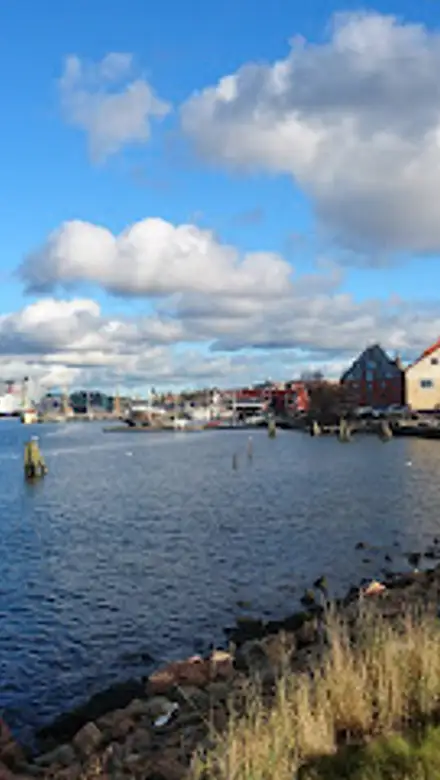
Älvsborgsbron Travel Guide
Free Guide: A graceful mid-century suspension bridge that frames Gothenburg’s harbour and offers panoramic views of the Göta älv and port activity.


A brief summary of Älvsborgsbron
A graceful mid-century suspension bridge that frames Gothenburg’s harbour and offers panoramic views of the Göta älv and port activity.
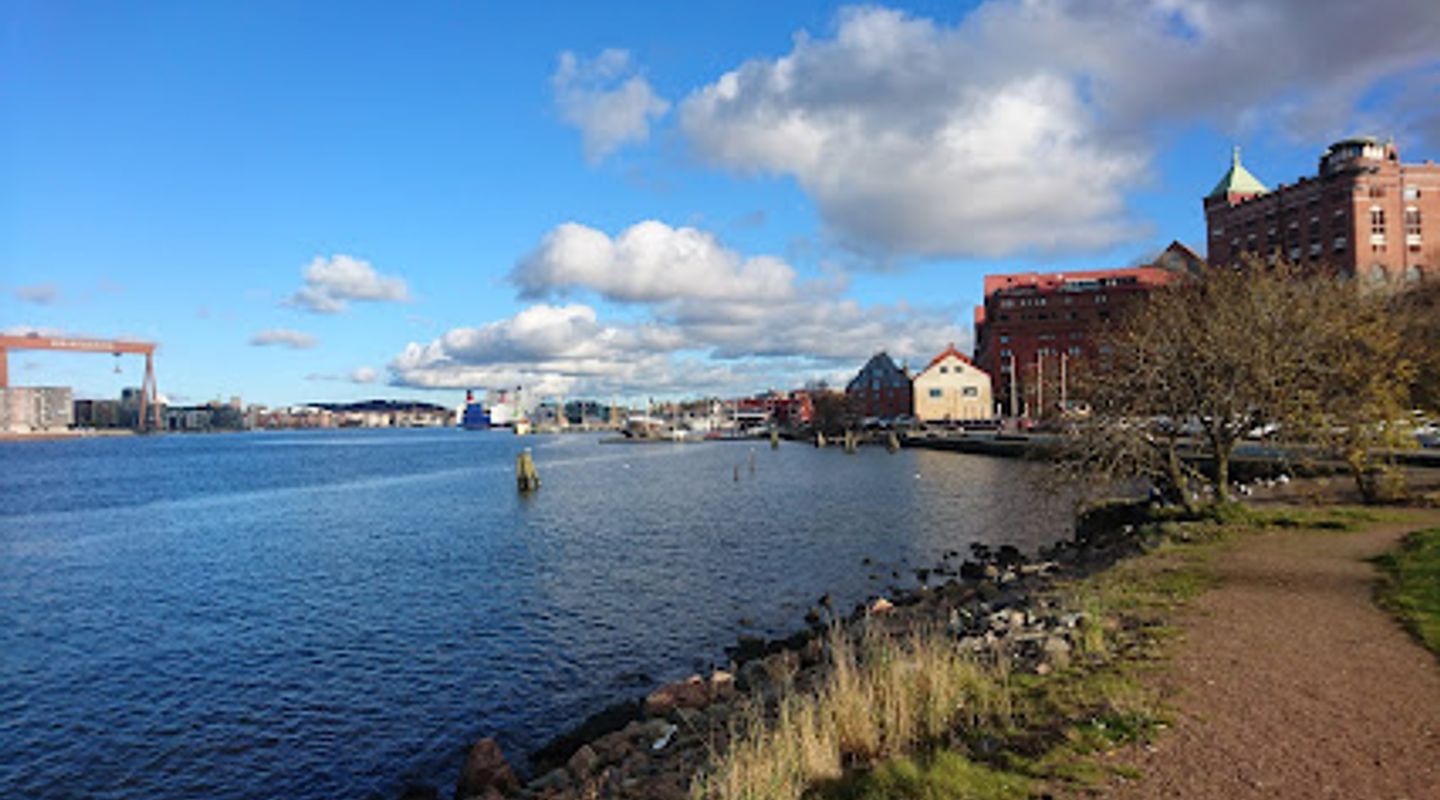
Älvsborgsbron is Gothenburg’s long, elegant suspension bridge spanning the Göta älv and linking the island of Hisingen with the mainland. Opened in the 1960s, the painted-steel structure rises above the harbour with tall towers, sweeping cables and a roadway that offers panoramic views of the port, ship traffic and waterfront districts — a striking piece of mid-20th-century engineering that defines the city skyline.
On-site amenities
 Seating areas
 Information boards
 Trash bins
Opening hours
- Every dayOpen 24 hours
Opening hours as listed on the venue’s Google Business Profile. Hours can change for services and special events, so check with the venue before you go.
- Address
- Älvsborgsbron, Västerleden, 414 51 Göteborg
- Phone
- Website
Getting there
Public bus
Tram + short walk
Bicycle
Discover more about Älvsborgsbron
Origins and engineering character
Älvsborgsbron was completed in the mid-1960s as a major crossing of the Göta älv and an essential link for road traffic between Hisingen and central Gothenburg. The bridge is a suspension structure built in steel, notable for its long main span and two prominent towers that support the sweeping cables. Its proportions — a length approaching a kilometre and a roadway set high above the shipping channel — reflect postwar ambitions to combine heavy-traffic utility with a tidy, modern silhouette.
Visual identity and materials
From close up the bridge reads as a sequence of textured steel elements: the towers, hanger cables and the layered deck plates beneath the roadway. Painted in a greenish-turquoise tone that has become familiar in photos and on postcards, the finish softens heavy metal into a colour often described as characteristic of Gothenburg’s harbour infrastructure. Light and weather interact constantly with these surfaces; on bright days the spans glint and the cables cast crisp shadows, while rainy skies mute the palette and emphasize the bridge’s structural lines.
Sensory experience on and beneath the deck
Standing on the pedestrian verge or walking a cycle lane, you feel the bridge’s scale: the road hums with tires and deep-throated trucks, steel vibrates faintly underfoot, and wind channels across the open deck. The height above the river gives an expansive view over the shipping lane, ferries and container terminals; the air carries harbour smells — salt, diesel, tar — and, occasionally, the echo of foghorns. From under the bridge the undersides of the deck, with their ribs and access catwalks, create a more industrial, cavern-like atmosphere.
Framing the city and the port
Älvsborgsbron functions as a frame for Gothenburg’s maritime approach. From vantage points near the bridge you can scan quays, cranes and the Eriksberg skyline; the bridge itself becomes a foreground feature in wider panoramas of the river and city. At certain times — low sun toward evening or after a storm — the bridge’s silhouette contrasts sharply with glassy water or cloud-pressed skies, producing dramatic photographic compositions that pair geometry with movement.
Civic role and everyday rhythms
Beyond its visual presence, the bridge is part of daily life: commuters, freight vehicles and cyclists rely on its lanes, while leisure users appreciate the lookouts and open views. Its design accommodates heavy traffic flow while reserving space for those who want to pause and watch boats pass. Maintenance, occasional repainting and winter care are part of its ongoing story — municipal stewardship that keeps the steelwork serviceable and presentable in an active harbour environment.
Nearby character and context
The areas on both sides of the river vary from industrial quays to converted docklands and residential terraces. These changes in scale and use mean the bridge reads differently depending on your approach: an industrial gateway when seen against cranes, or an elegant urban connector when framed by newly developed waterfront blocks. The immediate precincts also offer simple vantage points where the bridge’s scale and the river’s traffic can be appreciated without equipment — a reminder that this engineering landmark remains an everyday, living piece of the city’s infrastructure.
Evendo Review Centre
 Google
Guest reviews
Best time to go
Quietest: Jan, Feb & Dec · before 6am or at 10pm
Busy times are Evendo estimates for a typical year, to help you plan. Actual crowds vary with events, school holidays and the weather.
Explore Älvsborgsbron on the map
A handpicked selection of must-see spots near Älvsborgsbron, mapped for you.
Get your free copy of our complete guide to Älvsborgsbron, delivered straight to you.
Everything on this page, from opening hours and how to get there to Eve’s tips and the best time to go, in one PDF you can read offline, print or share.
Already have an account? Sign in
Your Älvsborgsbron guide is ready.
We'll send it to · Not you? Sign out

Getting your guide ready…
We are putting together a fresh copy of the Älvsborgsbron guide. This can take up to a minute.
This can take a few moments. If your browser asks, choose Allow so the download can start. You'll find the guide in your Downloads folder.
Nothing happened? Download it again
Sorry, the guide is taking longer than usual. Please try again in a minute, or get it by email instead.
Other nearby places you may find interesting
The closest places of the same kind, if this one is not quite what you had in mind.
-
-
-
-
-


Swipe for more places
More to explore near Älvsborgsbron

 Best experiences near Älvsborgsbron
 Best hotels near Älvsborgsbron
 Best landmarks near Älvsborgsbron
 Best attractions near Älvsborgsbron
 Best shops near Älvsborgsbron
 Best restaurants near Älvsborgsbron
 Best bars near Älvsborgsbron
Do you manage this location?
Take control to get all the benefits, like improved information, better appearance, and stronger visibility across AI-powered discovery.
Explore more
Explore more of Gothenburg Archipelago
Discover Sweden's coastal gem: The Gothenburg Archipelago, where pristine nature, charming villages, and rich history converge in a stunning maritime setting.
Explore Gothenburg Archipelago
Explore more of Sweden
Discover Sweden's breathtaking landscapes, vibrant cities, and rich cultural heritage. From the Northern Lights to historic castles, experience the essence of Scandinavia.
Explore Sweden