

Gustav Adolfs Torg, Gothenburg Travel Guide
Free Guide: Gothenburg's beating heart: a 17th-century square crowned by Gustav II Adolf's statue, ringed by neoclassical landmarks and the harbor canal's serene flow.


A brief summary of Gustav Adolfs Torg
Gothenburg's beating heart: a 17th-century square crowned by Gustav II Adolf's statue, ringed by neoclassical landmarks and the harbor canal's serene flow.
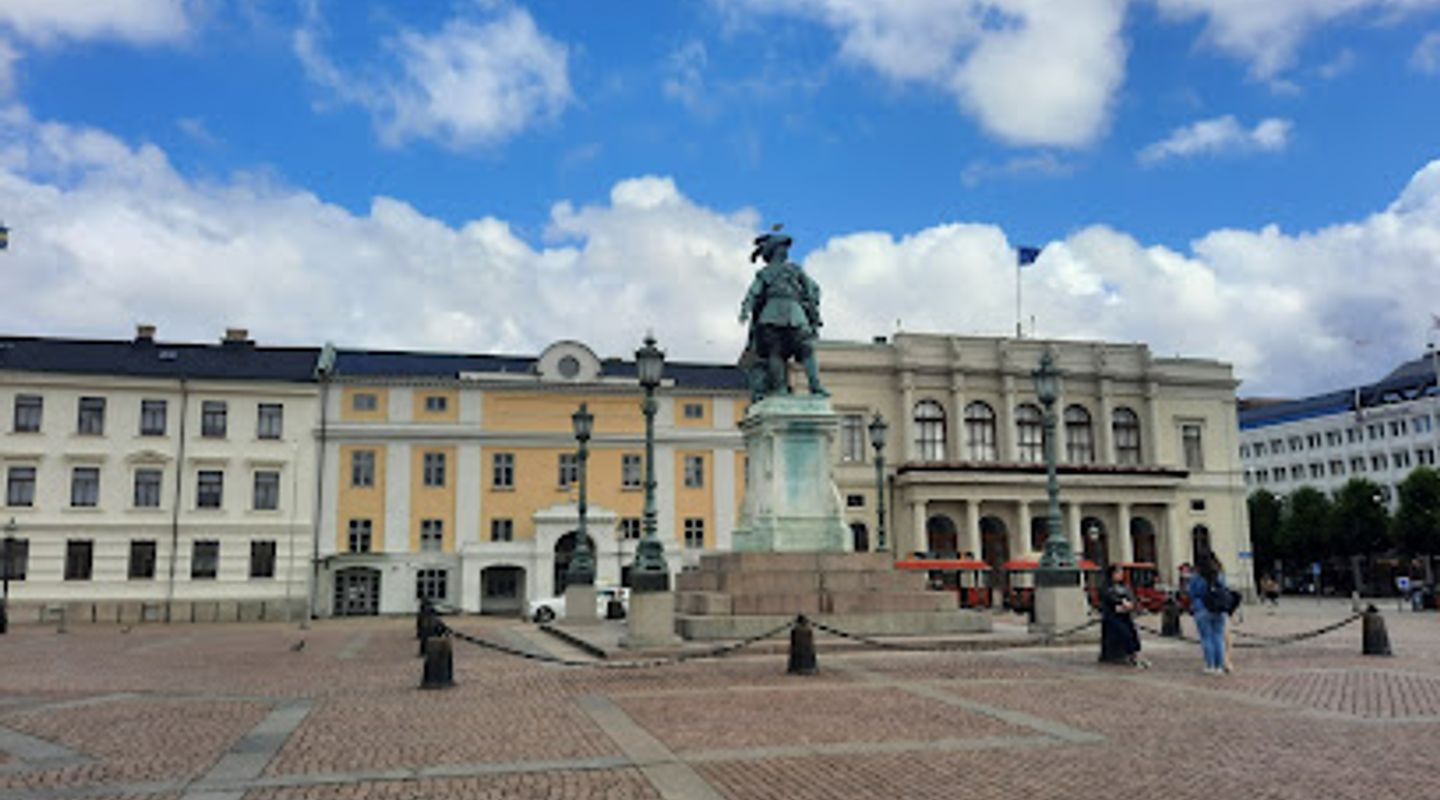
Gustaf Adolfs Torg stands as Gothenburg's historic central square, named after its founder King Gustav II Adolf. Dominated by his commanding bronze statue unveiled in 1854, the plaza is framed by grand neoclassical buildings including the City Hall, Stock Exchange, and overlooks the Stora Hamnkanalen. Once called Stortorget, it has served as the city's political heart since the 17th century, hosting events and embedded with a 1644 city map in its paving. A vibrant hub blending heritage and urban life in Nordstaden.
On-site amenities
 Seating areas
 Trash bins
 Drink options
 Food options
Opening hours
- Every dayOpen 24 hours
Opening hours as listed on the venue’s Google Business Profile. Hours can change for services and special events, so check with the venue before you go.
- Address
- Gustaf Adolfs Torg, 411 06 Göteborg
- Phone
Getting there
Walking
Tram
Bus
Taxi
Discover more about Gustav Adolfs Torg
Founder's Enduring Gaze
At the heart of Gustaf Adolfs Torg rises the imposing bronze statue of King Gustav II Adolf, Gothenburg's founder. Crafted by sculptor Bengt Erland Fogelberg and unveiled in 1854—the year of the artist's death—this monument captures the king in a dynamic pose, his right hand extended as if directing the city's birth in 1621. Perched atop a marble plinth, the statue symbolizes the monarch's vision for a fortified trading port on Sweden's west coast, amid the Thirty Years' War.The surrounding plaza, originally Stortorget or 'Big Square,' transformed with the statue's arrival, marking a shift from utilitarian space to honored memorial.
Architectural Guardians
Encircling the square are architectural gems reflecting Gothenburg's evolution. To the north, the Wenngrenska Huset from 1760 boasts added upper floors, adjacent to the 1749 Stadshuset (City Hall) with its elegant facade. The Börshuset, or Stock Exchange, completed in 1849, exemplifies 19th-century neoclassicism designed by Viktor von Wright, whose works include Stockholm's Public Library.Southward, the square meets Stora Hamnkanalen, Gothenburg's main harbor canal, offering watery reflections of these structures. These buildings, many protected, stand as sentinels of the city's mercantile past.
Political and Cultural Nucleus
Since the 17th century, Gustaf Adolfs Torg has pulsed as Gothenburg's political core, hosting city council gatherings and public assemblies. Flanking it are the old and new City Halls, underscoring its administrative role. The adjacent Nordstan shopping mall and Brunnsparken transport hub integrate modern commerce and mobility into this historic setting.The square has witnessed festivals, like the Gothenburg Fringe Festival openings, blending cultural vibrancy with its stately presence.
Embedded Historical Blueprint
Beneath your feet lies a subtle treasure: paving stones etched with a map of Gothenburg's 1644 neighborhoods, evoking the early colonial layout planned by the king. This ground-level cartography invites contemplation of the city's expansion from Dutch-inspired canals to today's metropolis.The plaza's open design facilitates gatherings, markets, and protests, maintaining its role as a communal anchor amid evolving urban rhythms.
Harbor Echoes and Urban Harmony
Framed by the canal's gentle flow, the square harmonizes land and water, with views toward the harbor that fueled Gothenburg's rise as a trade powerhouse. Seasonal light dances across facades, while the statue's patina whispers of two centuries exposed to sea breezes.Today, it remains a nexus where history meets daily life, from morning commuters to evening strollers, encapsulating the essence of Sweden's second city.
Evendo Review Centre
 Google
Guest reviews
Best time to go
Quietest: Jan, Feb & Mar · before 6am or from 11pm
Busy times are Evendo estimates for a typical year, to help you plan. Actual crowds vary with events, school holidays and the weather.
Explore Gustav Adolfs Torg on the map
A handpicked selection of must-see spots near Gustav Adolfs Torg, mapped for you.
Get your free copy of our complete guide to Gustav Adolfs Torg, delivered straight to you.
Everything on this page, from opening hours and how to get there to Eve’s tips and the best time to go, in one PDF you can read offline, print or share.
Already have an account? Sign in
Your Gustav Adolfs Torg guide is ready.
We'll send it to · Not you? Sign out

Getting your guide ready…
We are putting together a fresh copy of the Gustav Adolfs Torg guide. This can take up to a minute.
This can take a few moments. If your browser asks, choose Allow so the download can start. You'll find the guide in your Downloads folder.
Nothing happened? Download it again
Sorry, the guide is taking longer than usual. Please try again in a minute, or get it by email instead.
Unlock the best of Gustav Adolfs Torg
Skip-the-line tickets, guided tours with entry, and walking tours of the area, booked in a few clicks.
 Tour with entry
Private Self-Guided Tour in Gothenburg With 100 Audio Stories
from $3.19 Tour with entry
Gothenburg Walking Tour with Audioguide on Your Smartphone
from $10.67 Tour with entry
Gothenburg Private Walking Tour with a Local
from $63.27 Tour with entry
Bike Tour Gothenburg, Guided Bicycle Tours
from $114.56


Other nearby places you may find interesting
The closest places of the same kind, if this one is not quite what you had in mind.
-
-
-
-
-


Swipe for more places
More to explore near Gustav Adolfs Torg

 Best experiences near Gustav Adolfs Torg
 Best hotels near Gustav Adolfs Torg
 Best landmarks near Gustav Adolfs Torg
 Best attractions near Gustav Adolfs Torg
 Best shops near Gustav Adolfs Torg
 Best restaurants near Gustav Adolfs Torg
 Best bars near Gustav Adolfs Torg
Do you manage this location?
Take control to get all the benefits, like improved information, better appearance, and stronger visibility across AI-powered discovery.
Explore more

Explore more of Gothenburg
Discover Gothenburg: Sweden's coastal gem where cultural richness meets natural beauty. Enjoy stunning archipelagos, historic districts, and a vibrant culinary scene.
Explore Gothenburg
Explore more of Sweden
Discover Sweden's breathtaking landscapes, vibrant cities, and rich cultural heritage. From the Northern Lights to historic castles, experience the essence of Scandinavia.
Explore Sweden
