Mjälleborgen Travel Guide
Free Guide: Discover Sweden's northernmost ancient hillfort on Frösön, a 3rd-century powerhouse guarding Iron Age trade routes amid stunning Storsjön vistas.


A brief summary of Mjälleborgen
Discover Sweden's northernmost ancient hillfort on Frösön, a 3rd-century powerhouse guarding Iron Age trade routes amid stunning Storsjön vistas.
Mjälleborgen is an ancient hillfort perched on Öneberget hill on Frösön island in Jämtland, Sweden. Built during the Roman Iron Age around the 3rd-4th century AD, it stands as one of Sweden's northernmost fornborgar, featuring a massive 120-meter-long terrace of earth and stone reinforced by timber constructions. Strategically positioned to overlook Storsjön lake and key trade routes, it controlled iron production and trade vital to the region's economy. Archaeological digs reveal longhouses from the 5th century, signs of fires, and palisade remnants, evidencing a powerful elite society. Abandoned by the 700s amid shifting settlements, its ruins today offer a window into Jämtland's Iron Age power centers amid sweeping rural landscapes.
On-site amenities
 Trash bins
 Information boards
 Seating areas
Opening hours
- Every dayOpen 24 hours
Opening hours as listed on the venue’s Google Business Profile. Hours can change for services and special events, so check with the venue before you go.
- Address
- Frösövägen, 832 47 Frösön
- Website
Getting there
Bus
Car
Walking
Bicycle
Discover more about Mjälleborgen
Strategic Stronghold of Iron Age Jämtland
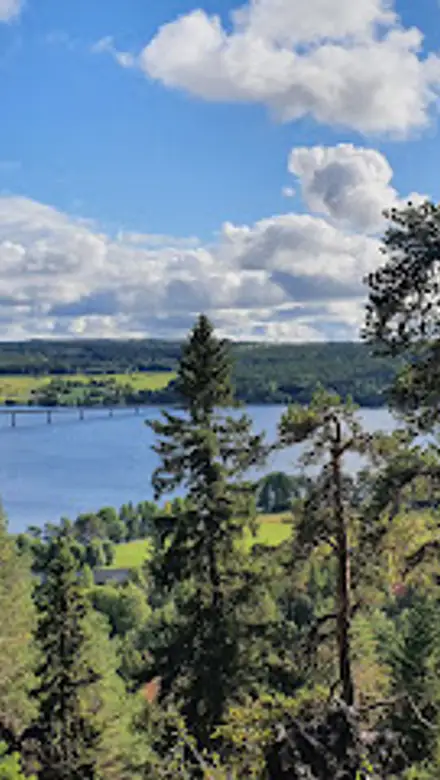
Perched atop Öneberget on Frösön, Mjälleborgen commands panoramic views over Storsjön and surrounding valleys. Constructed in the 3rd-4th century during the Roman Iron Age, this fornborg exemplifies early organized power in northern Scandinavia. Its massive terrace, stretching 120 meters long and 10 meters wide on the northern flank, was buttressed by steep cliffs to the south, forming a natural fortress. Timber frameworks bound the earth and stone ramparts, showcasing engineering prowess in a remote setting.The fort's location near vital iron trade routes along Ljungan river underscores its role in controlling production and commerce, as Jämtland's iron output peaked during this era.
Archaeological Layers of Construction and Conflict
Excavations uncover a palisade encircling the terrace, with traces of two longhouses erected in the 5th century amid the Migration Period. The site endured at least two burnings between the 300s and 500s, hinting at raids or internal strife. These wooden halls, integral to Nordic Iron Age life, suggest communal or elite gatherings within the fortified enclosure.Mjälleborgen ranks among Norrland's largest prehistoric builds, its scale demanding coordinated labor from regional populations, pointing to emergent hierarchies.
Power Center in a Thriving Landscape
Frösön emerged as Jämtland's administrative and economic hub from the Iron Age onward. Nearby Mjälle estate, encompassing the hill, featured medieval royal holdings and ties to lawspeakers and officials by 1345. Pollen evidence reveals intensive farming of barley and hemp, alongside cattle herding bolstered by a warming climate.The borg's oversight of lake and land routes linked it to Trøndelag and Medelpad, facilitating exchange in a fertile Storsjöbygden oasis.
Decline and Enduring Legacy
By the 700s, as settlements concentrated eastward, Mjälleborgen was abandoned amid broader stagnation in northern Sweden. Yet Frösön retained prominence, hosting the 11th-century runestone proclaiming Jämtland's Christianization and later a school to counter Norwegian influences.Today, as part of a national cultural heritage interest, the ruins blend into open farmlands, their subtle earthworks inviting reflection on ancient fortifications amid modern tranquility.
Natural Setting and Visible Remains
Öneberget rises modestly from fields, traversed by Mjällebäcken stream draining Ändsjön. The site's flacked northern terrace contrasts with sheer drops, preserving an atmospheric relic. Wild grasses and scattered stones evoke the fort's timber past, with vistas of lake, fells, and distant peaks enhancing its timeless allure.
Evendo Review Centre
 Google
Guest reviews
Best time to go
Quietest: Jan, Feb & Dec · before 7am or from 8pm
Busy times are Evendo estimates for a typical year, to help you plan. Actual crowds vary with events, school holidays and the weather.
Explore Mjälleborgen on the map
A handpicked selection of must-see spots near Mjälleborgen, mapped for you.
Get your free copy of our complete guide to Mjälleborgen, delivered straight to you.
Everything on this page, from opening hours and how to get there to Eve’s tips and the best time to go, in one PDF you can read offline, print or share.
Already have an account? Sign in
Your Mjälleborgen guide is ready.
We'll send it to · Not you? Sign out

Getting your guide ready…
We are putting together a fresh copy of the Mjälleborgen guide. This can take up to a minute.
This can take a few moments. If your browser asks, choose Allow so the download can start. You'll find the guide in your Downloads folder.
Nothing happened? Download it again
Sorry, the guide is taking longer than usual. Please try again in a minute, or get it by email instead.
Other nearby places you may find interesting
The closest places of the same kind, if this one is not quite what you had in mind.
-
-
-
-
-


Swipe for more places
More to explore near Mjälleborgen

 Best experiences near Mjälleborgen
 Best hotels near Mjälleborgen
 Best landmarks near Mjälleborgen
 Best attractions near Mjälleborgen
 Best shops near Mjälleborgen
 Best restaurants near Mjälleborgen
 Best bars near Mjälleborgen
Do you manage this location?
Take control to get all the benefits, like improved information, better appearance, and stronger visibility across AI-powered discovery.
Explore more

Explore more of Jämtland
Explore Jämtland: A Swedish gem where natural beauty, outdoor adventure, and rich cultural heritage blend seamlessly.
Explore Jämtland
Explore more of Sweden
Discover Sweden's breathtaking landscapes, vibrant cities, and rich cultural heritage. From the Northern Lights to historic castles, experience the essence of Scandinavia.
Explore Sweden