

Free Jämtland Travel Guide & Mobile App
Explore Jämtland with free travel guides. Discover regional history, expert tips, proposed trips, and audio guides on web or mobile app.


Explore Jämtland for Östersund’s culture, Åre’s mountains, lake landscapes, Sámi heritage and outdoor adventures in every season.
Read more about Jämtland
When is the best time to visit Jämtland?
Best: June–August · 18–20°C| Month | High (°C) | Rainfall (mm) |
|---|---|---|
| January | -3 | 40 |
| February | -3 | 35 |
| March | 1 | 35 |
| April | 6 | 40 |
| May | 13 | 45 |
| June (best) | 18 | 55 |
| July (best) | 20 | 65 |
| August (best) | 18 | 65 |
| September | 13 | 55 |
| October | 6 | 50 |
| November | 1 | 45 |
| December | -3 | 40 |
Getting to and around Jämtland
How to get there
Transportation
Top city travel guides in Jämtland
The cities of Jämtland, and the easiest places to base yourself.

Swipe for more cities
Destinations in Jämtland
Resorts, valleys and scenic spots worth a trip of their own.
-
-

-


Swipe for more destinations
Best attractions in Jämtland
Jämtland’s attractions range from urban culture around Östersund to mountain landscapes and outdoor activities in the west. Jamtli in Östersund combines open-air historic environments with collections that explain regional life, while nearby Frösön brings together lake views, the Frösö Runestone and a medieval church. Åre provides the province’s most developed mountain experience, with skiing, hiking, cycling and lifts focused on Åreskutan. Outside the resort, visitors can explore the Vålådalen area, forest and mountain trails, canoeing waters and fishing country, subject to local access rules and conditions. Waterfalls are among the region’s most accessible natural attractions: Tännforsen is a major fall near the Norwegian frontier, while Ristafallet lies beside the Indalsälven east of Åre. Smaller communities offer historic churches, farm landscapes, local food producers and craft traditions. In winter, snowshoeing, cross-country skiing and dog-sledding extend the possibilities beyond downhill sports; in summer, long-distance walking and cycling reveal a quieter side of the province. The attraction landscape is defined less by a dense chain of ticketed sites than by the relationship between heritage, working landscapes and open mountain country.
-
Tourist attraction
Furuviksparken
Thrills, wildlife, and sea-kissed concerts at Sweden's ultimate seaside amusement park—where family fun meets conservation magic.
-
Scenic spot
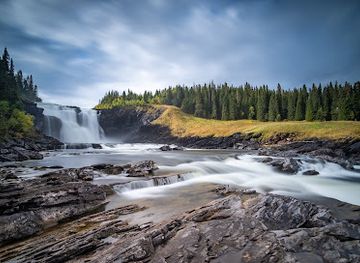
Tannforsen Waterfall
Sweden’s most powerful free‑flowing waterfall — a seasonal spectacle of thunderous water, ice sculptures and forested viewpoints near Duved.
-
Store
Jamtli
Discover Jämtland's living history, Viking treasures, and world-class art at Jamtli's immersive museum trio in Östersund.
-
Tourist attraction
Badhusparken
A compact waterfront park on Storsjön where seasonal lakeside life — from summer swims to winter ice — plays out against open water views.


Best landmarks in Jämtland
The Frösö Runestone on Frösön is Jämtland’s most important early medieval landmark, linking the province’s Christianisation with the political significance of the Storsjön district. Nearby Frösö Church, with its long history and prominent position above the lake, forms part of a historic landscape rather than standing as an isolated monument. In Östersund, the old town streets, civic buildings and lakeside setting express the role of the nineteenth-century town as Jämtland’s administrative and commercial centre. Åre Old Church, a medieval stone church in the mountain settlement, provides a striking contrast with the resort’s modern ski infrastructure and reflects the older farming community that preceded tourism. Åreskutan is the region’s most recognisable natural landmark, rising above Åre with broad views across valleys and lakes when weather permits. Tännforsen, one of Sweden’s best-known waterfalls, is another defining feature of western Jämtland, where the force of the water and surrounding forest make the landscape itself the landmark. Historic farm landscapes around Storsjön and the province’s traditional timber buildings complete this visual record of settlement, religion and mountain economy.
-
Ski resort
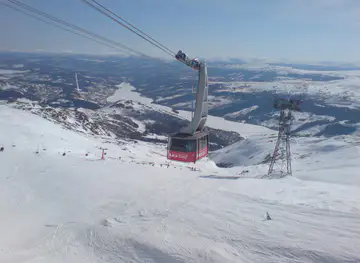
Åre ski resort
Discover the beauty of Åre Ski Resort, Sweden's premier destination for skiing, snowboarding, and breathtaking mountain vistas.
-
Tourist attraction
Frösö Kyrka
A medieval island church with a layered interior, historic relics and expansive views over Storsjön and the Jämtland highlands.
-
Observation deck
Frösötornet
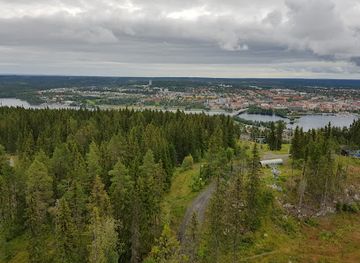
Ascend to panoramic heights over Storsjön and Jämtland's fjells, savor organic fika at a cozy café atop Frösön's summit—a quintessential Swedish scenic escape.
-
Tourist attraction
Stora Kyrkan
Östersund's 1940 basilica masterpiece: Wahlman's airy brick temple with Linnqvist's vast fresco altarpiece and Jämtland's Christian saga carved in granite.



Explore Jämtland on the map
Plan your trip on one map. See where the top cities, national parks and sights are, and book hotels and experiences in a few clicks.
Best hotels in Jämtland
Best restaurants in Jämtland
Jämtland’s food culture is closely tied to its farms, forests, lakes and mountain pastures. In Östersund and Åre, restaurants range from informal cafés and traditional pubs to contemporary kitchens that place local ingredients at the centre of their menus. Game, freshwater fish, potatoes, dairy products, root vegetables, mushrooms and wild berries are common regional reference points, while Jämtland flatbread and locally made cheeses are useful introductions to the province’s baking and dairy traditions. Cloudberries and other foraged ingredients appear seasonally in desserts, preserves and drinks. Farm shops and producers’ markets are especially valuable for travellers seeking bread, cheeses, cured products and small-batch specialities, although opening arrangements vary outside the main towns. Mountain and rural inns often provide hearty meals suited to walkers and skiers, while Östersund offers the broadest choice for visitors who want to sample several aspects of the regional larder. Menus change with the seasons, so asking about local produce is often more rewarding than looking for a single definitive dish.
-
American
Restaurang Broken, Åre
A lively American-style bar and burger house in central Åre — big portions, cold taps and a friendly après-ski energy.
-
Restaurant
Restaurang Tre Rum
A roomy, homely bistro on Östersund’s main street — steady food, late-night service and space for everything from quiet lunches to big celebrations.
-
Asian
BBQ Garden
Sizzling Asian buffets in Östersund: sushi, Mongolian grill, wok wonders, and bold flavors from Thailand to Vietnam await at this downtown favorite.
-
Restaurant
Tages Konditori & Kök AB
A cozy Frösön konditori that pairs fresh in‑house baking with a full kitchen serving simple, well‑made all‑day meals.


Best bars in Jämtland
Evening life in Jämtland is concentrated in Östersund and Åre, with a quieter pattern elsewhere. Östersund has the province’s widest selection of pubs, cafés, restaurants, live music and seasonal cultural events, ranging from relaxed lakeside or town-centre evenings to busier weekends. Åre’s nightlife is more closely connected with the ski season and attracts visitors to bars, restaurants and music venues after a day on the mountain, particularly during peak winter and holiday periods. Outside these centres, historic inns, village pubs, breweries and small hotel bars provide the main evening options, often with early closing or limited weekly schedules. Local beer and other Swedish drinks may feature, but alcohol is not necessary to engage with the region’s evening culture: concerts, food events, saunas and winter gatherings are also part of the social scene. Check current arrangements before travelling, as rural venues and seasonal businesses can change their hours.
-
Restaurant
Dalwhinnie
Discover Dalwhinnie in Östersund - where exceptional culinary experiences meet local charm and flavor.
-
Bar
Bastard Burgers
Casual, Swedish-sourced smash burgers and vegan alternatives in the heart of Östersund — bold flavours served with Shack Fries.
-
Gastropub
The Bishops Arms - Östersund
A warm, English‑style gastropub on Östersund’s Stortorget — hearty pub fare, wide beer and whisky choices, lively late‑evening atmosphere.
-
Bar
Jane Doe Bar
Dive into Östersund's rock 'n' roll pulse at Jane Doe Bar, where bold burgers, craft beers, and live beats fuel unforgettable nights in a pink-hued two-floor haven.


Best nightclubs in Jämtland
Evening life in Jämtland is concentrated in Östersund and Åre, with a quieter pattern elsewhere. Östersund has the province’s widest selection of pubs, cafés, restaurants, live music and seasonal cultural events, ranging from relaxed lakeside or town-centre evenings to busier weekends. Åre’s nightlife is more closely connected with the ski season and attracts visitors to bars, restaurants and music venues after a day on the mountain, particularly during peak winter and holiday periods. Outside these centres, historic inns, village pubs, breweries and small hotel bars provide the main evening options, often with early closing or limited weekly schedules. Local beer and other Swedish drinks may feature, but alcohol is not necessary to engage with the region’s evening culture: concerts, food events, saunas and winter gatherings are also part of the social scene. Check current arrangements before travelling, as rural venues and seasonal businesses can change their hours.
-
Night club
Bygget
Åre's colossal nightclub with epic live acts, après-ski frenzy, and slope-side revelry—up to 1200 partygoers on multiple dance floors.
-
Club
Club Nostalgia
Rev up for vintage thrills at Hammarstrand's hillclimb haven, where classic cars conquer rugged terrain amid Jämtland's wild beauty.
-
 Night club
Bartender Event
Ignite your night in Östersund at Bartender Event, where thumping beats, masterful cocktails, and electric vibes create unforgettable evenings on Brogränd.


Best shops in Jämtland
Shopping in Jämtland is strongest in Östersund and Åre, with smaller market towns and villages offering more specialised, local-scale choices. Östersund combines ordinary high-street retail with independent food shops, cafés, galleries, craft outlets and seasonal markets, making it the best place to seek a broad introduction to regional products. Åre has outdoor equipment, ski-related retail, design-led shops and food businesses aimed at visitors, alongside practical services for mountain activities. In rural districts, farm shops and producer outlets are more significant than conventional retail centres, with Jämtland flatbread, cheeses, berries, preserves, smoked foods and other local specialities among the most useful purchases. Look also for handcrafts, wool, woodwork, ceramics and Sámi-inspired or Sámi-made products, checking provenance and buying respectfully. Markets and independent businesses may operate seasonally or on limited days, so travellers should confirm arrangements before making a separate journey. The most distinctive souvenirs are generally edible products and locally made crafts rather than mass-produced regional memorabilia.
-
Sporting goods store
XXL
Nordens största sportvaruhus i Östersund: skidprylar, cyklar och vildmarkskläder för Jämtlands äventyr – allt under ett tak för aktiva dagar vid Storsjön.
-
Chocolate shop
Åre Chokladfabrik
Handcrafted chocolates and fika bliss at Åre's iconic factory—watch pralines take shape, sample bold flavors, and unwind by the water in Jämtland's sweet escape.
-
Shopping mall
Mittpunkten
Experience shopping and dining at Mittpunkten, Östersund's lively mall, featuring local shops, delicious cafes, and a vibrant atmosphere.
-
Alcohol retail monopoly
Systembolaget
Östersund’s local Systembolaget outlet on Hagvägen — the practical, staffed source for Sweden’s regulated beer, wine, spirits and alcohol‑free choices.


Get your free copy of our complete guide to Jämtland, delivered straight to you.
Everything on this page, from attractions and restaurants to essentials and local phrases, in one PDF you can read offline, print or share.
Already have an account? Sign in
Your Jämtland guide is ready.
We'll send it to · Not you? Sign out

Getting your guide ready…
We are putting together a fresh copy of the Jämtland guide. This can take up to a minute.
This can take a few moments. If your browser asks, choose Allow so the download can start. You'll find the guide in your Downloads folder.
Nothing happened? Download it again
Sorry, the guide is taking longer than usual. Please try again in a minute, or get it by email instead.
Jämtland essentials
Currency and Payment
Safety
Emergency Situations
Do's and Don'ts
Local Tips
From Eve
Local phrases worth knowing
You don't need to get them perfect. A few words go a long way, and locals appreciate the effort.
Basics
| English | Local | Say it |
|---|---|---|
| Hello | Hej | [hay] |
| Goodbye | Adjö | [ah-yuh] |
| Yes | Ja | [yah] |
| No | Nej | [nay] |
| Please/You're welcome | Snälla/Tack | [snel-lah/tahk] |
| Thank you | Tack | [tahk] |
| Excuse me/Sorry | Ursäkta/Mi ledsen | [oor-sehk-tah/mee led-sen] |
| How are you? | Hur mår du? | [hoor moor doo] |
| Fine. And you? | Bra. Och du? | [bra. ohk doo] |
| Do you speak English? | Talar du engelska? | [tah-lar doo eng-el-skah] |
| I don't understand | Jag förstår inte | [yahg fur-stor in-tay] |
Eating & Drinking
| English | Local | Say it |
|---|---|---|
| I'd like to see the menu, please | Jag skulle vilja se menyn, snälla | [yahg skool-leh vil-yah say men-yun, snel-lah] |
| I don't eat meat | Jag äter inte kött | [yahg eh-ter in-tay shurt] |
| Cheers! | Skål! | [skawl] |
| I would like to pay, please | Jag skulle vilja betala, snälla | [yahg skool-leh vil-yah beh-tah-lah, snel-lah] |
Emergencies
| English | Local | Say it |
|---|---|---|
| Help! | Hjälp! | [yelp] |
| Go away! | Gå bort! | [gaw bort] |
| Call the Police! | Ring polisen! | [ring po-lee-sen] |
| Call a doctor! | Ring en läkare! | [ring en leh-kah-reh] |
| I'm lost | Jag är vilse | [yahg air vil-seh] |
| I'm ill | Jag är sjuk | [yahg air shoo-k] |
Shopping
| English | Local | Say it |
|---|---|---|
| I'd like to buy... | Jag skulle vilja köpa... | [yahg skool-leh vil-yah shur-pah] |
| I'm just looking | Jag tittar bara | [yahg tit-tar bah-rah] |
| How much is it? | Hur mycket kostar det? | [hoor myu-ket kos-tar deh] |
| That's too expensive | Det är för dyrt | [deht air fur deer-t] |
| Can you lower the price? | Kan du sänka priset? | [kan doo sen-kah pree-set] |
Time & Numbers
| English | Local | Say it |
|---|---|---|
| What time is it? | Vad är klockan? | [vahd air kloh-kahn] |
| It's one o'clock | Det är ett på klockan | [deht air eht paw kloh-kahn] |
| Half past (10) | Halv över (10) | [halv uhr-ver (10)] |
| Morning | Morgon | [mor-gon] |
| Afternoon | Eftermiddag | [ef-ter-mid-dahg] |
| Evening | Kväll | [kvel] |
| Yesterday | I går | [ee gohr] |
| Today | I dag | [ee dahg] |
| Tomorrow | I morgon | [ee mor-gon] |
| 1 | 1 | [1] |
| 2 | 2 | [2] |
| 3 | 3 | [3] |
| 4 | 4 | [4] |
| 5 | 5 | [5] |
| 6 | 6 | [6] |
| 7 | 7 | [7] |
| 8 | 8 | [8] |
| 9 | 9 | [9] |
| 10 | 10 | [10] |
Transport & Directions
| English | Local | Say it |
|---|---|---|
| Where's a/the...? | Var är en/den...? | [var air en/den...?] |
| What's the address? | Vad är adressen? | [vahd air ah-dress-en] |
| Can you show me (on the map)? | Kan du visa mig (på kartan)? | [kan doo vee-sah may (paw kar-tan)?] |
| When's the next (bus)? | När går nästa (buss)? | [nair gohr nais-tah (boos)?] |
| A ticket (to ....) | En biljett (till ....) | [en bil-yett (til ....)] |
History of Jämtland
Early Settlement and Iron Age Traditions
Jämtland has been inhabited since the retreat of the ice sheet, with archaeological evidence of hunting, fishing and later farming communities. The province’s lakes, river valleys and mountain passes connected settlements across central Scandinavia. Iron Age burial sites, house remains and rock art testify to changing patterns of trade and land use, while the continued presence of reindeer-herding traditions reflects the long history of Sámi life in the wider mountain region. The landscape was never an empty wilderness: seasonal movement, resource use and local exchange shaped it long before modern tourism.
The Frösö Runestone and Norse Jämtland
The Frösö Runestone, raised in the eleventh century on Frösön, is one of Jämtland’s most important historical objects. Its inscription refers to the Christianisation of the province and to a bridge-building project, offering evidence of organised local society during the Viking Age and early medieval period. Frösön became a political and religious centre around Storsjön, and the runestone’s location near the later church illustrates the transition from pre-Christian traditions to Christianity. It remains a powerful marker of Jämtland’s distinct history within the Swedish and Norwegian borderlands.
Medieval Links with Norway
For much of the Middle Ages, Jämtland was closely tied to Norway through geography, trade and political allegiance. Mountain passes connected the province with Trøndelag and Trondheim, while Storsjön and the Indalsälven valley supported movement towards the coast. Churches and farms expanded as Christianity became established, and the region’s position between kingdoms gave it a distinctive borderland character. The Treaty of Brömsebro in 1645 transferred Jämtland from Denmark-Norway to Sweden, a political change that gradually redirected administration, taxation and commercial relationships eastwards.
Farming, Timber and Local Trade
After becoming part of Sweden, Jämtland developed through a mixture of small-scale farming, livestock keeping, forestry and trade. The fertile shores around Storsjön supported settlement, while upland communities relied on seasonal movement, haymaking and carefully managed pasture. Timber became increasingly important as roads, rivers and later railways connected the interior with national markets. Market towns and villages grew as centres for agricultural exchange, and many traditional farm buildings, churches and cultivated landscapes still reflect this economy. These industries laid the foundations for the region’s modern settlements before tourism became a major source of income.
The Railway and the Growth of Tourism
The arrival of the railway in the late nineteenth century transformed access to Jämtland. Östersund gained stronger connections with central Sweden, while rail travel made the western mountains more accessible to visitors seeking fresh air, scenery and organised outdoor recreation. Åre developed from a farming and transport settlement into a prominent mountain resort, first attracting summer visitors and later becoming known for winter sports. Hotels, mountain stations, ski facilities and improved roads changed the local economy, while the rail corridor remains one of the most practical ways to reach the province without a car.
Sámi Life and Contemporary Recognition
Sámi communities have long used Jämtland’s forests and mountains for reindeer herding, seasonal movement and cultural practice. Modern boundaries, forestry, hydroelectric development, tourism and competing land uses have created pressures, but Sámi culture remains an essential part of the province’s identity rather than a historical footnote. Visitors encounter this heritage through language, crafts, food, reindeer-herding landscapes and cultural initiatives, although experiences vary and should be approached respectfully. Contemporary Jämtland continues to negotiate how traditional land use and modern recreation can coexist.
Jämtland’s Food Culture and Regional Identity
In recent decades, Jämtland has strengthened its reputation for small-scale food production and regional cuisine. The tradition draws on dairy farming, mountain pasture, freshwater fishing, foraging, baking and the use of game and berries. Jämtland flatbread, local cheeses and products made from cloudberries and other wild ingredients express the relationship between food and landscape. Farm shops, producers’ markets and restaurants have helped turn these traditions into a contemporary cultural asset. The movement also reinforces a broader regional identity centred on self-reliance, local agriculture and the distinctive resources of the northern interior.
Jämtland in Photos
Browse through our photo collection highlighting the charm and character of the destination.
Neighbouring regions of Jämtland
The closest regions to Jämtland, if you have time for more than one.
-

-

-

-

-


Swipe for more regions
Explore more
Explore more of Sweden
Discover Sweden's breathtaking landscapes, vibrant cities, and rich cultural heritage. From the Northern Lights to historic castles, experience the essence of Scandinavia.
Explore Sweden