

Krönikebrunnen, Jönköping Travel Guide
Free Guide: Bronze chronicle of Jönköping's past at historic Hovrättstorget, where medieval founders meet modern plaza life in sculpted splendor.


A brief summary of Krönikebrunnen
Bronze chronicle of Jönköping's past at historic Hovrättstorget, where medieval founders meet modern plaza life in sculpted splendor.
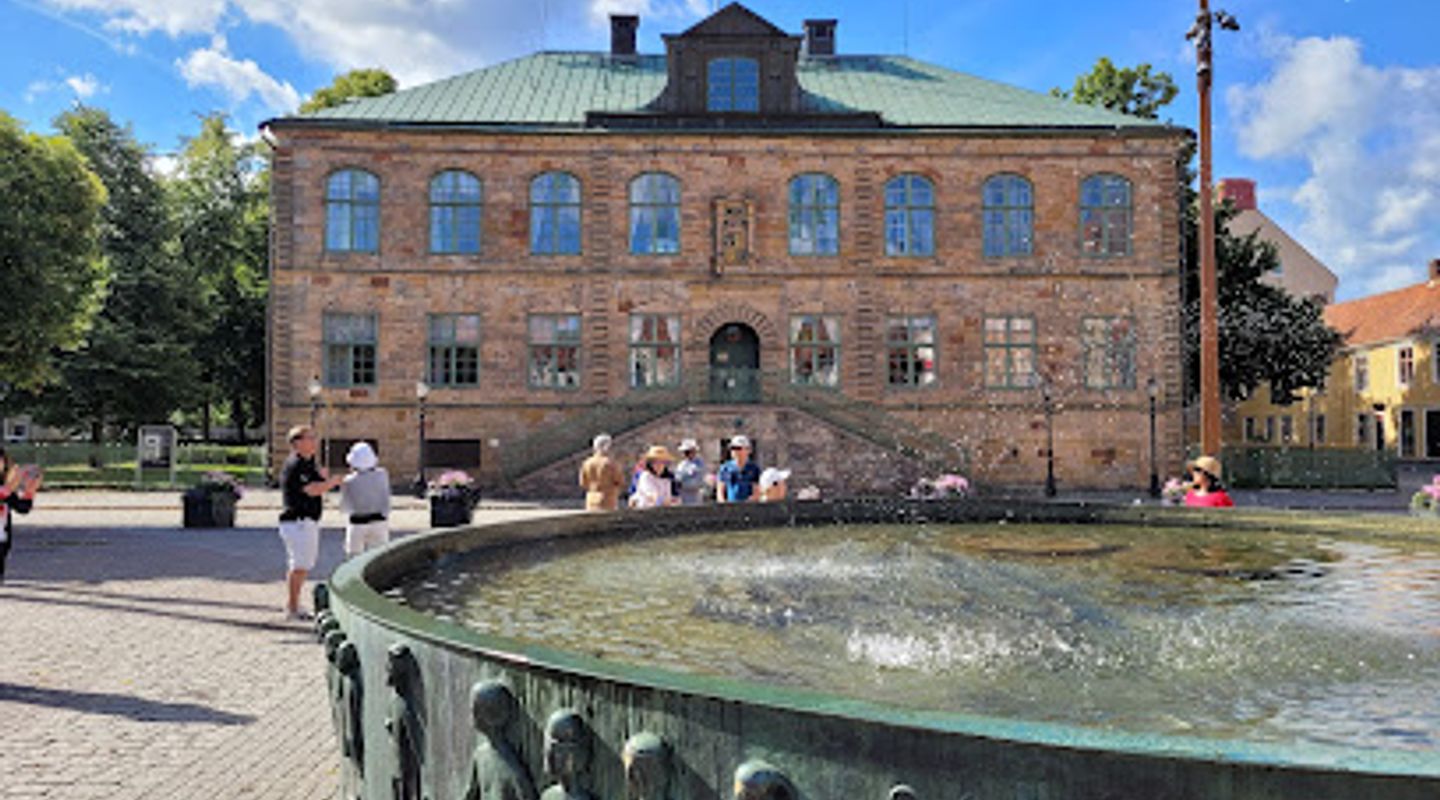
Krönikebrunnen is a striking bronze fountain at the heart of Hovrättstorget in Jönköping, Sweden. Crafted by sculptor John Lundqvist in 1958, it features motifs alluding to the city's founder, King Magnus Ladulås, and stands as a symbol of Jönköping's rich history amid historic buildings like Göta Hovrätt and Gamla Rådhuset. This public artwork invites quiet contemplation in a bustling urban square surrounded by the oldest standing architecture in the city.
On-site amenities
 Seating areas
 Trash bins
 Drink options
 Food options
Opening hours
- Every dayOpen 24 hours
Opening hours as listed on the venue’s Google Business Profile. Hours can change for services and special events, so check with the venue before you go.
- Address
- Hovrättstorget 4, 553 21 Jönköping
- Website
Getting there
Walking
Bus
Bicycle
Taxi
Discover more about Krönikebrunnen
Origins in Jönköping's Rebirth
Hovrättstorget emerged after the city's western center burned in 1612 ahead of a Danish attack, prompting reconstruction east of the Hamnkanal. The square became the new marketplace along Östra Storgatan, lined with stone paving and prestige buildings. In the 1620s, a wooden town hall rose here, followed by Göta Hovrätt in the 1630s, constructed from Trånghallasandsten in French classicism style, likely designed by Simon de la Vallée and completed by the 1660s.
The Fountain's Creation and Symbolism
Installed in 1958 after the square's redesign from a 1906 park back to mostly stone paving, Krönikebrunnen occupies the center. Sculptor John Lundqvist cast this bronze basin with reliefs evoking Jönköping's founding by Magnus Ladulås in the late 13th century. Originally, ideas for matchstick-themed motifs reflected the city's industrial past, but the final design honors medieval roots, blending artistry with local lore in a timeless public feature.
Architectural Surroundings
Göta Hovrätt, Jönköping's oldest surviving building and a state-protected monument, anchors the square's southern edge. Built from 1639 under master mason Heinrich Gottwald, its facade boasts carved sandstone, a grand portico, double stone stairs, and the Swedish coat of arms with Queen Christina's initials above the entrance. The structure, initially planned for three stories but scaled to two for cost, served as Sweden's fourth high court until 2003.Adjacent Gamla Rådhuset, erected 1696-1699 after a fire, showcases Dutch classicism by Erik Dahlbergh. The eastern side once held a wooden theater from 1825, replaced in 1905 by Jönköpings Teater and Grand Hotel.
Evolution Through Centuries
The square's southeastern corner connected to Tyska maden and a 1620s canal to Breda hamnen, filled by the 1920s to form today's Östra torget. It hosted markets, trials, and gatherings, evolving from open trade hub to modern paved plaza. Paving issues and central fountain placement have sparked accessibility discussions, yet it remains a vibrant knot in Öster neighborhood, near shops and eateries.
Cultural Heart of Öster
Today, Hovrättstorget pulses with Jönköping's heritage, its cobblestones echoing footsteps from traders to judges. The fountain's water play contrasts sturdy sandstone facades, offering a serene focal point amid urban flow. As part of the city's oldest district, it embodies resilience—from medieval foundations to 20th-century renewal—inviting pauses to trace stories etched in stone and bronze.
Evendo Review Centre
 Google
Guest reviews
Best time to go
Quietest: Jan, Feb & Nov · before 8am or from 11pm
Busy times are Evendo estimates for a typical year, to help you plan. Actual crowds vary with events, school holidays and the weather.
Explore Krönikebrunnen on the map
A handpicked selection of must-see spots near Krönikebrunnen, mapped for you.
Get your free copy of our complete guide to Krönikebrunnen, delivered straight to you.
Everything on this page, from opening hours and how to get there to Eve’s tips and the best time to go, in one PDF you can read offline, print or share.
Already have an account? Sign in
Your Krönikebrunnen guide is ready.
We'll send it to · Not you? Sign out

Getting your guide ready…
We are putting together a fresh copy of the Krönikebrunnen guide. This can take up to a minute.
This can take a few moments. If your browser asks, choose Allow so the download can start. You'll find the guide in your Downloads folder.
Nothing happened? Download it again
Sorry, the guide is taking longer than usual. Please try again in a minute, or get it by email instead.
Other nearby places you may find interesting
The closest places of the same kind, if this one is not quite what you had in mind.
-
-

-
-
-


Swipe for more places
More to explore near Krönikebrunnen

 Best experiences near Krönikebrunnen
 Best hotels near Krönikebrunnen
 Best landmarks near Krönikebrunnen
 Best attractions near Krönikebrunnen
 Best shops near Krönikebrunnen
 Best restaurants near Krönikebrunnen
 Best bars near Krönikebrunnen
Do you manage this location?
Take control to get all the benefits, like improved information, better appearance, and stronger visibility across AI-powered discovery.
Explore more

Explore more of Jönköping
Discover Jönköping, a captivating blend of natural beauty, historical charm, and modern attractions on the shores of Lake Vättern in Southern Sweden.
Explore Jönköping
Explore more of Sweden
Discover Sweden's breathtaking landscapes, vibrant cities, and rich cultural heritage. From the Northern Lights to historic castles, experience the essence of Scandinavia.
Explore Sweden
