

Rumlaborg, Jönköping Travel Guide
Free Guide: Medieval ruins on a prehistoric hillfort, guarding Vättern's shores through centuries of sieges and transformation into Huskvarna's scenic overlook.


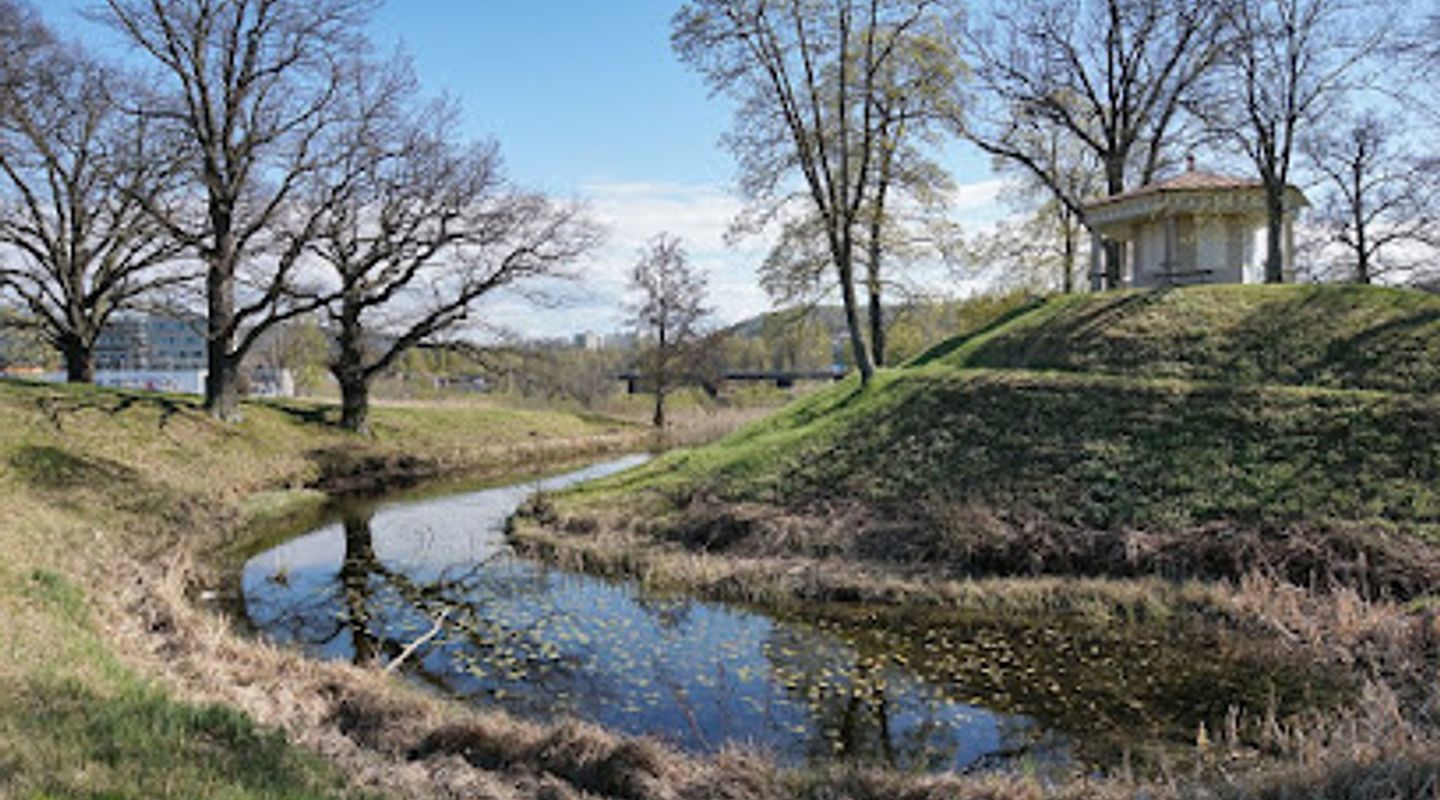
A brief summary of Rumlaborg
Medieval ruins on a prehistoric hillfort, guarding Vättern's shores through centuries of sieges and transformation into Huskvarna's scenic overlook.
Rumlaborg is a medieval castle ruin perched on Vista Kulle in Huskvarna, offering a glimpse into Sweden's turbulent history amid an urban setting beside Huskvarnaån. Originally a prehistoric hillfort from around the 5th century, it evolved into a strategic stronghold during the Middle Ages, witnessing sieges, uprisings, and reconstructions until its demolition in the 1850s for a public park. Free to visit anytime, the site features impressive remnants of walls and provides panoramic views over Vättern lake and Jönköping.
On-site amenities
 Seating areas
 Trash bins
 Information boards
 Drink options
Opening hours
- Every dayOpen 24 hours
Opening hours as listed on the venue’s Google Business Profile. Hours can change for services and special events, so check with the venue before you go.
- Address
- 561 32 Huskvarna
- Website
Getting there
Bus
Car
Walking
Bicycle
Discover more about Rumlaborg
Prehistoric Origins on Vista Kulle
High atop Vista Kulle, just north of Huskvarna, Rumlaborg began as one of Jönköping County's four ancient hillforts, likely dating to the Migration Period around the 5th century. These fornborgar were massive defensive structures built by early inhabitants to protect against invaders, utilizing the hill's steep slopes and natural barriers. Though little remains of the original prehistoric walls—stones were repurposed over centuries—the site's elevated position still evokes the strategic genius of its builders, who commanded sweeping views of approaching threats from land and Vättern lake.Excavations reveal layers of human activity spanning over a millennium, blending Iron Age defenses with later medieval fortifications. The hill's isolation provided a formidable natural fortress, its rocky outcrops and dense forests shielding inhabitants from surprise attacks.
Medieval Stronghold and Royal Conflicts
By 1366, Albrecht of Mecklenburg transformed the site into a proper stone castle, renaming it Rumlaborg after nearby Humblarum village and establishing it as the seat of Rumlaborg County. This marked its shift from tribal refuge to a key royal bastion guarding vital trade routes along Vättern's shores. The castle's towers and thick walls withstood numerous assaults, symbolizing power in Småland's volatile landscape.In 1389, Albrecht rallied troops here before marching to relieve Axevalla hus, while in 1529, local burghers from Jönköping failed to breach its defenses during the Smålänning uprising against Gustav Vasa. These events underscore Rumlaborg's role in Sweden's power struggles, from Germanic dukes to the rise of the Vasa dynasty.
Fortifications and Defensive Evolution
Rumlaborg expanded into a larger defense complex with auxiliary forts like Garpe Skans on Husqvarna lands and Warpa Skans near the Gränna road, protecting lake-bound trade paths. In 1611, amid Danish threats, engineers rebuilt sections for 'open defense,' adapting medieval walls to early modern warfare with enhanced ramparts and artillery positions.The northern wall segment survives most intact, its massive stones a testament to 14th-century masonry. Surrounded by Huskvarnaån's rushing waters, the ruin's layout reveals clever use of terrain: sheer drops on three sides, with the river forming a natural moat.
Decline into Urban Parkland
By the 1850s, military relevance faded, and the site was leveled to create a landscaped park for Huskvarna residents, complete with a lusthus gazebo. Stones tumbled down the slopes fueled local construction, erasing much of the borg but preserving its hilltop prominence amid growing industry.Today, integrated into Huskvarna's urban fabric, the ruins blend seamlessly with paths, greenery, and modern life, theån's murmur below contrasting the silent stones above. Information boards recount its saga, inviting reflection on layers of conquest and abandonment.
Enduring Legacy Over Vättern
Rumlaborg's vantage yields unmatched vistas: south across Vättern to Huskvarna and Jönköping's skyline, with Nydala kloster faintly visible. This perch not only defended but inspired, linking prehistoric sentinels to medieval lords overlooking Småland's heartland.The site's quiet power lies in its palimpsest quality—each era overwriting the last, yet the hill endures as a silent chronicle of resilience.
Evendo Review Centre
 Google
Guest reviews
Best time to go
Quietest: Jan, Feb & Dec · before 8am or from 10pm
Busy times are Evendo estimates for a typical year, to help you plan. Actual crowds vary with events, school holidays and the weather.
Explore Rumlaborg on the map
A handpicked selection of must-see spots near Rumlaborg, mapped for you.
Get your free copy of our complete guide to Rumlaborg, delivered straight to you.
Everything on this page, from opening hours and how to get there to Eve’s tips and the best time to go, in one PDF you can read offline, print or share.
Already have an account? Sign in
Your Rumlaborg guide is ready.
We'll send it to · Not you? Sign out

Getting your guide ready…
We are putting together a fresh copy of the Rumlaborg guide. This can take up to a minute.
This can take a few moments. If your browser asks, choose Allow so the download can start. You'll find the guide in your Downloads folder.
Nothing happened? Download it again
Sorry, the guide is taking longer than usual. Please try again in a minute, or get it by email instead.
Other nearby places you may find interesting
The closest places of the same kind, if this one is not quite what you had in mind.
-
-
-

-
-


Swipe for more places
More to explore near Rumlaborg

 Best experiences near Rumlaborg
 Best hotels near Rumlaborg
 Best landmarks near Rumlaborg
 Best attractions near Rumlaborg
 Best shops near Rumlaborg
 Best restaurants near Rumlaborg
 Best bars near Rumlaborg
Do you manage this location?
Take control to get all the benefits, like improved information, better appearance, and stronger visibility across AI-powered discovery.
Explore more

Explore more of Jönköping
Discover Jönköping, a captivating blend of natural beauty, historical charm, and modern attractions on the shores of Lake Vättern in Southern Sweden.
Explore Jönköping
Explore more of Sweden
Discover Sweden's breathtaking landscapes, vibrant cities, and rich cultural heritage. From the Northern Lights to historic castles, experience the essence of Scandinavia.
Explore Sweden
