Folkungabrunnen, Linköping Travel Guide
Free Guide: Carl Milles' bronze masterpiece on Linköping's Stora Torget, immortalizing Folke Filbyter and Östergötland's storied past in a central urban fountain.


A brief summary of Folkungabrunnen
Carl Milles' bronze masterpiece on Linköping's Stora Torget, immortalizing Folke Filbyter and Östergötland's storied past in a central urban fountain.
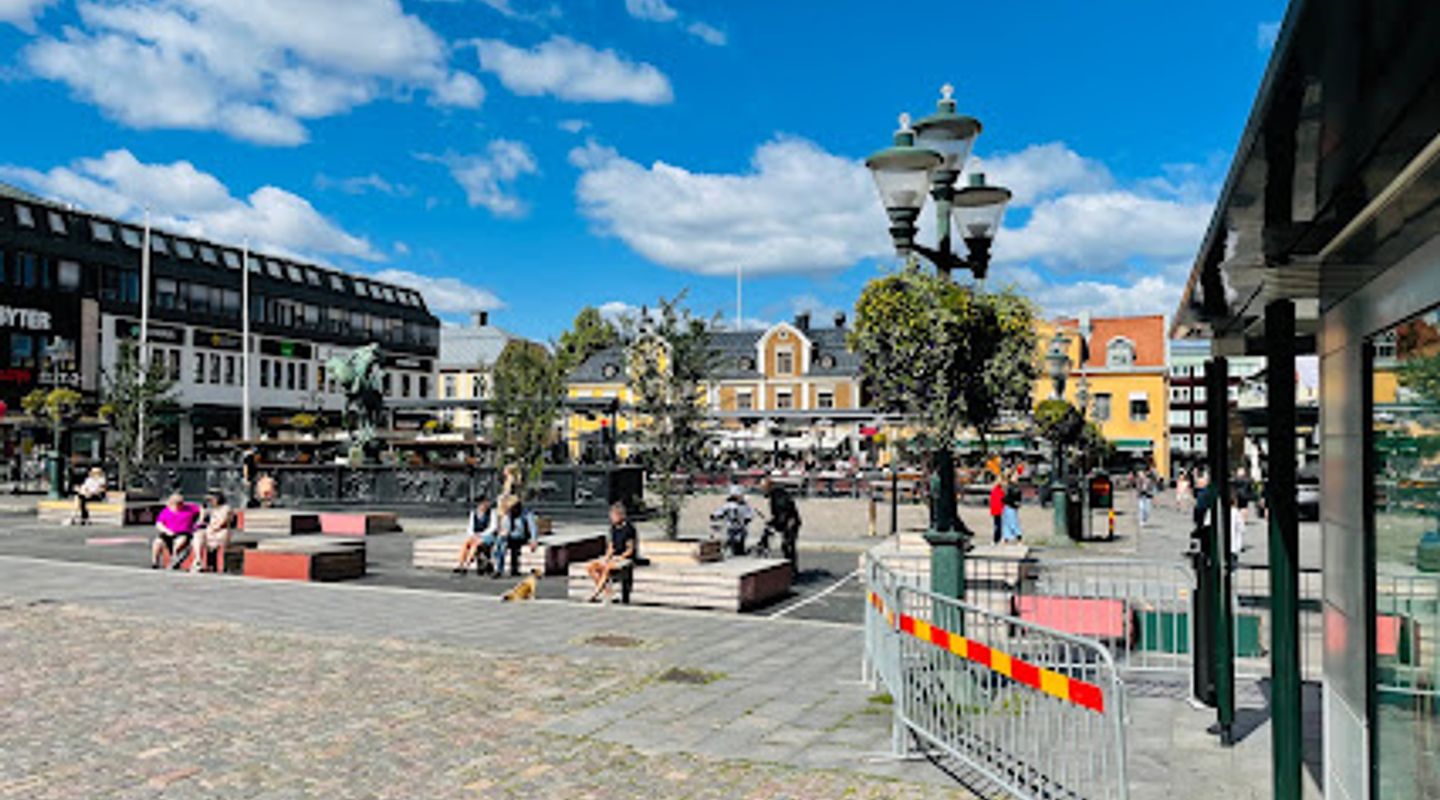
Folkungabrunnen is a striking bronze fountain sculpture by Carl Milles on Stora Torget in Linköping, depicting Folke Filbyter crossing a stream. Created between 1924 and 1927, it draws from Verner von Heidenstam's novel Folkungaträdet, celebrating the medieval Folkunga dynasty with intricate reliefs of Östergötland's history. As the central landmark of the main square, it serves as a gathering point amid bustling urban life, blending art, history, and public space in this Swedish city.
On-site amenities
 Restrooms
 Drink options
 Food options
 Seating areas
 Trash bins
 Information boards
- Address
- Sankt Larsgatan 39, 582 24 Linköping
Getting there
Walking
Bus
Bicycle
Taxi
Discover more about Folkungabrunnen
Folke Filbyter's Legendary Ride
At the heart of Folkungabrunnen stands the commanding bronze figure of Folke Filbyter, the mythical progenitor of the Folkunga dynasty, also known as the House of Bjelbo. Mounted on horseback, he forges across a turbulent stream, symbolizing strength and origins in Swedish medieval lore. Sculptor Carl Milles captured this dynamic moment with patinated bronze that gleams under Linköping's varying skies, evoking the raw power of ancient sagas amid modern surroundings.The fountain's basin, crafted from dark diabase granite from Glimåkra and flanked by gray Stockholm granite, cradles this central group. Water once cascaded around the rider, though today it stands as a monumental sculpture, its form enduring as a testament to early 20th-century artistry.
Carl Milles' Artistic Vision
Commissioned by Linköping city and funded through public donations and foundations, the work was unveiled on December 12, 1927. Milles, one of Sweden's most celebrated sculptors, drew direct inspiration from Verner von Heidenstam's 1905 novel Folkungaträdet, weaving literary romance into public stone and metal. The reliefs encircling the basin depict pivotal events and figures from Östergötland's history, turning the fountain into a visual chronicle of regional pride.Milles' design radiates outward, mirroring how Stora Torget anchors Linköping's layout. A replica of the central figure and reliefs resides at Millesgården museum on Lidingö island, while the original represented Sweden at the 1939 New York World's Fair, underscoring its national stature.
Stora Torget's Vibrant Heart
Positioned along Storgatan in the city's main square, Folkungabrunnen acts as a natural orienting point. Stora Torget, shaped in the 18th century, buzzes with markets, events, and daily life, its cobblestones and surrounding buildings framing the sculpture perfectly. The fountain's placement invites contemplation, whether during quiet mornings or lively evenings when lights illuminate its contours.Nearby historic sites like Linköping Cathedral and the castle enhance the area's layered heritage, making the square a nexus for exploration without overshadowing the fountain's prominence.
Enduring Cultural Symbol
Beyond aesthetics, Folkungabrunnen embodies Linköping's fusion of myth, history, and civic identity. Folke Filbyter, rooted in legend as the dynasty's founder, links the sculpture to Sweden's royal past, when the Folkungar rose to power in the 13th century. Milles' interpretation bridges folklore and fact, inviting passersby to ponder the region's medieval legacy.The work's survival through decades of urban evolution highlights its resilience, much like the rider it portrays. It stands not just as art, but as a living emblem of Östergötland's narrative, etched in granite and bronze for generations.
Evendo Review Centre
 Google
Guest reviews
Best time to go
Quietest: Jan, Feb & Dec · before 8am or from 10pm
Busy times are Evendo estimates for a typical year, to help you plan. Actual crowds vary with events, school holidays and the weather.
Explore Folkungabrunnen on the map
A handpicked selection of must-see spots near Folkungabrunnen, mapped for you.
Get your free copy of our complete guide to Folkungabrunnen, delivered straight to you.
Everything on this page, from opening hours and how to get there to Eve’s tips and the best time to go, in one PDF you can read offline, print or share.
Already have an account? Sign in
Your Folkungabrunnen guide is ready.
We'll send it to · Not you? Sign out

Getting your guide ready…
We are putting together a fresh copy of the Folkungabrunnen guide. This can take up to a minute.
This can take a few moments. If your browser asks, choose Allow so the download can start. You'll find the guide in your Downloads folder.
Nothing happened? Download it again
Sorry, the guide is taking longer than usual. Please try again in a minute, or get it by email instead.
Other nearby places you may find interesting
The closest places of the same kind, if this one is not quite what you had in mind.
-
-
-
-
-


Swipe for more places
More to explore near Folkungabrunnen

 Best experiences near Folkungabrunnen
 Best hotels near Folkungabrunnen
 Best landmarks near Folkungabrunnen
 Best attractions near Folkungabrunnen
 Best shops near Folkungabrunnen
 Best restaurants near Folkungabrunnen
 Best bars near Folkungabrunnen
Do you manage this location?
Take control to get all the benefits, like improved information, better appearance, and stronger visibility across AI-powered discovery.
Explore more

Explore more of Linköping
Discover Linköping: A vibrant fusion of medieval charm, innovative spirit, and natural beauty in the heart of Sweden.
Explore Linköping
Explore more of Sweden
Discover Sweden's breathtaking landscapes, vibrant cities, and rich cultural heritage. From the Northern Lights to historic castles, experience the essence of Scandinavia.
Explore Sweden