

Runestone Travel Guide
Free Guide: A compact 11th‑century Uppland runestone embedded in a Gamla stan wall — a tactile shard of Viking‑Age memory at street level.


A brief summary of Runestone
A compact 11th‑century Uppland runestone embedded in a Gamla stan wall — a tactile shard of Viking‑Age memory at street level.
A small 11th‑century Uppland runestone set into a building wall at the corner of Prästgatan and Kåkbrinken in Gamla stan, Stockholm. Richly incised with a serpentine animal and runic text commemorating a son, the stone is an intimate, tangible fragment of Viking‑Age Scandinavia that sits at street level amid medieval alleys and baroque facades, easy to spot for curious walkers and history lovers.
On-site amenities
 Seating areas
 Information boards
 Trash bins
Opening hours
- Every dayOpen 24 hours
Opening hours as listed on the venue’s Google Business Profile. Hours can change for services and special events, so check with the venue before you go.
- Address
- Prästgatan 29, 111 29 Stockholm
- Website
Getting there
Public tram and walking
Taxi or rideshare
Guided walking tour
Discover more about Runestone
An ancient memorial tucked into the old town
The runestone known in catalogues as Uppland Runic Inscription U 53 is a compact carved slab embedded in the base of a building at the corner of Prästgatan and Kåkbrinken in Gamla stan. It dates stylistically to the later Viking Age (roughly the 11th century) and belongs to the Uppland group of inscriptions, the rich corpus of memorial stones once raised across the region. The stone’s small scale and its placement in the urban fabric make it unusual: instead of standing free in a field it has become part of the city’s walls, a surviving fragment of a far older landscape now woven into Stockholm’s medieval streets.
Design, runes and worn ornament
Carved in a serpentine, interlacing motif characteristic of Urnes‑style ornament, the stone carries a coiled animal whose body contains fragments of the runic text. The inscription is laconic: it names Torsten (Thorsteinn) and Frögunn (a woman’s name with pre‑Christian roots) and records that they had the stone raised after their son. Time, reuse and weather have left the glyphs and the animal ornament worn and partially damaged, but the surviving strokes still convey the original artisan’s intent — a mixture of formal mastery and the practical limitations of cutting into hard stone.
From ritual stone to reused building material
Runestones were originally freestanding memorials or markers; many were later reused as construction material when their original context was forgotten. U 53’s presence in a house foundation reflects this process of reuse. Records and antiquarian transcriptions date back several centuries, and the stone’s incorporation into the built environment highlights how older objects were repurposed during urban growth. The exact original setting of the stone is unknown, but its Uppland stylistic links suggest it was carved somewhere north of present‑day Stockholm before becoming part of the city’s fabric.
Scale, texture and immediate atmosphere
You will notice U 53 more by doing a short, focused look than by scanning for a landmark: it’s roughly half a metre high and set low in the wall, so viewing is an intimate experience. The carved grooves feel shallow where the stone is weathered and crisp in protected areas; the grey granite carries centuries of dust and occasional traces of lime mortar where it was reset. The surrounding streets are narrow and cobbled, with the vertical rhythm of façades and the close murmur of pedestrian traffic reinforcing the sense that this runic relic belongs to everyday city life rather than a museum case.
Historical threads that connect to the present
The names and phrasing preserved on the stone are typical of Viking‑Age memorial formulae — short commemorations that announce who raised the stone and in whose memory. The presence of a woman’s name that preserves older, non‑Christian elements alongside a later carved cross on some comparable stones hints at the period of cultural layering when pagan and Christian practices coexisted. As a material object U 53 links Stockholm’s pavement to a wider Scandinavian network of stones that recorded family, status and memory during a time of conversion and social change.
What to look for and why it matters
When you examine the runestone, focus on the carved band that traces the animal form: the inscription is set into that loop and reads as a carved ribbon rather than a straight line of text. Look for differences in cutting depth that suggest more than one hand may have worked on the stone, and notice how its modest proportions force a compact composition. The stone’s modesty is part of its significance: it is not monumental, but it is genuine — a surviving, readable trace of personal grief, craftsmanship and cultural continuity in the heart of Stockholm.
Evendo Review Centre
 Google
Guest reviews
Best time to go
Quietest: Jan, Feb & Mar · before 7am or from 9pm
Busy times are Evendo estimates for a typical year, to help you plan. Actual crowds vary with events, school holidays and the weather.
Explore Runestone on the map
A handpicked selection of must-see spots near Runestone, mapped for you.
Get your free copy of our complete guide to Runestone, delivered straight to you.
Everything on this page, from opening hours and how to get there to Eve’s tips and the best time to go, in one PDF you can read offline, print or share.
Already have an account? Sign in
Your Runestone guide is ready.
We'll send it to · Not you? Sign out

Getting your guide ready…
We are putting together a fresh copy of the Runestone guide. This can take up to a minute.
This can take a few moments. If your browser asks, choose Allow so the download can start. You'll find the guide in your Downloads folder.
Nothing happened? Download it again
Sorry, the guide is taking longer than usual. Please try again in a minute, or get it by email instead.
Other nearby places you may find interesting
The closest places of the same kind, if this one is not quite what you had in mind.
-
-
-
-

-


Swipe for more places
More to explore near Runestone

 Best experiences near Runestone
 Best hotels near Runestone
 Best landmarks near Runestone
 Best attractions near Runestone
 Best shops near Runestone
 Best restaurants near Runestone
 Best bars near Runestone
Do you manage this location?
Take control to get all the benefits, like improved information, better appearance, and stronger visibility across AI-powered discovery.
Explore more
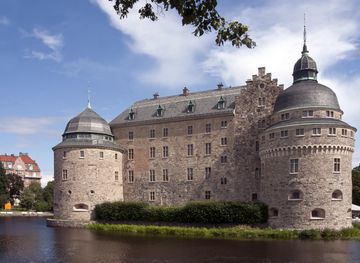
Explore more of Närke
Discover Närke, Sweden's heartland, where natural beauty meets rich history and vibrant culture, offering a tranquil yet enriching experience for every traveler.
Explore Närke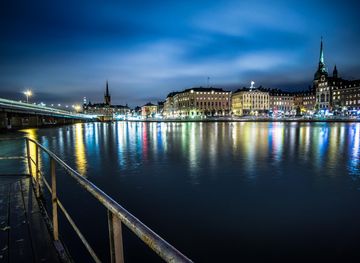
Explore more of Sweden
Discover Sweden's breathtaking landscapes, vibrant cities, and rich cultural heritage. From the Northern Lights to historic castles, experience the essence of Scandinavia.
Explore Sweden
