Göta Virke Travel Guide
Free Guide: A 3.5 km Viking-age earthwork threading lakes, pasture and woodland — tangible boundary, subtle in the landscape.


A brief summary of Göta Virke
A 3.5 km Viking-age earthwork threading lakes, pasture and woodland — tangible boundary, subtle in the landscape.
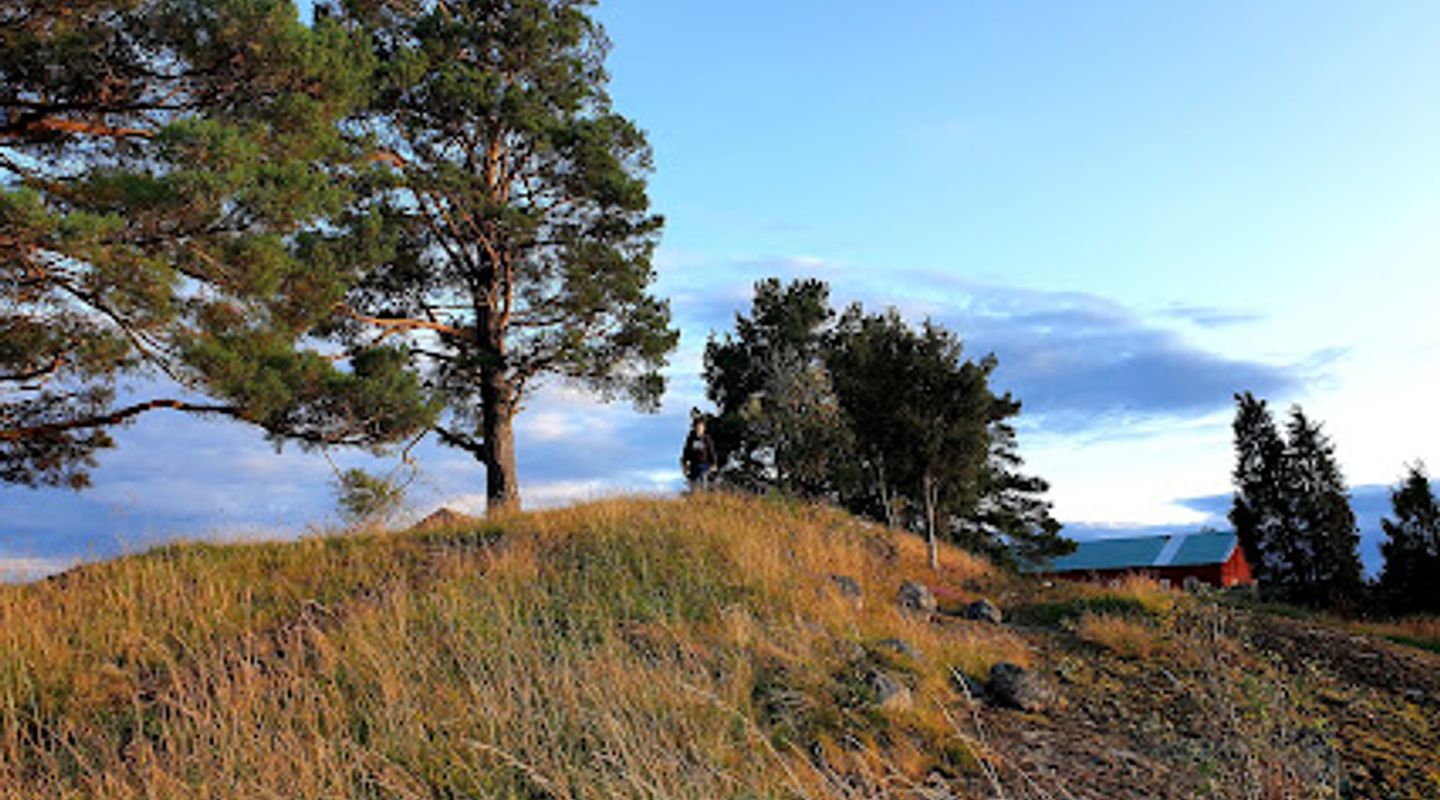
Götavirke is the visible remains of a roughly 3.5 km long Viking-age defensive earthen bank and ditch that runs between Asplången and Lillsjön near Västra Husby in Östergötland. Winding through woodland and pasture, the embankment survives as a sequence of turf-covered banks and gaps that tell of early medieval frontier construction, with quiet rural atmosphere and interpretive signage at key points.
On-site amenities
 Information boards
 Seating areas
- Address
- CENTRALVÄGEN 5, 605 96 Norrköping
- Website
Getting there
Regional bus + short walk
Car access with short field approach
Bicycle plus trail approach
Discover more about Göta Virke
What Götavirke is and why it matters
Götavirke is the surviving trace of a continuous defensive earthwork built during the Viking Age, stretching roughly 3.5 kilometres in a north–south alignment between the small lakes and wetlands near Västra Husby and Hylinge in Östergötland. The feature comprises banks and ditches that once formed a linear fortification, intended to control movement across a landscape of arable land, forest and water. Its scale and continuity make it one of the clearer examples of territorial boundaries and fieldworks from the early medieval period in this region.
Landscape and visible remains you’ll see
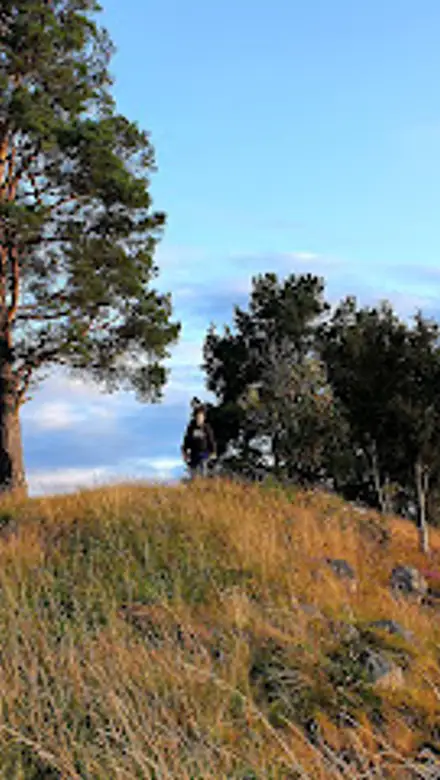
On the ground the structure appears as raised, turf-covered banks with intermittent breaks where later cultivation, drainage or erosion have removed sections. In places the bank rises conspicuously from pasture or skirts small copses; elsewhere it is a low, grass-lined ridge that you can follow with your eyes rather than by foot alone. The setting alternates between open farmland, hedgerow, and mixed woodland, and the route is framed by small lakes and wet ground that would once have increased the defensive value of the line.
Archaeological and historical snapshot
Excavations, surveys and historical interpretation place the construction of the earthwork in the early medieval centuries, commonly associated with the Viking Age and the period of regional power consolidation. Such linear earthworks were practical tools of territorial control — to channel traffic, mark boundaries, and create defensible lines — and Götavirke is read as part of that wider pattern of landscape shaping in Scandinavia. Fragments of contemporary finds in the wider area help anchor the bank in a cultural and economic landscape of farms, trackways and small settlements.
How the site feels and what to look for
The atmosphere is quietly pastoral: birdsong, distant farm machinery, and the soft rustle of grass over the bank. Look for subtle changes in ground level, the curving silhouette of the embankment where it rises above field drains, and the occasional information panel that explains the line’s orientation and purpose. In wetter sections the ditch sides can appear overgrown; in drier, grazed pasture the bank is more distinct. The route’s interruptions are part of its story — later land use has laced new patterns through the original defensive geometry.
Conservation and present-day context
Götavirke today is protected as a cultural environment and managed with an eye to conserving the archaeological profile while allowing agricultural use of surrounding land. Management aims to keep the banks visible without heavy-handed engineering; grazing and low-impact upkeep are typical. The site’s fragments are best appreciated as a linear sequence rather than a single, continuous monument — each surviving section offers a small, readable chapter in a long human-landscape relationship.
Seasonal character and visiting notes
The monument reads differently through the year: spring-green fields and early leafing make the bank subtle but verdant; high summer enhances contrasts between grass and shadow; autumn mists and bare-branch silhouettes emphasise its ridgeline; winter’s low light throws long shadows across the embankment. Modest signage marks key points but the experience rewards a slow eye and a willingness to trace an ancient line through ordinary countryside.
Evendo Review Centre
 Google
Guest reviews
Best time to go
Quietest: Jan, Feb & Dec · before 6am or at 9pm
Busy times are Evendo estimates for a typical year, to help you plan. Actual crowds vary with events, school holidays and the weather.
Explore Göta Virke on the map
A handpicked selection of must-see spots near Göta Virke, mapped for you.
Get your free copy of our complete guide to Göta Virke, delivered straight to you.
Everything on this page, from opening hours and how to get there to Eve’s tips and the best time to go, in one PDF you can read offline, print or share.
Already have an account? Sign in
Your Göta Virke guide is ready.
We'll send it to · Not you? Sign out

Getting your guide ready…
We are putting together a fresh copy of the Göta Virke guide. This can take up to a minute.
This can take a few moments. If your browser asks, choose Allow so the download can start. You'll find the guide in your Downloads folder.
Nothing happened? Download it again
Sorry, the guide is taking longer than usual. Please try again in a minute, or get it by email instead.
Other nearby places you may find interesting
The closest places of the same kind, if this one is not quite what you had in mind.
-
-
-
-
-


Swipe for more places
More to explore near Göta Virke

 Best experiences near Göta Virke

 Best hotels near Göta Virke

 Best landmarks near Göta Virke

 Best attractions near Göta Virke

 Best shops near Göta Virke

 Best restaurants near Göta Virke

 Best bars near Göta Virke
Do you manage this location?
Take control to get all the benefits, like improved information, better appearance, and stronger visibility across AI-powered discovery.
Explore more

Explore more of Östergötland
Discover Östergötland: A perfect blend of history, nature, and culture in southern Sweden, offering charming towns, lush landscapes, and a rich cultural heritage.
Explore Östergötland
Explore more of Sweden
Discover Sweden's breathtaking landscapes, vibrant cities, and rich cultural heritage. From the Northern Lights to historic castles, experience the essence of Scandinavia.
Explore Sweden