Håga mound Travel Guide
Free Guide: Stand atop Scandinavia's richest Bronze Age tumulus, where gold treasures and ancient rituals whisper from 3,000-year-old earth in Uppsala's serene Hagadalen.


A brief summary of Håga mound
Stand atop Scandinavia's richest Bronze Age tumulus, where gold treasures and ancient rituals whisper from 3,000-year-old earth in Uppsala's serene Hagadalen.
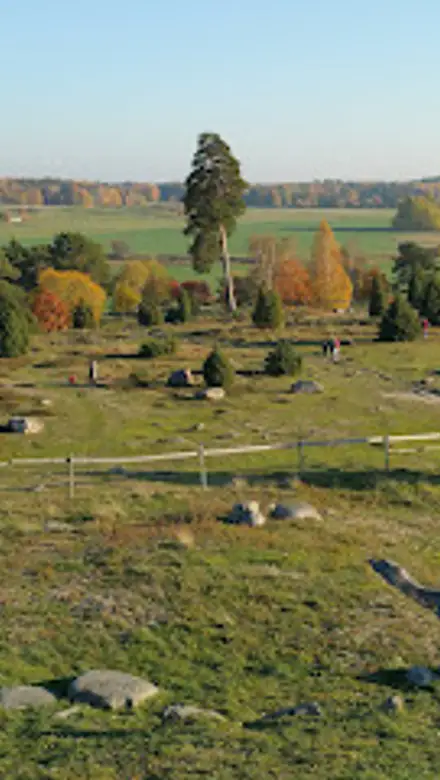
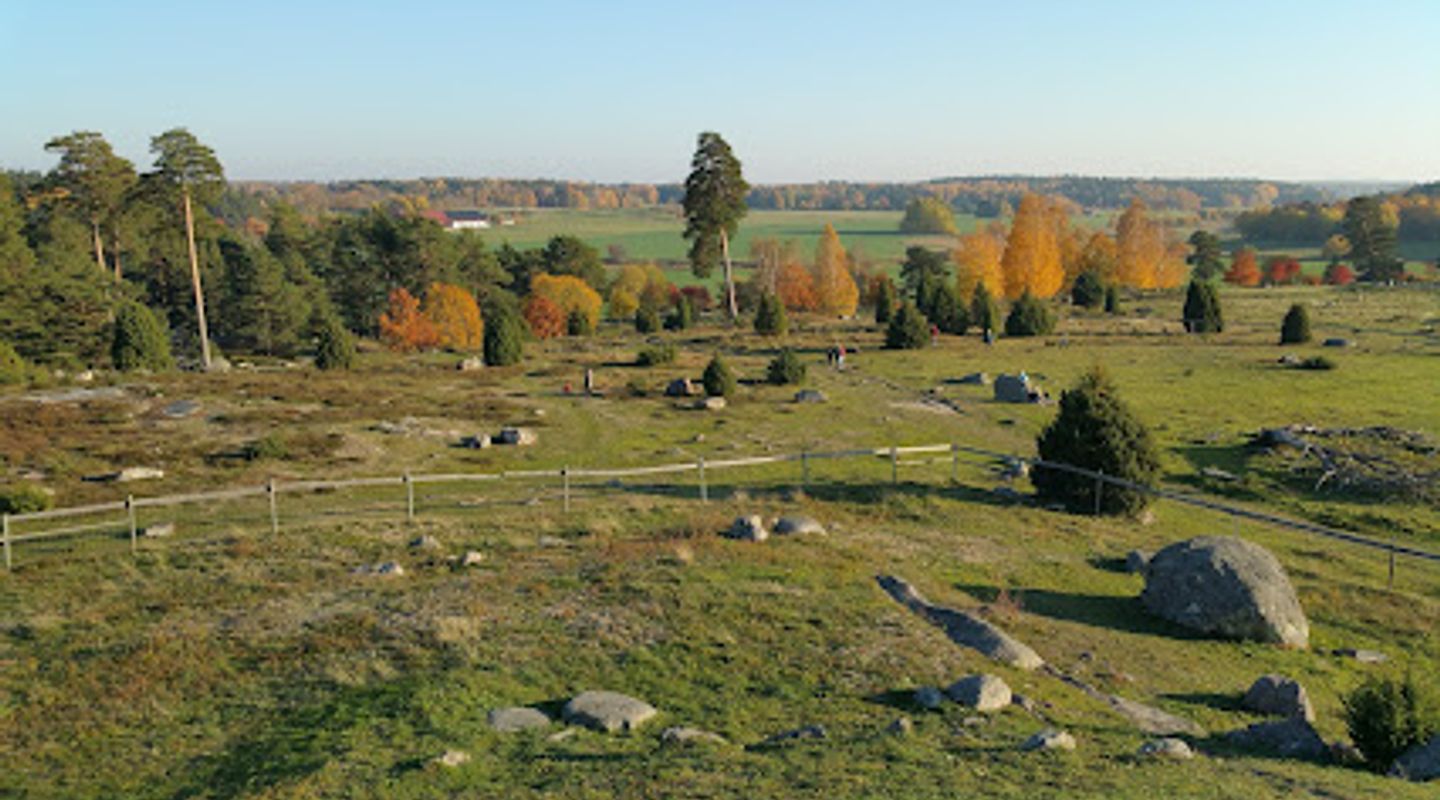
The Håga Mound, also known as King Björn's Mound, stands as one of Scandinavia's most significant Bronze Age burial sites. This imposing 7-meter-high tumulus, dating to around 1000 BCE, rises dramatically in Hagadalen nature reserve near Uppsala, overlooking what was once a sea inlet. Excavated in 1902–1903, it revealed an oak coffin with cremated remains of a chieftain, accompanied by gold-gilded treasures including a sword, brooches, razors, and buttons—making it the Nordic region's richest Bronze Age grave. Surrounded by ancient house foundations, cultic enclosures, and trekking paths through lush woodland, the site blends profound archaeological heritage with serene natural beauty, offering a tangible link to prehistoric rituals and power.
On-site amenities
 Drinking water
 Trash bins
 Information boards
 Seating areas
 Picnic areas
Opening hours
- Every dayOpen 24 hours
Opening hours as listed on the venue’s Google Business Profile. Hours can change for services and special events, so check with the venue before you go.
- Address
- Hågavägen 51, 752 63 Uppsala
- Phone
- Website
Getting there
Bus
Bicycle
Walking
Car
Discover more about Håga mound
Imposing Bronze Age Monument
The Håga Mound dominates the landscape of Hagadalen, a nature reserve just west of Uppsala. Measuring 45 meters across and 7 meters high, this tumulus was erected around 1000 BCE on the shore of a now-vanished sea inlet, shaped by post-glacial land uplift. Layers of turf cover a central cairn, beneath which lies a wooden chamber housing a hollow oak coffin. The cremated remains inside belonged to a short man, likely a regional chieftain or petty king, interred with extraordinary wealth that underscores his status.
Treasures of a Forgotten Elite
Excavations in 1902–1903, led by archaeologist Oscar Almgren alongside the future King Gustaf VI Adolf, uncovered Scandinavia's gold-richest Bronze Age burial. The coffin held unburnt bronze artifacts: a sword with gold-covered hilt, spectacle brooch plated in gold, razors, tweezers, thickly gilded buttons, and pincers—possibly crafted in a Zealand workshop. Evidence of human sacrifice, including marrow-extracted bones, and animal remains like oxen, pigs, and sheep, suggest elaborate funeral rites with pyres evoking epic traditions.
Ritual Heart of Ancient Håga
Beyond the mound, Håga reveals a sprawling Bronze Age complex. Stone house foundations mark a settlement, while two cultic enclosures—symbolic structures without entrances—hint at sacred practices. The larger enclosure aligns with the mound's era, used for centuries in rituals that connected mortals to the divine. These features position Håga as a precursor to nearby Gamla Uppsala, a Viking Age power center, bridging epochs of spiritual continuity in the Mälaren region.
Excavation and Enduring Legacy
The mound's discoveries reshaped understanding of Nordic prehistory, with artifacts now housed in Stockholm's Swedish History Museum's Gold Room. Initially thought Iron Age and linked to 9th-century King Björn—who resided at the Håga estate per medieval sagas—the site proved millennia older. Its name, meaning 'tall mound,' echoes Old Norse roots, while Björn's association reversed: the king drew his title from the mound. Modern studies continue to illuminate its role in sacrificial and burial customs.
Nature's Embrace in Hagadalen
Today, the mound integrates seamlessly into Hagadalen's wooded trails and open meadows, inviting exploration year-round. Winter snow caps its slopes, while summer greenery frames panoramic views toward Uppsala. The site's tranquility belies its ancient drama, where sea breezes once carried pyre smoke, now replaced by birdsong and rustling leaves. As a protected preserve, it preserves both archaeological integrity and ecological harmony.
Evendo Review Centre
 Google
Guest reviews
Best time to go
Quietest: Jan, Feb & Dec · before 7am or from 9pm
Busy times are Evendo estimates for a typical year, to help you plan. Actual crowds vary with events, school holidays and the weather.
Explore Håga mound on the map
A handpicked selection of must-see spots near Håga mound, mapped for you.
Get your free copy of our complete guide to Håga mound, delivered straight to you.
Everything on this page, from opening hours and how to get there to Eve’s tips and the best time to go, in one PDF you can read offline, print or share.
Already have an account? Sign in
Your Håga mound guide is ready.
We'll send it to · Not you? Sign out

Getting your guide ready…
We are putting together a fresh copy of the Håga mound guide. This can take up to a minute.
This can take a few moments. If your browser asks, choose Allow so the download can start. You'll find the guide in your Downloads folder.
Nothing happened? Download it again
Sorry, the guide is taking longer than usual. Please try again in a minute, or get it by email instead.
Other nearby places you may find interesting
The closest places of the same kind, if this one is not quite what you had in mind.
-
-

-
-
-


Swipe for more places
More to explore near Håga mound

 Best experiences near Håga mound
 Best hotels near Håga mound
 Best landmarks near Håga mound
 Best attractions near Håga mound
 Best shops near Håga mound
 Best restaurants near Håga mound
 Best bars near Håga mound
Do you manage this location?
Take control to get all the benefits, like improved information, better appearance, and stronger visibility across AI-powered discovery.
Explore more

Explore more of Småland
Experience the natural beauty, rich history, and cultural charm of Småland, a picturesque region in southern Sweden perfect for outdoor adventures and family-friendly activities.
Explore Småland
Explore more of Sweden
Discover Sweden's breathtaking landscapes, vibrant cities, and rich cultural heritage. From the Northern Lights to historic castles, experience the essence of Scandinavia.
Explore Sweden