Lejonbacken, Stockholm Travel Guide
Free Guide: Ascend the Lion Slope to Stockholm's Royal Palace, where Medici lions guard ramps of granite and marble, unveiling waterfront panoramas and medieval secrets below.


A brief summary of Lejonbacken
Ascend the Lion Slope to Stockholm's Royal Palace, where Medici lions guard ramps of granite and marble, unveiling waterfront panoramas and medieval secrets below.
Lejonbacken, the Lion Slope, graces the northern approach to Stockholm's Royal Palace with its sweeping ramps flanked by majestic Medici lion sculptures. Constructed in the 1780s from diverse Swedish stones, this Baroque masterpiece offers panoramic vistas over the waterfront and city, evoking centuries of royal grandeur. Beneath lies the Tre Kronor Museum, revealing the site's Viking origins and medieval castle ruins. A free, accessible highlight blending history, architecture, and scenic beauty in Gamla Stan.
On-site amenities
 Drinking water
 Seating areas
 Trash bins
 Information boards
- Address
- Södermalm, Stockholm
Getting there
Walking
Public Bus
Metro
Ferry
Discover more about Lejonbacken
Lion Guardians of Royal Majesty
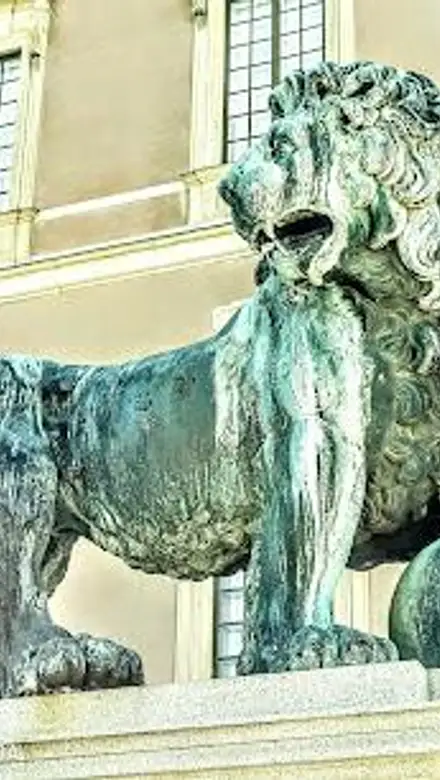
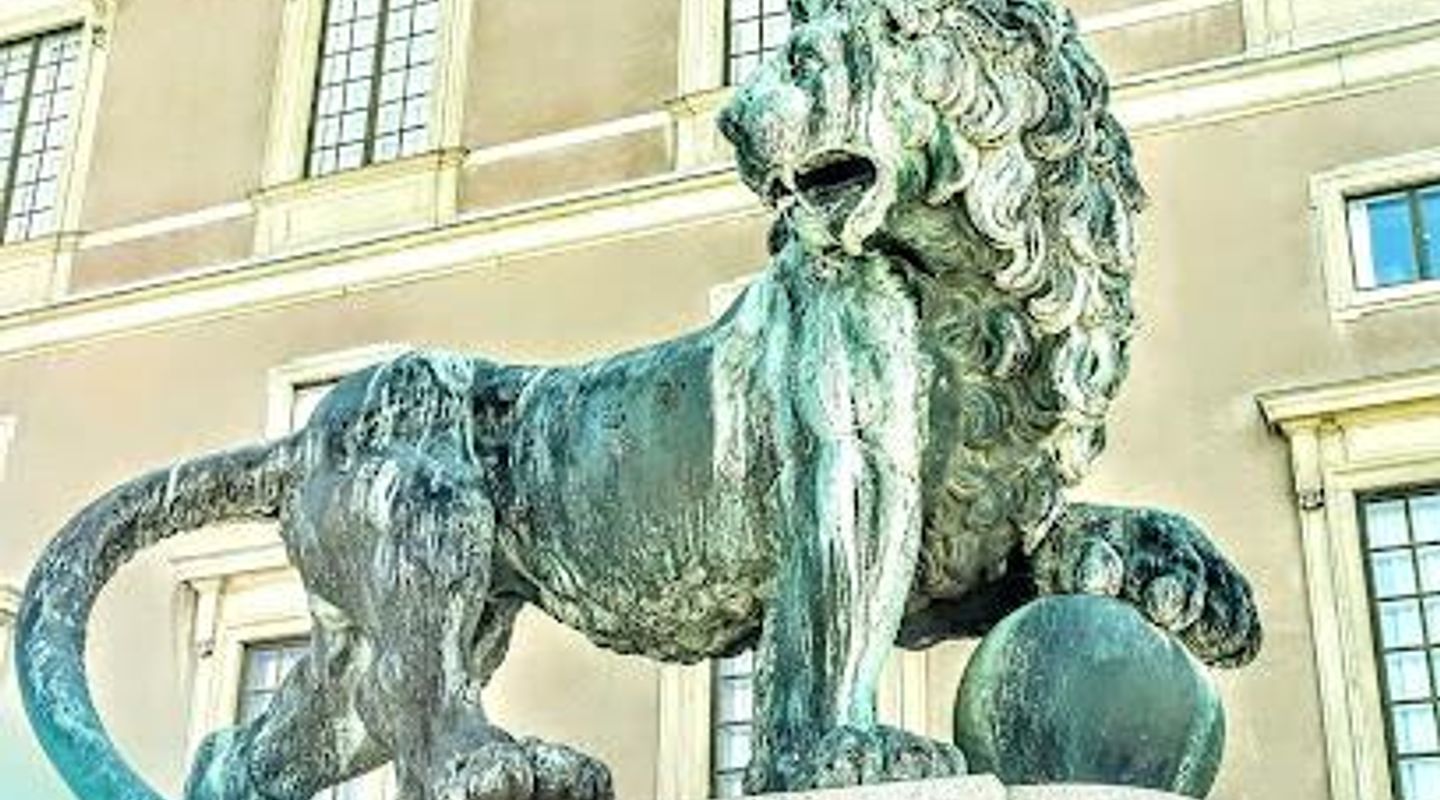
Lejonbacken, known as the Lion Slope, commands the northern facade of Stockholm's Royal Palace with its dramatic system of ramps. Named for the pair of imposing bronze Medici lions perched on stone railings, these sculptures symbolize power and protection. Crafted in the style of Renaissance Italy, the lions survey the approach, their muscular forms hewn from bronze that gleams under the Nordic sun. The ramps ascend gracefully, integrating seamlessly with the palace's Baroque proportions.
Baroque Engineering and Stone Symphony
Built primarily during the 1780s, Lejonbacken's construction drew from earlier 17th-century designs following the devastating 1697 fire that razed the original Tre Kronor castle. Architects envisioned grand ramps to elevate the palace entrance, using a palette of regional rocks: resilient Stockholm granite for bases and railings, carved Gotland sandstone for ornaments, and polished Kolmården marble for balustrades. Towering six-meter columns, cut from single granite blocks, flank the central path, their quadrangular pedestals a nod to 19th-century adaptations.
Panoramic Vistas Across Stockholm's Waters
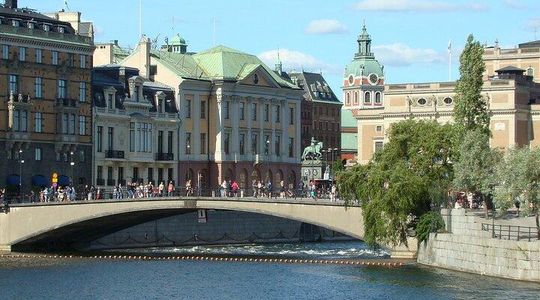
From the elevated platform, gazes sweep over Stallkanalen, the swirling Norrström waters, and bridges like Strömbron and Norrbro. To the west lies Mynttorget, once site of the Royal Mint; eastward, the quay of Slottskajen hums with activity. Historic views capture old Norrbro's wooden spans and royal stables, now evoking a cityscape where water mirrors Gamla Stan's spires against Norrmalm's skyline. Dawn light bathes the lions in gold, while dusk casts long shadows over the canal.
Underneath: Echoes of Tre Kronor
Beneath the ramps hides the Tre Kronor Museum, opened in 1999 within five-meter-thick medieval walls and bricked vaults. It chronicles the site's evolution from 10th-century Viking outpost to 13th-century fortress, displaying artifacts, models, and archaeological remnants. The museum illuminates the palace's layered history, from defense tower to grand residence, offering a subterranean counterpoint to the ramps' airy expanse.
From Fire to Final Flourish
Post-1697 fire, initial ramp sections rose swiftly by 1704, lions installed atop plinths. Full completion spanned decades, aligning with Norrbro's 1807 opening and final stages in 1826-1834 under Per Axel Nyström. King Charles XIV John sourced stones from unfinished Haga Palace projects, fulfilling Charles XIII's granite vision. This enduring structure bridges Sweden's turbulent past with its monarchical present.
Evendo Review Centre
 Google
Guest reviews
Best time to go
Quietest: Jan, Feb & Nov · before 3am
Busy times are Evendo estimates for a typical year, to help you plan. Actual crowds vary with events, school holidays and the weather.
Explore Lejonbacken on the map
A handpicked selection of must-see spots near Lejonbacken, mapped for you.
Get your free copy of our complete guide to Lejonbacken, delivered straight to you.
Everything on this page, from opening hours and how to get there to Eve’s tips and the best time to go, in one PDF you can read offline, print or share.
Already have an account? Sign in
Your Lejonbacken guide is ready.
We'll send it to · Not you? Sign out

Getting your guide ready…
We are putting together a fresh copy of the Lejonbacken guide. This can take up to a minute.
This can take a few moments. If your browser asks, choose Allow so the download can start. You'll find the guide in your Downloads folder.
Nothing happened? Download it again
Sorry, the guide is taking longer than usual. Please try again in a minute, or get it by email instead.
Unlock the best of Lejonbacken
Skip-the-line tickets, guided tours with entry, and walking tours of the area, booked in a few clicks.

Other nearby places you may find interesting
The closest places of the same kind, if this one is not quite what you had in mind.
-
-
-
-
-


Swipe for more places
More to explore near Lejonbacken

 Best experiences near Lejonbacken
 Best hotels near Lejonbacken
 Best landmarks near Lejonbacken
 Best attractions near Lejonbacken
 Best shops near Lejonbacken
 Best restaurants near Lejonbacken
 Best bars near Lejonbacken
Do you manage this location?
Take control to get all the benefits, like improved information, better appearance, and stronger visibility across AI-powered discovery.
Explore more

Explore more of Stockholm
Discover Stockholm: A captivating blend of history, culture, and natural beauty spread across 14 picturesque islands in Sweden's stunning capital city.
Explore Stockholm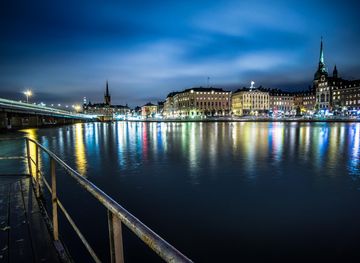
Explore more of Sweden
Discover Sweden's breathtaking landscapes, vibrant cities, and rich cultural heritage. From the Northern Lights to historic castles, experience the essence of Scandinavia.
Explore Sweden