

Storkyrkan, Stockholm Travel Guide
Free Guide: Stockholm's 700-year-old Gothic cathedral: royal coronations, Reformation birthplace, and home to Saint George slaying the dragon amid brick vaults and Baroque splendor.


A brief summary of Storkyrkan
Stockholm's 700-year-old Gothic cathedral: royal coronations, Reformation birthplace, and home to Saint George slaying the dragon amid brick vaults and Baroque splendor.
Storkyrkan, Stockholm's oldest church and cathedral since 1942, stands as a Gothic masterpiece in Gamla Stan, blending medieval brick vaults with Baroque exteriors. Founded in the 13th century by Birger Jarl, it has witnessed royal coronations, Reformation sermons, and key Swedish events, featuring treasures like the Saint George and the Dragon sculpture and a silver altarpiece.
On-site amenities
 Restrooms
 Seating areas
 Information boards
Opening hours
- Every day9:30 am–5 pm
Opening hours as listed on the venue’s Google Business Profile. Hours can change for services and special events, so check with the venue before you go.
- Address
- Trångsund 1, 111 29 Stockholm
- Phone
- Website
Getting there
Walking
Bus
Taxi
Discover more about Storkyrkan
Origins Amid Medieval Trade
Storkyrkan's story begins in the 13th century as Stockholm emerged as a trading hub on Stadsholmen island. Tradition credits Birger Jarl, the city's founder, with establishing the first church around 1264, dedicated to Saint Nicholas, patron of sailors and merchants. The earliest written record dates to 1279, when a knight bequeathed silver to 'Stockholm's Great Church.' Likely built of wood initially, it burned, paving the way for a stone structure consecrated in 1306 as a treskeppig tegelkyrka in Brick Gothic style, mirroring Baltic influences.
Expansions Shaping a Hall Church
Through the 14th and 15th centuries, Storkyrkan expanded dramatically to reflect Stockholm's growing wealth. King Magnus IV and Queen Blanche of Namur donated funds in 1346 for chapels encircling the nave. By the 1430s, Själakoret—a grand chapel for soul masses—was added south of the porch. The church grew eastward with five bays, culminating in a polygonal choir, and side chapels merged to form a five-aisled hall church by 1480. Vaulted ceilings rose on brick pillars, with larger windows admitting light to the Gothic interior that endures today.
Royal Ties and Reformation Echoes
As Stockholm's sole parish church, Storkyrkan intertwined with Swedish royalty from the start. The first coronation occurred here in 1336 for Magnus Eriksson and his queen. It hosted weddings like Gustav Vasa's in 1531 and Erik XIV's controversial union with Karin Månsdotter in 1568. In 1527, Olaus Petri delivered Sweden's first Lutheran mass in Swedish, marking the Reformation's triumph under Gustav Vasa. Fortifications added in 1520 amid tensions precede the Stockholm Bloodbath, underscoring its political role.
Baroque Renewal and Artistic Treasures
The 18th century transformed the exterior to harmonize with the adjacent Royal Palace. Architect Johan Eberhard Carlberg redesigned gables and tower in Baroque style from 1736-1742, creating the facade seen today. Inside, highlights include the 1652 silver-and-ebony altarpiece by Eustachius Erdmüller, depicting the Crucifixion in reliefs flanked by evangelists. Nicodemus Tessin the Younger's royal pews feature gilded crowns borne by angels, while Burchard Precht's 1700 Baroque pulpit gleams in gold.
Iconic Sculpture of Triumph
Dominating the northern aisle, the life-sized wooden Saint George and the Dragon sculpture captivates. Commissioned by Regent Sten Sture the Elder post-1471 Battle of Brunkeberg victory over Danes, it symbolizes Swedish resilience. Carved with intricate detail—George's poised lance, the dragon's writhing scales, and a princess in distress—it evokes medieval legend while commemorating national defiance.
Enduring Ceremonial Heart
Storkyrkan became Stockholm's cathedral in 1942, fusing three parishes. It remains the monarchy's church for state events, from coronations of Karl XII to Victoria's 2010 wedding. Its medieval core, layered with Renaissance and Baroque elements, forms an irreplaceable part of Gamla Stan's skyline, whispering centuries of faith, power, and transformation.
Evendo Review Centre
 Google
Guest reviews
Best time to go
Quietest: Jan, Feb & Mar · before 8am or from 7pm
Busy times are Evendo estimates for a typical year, to help you plan. Actual crowds vary with events, school holidays and the weather.
Explore Storkyrkan on the map
A handpicked selection of must-see spots near Storkyrkan, mapped for you.
Get your free copy of our complete guide to Storkyrkan, delivered straight to you.
Everything on this page, from opening hours and how to get there to Eve’s tips and the best time to go, in one PDF you can read offline, print or share.
Already have an account? Sign in
Your Storkyrkan guide is ready.
We'll send it to · Not you? Sign out

Getting your guide ready…
We are putting together a fresh copy of the Storkyrkan guide. This can take up to a minute.
This can take a few moments. If your browser asks, choose Allow so the download can start. You'll find the guide in your Downloads folder.
Nothing happened? Download it again
Sorry, the guide is taking longer than usual. Please try again in a minute, or get it by email instead.
Unlock the best of Storkyrkan
Skip-the-line tickets, guided tours with entry, and walking tours of the area, booked in a few clicks.
 Tour with entry
Self-Guided Tours In Stockholm With 100 Captivating Audio Stories
from $3.19 Tour with entry
Secret Societies of Stockholm: Self-Guided Puzzle Quest
from $7.24 Tour with entry
Stockholm Ghost Hunt: Self-Guided Tour and Puzzle Adventure
from $7.66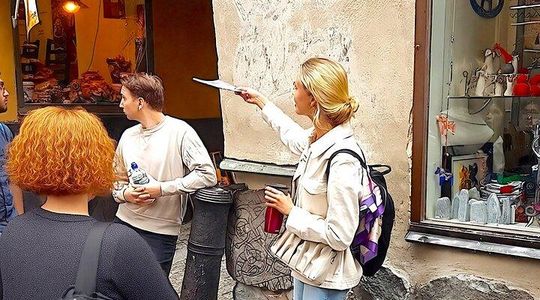 Tour with entry
Walking Tour of Stockholm's Old Town, Gamla Stan
from $9.59


Other nearby places you may find interesting
The closest places of the same kind, if this one is not quite what you had in mind.
-
-
-
-
-


Swipe for more places
More to explore near Storkyrkan

 Best experiences near Storkyrkan
 Best hotels near Storkyrkan
 Best landmarks near Storkyrkan
 Best attractions near Storkyrkan
 Best shops near Storkyrkan
 Best restaurants near Storkyrkan
 Best bars near Storkyrkan
Do you manage this location?
Take control to get all the benefits, like improved information, better appearance, and stronger visibility across AI-powered discovery.
Explore more

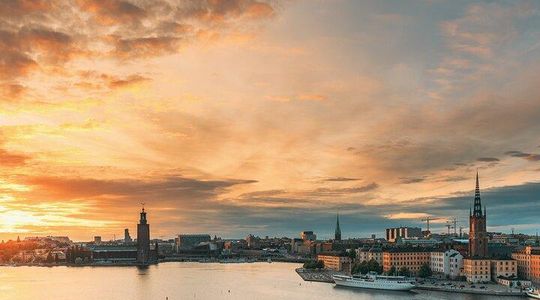
Explore more of Stockholm
Discover Stockholm: A captivating blend of history, culture, and natural beauty spread across 14 picturesque islands in Sweden's stunning capital city.
Explore Stockholm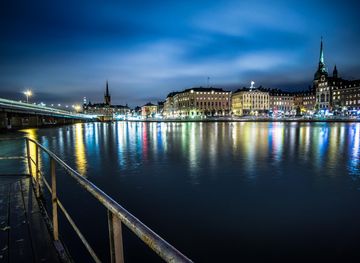
Explore more of Sweden
Discover Sweden's breathtaking landscapes, vibrant cities, and rich cultural heritage. From the Northern Lights to historic castles, experience the essence of Scandinavia.
Explore Sweden
