

Arvfurstens Palats, Vastergotland Travel Guide
A hushed Gustavian palace on Gustav Adolfs torg that fuses 17th-century portals with an 18th-century neoclassical façade and now shelters Sweden’s foreign ministry.
Arvfurstens palats is an elegant late-18th-century neoclassical palace on Gustav Adolfs torg in central Stockholm, built 1783–1794 for Princess Sofia Albertina and designed by Erik Palmstedt. Today the building houses Sweden’s Ministry for Foreign Affairs and preserves grand period interiors, remnants of a 17th-century Torstensson palace and sculpted sandstone portals. The façade, formal rooms and its square-side position make it a striking piece of Stockholm’s Gustavian-era urban ensemble.
A brief summary to Arvfurstens Palats
- Gustav Adolfs torg 1, Stockholm, 111 52, SE
- Click to display
- Duration: 0.25 to 1 hours
- Free
-
 Outdoor
- Mobile reception: 5 out of 5

Know before you go
Hi, I'm Eve. Here are a few practical things to know before exploring Arvfurstens Palats.
- This is an active government building; exterior photography is fine but interior access is generally restricted—check for occasional open-house events.
- Bring a small pair of binoculars or a telephoto lens to study carved sandstone portals and façade details from the square.
- Visit at golden hour if you want softer light on the façade and a quieter atmosphere around the square.
Do you manage this location?
Take control to get all the benefits, like improved information, better appearance, and stronger visibility across AI-powered discovery. Learn more about listing your business on Evendo
Activate your presenceOther nearby places you may find interesting
The closest places of the same kind, if this one is not quite what you had in mind.
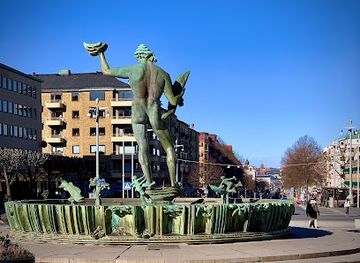
Explore Arvfurstens Palats on the Map
A handpicked selection of must-see spots near Arvfurstens Palats, mapped for you.
Getting There
-
Metro plus walk
Take the metro to the central station (10–20 minutes including transfer time); from there a 10–15 minute walk across central streets on mostly flat pavement; high service frequency but expect crowds at peak times; no ticket beyond standard metro fare (SEK 0–80 depending on card and zone).
-
Bus or tram approach
Use a central bus or tram route serving the Norrmalm/Gamla Stan corridor (10–25 minutes travel depending on origin and traffic); stops are a short, level walk from the square; services run often but can be slower in rush hour; standard local fare applies (SEK 0–80 depending on card and zone).
-
Taxi or ride-hail
A taxi from central Stockholm points typically takes 5–20 minutes depending on time of day; convenient for luggage or limited-mobility travelers; fares vary by operator and time—expect roughly SEK 150–300 for central short trips with possible surcharges at night.
For the on-the-go comforts that matter to you
-
 Seating Areas
-
 Information Boards
-
 Trash Bins
Discover more about Arvfurstens Palats
An 18th-century palace with older bones
Arvfurstens palats was substantially rebuilt between 1783 and 1794 for Princess Sofia Albertina on the site of an earlier 17th-century house associated with field marshal Lennart Torstensson. The architect Erik Palmstedt fused the older Torstensson wing into a larger neoclassical composition whose main elevation faces Gustav Adolfs torg. Inside, original Gustavian decorative schemes survive in several formal rooms, preserving the restrained proportions, painted ornament and gilt details typical of late-18th-century Swedish interior design.Architectural character and notable features
The palace presents a calm, classically ordered façade to the square, a deliberate counterpart to the operatic and civic buildings that once framed Gustav Adolfs torg. Sandstone portals carved in the 1640s remain in the older Torstensson wing and are visible against the palace’s later masonry—these portals, bearing family coats of arms, are tangible links to the site’s earlier ownership. The plan folds older wings into a coherent block; windows, cornices and the portal rhythm give the exterior a dignified, civil-service character that has belied its aristocratic origins since the early 20th century.From private palace to government house
Originally the private residence of a royal sister, the building passed through private hands and royal inheritance before becoming state property in the early 1900s. Since 1906 the Ministry for Foreign Affairs has occupied the palace, and 20th-century restorations adapted ceremonial rooms for official use while conserving historic decorative schemes. Careful 20th-century work reconfigured services and circulation without erasing the palace’s period atmosphere, so the building today reads as both a working government house and a preserved historic interior ensemble.Sensory impressions and the square’s setting
Standing on Gustav Adolfs torg, the palace participates in one of Stockholm’s most formal urban spaces: the square’s paving, the statue of Gustav II Adolf and the flanking government and cultural buildings create a composed cityroom. On a crisp morning the façade’s pale stone and tall windows catch cool northern light, while in warmer months the square’s activity—distant traffic hum, footsteps across stone, the occasional gull—frames the building in urban life. The sandstone portals and carved details invite a closer look; the overall impression is of reserved grandeur rather than flamboyance.Layers of history in detail
The site preserves a layered chronology: visible fragments of the Torstensson palace from the 1640s, the late-18th-century Palmstedt composition and later alterations trace changing uses and tastes. Interior fittings by Louis Masreliez and Gustavian decorative vocabulary survive alongside later 19th- and 20th-century modifications. These overlapping eras make the palace a compact narrative of Stockholm’s aristocratic building tradition and the shift from princely residence to public administration.What to notice while you’re here
Even if access to inner rooms is limited because the palace functions as a government ministry, the exterior and portals reward attentive study: note the juxtaposition of the older Torstensson stonework against the more refined Gustavian façades, the scale relationships that align the palace with neighbouring buildings, and the way the building’s placement on the square participates in an 18th-century idea of ceremonial urban composition. For an architecture-minded visitor, these visual cues read as evidence of planned formality and evolving civic function.












Your all‑in‑one travel companion app
Explore expert travel guides, compare and book tours, experiences, hotels, and more—all from the palm of your hand. Download now for seamless trip planning wherever your wanderlust takes you.


Explore More of Vastergotland
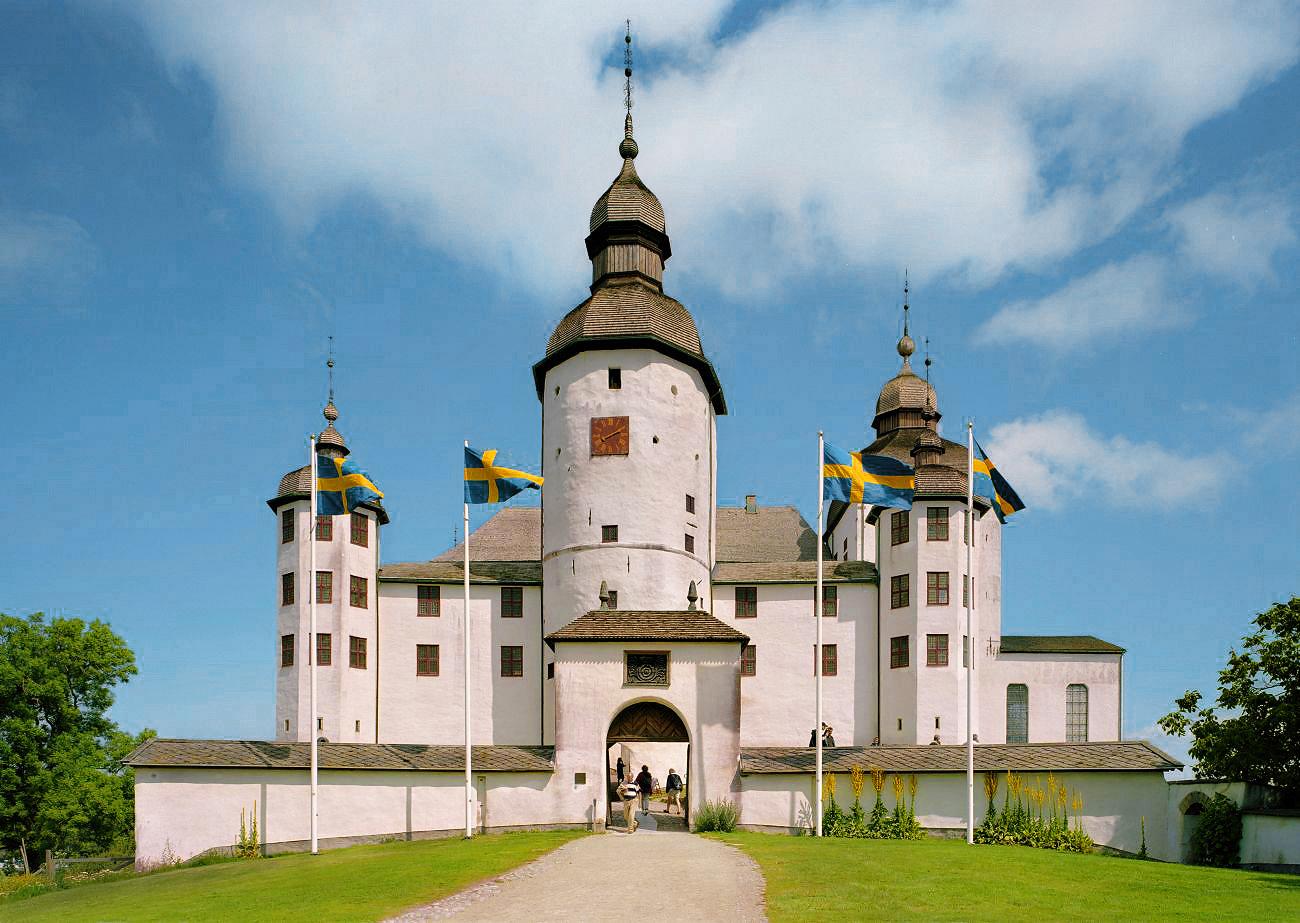
Looking beyond Arvfurstens Palats? Discover Vastergotland for broader travel guides, local hot-spots, and regional highlights.
Explore Vastergotland
Sweden’s parliament on Helgeandsholmen: historic chambers, modern debating hall and an open invitation to observe how Swedish democracy works.
A huddled fox under ragged blankets symbolizes homelessness and resilience at a bustling Stockholm corner, crafted by Laura Ford to provoke empathy in the city center.
