Gräfsnäs castle ruins Travel Guide
Free Guide: Haunted ruins of a Renaissance castle cursed by fire, rising dramatically from Lake Anten's peninsula amid historic park trails and steam railway heritage.


A brief summary of Gräfsnäs castle ruins
Haunted ruins of a Renaissance castle cursed by fire, rising dramatically from Lake Anten's peninsula amid historic park trails and steam railway heritage.
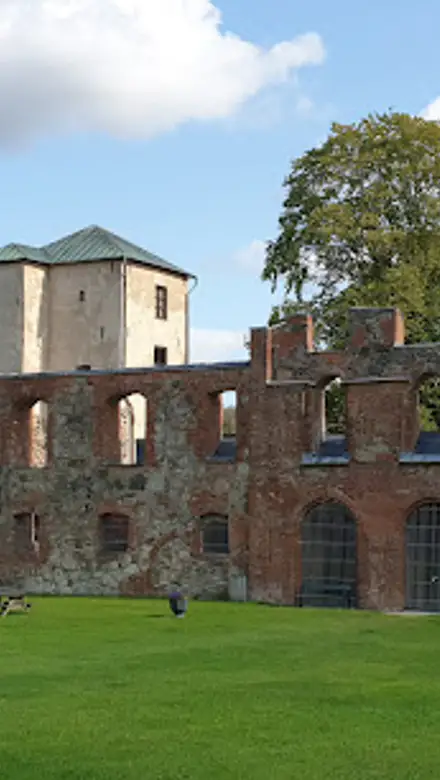
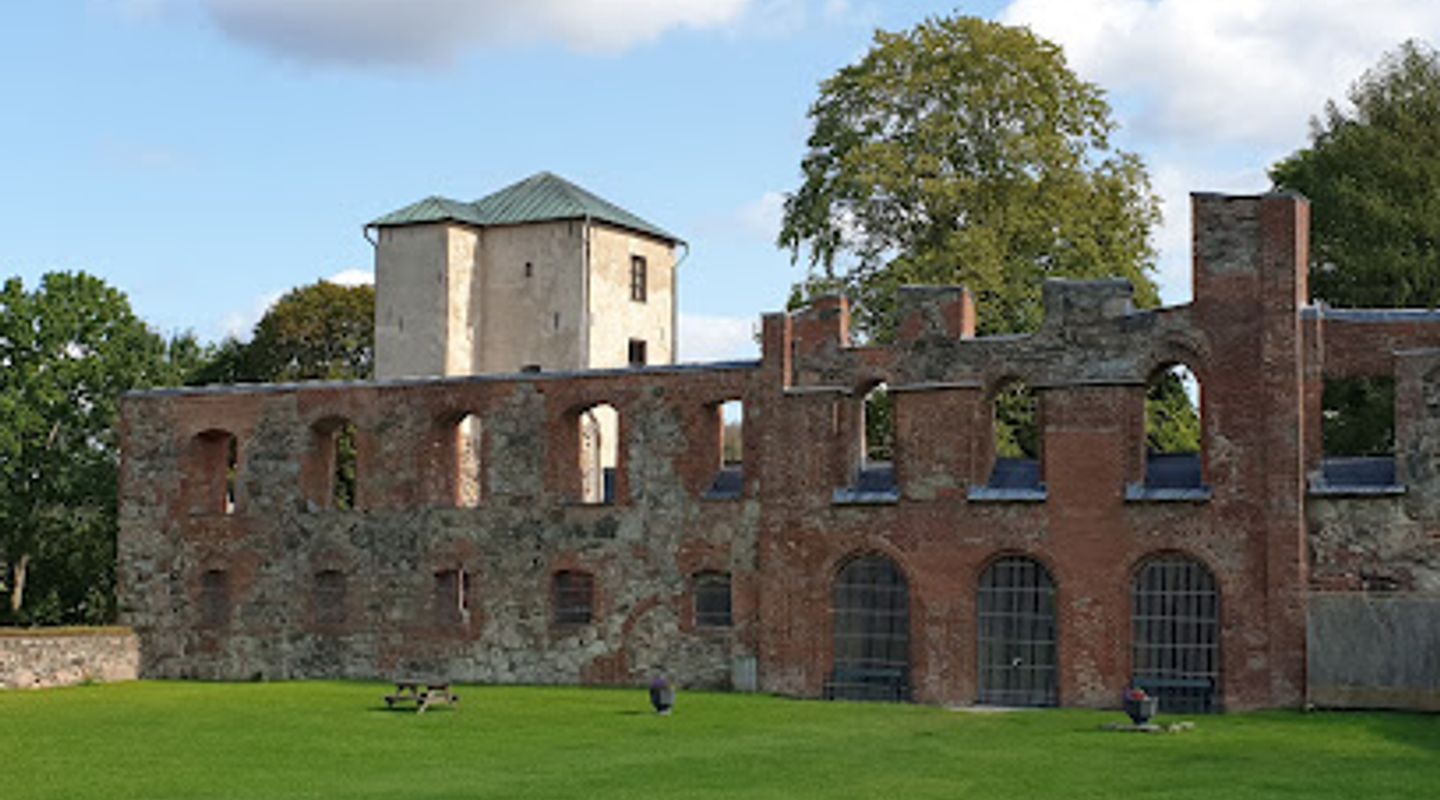
Nestled on a peninsula in Lake Anten near Sollebrunn, the Gräfsnäs Castle Ruins stand as evocative remnants of a grand 16th-century fortress. Once one of Västergötland's largest castles, it evolved from a defensive stronghold to a Renaissance palace before succumbing to three mysterious fires exactly 100 years apart in 1634, 1734, and 1834. Surrounded by a historic park with relocated heritage buildings and a museum railway, the site blends dramatic history with serene natural beauty, offering short hikes amid ivy-clad walls and panoramic lake views. Free access makes it an ideal day trip for history enthusiasts exploring Sweden's medieval past.
On-site amenities
 Restrooms
 Drink options
 Food options
 Seating areas
 Picnic areas
 Trash bins
 Information boards
Opening hours
- Every dayOpen 24 hours
Opening hours as listed on the venue’s Google Business Profile. Hours can change for services and special events, so check with the venue before you go.
- Address
- 441 72, Kungsallén 35, 466 95 Sollebrunn
- Website
Getting there
Car
Bus
Train
Bicycle
Discover more about Gräfsnäs castle ruins
Origins on Loholmen and the Shift to Gräfsnäs
The story of Gräfsnäs begins in the late 13th century with a fortified structure on the island of Loholmen in Lake Anten. Archaeological finds, including a 200-meter-long bridge dated to 1301 and brickworks from the 1200s, reveal early medieval activity. Owned by figures like Gudmar Magnusson in the 1300s, the island borg fell into turmoil under Sten Eriksson Leijonhufvud, notorious as a tyrannical landowner. Enraged peasants reportedly stormed and destroyed it around 1550.Ebba Lilliehöök, Sten's widow, relocated the stronghold to the mainland peninsula at Gräfsnäs udde, reusing materials from Loholmen. Her son, Axel Stensson Leijonhufvud, fortified it with defensive walls, towers, and a deep moat, transforming it into a robust bastion amid Sweden's turbulent 16th-century politics.
Fortress Under Fire and Royal Intrigue
Gräfsnäs played a pivotal role in Swedish history, linked to Gustav Vasa through the Leijonhufvud family—Margareta Leijonhufvud, Gustav's second wife and mother to kings Johan III and Karl IX, had family ties to the site. Axel Leijonhufvud's schemes during the power struggles between Sigismund and Duke Karl led to sieges; Danish forces plundered it in 1612, razing fortifications.The castle endured its first major blaze in 1634, reduced to foundations. Gustav Adolf Lewenhaupt, married to Christina Catharina de la Gardie, rebuilt it by 1648-1653 into a lavish late-Renaissance palace, depicted in Erik Dahlbergh's Suecia antiqua et hodierna. High walls encircled a courtyard with 50 rooms, two towers, and a three-story central block—one of Västergötland's most splendid stone edifices.
Three Cursed Fires and Inevitable Ruin
A haunting prophecy shadowed Gräfsnäs: it would burn three times at century intervals, harbor hatred, and remain desolate. Remarkably, fires struck in 1634, 1734, and 1834. The second blaze followed ownership by German Duke Christian August of Augustenburg, who summered there while the estate decayed. By 1814, under Johan Gripenstedt, vaults were removed and walls lowered for a more residential feel.The final 1834 inferno left it abandoned. By the late 1880s, the roof was stripped, accelerating collapse under wind and weather. The curse fulfilled its grim fate, turning grandeur to atmospheric decay.
Conservation and the Living Park
Revival came in the 20th century with conservation efforts stabilizing the ivy-draped walls. From the 1940s, Gräfsnäs Park incorporated historic buildings tied to local heritage, creating an open-air museum. The Anten-Gräfsnäs museum railway (AGJ) connects from Anten, steaming through scenic countryside to the ruins.Today, the site invites exploration of massive stone arches, moat remnants, and northern tower stubs overlooking the lake. Trails wind through the park's meadows and woods, where wildflowers bloom in summer and autumn foliage paints the peninsula gold.
Atmospheric Echoes of the Past
Wander the ruins and sense the weight of centuries: the "styggt vatten" (ugly water) of the green moat lingers in legend, as described in 19th-century accounts. Birdsong fills the air, water laps at the shore, and stone warmed by sun holds whispers of feuds, rebuilds, and royal shadows. Gräfsnäs endures as a poignant testament to Sweden's feudal age.
Evendo Review Centre
 Google
Guest reviews
Best time to go
Quietest: Jan, Feb & Dec · before 7am or from 8pm
Busy times are Evendo estimates for a typical year, to help you plan. Actual crowds vary with events, school holidays and the weather.
Explore Gräfsnäs castle ruins on the map
A handpicked selection of must-see spots near Gräfsnäs castle ruins, mapped for you.
Get your free copy of our complete guide to Gräfsnäs castle ruins, delivered straight to you.
Everything on this page, from opening hours and how to get there to Eve’s tips and the best time to go, in one PDF you can read offline, print or share.
Already have an account? Sign in
Your Gräfsnäs castle ruins guide is ready.
We'll send it to · Not you? Sign out

Getting your guide ready…
We are putting together a fresh copy of the Gräfsnäs castle ruins guide. This can take up to a minute.
This can take a few moments. If your browser asks, choose Allow so the download can start. You'll find the guide in your Downloads folder.
Nothing happened? Download it again
Sorry, the guide is taking longer than usual. Please try again in a minute, or get it by email instead.
Other nearby places you may find interesting
The closest places of the same kind, if this one is not quite what you had in mind.
-
-
-
-
-


Swipe for more places
More to explore near Gräfsnäs castle ruins

 Best experiences near Gräfsnäs castle ruins
 Best hotels near Gräfsnäs castle ruins
 Best landmarks near Gräfsnäs castle ruins
 Best attractions near Gräfsnäs castle ruins
 Best shops near Gräfsnäs castle ruins
 Best restaurants near Gräfsnäs castle ruins
 Best bars near Gräfsnäs castle ruins
Do you manage this location?
Take control to get all the benefits, like improved information, better appearance, and stronger visibility across AI-powered discovery.
Explore more

Explore more of Västergötland
Discover Västergötland: A blend of historical treasures, natural beauty, and cultural richness in the heart of Sweden.
Explore Västergötland
Explore more of Sweden
Discover Sweden's breathtaking landscapes, vibrant cities, and rich cultural heritage. From the Northern Lights to historic castles, experience the essence of Scandinavia.
Explore Sweden