Visborg, Visby Travel Guide
Free Guide: Compact but evocative ruins of a 15th-century fortress that once controlled Visby’s harbour and played a dramatic role in Gotland’s maritime history.


A brief summary of Visborg
Compact but evocative ruins of a 15th-century fortress that once controlled Visby’s harbour and played a dramatic role in Gotland’s maritime history.
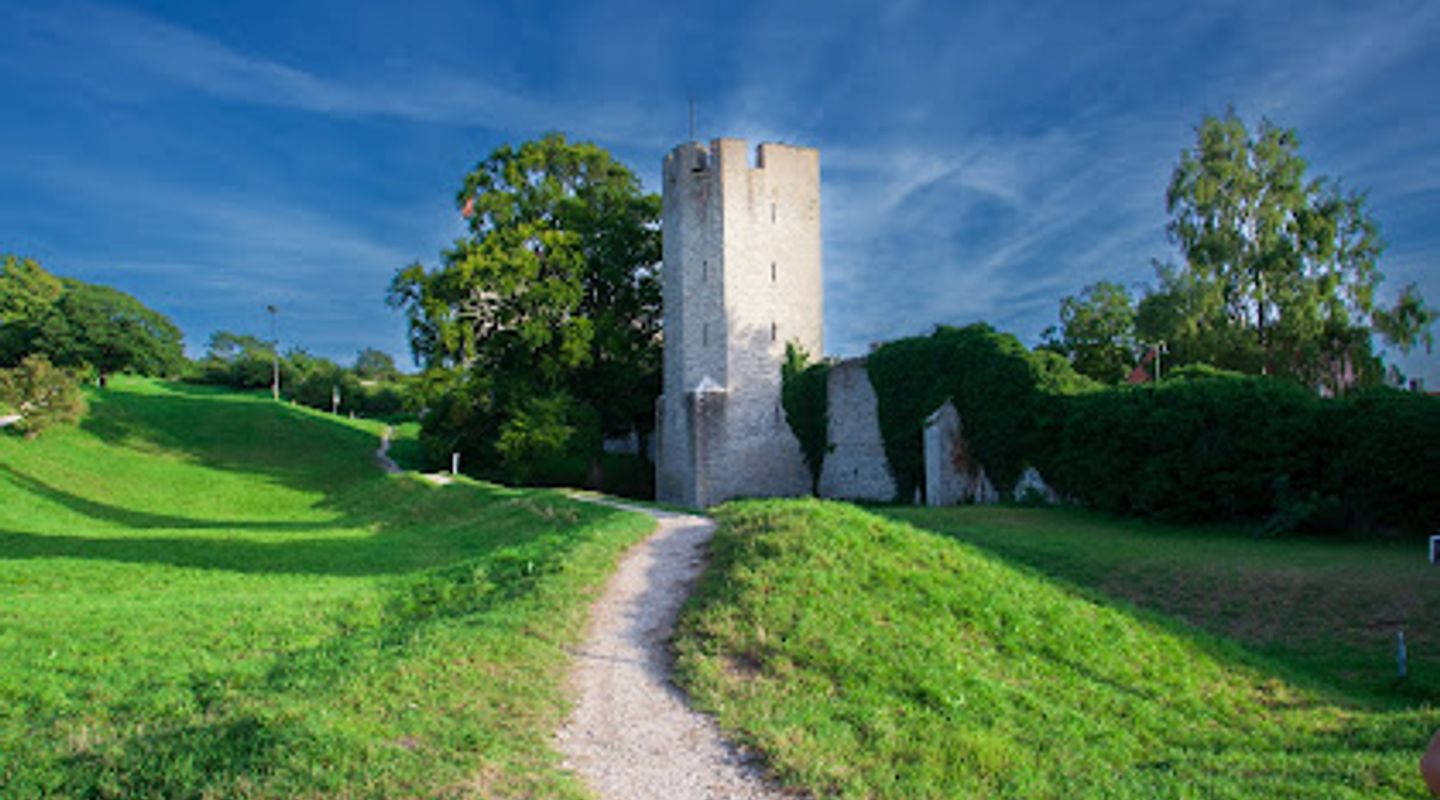
Ruins of a once-formidable medieval fortress built at the southwest corner of Visby’s ring wall; Visborgs slott dominated the harbour and later served as a royal residence and base for privateering before being demolished in the late 17th century. Today only earthworks, fragments and story-filled traces remain tucked into the cityscape near Södra Slottsgränd, offering quiet, atmospheric encounters with Gotland’s turbulent medieval and early modern past.
On-site amenities
 Information boards
 Seating areas
 Trash bins
Opening hours
- Every dayOpen 24 hours
Opening hours as listed on the venue’s Google Business Profile. Hours can change for services and special events, so check with the venue before you go.
- Address
- Södra Slottsgränd 4, 621 57 Visby
- Website
Getting there
Local bus
Walking from Visby centre
Taxi
Discover more about Visborg
Origins of a fortified profile
Visborgs slott began to take shape during the early 1400s where Visby’s stone ring wall sweeps down toward the harbour, deliberately built so the town wall could serve as part of the castle’s defences. Constructed under the authority of monarchs and military governors of the era, its fabric and footprint reflected shifting power in the Baltic: from local tensions with the Hanseatic cities and the Teutonic Order to royal ambitions of controlling sea lanes and trade.
Kings, captains and privateers
The fortress is closely connected with King Erik of Pomerania; it became his stronghold and a centre for seafaring activity including state-licensed privateering. At times the castle functioned as a residence and a military base, with records of sieges, garrisons and a rotating line of commanders over the centuries. Its strategic position allowed those who held it to influence maritime traffic and assert authority over Visby and surrounding waters.
Construction, layout and surviving traces
Built as a compact citadel integrated with existing towers of the ring wall, the castle complex once included thick defensive walls, towers and residential and service buildings within an enclosure of roughly a few thousand square metres. While the original masonry once rose above the skyline, what you see now are low walls, foundations, worked stone and earthworks that mark where vaulted chambers, ramparts and curtain walls once stood; these fragments must be read alongside the city wall to imagine the former mass and silhouette of the stronghold.
Destruction and the changing political map
Visborg’s end came amid the back-and-forth conflicts of the 17th century: occupation, modernisation, war and strategic demolitions left the site intentionally dismantled. When occupying forces prepared to abandon Gotland in the late 1670s the castle was partly blown up and systematically razed so it could no longer be used as a fortification, leaving the ruinous footprint visible today and reshaping the urban fabric nearby.
Atmosphere and visitor experience
The present-day ruin sits quietly against the south-west reach of Visby’s ring wall and the town’s narrow streets, where limestone blocks, low stretches of collapsed masonry and grassy embankments form a compact archaeological scene. The site invites close inspection: run a hand along worn stone, study tool marks, and imagine the creak of ships’ rigging and the clatter of horses on stony approaches. In changing light the stones take on different hues; in wind from the sea you can still sense the strategic reasons this spot was chosen.
Context in Visby’s urban story
Visborgs slott is one chapter in Visby’s layered history: medieval church ruins, defensive walls, merchant houses and later administrative buildings all interlock here. The ruin connects to narratives of commerce, warfare and shifting sovereignty that shaped Gotland’s role in the Baltic—an archaeological and urban fragment that anchors the city’s long chronology and rewards patient observation.
Evendo Review Centre
 Google
Guest reviews
Best time to go
Quietest: Jan, Feb & Dec · before 6am or from 9pm
Busy times are Evendo estimates for a typical year, to help you plan. Actual crowds vary with events, school holidays and the weather.
Explore Visborg on the map
A handpicked selection of must-see spots near Visborg, mapped for you.
Get your free copy of our complete guide to Visborg, delivered straight to you.
Everything on this page, from opening hours and how to get there to Eve’s tips and the best time to go, in one PDF you can read offline, print or share.
Already have an account? Sign in
Your Visborg guide is ready.
We'll send it to · Not you? Sign out

Getting your guide ready…
We are putting together a fresh copy of the Visborg guide. This can take up to a minute.
This can take a few moments. If your browser asks, choose Allow so the download can start. You'll find the guide in your Downloads folder.
Nothing happened? Download it again
Sorry, the guide is taking longer than usual. Please try again in a minute, or get it by email instead.
Other nearby places you may find interesting
The closest places of the same kind, if this one is not quite what you had in mind.
-
-
-
-
-


Swipe for more places
More to explore near Visborg

 Best experiences near Visborg
 Best hotels near Visborg
 Best landmarks near Visborg
 Best attractions near Visborg
 Best shops near Visborg
 Best restaurants near Visborg
 Best bars near Visborg
Do you manage this location?
Take control to get all the benefits, like improved information, better appearance, and stronger visibility across AI-powered discovery.
Explore more

Explore more of Visby
Discover Visby, Sweden's medieval marvel on the island of Gotland, where history, charm, and natural beauty converge in a UNESCO World Heritage site.
Explore Visby
Explore more of Sweden
Discover Sweden's breathtaking landscapes, vibrant cities, and rich cultural heritage. From the Northern Lights to historic castles, experience the essence of Scandinavia.
Explore Sweden