

Free Visby Travel Guide & Mobile App
Plan your Visby trip with Evendo. Get free guides to top attractions, restaurants, hotels, and bars. Web access or download the mobile app.


Visby, Sweden blends medieval walls, church ruins, Baltic views and Gotland culture, with atmospheric streets, museums, gardens and island excursions.
A Medieval Baltic City
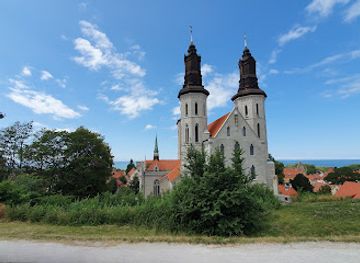
On Sweden’s island of Gotland, Visby rises above the Baltic with a remarkably intact medieval centre enclosed by a weathered limestone wall. The city’s narrow lanes lead past gabled merchants’ houses, vaulted cellars and the ruins of churches that testify to the wealth Visby acquired as a trading port in the Hanseatic world. Above the rooftops, the cathedral of St Mary remains the historic centre’s most prominent working church, while the city wall frames views towards the sea and the island’s open countryside.Read more about Visby
Streets, Gardens and Summer Life
When is the best time to visit Visby?
Best: June–August · 20–23°C| Month | High (°C) | Rainfall (mm) |
|---|---|---|
| January | 0 | 30 |
| February | 0 | 30 |
| March | 3 | 25 |
| April | 9 | 20 |
| May | 15 | 20 |
| June (best) | 20 | 20 |
| July (best) | 23 | 50 |
| August (best) | 22 | 50 |
| September | 18 | 40 |
| October | 12 | 40 |
| November | 7 | 30 |
| December | 3 | 30 |
Getting to and around Visby
How to get there
Transportation
Best attractions in Visby
Visby’s principal attraction is the medieval town itself, where narrow lanes pass beneath the Ringmur and open onto small squares, church ruins and sea-facing viewpoints. The Gotland Museum, particularly its exhibition of the island’s picture stones and medieval treasures, provides essential context for the streets outside. St Mary’s Cathedral remains an active place of worship and a powerful focal point within the old town, while the roofless ruins of churches such as St Karin and St Nicolai create atmospheric spaces for walks and cultural events. The Botanical Garden offers winding paths, mature trees and abundant planting within the shelter of the old town, and Almedalen park leads towards the harbour and waterfront. Beyond the walls, the promenade and coastal paths broaden the experience with Baltic horizons and limestone shorelines. In summer, Medeltidsveckan adds performances, markets and historical pageantry to the city’s already medieval setting.
-
Botanical garden
DBW's Botanical Garden
A compact, year‑round green oasis beneath Visby’s medieval wall—roses, specimen trees, a pond and a small church ruin in a quietly cultivated town garden.
13 min walk · 1.1 km from city centre
-
Theme park
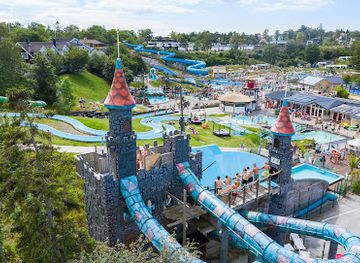
Kneippbyn
A family-oriented summer village outside Visby — water slides, Pippi’s Villa Villekulla and on-site cottages for multi-day stays.
13 min drive · 4.2 km from city centre
-
Park
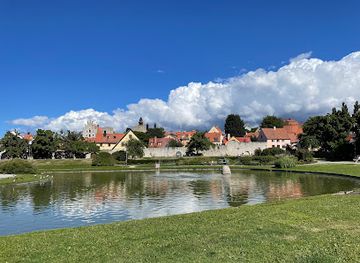
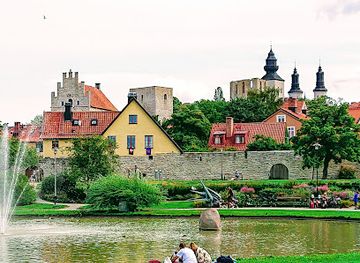
Almedalen
A compact, elm‑shaded park inside Visby’s medieval walls — tranquil daily retreat and the historic stage for Sweden’s famed political week.
10 min walk · 0.8 km from city centre
-
Art museum
Gotland Museum
Unlock 8,000 years of Viking lore, picture stones, and island mysteries in Visby's medieval treasure trove—a portal to Gotland's seafaring soul.
8 min walk · 0.7 km from city centre
Best landmarks in Visby
Visby’s most significant landmark is the Ringmur, the thirteenth-century town wall whose towers and gates define the boundary of the medieval centre. St Mary’s Cathedral, founded in the Middle Ages and associated with Visby’s German merchant community, remains the old town’s principal religious building and a visible reference point above the rooftops. The ruins of St Karin, St Nicolai, St Hans and other medieval churches reveal the scale of Visby’s former ecclesiastical life, their arches and limestone walls integrated into the modern streetscape. Donnerska Huset and other merchant buildings around the central squares reflect the town’s trading past, while the old harbour district and Almedalen connect civic history with the Baltic shore. Together these structures explain why the medieval town is protected as a UNESCO World Heritage site.
-
Tourist attraction
Stora torget
Visby's medieval heartbeat: historic square with Franciscan ruins, buzzing markets, and timeless trade vibes since the 1300s.
9 min walk · 0.7 km from city centre
-
Historical place
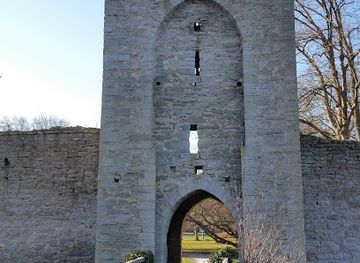
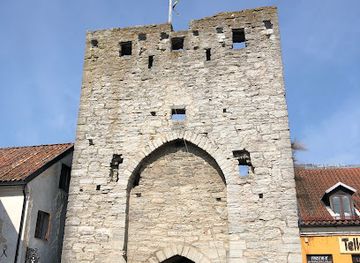
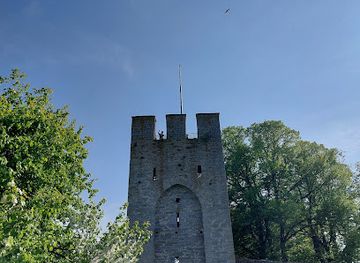
Visby Town Wall
A 3.4 km medieval stone ring that frames Visby—towers, gates and sea-facing ramparts that carry centuries of Baltic trade and conflict.
13 min walk · 1.0 km from city centre
-
Tourist attraction
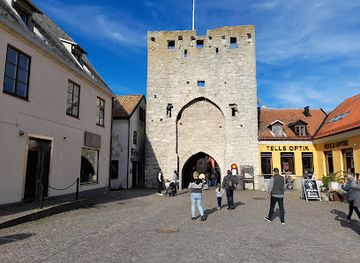
Söderport
A compact medieval stone gate marking Visby’s southern entrance — a tangible fragment of the 13th‑century ring wall that still frames the city.
5 min walk · 0.4 km from city centre
-
Tourist attraction
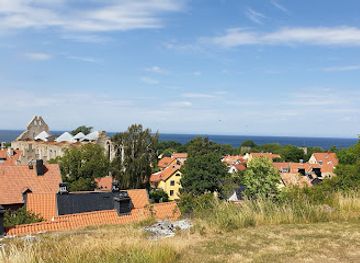
St. Nicolai Ruin
A 13th‑century stone skeleton in the heart of Visby where arches frame sky, history and seasonal light events.
13 min walk · 1.1 km from city centre
Explore Visby on the map
Plan your Visby trip on one map. See where the top attractions, landmarks, restaurants, bars and hotels are, find what's near where you're staying, and book hotels and experiences in a few clicks.
Best hotels in Visby
Best restaurants in Visby
Visby’s food culture draws on Gotland’s agricultural landscape and maritime setting, with local lamb, root vegetables, dairy products, fish and seasonal produce appearing alongside contemporary Nordic cooking. A characteristic island treat is saffranspannkaka, a saffron rice pancake usually served with whipped cream and berries, while Gotlandic bread and locally produced mustard, cheese and preserves make useful edible souvenirs. The old town contains restaurants, cafés, bakeries and wine bars in historic buildings, particularly around Stora Torget, Adelsgatan and the lanes descending towards the harbour. Summer brings outdoor seating and seasonal menus, while farmers’ stalls and food events provide opportunities to encounter island produce more directly. Dining ranges from informal cafés and traditional Swedish fare to modern restaurants interpreting Gotland’s ingredients, with menus and opening patterns often changing between the busy summer season and quieter months.
-
Hamburger
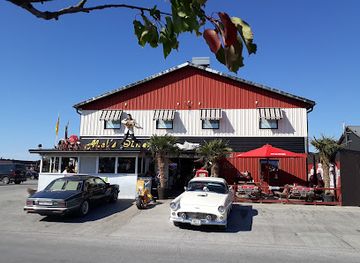
Mel's Diner
Affordable American-style burgers and diner classics in the heart of Visby, served in a friendly, retro-tinged setting.
5 min drive · 1.7 km from city centre
-
Crêperie
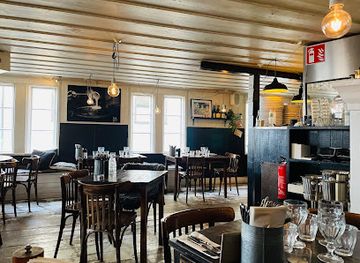
Crêperie & Logi
A cosy, year‑round crêperie in Visby’s medieval core serving savoury galettes, sweet crêpes and a tight cider and coffee selection.
6 min walk · 0.5 km from city centre
-
Pizza
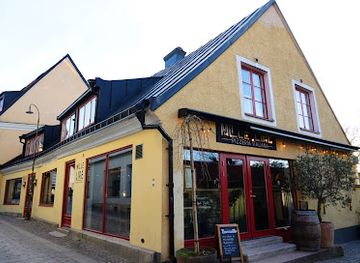
Mille Lire Stora Torget
Stone‑oven pizza and a convivial terrace near Visby’s Stora Torget — classic Italian flavours served in a warm, unpretentious setting.
8 min walk · 0.6 km from city centre
-
Seafood
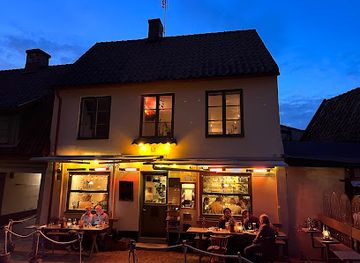
Bakfickan
Cozy Visby seafood haven with 25+ years of fresh herring, fish soups, and local delicacies amid medieval ruins—intimate bites from Gotland's sea.
9 min walk · 0.7 km from city centre
Best bars in Visby
Visby’s evening life is seasonal and concentrated rather than metropolitan. Within the walls, historic cellars, bars, cafés and restaurants provide places for a relaxed drink, while Stora Torget and the streets around Adelsgatan become livelier during the summer visitor season. The harbour area adds waterfront dining and evening walks, and cultural programmes may include concerts, theatre, exhibitions and events connected with Medeltidsveckan or Almedalsveckan. Almedalen, the park beside the sea, is also an important public setting during political and cultural gatherings, although activity varies considerably through the year. Larger late-night venues and entertainment events are more likely to operate in summer, whereas winter evenings are quieter and oriented towards local hospitality. Checking current arrangements is advisable, as seasonal opening patterns strongly shape Visby’s nightlife.
-
Bar
Black Sheep Arms
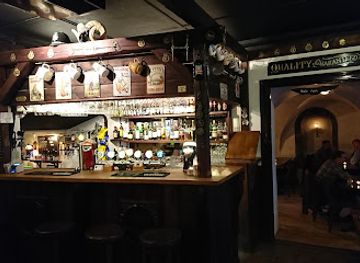
Authentic British pub in Visby's medieval core: fish & chips, local beef burgers, live music, whiskeys, and Gotland brews in a cozy courtyard haven.
11 min walk · 0.9 km from city centre
-
Bar
Joda bar & kök
Harborfront Swedish bar and kitchen in Visby serving lunch deals, grill buffets, and lively vibes on Skeppsbron—casual eats with sea views year-round.
9 min walk · 0.7 km from city centre
-
Bar
Munkkällaren
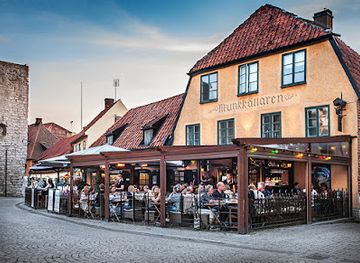
Historic Visby cellar blending medieval stone vaults, hearty Swedish feasts, and pulsating nightlife on the main square terrace.
9 min walk · 0.7 km from city centre
-
Bar
Bolaget i Visby AB
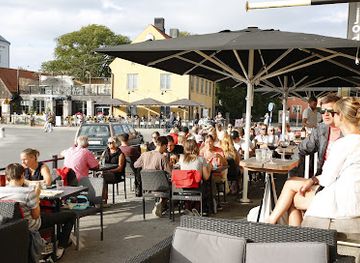
An evening-focused French‑inspired bistro and cocktail bar on Visby’s Stora Torget with terrace dining, a strong wine list and lively night-time character.
8 min walk · 0.7 km from city centre
Best nightclubs in Visby
Visby’s evening life is seasonal and concentrated rather than metropolitan. Within the walls, historic cellars, bars, cafés and restaurants provide places for a relaxed drink, while Stora Torget and the streets around Adelsgatan become livelier during the summer visitor season. The harbour area adds waterfront dining and evening walks, and cultural programmes may include concerts, theatre, exhibitions and events connected with Medeltidsveckan or Almedalsveckan. Almedalen, the park beside the sea, is also an important public setting during political and cultural gatherings, although activity varies considerably through the year. Larger late-night venues and entertainment events are more likely to operate in summer, whereas winter evenings are quieter and oriented towards local hospitality. Checking current arrangements is advisable, as seasonal opening patterns strongly shape Visby’s nightlife.
-
Night club
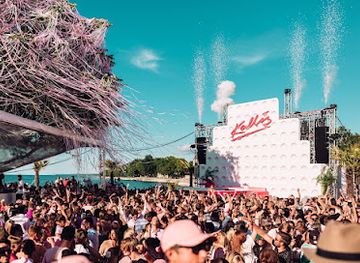
Kallis Visby
Europe's top day club where Baltic sunsets ignite legendary parties, Mediterranean flavors tantalize, and Gotland's sea pulses with summer energy.
12 min walk · 0.9 km from city centre
-
Night club
Gutekällaren
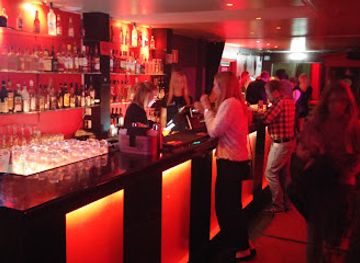
A seasonal multi-bar club in the heart of Visby — layered rooms, late nights and a compact summer dance scene in a historic old-town setting.
9 min walk · 0.7 km from city centre
-
Night club
Burmeister
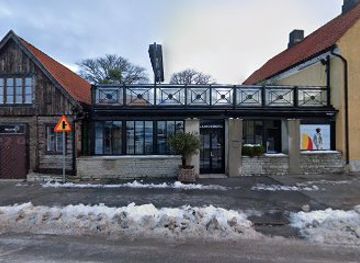
Historic 17th-century merchant house turned exclusive Visby night club, alive with summer beats and high-energy events in the medieval old town.
9 min walk · 0.7 km from city centre
-
Night club
Terrassen
Harbor terrace bar pulsing with Visby nightlife: craft brews, sea views, and beats from noon till dawn in Gotland's medieval heart.
10 min walk · 0.8 km from city centre
Best shops in Visby
Shopping in Visby centres on the old town’s pedestrian-friendly lanes, especially Adelsgatan, Hästgatan and the streets around Stora Torget. Independent boutiques, galleries, design shops and craft studios occupy many historic buildings, creating a retail landscape more closely tied to local character than to large shopping centres. Look for Gotlandic wool and sheepskin goods, ceramics, glass, jewellery, textiles, prints and small-scale handicrafts, as well as island-produced foods such as preserves, mustard, chocolate and spirits where permitted. The Gotland Museum shop offers culturally themed items, while seasonal markets and festival stalls bring additional makers into the centre. Shop opening patterns can change substantially outside summer, and some specialist businesses are small or appointment-based, so the most rewarding browsing tends to come from allowing time to wander between the principal streets rather than following a single enclosed retail complex.
-
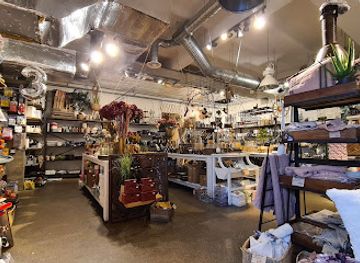
Home goods store
Garag1
A compact, design-minded Visby homewares store mixing Scandinavian simplicity with rugged, curated finds for everyday living.
4 min walk · 0.3 km from city centre
-
Ice Cream
Glassmagasinet
Gotland's grandest gelato haven: 356 flavors, sea vistas, and Italian craft in Visby's harbor heartbeat.
8 min walk · 0.6 km from city centre
-
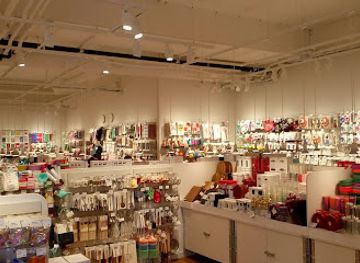
Gift shop
Flying Tiger Copenhagen
A cheerful, budget-friendly Danish variety shop in Visby for colourful gifts, craft bits and easy souvenirs.
4 min walk · 0.3 km from city centre
-
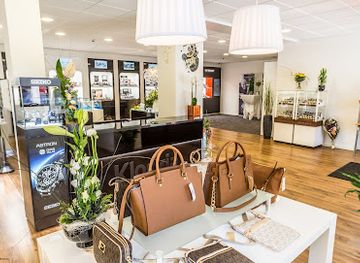
Jewelry store
Klockia Gotland Ur
A compact Visby atelier combining certified watchmaking service with a curated selection of watches and jewellery on historic Hästgatan.
5 min walk · 0.4 km from city centre
Get your free copy of our complete guide to Visby, delivered straight to you.
Everything on this page, from attractions and restaurants to essentials and local phrases, in one PDF you can read offline, print or share.
Already have an account? Sign in
Your Visby guide is ready.
We'll send it to · Not you? Sign out

Getting your guide ready…
We are putting together a fresh copy of the Visby guide. This can take up to a minute.
This can take a few moments. If your browser asks, choose Allow so the download can start. You'll find the guide in your Downloads folder.
Nothing happened? Download it again
Sorry, the guide is taking longer than usual. Please try again in a minute, or get it by email instead.
Visby essentials
Currency and Payment
Safety
Emergency Situations
Do's and Don'ts
Local Tips
From Eve
Local phrases worth knowing
You don't need to get them perfect. A few words go a long way, and locals appreciate the effort.
Basics
| English | Local | Say it |
|---|---|---|
| Hello | Hej | [hey] |
| Goodbye | Adjö | [ad-yo] |
| Yes | Ja | [ya] |
| No | Nej | [ney] |
| Please/You're welcome | Snälla/Tack | [snell-ah/tack] |
| Thank you | Tack | [tack] |
| Excuse me/Sorry | Ursäkta | [ur-sak-ta] |
| How are you? | Hur mår du? | [hur mor doo] |
| Fine. And you? | Bra. Och du? | [bra. okh doo] |
| Do you speak English? | Talar du engelska? | [talar doo eng-els-ka] |
| I don't understand | Jag förstår inte | [yag for-stor in-te] |
Eating & Drinking
| English | Local | Say it |
|---|---|---|
| I'd like to see the menu, please | Jag skulle vilja se menyn, tack | [yag skool-le vil-ya se meny-n, tack] |
| I don't eat meat | Jag äter inte kött | [yag et-er in-te shøtt] |
| Cheers! | Skål! | [skol] |
| I would like to pay, please | Jag skulle vilja betala, tack | [yag skool-le vil-ya bet-a-la, tack] |
Emergencies
| English | Local | Say it |
|---|---|---|
| Help! | Hjälp! | [yelp] |
| Go away! | Gå därifrån! | [go da-ri-fran] |
| Call the Police! | Ring polisen! | [ring po-li-sen] |
| Call a doctor! | Ring en läkare! | [ring en le-ka-re] |
| I'm lost | Jag är vilse | [yag ar vil-se] |
| I'm ill | Jag är sjuk | [yag ar shuk] |
Shopping
| English | Local | Say it |
|---|---|---|
| I'd like to buy... | Jag skulle vilja köpa... | [yag skool-le vil-ya shø-pa] |
| I'm just looking | Jag tittar bara | [yag tit-tar ba-ra] |
| How much is it? | Hur mycket kostar det? | [hur my-ket kost-ar det] |
| That's too expensive | Det är för dyrt | [det ar for deert] |
| Can you lower the price? | Kan du sänka priset? | [kan doo sen-ka pris-et] |
Time & Numbers
| English | Local | Say it |
|---|---|---|
| What time is it? | Vad är klockan? | [vad ar klok-an] |
| It's one o'clock | Klockan är ett | [klok-an ar et] |
| Half past (10) | Halv tio | [halv tee-oh] |
| Morning | Morgon | [mor-gon] |
| Afternoon | Eftermiddag | [ef-ter-mid-dag] |
| Evening | Kväll | [kvel] |
| Yesterday | Igår | [ig-er] |
| Today | Idag | [id-ag] |
| Tomorrow | Imorgon | [i-mor-gon] |
| 1 | Ett | [et] |
| 2 | Två | [tvo] |
| 3 | Tre | [tre] |
| 4 | Fyra | [fy-ra] |
| 5 | Fem | [fem] |
| 6 | Sex | [sex] |
| 7 | Sju | [sju] |
| 8 | Åtta | [ot-ta] |
| 9 | Nio | [ni-o] |
| 10 | Tio | [tee-oh] |
Transport & Directions
| English | Local | Say it |
|---|---|---|
| Where's a/the...? | Var finns en/den...? | [var fins en/den] |
| What's the address? | Vad är adressen? | [vad ar ad-res-sen] |
| Can you show me (on the map)? | Kan du visa mig (på kartan)? | [kan doo vee-sa may (po kart-an)] |
| When's the next (bus)? | När går nästa (buss)? | [nar gor nes-ta (boos)] |
| A ticket (to ....) | En biljett (till ....) | [en bil-yet (til)] |
History of Visby
Gotland’s Early Settlements
Visby’s history belongs to the much older story of Gotland, an island settled and farmed long before the town became a major Baltic port. Archaeological evidence records prehistoric communities, while Gotland’s position between Scandinavia, the eastern Baltic and continental Europe encouraged travel and exchange. The island’s famous picture stones, some dating from the Iron Age and Viking Age, preserve evidence of symbolic culture and long-distance connections. Before Visby’s medieval expansion, activity was distributed among rural settlements, landing places and trading sites. The later town grew from this strategic island setting rather than appearing in isolation, drawing on Gotland’s agricultural resources, seafaring traditions and links with surrounding Baltic societies.
The Rise of a Hanseatic Port
From the twelfth century, Visby developed into one of the Baltic’s important commercial centres. Gotlandic merchants traded with ports around the Baltic and beyond, while German-speaking merchants established a strong presence in the town. Warehouses, merchant houses and churches reflected the prosperity generated by trade in goods including grain, furs, wax and textiles. Visby’s urban shape took form during this period, with streets descending towards the harbour and substantial stone buildings rising among timber structures. The town became closely associated with the Hanseatic League, a network of trading cities and merchant communities that connected northern European commerce. Its medieval remains today reflect both local Gotlandic society and the international character of the port.
Walls, Churches and Urban Power
Visby’s town wall was built and extended during the thirteenth century, when commercial prosperity and political tensions made fortified urban boundaries increasingly important. The wall, punctuated by towers and gates, separated the town from the surrounding countryside and became a visible expression of civic power. Medieval Visby also acquired an extraordinary concentration of churches: alongside St Mary’s Cathedral, numerous parish churches and monastic foundations served different communities and functions. Many later fell into ruin, but their surviving arches and stonework remain central to the city’s identity. The contrast between the intact wall, the cathedral and roofless church ruins gives Visby its distinctive medieval character.
The Danish Conquest of 1361
In 1361, King Valdemar IV of Denmark invaded Gotland. Danish forces defeated a Gotlandic peasant army outside Visby, and the battle’s dead were buried in mass graves discovered by archaeologists near the city wall. The conquest placed Visby and the island under Danish rule, although the town’s trading importance continued through a period of shifting Baltic power. The event has acquired a powerful place in local historical memory, not least because the remains reveal the scale and violence of the confrontation. The Battle of Visby is discussed in the Gotland Museum and remembered in the landscape beyond the walls, linking archaeological evidence with the political struggles of medieval Scandinavia.
Trade, Decline and Changing Rule
Visby’s commercial fortunes diminished as trade patterns changed and rival ports gained influence. Conflict, piracy and political instability affected the Baltic, while the town’s position within successive Danish and Swedish spheres shifted over time. In 1645, Gotland was ceded by Denmark to Sweden under the Treaty of Brömsebro, bringing the island into the Swedish realm. Visby remained an important local centre, but it no longer possessed the international dominance of its medieval heyday. Some churches and merchant buildings declined, leaving the ruins that later generations would treat as historical monuments. The town’s reduced scale helped preserve much of its medieval street pattern and fortified boundary.
Preservation and Modern Visby
During the nineteenth and twentieth centuries, Visby’s medieval fabric increasingly came to be valued as a cultural inheritance rather than simply old urban infrastructure. Restoration, archaeological work and conservation helped protect the wall, ruins, cathedral and historic houses from wholesale redevelopment. In 1995, the medieval town of Visby was inscribed on the UNESCO World Heritage List, recognising its importance as a fortified former trading city in northern Europe. Modern Visby now combines life as Gotland’s administrative and cultural centre with a carefully preserved historic core. The annual Medieval Week and the continuing use of public squares, gardens and waterfront spaces add contemporary life to an urban landscape shaped many centuries ago.
Travel experiences inspired by this city
-
 7 Day Trip
Family Adventure in Medieval Visby, Sweden
Explore the medieval charm of Visby, Sweden, with your family for a memorable cultural experience and breathtaking coastal landscapes.
7 Day Trip
Family Adventure in Medieval Visby, Sweden
Explore the medieval charm of Visby, Sweden, with your family for a memorable cultural experience and breathtaking coastal landscapes.
 15 Apr 2026
By Abebech Tadesse-Schmidt -
 7 Day Trip
Exploring the Medieval Charm of Visby, Sweden
Discover Visby's medieval charm and vibrant culture on a 7-day journey with your spouse, staying at a centrally located family-friendly hotel.
7 Day Trip
Exploring the Medieval Charm of Visby, Sweden
Discover Visby's medieval charm and vibrant culture on a 7-day journey with your spouse, staying at a centrally located family-friendly hotel.
 15 Mar 2026
By David Smith -
 7 Day Trip
Exploring the Medieval Charm of Visby with My Spouse
Join us on a journey to Visby, Sweden, where we explore medieval charm and vibrant culture while staying in comfort at Hotell Repet.
7 Day Trip
Exploring the Medieval Charm of Visby with My Spouse
Join us on a journey to Visby, Sweden, where we explore medieval charm and vibrant culture while staying in comfort at Hotell Repet.
 15 May 2025
By Jan Kovar
Swipe for more travel diaries
Visby in Photos
Browse through our photo collection highlighting the charm and character of the destination.
Cities near Visby
The closest cities to Visby, if you have time for more than one stop.
-

-

-

-

-


Swipe for more cities
Explore more
Explore more of Sweden
Discover Sweden's breathtaking landscapes, vibrant cities, and rich cultural heritage. From the Northern Lights to historic castles, experience the essence of Scandinavia.
Explore Sweden