

Bereket Railway Station, Turkmenistan Travel Guide
Discover Bereket Railway Station: A Cultural and Historical Gateway in Turkmenistan's Transport Network
Bereket Railway Station is a key hub in Turkmenistan's extensive rail network. Located in the city of Bereket, this station is a vital link between the Caspian Sea region and the rest of the country. Its strategic position makes it a bustling center of activity and a fascinating destination for tourists interested in rail travel and transportation history. The station's architecture is a blend of traditional Turkmen design and modern functionality. The building features intricate patterns and motifs that reflect the rich cultural heritage of the region. Inside, you'll find a clean and efficient facility with amenities that cater to both local commuters and international travelers. Bereket itself is a charming city where you can experience the daily life of Turkmen people. The local markets offer a variety of goods, from fresh produce to handmade crafts, providing a glimpse into the region's vibrant culture. The surrounding landscape, characterized by vast steppes and desert terrain, offers a stark yet beautiful backdrop, perfect for photography enthusiasts and nature lovers.

Know before you go
Hi, I'm Eve. Here are a few practical things to know before exploring Bereket Railway Station.
- Carry local currency as not all shops and services accept credit cards.
- Learn a few basic phrases in Turkmen or Russian to help with communication.
- Visit the local markets early in the morning for the best selection of goods.
- Check the train schedules in advance as services can be infrequent.
- Consider hiring a local guide to gain deeper insights into the history and culture of the area.
Explore Bereket Railway Station: Things to Do, Places to Eat, Hotels & More
Handpicked recommendations for top attractions, local dining, accommodations, and more

Best attractions in Bereket Railway Station
Top-rated picks
Best Attractions

Independence Monument
Discover the Independence Monument in Ashgabat, a stunning symbol of Turkmenistan's freedom surrounded by beautiful gardens and rich history.

World of Turkmenbashi Tales
Explore the vibrant World of Turkmenbashi Tales, an enchanting amusement park that celebrates the folklore and cultural richness of Turkmenistan.

Independence Park
Discover the beauty of Independence Park in Ashgabat, where nature meets culture in a stunning urban oasis.

Turkmenbashy Ruhy Mosque
Explore the breathtaking Turkmenbashy Ruhy Mosque, a stunning blend of modern architecture and Islamic heritage in the heart of Ashgabat.

Best landmarks in Bereket Railway Station
Top-rated picks
Best Landmarks

Ertugrul Gazi Mosque
Discover the breathtaking Ertugrul Gazi Mosque in Ashgabat, an architectural gem blending Islamic tradition with modern elegance.

Independence Monument
Explore the Independence Monument in Ashgabat, a stunning symbol of Turkmenistan's heritage, surrounded by beautiful gardens and fountains.

World of Turkmenbashi Tales
Experience the magic of Turkmen culture at the World of Turkmenbashi Tales, a captivating amusement park in Ashgabat, filled with rides and folklore.

Independence Park
Discover the serene beauty of Independence Park in Ashgabat, where Turkmen culture meets lush landscapes and historic monuments.

Best restaurants in Bereket Railway Station
Top-rated picks
Best Restaurants

Hezzet Restaurant
Experience authentic Turkmen cuisine at Hezzet Restaurant in Ashgabat - where tradition meets flavor in a family-friendly setting.

Altyn Açar
Experience the sweet side of Ashgabat at Altyn Açar, where traditional Turkmen desserts meet modern culinary artistry.

AlpEt Steakhouse
Experience the best steaks in Ashgabat at AlpEt Steakhouse - where flavor meets hospitality in Turkmenistan.

Burger Zone
Discover Burger Zone in Ashgabat – where juicy burgers meet local hospitality for an unforgettable culinary experience.

Best bars in Bereket Railway Station
Top-rated picks
Best Bars

Altyn Açar
Discover the sweet side of Ashgabat at Altyn Açar, a delightful dessert restaurant offering traditional and contemporary treats.

AlpEt Steakhouse
Experience the rich flavors of Turkmenistan at AlpEt Steakhouse, Ashgabat's premier destination for succulent steaks and warm hospitality.

Üzüm Café
Discover the flavors of Turkmenistan at Üzüm Café, a charming spot in Ashgabat offering rich coffee and traditional dishes in a cozy atmosphere.

Altyn Ada
Discover Altyn Ada in Ashgabat: A culinary experience blending tradition and taste in a warm, inviting atmosphere.

Best nightclubs in Bereket Railway Station
Top-rated picks
Best Nightclubs

Ashgabat International Airport
Experience the modern elegance of Ashgabat International Airport, your gateway to the enchanting landscapes and rich culture of Turkmenistan.

Yunus Club
Discover the vibrant nightlife of Ashgabat at Yunus Club, where locals and tourists unite for unforgettable nights filled with music and dance.

Florida
Experience the vibrant nightlife of Ashgabat with exquisite dining and entertainment options in a stylish night club atmosphere.

Bereket railway station
Experience the architectural charm and cultural significance of Bereket Railway Station, a key transport hub in Turkmenistan's railway network.

Best shops in Bereket Railway Station
Top-rated picks
Best Shops

Berkarar
Explore Berkarar in Ashgabat for a unique shopping and dining experience in a modern setting, perfect for tourists and locals alike.
Grand Turkmen Hotel
Experience luxury and comfort at the Grand Turkmen Hotel, where traditional hospitality meets modern elegance in the heart of Ashgabat.

State shopping center Gulistan (Russian bazaar)
Experience the vibrant culture and diverse offerings at the State Shopping Center Gulistan in Ashgabat, Turkmenistan, a must-visit market for every traveler.

Teke Bazar
Explore Teke Bazar in Ashgabat: An authentic market celebrating Turkmen culture with vibrant crafts, delectable street food, and lively local interactions.

Explore Bereket Railway Station on the Map
A handpicked selection of must-see spots in Bereket Railway Station, mapped for you.
Bereket Railway Station Essentials
-
Bereket Railway Station is located in the town of Bereket in Balkan Province, Turkmenistan. The nearest international airport is Turkmenbashi International Airport, which is about 200 kilometers away. From the airport, you can take a taxi or a bus to Bereket. The journey typically takes around 3 to 4 hours by road. Alternatively, you can take a domestic flight to the regional airport in Balkanabat and then hire a taxi or take a bus for the remaining 90 kilometers to Bereket.
-
Within Bereket, the most common forms of transportation are taxis and buses. Taxis are readily available and relatively inexpensive. Public buses and minibuses operate within the town and connect to nearby villages. For longer journeys, hiring a car can be a convenient option. The railway station itself is a major hub, connecting various parts of Turkmenistan and offering a scenic and efficient way to explore the region.
-
The official currency in Turkmenistan is the Turkmenistani manat (TMT). Credit cards are not widely accepted, so it is advisable to carry cash. ATMs are available in Bereket, but they may not always be reliable, so it is wise to withdraw sufficient cash before traveling. Exchange your currency at official exchange offices or banks to get the best rates.
-
Bereket is generally a safe destination for tourists. However, like any travel destination, it is advisable to take standard precautions. Avoid walking alone at night in unfamiliar areas and keep an eye on your belongings in crowded places. While there are no specific high-crime areas targeting tourists, it is always best to stay vigilant and aware of your surroundings.
-
In case of emergency, dial 03 for medical assistance and 02 for police. The local police station and medical facilities are available in Bereket. It is recommended to have travel insurance that covers medical emergencies. For minor health issues, there are pharmacies in the town where you can purchase over-the-counter medications.
-
Fashion: Do dress modestly, particularly when visiting religious sites or rural areas. Avoid wearing revealing clothing. Religion: Do respect local customs and traditions. Always cover your head when entering mosques. Public Transport: Do be respectful and give up your seat to elderly passengers. Don’t eat or drink on public transport. Greetings: Do greet people with a handshake. A slight bow of the head is also a sign of respect. Eating & Drinking: Do try local delicacies and accept food offerings graciously. Don’t refuse hospitality, as it is considered impolite.
-
To experience Bereket Railway Station like a local, visit the nearby markets where you can buy fresh produce and traditional Turkmen goods. Engage with locals, as they are often friendly and willing to share stories about the town’s history and culture. Don't miss visiting the local cultural centers or attending a traditional music performance. For a unique experience, take a train ride to nearby attractions and enjoy the scenic views of the Turkmen landscape.
When is the best time to visit Bereket Railway Station?
Useful Local Phrases for Bereket Railway Station
You don't need to speak the language perfectly. Even learning a few simple words can make conversations warmer—and locals usually appreciate the effort.
— Eve

Here are the phrases I use most often in Bereket Railway Station. Try a few—you'll be surprised how far they go! 😊
❤️
-
- HelloSalam
[sah-lahm] - GoodbyeSag bol
[sahg bohl] - YesHawa
[hah-wah] - NoYok
[yohk] - Please/You're welcomeRahmet
[rah-met] - Thank youRahmet
[rah-met] - Excuse me/SorryUzr
[ooz-ur] - How are you?Nahili?
[nah-heel-ee] - Fine. And you?Gut. Siz?
[goot. siz] - Do you speak English?Siz Iňlisçe gaplaşarsyňyzmy?
[siz een-lee-scheh gap-lah-shar-suhn-muh] - I don't understandMen yzaýanok
[men uhz-ay-an-ohk]
- HelloSalam
-
- I'd like to see the menu, pleaseMen menýuňy görsemokçy
[men men-young-uhng gohr-sehm-ohk-chuh] - I don't eat meatMen et yemem
[men eht yeh-mem] - Cheers!Çana!
[chah-nah] - I would like to pay, pleaseMen töleg etmekçi bolýanok
[men tuh-lehg eht-mehk-chi boh-lyah-nuhk]
- I'd like to see the menu, pleaseMen menýuňy görsemokçy
-
- Help!Ýardam!
[yahr-dahm] - Go away!Uzak duraň!
[oo-zahk doo-rahng] - Call the Police!Polise gaplaş!
[poh-lee-seh gap-lahsh] - Call a doctor!Doktora gaplaş!
[dohk-toh-rah gap-lahsh] - I'm lostMen yoň
[men ohn] - I'm illMen çäýränok
[men chah-yrahn-ohk]
- Help!Ýardam!
-
- I'd like to buy...Men satyn almakçy
[men sah-teen ahl-mahk-chuh] - I'm just lookingMen sapagyňok
[men sah-pahg-uhn-ohk] - How much is it?Ol ýagny bolar?
[ohl yahng-uh boh-lahr] - That's too expensiveBu ýokary bahasy
[boo yoh-kahr-ee bah-hahs-uh] - Can you lower the price?Bahasyňy peseldermekçi bolasyňyzmy?
[bah-hah-suhn-uh peh-sehl-dehr-mehk-chi boh-lah-suhn-muh]
- I'd like to buy...Men satyn almakçy
-
- What time is it?Häzir näme wagt?
[hah-zeer nah-meh wahg-t] - It's one o'clockOn birde
[ohn beer-deh] - Half past (10)On ýarym
[ohn yah-ruhm] - MorningErtir
[ehr-teer] - AfternoonAgşam
[ahg-shahm] - EveningGijä
[gee-jeh] - YesterdayDüýn
[doo-een] - TodayBugün
[boo-goon] - TomorrowErtir
[ehr-teer] - 1Bir
[beer] - 2Iki
[ee-kee] - 3Üç
[ootch] - 4Dört
[dohrt] - 5Bäş
[bahsh] - 6Alty
[ahl-tuh] - 7Ýedi
[yeh-dee] - 8Sekiz
[seh-keez] - 9Togus
[toh-goosh] - 10On
[ohn]
- What time is it?Häzir näme wagt?
-
- Where's a/the...?...ny ýerden tapmaq
[...nuh yehr-dehn tahp-mahk] - What's the address?Adres näme?
[ah-drehs nah-meh] - Can you show me (on the map)?Meniň üçin (kartyň üstünde) görsenokçy bolasyňyzmy?
[meh-neeng oo-chin (kar-teen oos-toon-deh) gohr-sehn-ohk-chi boh-lah-suhn-muh] - When's the next (bus)?Indi ýakynda näme wagtda (awtobus)?
[een-dee yah-keen-dah nah-meh wahg-tah (ow-toh-boos)] - A ticket (to ....)Bir bilete (....-a)
[beer bee-leh-teh (....-ah)]
- Where's a/the...?...ny ýerden tapmaq
History of Bereket Railway Station
-
Bereket Railway Station, originally known as Kazandjik Station, was established in the late 19th century during the Russian Empire's expansion into Central Asia. It was part of the Trans-Caspian Railway, which played a pivotal role in connecting the Caspian Sea to the heart of Central Asia, facilitating trade, military movements, and cultural exchanges.
-
During the Soviet era, Bereket Railway Station became a crucial hub in the Soviet railway network. It was strategically important for transporting goods and military supplies, especially during World War II when it served as a key logistical point for the Soviet war effort. The station's significance continued throughout the Cold War, symbolizing Soviet industrial and logistical prowess in the region.
-
In the early 2000s, Bereket Railway Station underwent significant modernization as part of Turkmenistan's broader efforts to improve its railway infrastructure. The station was renovated to handle increased passenger and freight traffic, reflecting the country's ambitions to become a regional transit and logistics hub. Modern facilities and updated technology were introduced, ensuring the station's relevance in the contemporary era.
-
Bereket Railway Station is more than just a transportation hub; it is a cultural landmark. The station's architecture combines Soviet-era design with local Turkmen motifs, symbolizing the blending of cultural influences. It serves as a gathering place for locals and travelers alike, where stories of the past and hopes for the future converge. The surrounding area is rich with cultural heritage, featuring local markets, traditional crafts, and historical sites.
-
The presence of Bereket Railway Station has significantly impacted the local economy. It has spurred the development of nearby towns and cities, fostering trade and commerce. The station facilitates the export of Turkmenistan's rich natural resources, including cotton, oil, and gas, connecting the country to international markets. This economic vitality has contributed to the overall development and modernization of the region.
Neighbouring destination travel guides
Browse our curated selection of top destinations, scenic points, and must-visit spots in the area.




Your all‑in‑one travel companion app
Explore expert travel guides, compare and book tours, experiences, hotels, and more—all from the palm of your hand. Download now for seamless trip planning wherever your wanderlust takes you.


Explore More of Balkan Region

Looking beyond Bereket Railway Station? Discover Balkan Region for broader travel guides, local hot-spots, and regional highlights.
Explore Balkan RegionExplore More of Turkmenistan
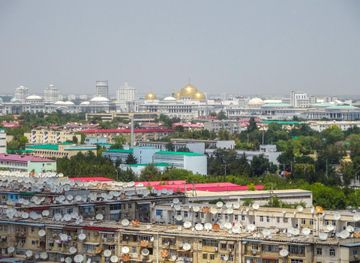
Looking beyond Bereket Railway Station? Discover Turkmenistan for broader travel guides, local hot-spots, and regional highlights.
Explore TurkmenistanBereket Railway Station in Photos
Browse through our photo collection highlighting the charm and character of the destination.


Bereket Railway Station: The Heart of Turkmenistan's Rail Network
Bereket Railway Station is a key hub in Turkmenistan's extensive rail network. Located in the city of Bereket, this station is a vital link between the Caspian Sea region and the rest of the country. Its strategic position makes it a bustling center of activity and a fascinating destination for tourists interested in rail travel and transportation history. The station's architecture is a blend of traditional Turkmen design and modern functionality. The building features intricate patterns and motifs that reflect the rich cultural heritage of the region. Inside, you'll find a clean and efficient facility with amenities that cater to both local commuters and international travelers. Bereket itself is a charming city where you can experience the daily life of Turkmen people. The local markets offer a variety of goods, from fresh produce to handmade crafts, providing a glimpse into the region's vibrant culture. The surrounding landscape, characterized by vast steppes and desert terrain, offers a stark yet beautiful backdrop, perfect for photography enthusiasts and nature lovers.