Dunnottar Castle
Clifftop fortress where Scottish crown jewels were hidden from Cromwell's army.
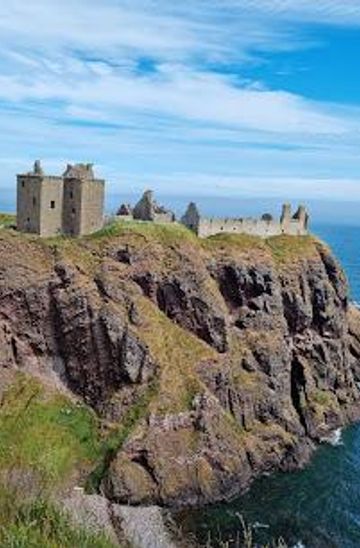
Perched dramatically on a 160-foot rocky promontory along the Aberdeenshire coast near Stonehaven, Dunnottar Castle stands as one of Scotland's most iconic and historically significant ruins. This clifftop fortress, surrounded by the North Sea on three sides, has witnessed over 1,500 years of turbulent Scottish history—from Pictish stronghold to Viking raids, Wars of Independence, and its most famous role as the secret refuge of the Honours of Scotland during Oliver Cromwell's siege in the 1650s. Today, visitors explore evocative roofless ruins dominated by the well-preserved 14th-century keep, wandering through the remnants of a once-impregnable seat of the powerful Earl Marischal family.
A brief summary to Dunnottar Castle
- Stonehaven, AB39 2TL, GB
- Click to display
- Click to display
- Duration: 1.5 to 3 hours
- Budget
-
 Outdoor
- Mobile reception: 4 out of 5
- Monday 10 am-2 pm
- Tuesday 10 am-2 pm
- Thursday 10 am-2 pm
- Friday 10 am-2 pm
- Saturday 10 am-2 pm
- Sunday 10 am-2 pm

Know before you go
Hi, I'm Eve. Here are a few practical things to know before exploring Dunnottar Castle.
- Wear sturdy footwear with good grip; the steep stone steps and uneven terrain can be slippery, especially in wet weather or high winds. The castle may close suddenly due to severe weather conditions, so check the Met Office forecast before visiting.
- Arrive early in summer months to secure parking and avoid peak crowds. Last entry is one hour before closing, so plan accordingly. Winter hours vary with sunset times, so verify opening times on the official website.
- Bring a camera or smartphone for photography; the coastal views and dramatic clifftop setting offer exceptional photo opportunities throughout the day, with particularly striking light during golden hour.
- Allow at least 1.5 to 2 hours to explore the ruins thoroughly and enjoy the surrounding coastal path. The walk down to Stonehaven village along the coastal trail is rewarding and offers opportunities to spot puffins nesting on the cliffs.
- Purchase tickets in advance online to avoid queues and ensure entry, particularly during peak summer season. Card payments only are accepted at the castle; online booking provides flexibility and guarantees admission.
Do you manage this location?
Take control to get all the benefits, like improved information, better appearance, and stronger visibility across AI-powered discovery. Learn more
Activate your presence
Getting There
-
By Car from Stonehaven
From Stonehaven town centre, follow the A92 south for approximately 2 miles. Dunnottar Castle is clearly signposted. The castle has an on-site car park with parking available, though spaces fill quickly during peak summer season (June–August). Driving time is approximately 5–10 minutes. The postcode AB39 2TL can be entered into GPS navigation systems.
-
By Bus from Aberdeen or Stonehaven
From Aberdeen city centre, take bus services X7, 113, or M9 heading toward Stonehaven. Journey time is approximately 45 minutes to 1 hour from Aberdeen. From Stonehaven, board the same bus services at Barclay Street near Market Square and request to alight at Dunnottar Junction. The bus stop is located on the A92, approximately 15 minutes' walk from the castle entrance. Buses run regularly throughout the day; service frequency varies seasonally. Single fares cost approximately £2–4 depending on starting point.
-
By Train and Bus from Aberdeen
Take the ScotRail train from Aberdeen to Stonehaven station, a journey of approximately 30 minutes. From Stonehaven station, transfer to bus services X7, 113, or M9 (approximately 10–15 minutes' journey to Dunnottar Junction). Total journey time is approximately 1 hour. Train fares vary; advance booking typically costs £5–12 for a single ticket.
-
On Foot from Stonehaven
From Stonehaven harbour area, follow the Aberdeenshire Coastal Trail southward for approximately 1.6 miles. The walk takes 30–40 minutes on well-marked paths with moderate elevation gain. The final approach involves steep stone steps ascending to the castle entrance. This scenic route offers coastal views and opportunities to observe seabirds. The path is accessible year-round but can be muddy or slippery after rain.
For the on-the-go comforts that matter to you
-
 Restrooms
-
 Drink Options
-
 Food Options
-
 Seating Areas
-
 Information Boards
-
 Visitor Center
Discover more about Dunnottar Castle
A Fortress Shaped by Centuries of Conflict
Dunnottar Castle's origins stretch back into Scotland's misty past. While legend credits Saint Ninian with establishing a chapel here in the 5th century, the earliest confirmed historical references appear in 7th-century records, when the site served as a Pictish stronghold commanding the northeast coast. The castle's strategic location—perched 160 feet above the turbulent North Sea on three sides—made it an invaluable defensive position, though this advantage would be tested repeatedly throughout the medieval period.The site endured relentless assault from Viking raiders seeking to control Scotland's fertile east coast. In 900 AD, King Donald II of Scotland, the first ruler formally titled King of Alba, was killed at Dunnottar while defending against Scandinavian invaders who subsequently destroyed much of the fortification. Centuries later, English forces under King Æthelstan raided as far north as Dunnottar in 934, demonstrating the castle's continued strategic importance and vulnerability.The Keith Family and Stone Fortifications
The turning point in Dunnottar's physical resilience came in 1392 when Sir William Keith, Great Marischal of Scotland, constructed the first permanent stone keep—the fortress's oldest surviving major structure. This marked a decisive shift from repeated destruction and rebuilding to genuine architectural permanence. The Keith family's stewardship transformed Dunnottar from a frequently ruined outpost into a seat of considerable power and prestige. By the 16th century, George Keith, 5th Earl Marischal, undertook an ambitious reconstruction project, converting the medieval fortress into a more comfortable residence with multiple buildings arranged around a courtyard, complete with a grand stone gatehouse known as Benholm's Lodging. These improvements created elegant living spaces while maintaining formidable defensive features, including gun ports strategically positioned to command the entrance.The Honours of Scotland and Cromwell's Siege
Dunnottar achieved its greatest historical prominence during the English Civil War and the subsequent Commonwealth period. When King Charles II visited Scotland in 1650 and was crowned in 1651, the Scottish Crown Jewels—the Honours of Scotland comprising the crown, sword, and scepter—could not safely return to Edinburgh as Oliver Cromwell's invading army advanced northward. The 7th Earl Marischal made the crucial decision to hide these priceless regalia at Dunnottar, smuggling them into the castle hidden within sacks of wool. Sir George Ogilvie took command of the fortress's defense, and for eight months the small garrison withstood Cromwell's relentless siege, enduring bombardment from heavy siege cannons. Against overwhelming odds, the defenders held firm, successfully preserving the Honours of Scotland from capture. This extraordinary feat of loyalty and courage cemented Dunnottar's place in Scottish national memory.Decline and Romantic Ruin
Following the Jacobite Rising of 1715, in which the 10th Earl Marischal joined the rebellion, the crown forfeited his titles and lands. Dunnottar passed from the Keith family's hands, and by the early 18th century, the castle lost its appeal as a residence. The nobility increasingly preferred more comfortable lowland estates to the windswept clifftop fortress. The castle was largely dismantled and abandoned to the elements, gradually transforming into the evocative ruin that captivates visitors today. What began as a strategic liability—its exposed, storm-battered location—became its greatest asset in the modern era, creating one of Scotland's most photographed and romantically compelling historical sites.A Living Monument to Scottish Resilience
Today, Dunnottar Castle stands as a powerful testament to Scottish determination and historical significance. The 14th-century keep remains substantially intact, its sturdy stone walls a reminder of medieval engineering prowess. The chapel, parts of which date to the 13th century, survives in fragmentary form. Most other structures exist as roofless ruins, their bare walls silhouetted against the dramatic coastal landscape. The site's theatrical setting—perched above churning seas with panoramic views of the Aberdeenshire coast—enhances its emotional impact, making it far more than a mere historical curiosity. Visitors ascending the steep pathway experience the same sense of isolation and vulnerability that medieval defenders and residents once knew, creating an immersive connection to centuries of Scottish struggle, courage, and cultural pride.Explore the best of what Dunnottar Castle has to offer















More about Aberdeenshire
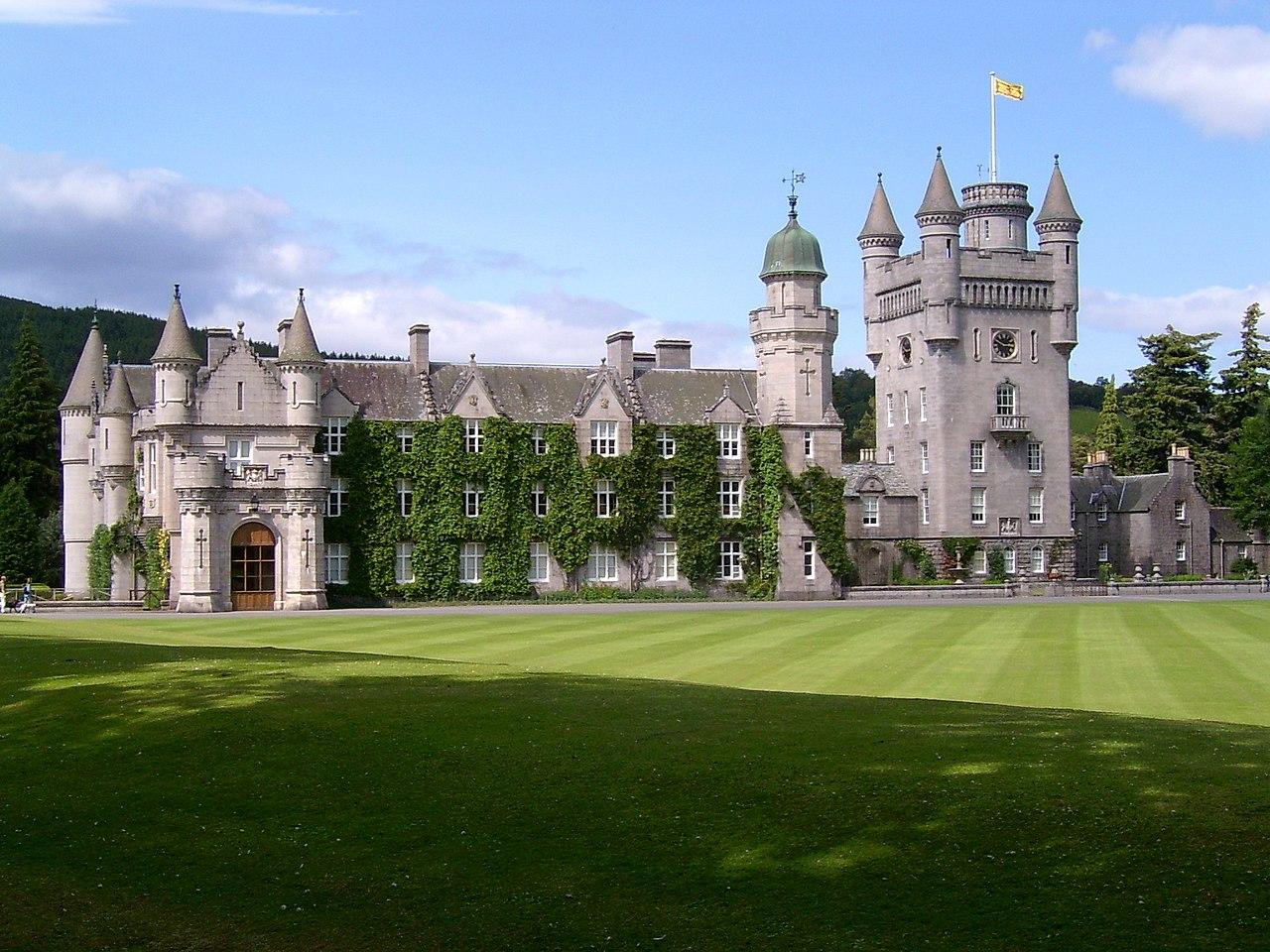
Discover Aberdeenshire: A land of castles, coastlines, and culinary delights in the heart of Scotland's stunning scenery.
Tell me more about Aberdeenshire