

Shane's Castle, Antrim Travel Guide
Ruined grandeur on Lough Neagh's shore—centuries of O'Neill dynasty power, fire, and legend.
Shane's Castle stands as a haunting testament to centuries of Irish nobility and turbulent history on the shores of Lough Neagh. Originally built in 1345 as Edenduffcarrick, this ruined estate near Randalstown in County Antrim bears the scars of two devastating fires—one in 1816 and another in 1922—yet remains a magnificent 2,700-acre demesne. Today, visitors explore the romantic ruins, historic grounds, and surrounding woodland while discovering tales of the powerful O'Neill dynasty and their enduring legacy in Northern Ireland.
A brief summary to Shane's Castle
- Antrim, GB
- Click to display
- Click to display
- Duration: 1.5 to 4 hours
- Free
-
 Outdoor
- Mobile reception: 4 out of 5
- Saturday 8 am-9 pm
- Sunday 8 am-9 pm

Know before you go
Hi, I'm Eve. Here are a few practical things to know before exploring Shane's Castle.
- Visit during clear weather to fully appreciate the panoramic views across Lough Neagh and the surrounding woodland. The ruins photograph beautifully in golden hour light, particularly at sunset.
- Wear sturdy footwear suitable for uneven terrain and potentially muddy ground, especially after rain. The estate grounds are extensive and walking paths may be challenging in wet conditions.
- Allow time to explore the surviving camellia house and the 1722 vault in the adjoining graveyard. These structures offer intimate glimpses into the estate's architectural heritage.
- Bring binoculars to observe wildlife and birdlife around Lough Neagh. The estate's woodland and waterside setting attract diverse species throughout the year.
- Check ahead for any special events or guided tours, as the estate occasionally hosts activities that provide deeper historical context and access to restricted areas.
Do you manage this location?
Take control to get all the benefits, like improved information, better appearance, and stronger visibility across AI-powered discovery. Learn more about listing your business on Evendo
Activate your presenceOther nearby places you may find interesting
The closest places of the same kind, if this one is not quite what you had in mind.
Explore Shane's Castle on the Map
A handpicked selection of must-see spots near Shane's Castle, mapped for you.
Getting There
-
Car from Antrim Town Centre
From Antrim town centre, take the A6 towards Randalstown. Follow signs for Shane's Castle, turning onto Castle Road. The journey takes approximately 10–15 minutes covering roughly 5 kilometres. On-site parking is available. The A6 is well-maintained and suitable for all vehicles year-round.
-
Bus from Antrim or Randalstown
Local bus services operate between Antrim and Randalstown, with stops near the estate entrance. Journey time from Antrim town centre is approximately 20–25 minutes. Services run several times daily, though frequency varies by day of week. Check local transport schedules for current timetables and fares, typically ranging from £2–4 per journey.
-
Walking from Randalstown
From Randalstown town centre, the estate is accessible via a scenic walk of approximately 3–4 kilometres along country roads and lanes. The journey takes 45–60 minutes depending on pace and route. The terrain is generally level but includes stretches along narrow rural roads without dedicated pavements. Walking is most pleasant in dry weather and daylight hours.
-
Taxi or Ride-Share from Antrim
Taxis and ride-share services operate throughout County Antrim. A journey from Antrim town centre to Shane's Castle typically costs £12–18 and takes 10–15 minutes. Services are available throughout the day and evening, though advance booking is recommended during peak hours.
For the on-the-go comforts that matter to you
-
 Parking Areas
-
 Information Boards
-
 Seating Areas
-
 Picnic Areas
Discover more about Shane's Castle
The O'Neill Dynasty and Medieval Origins
Shane's Castle traces its lineage to 1345, when it was first constructed as Edenduffcarrick, meaning "brow of black rock" in Irish. The castle took its present name from Shane McBrian O'Neill, the last captain of Clanaboy, after King James I granted him the original estate in 1607 following the Plantation of Ulster. The O'Neill family, one of Ireland's most powerful clans, ruled vast territories across Ulster for centuries. Their ancient stronghold stood at Dungannon, their kings were elected in the Primate's Palace in Armagh, and inaugurated with crown and golden shoe on the hill at Tullahogue. The red hand of Ulster—the province's armorial ensign—became forever associated with this mighty dynasty.The Magnificent Castellated Mansion
By the 18th century, Shane's Castle had evolved into a magnificent three-storey castellated mansion with a basement, battlemented parapet, curved bows, and projecting end bays. The main elevation faced the lough shore at right angles, commanding views across the water. The estate flourished under successive owners, who added elegant features including a grand terrace completed around 1800, a conservatory of rare and foreign plants, and a fortified esplanade furnished with twenty pieces of cannon dated 1790. The camellia house, designed by renowned architect John Nash in 1815, became a celebrated feature, filled with exotic specimens. An extensive library and valuable paintings adorned the interiors, while the surrounding demesne—eventually extending to 2,700 acres—became renowned for its magnificent oak trees, the finest in northern Ireland, and celebrated gardens famous throughout the region.Catastrophe and Resilience: The Fires of 1816 and 1922
On a fateful night in 1816, disaster struck when an accidental fire, caused by a jackdaw's nest igniting in an unused chimney, completely gutted the main block of the castle. The entire structure was consumed, destroying the extensive library and invaluable paintings within. Only the fortified esplanade, cannon, and grand conservatory escaped without injury. The 1st Earl, so dispirited by the loss, abandoned his plans to rebuild the castle and instead constructed a small residence adjoining the stables. More than a century later, on 20 May 1922, during Ireland's Civil War, the castle fell victim to an IRA attack. The O'Neill family was held at gunpoint while the house was raided and burned, with all but the kitchen wing destroyed. The cost of damages reached approximately £100,000—a staggering sum for the era.A Living Estate and Modern Legacy
Despite these catastrophes, Shane's Castle remains one of the largest and finest private demesnes in Northern Ireland. The working estate encompasses approximately 800 acres of farmland and 1,000 acres of woodland, preserving both agricultural heritage and natural beauty. The ruins of the original dwelling still stand on the shores of Lough Neagh, alongside the surviving 18th-century house with its lakeside terrace and the 1722 vault. The Nash-designed camellia house continues to flourish with rare plants. From 1971 to 1995, Lord O'Neill opened the estate as a public attraction featuring a narrow-gauge railway pieced together from rescued steam and diesel locomotives, ex-Donegal Railways railcars, and Belgian trams—a unique heritage experience that brought the castle's story to new generations.Lough Neagh and Legendary Traditions
The castle's position on the north-east shore of Lough Neagh places it within a landscape steeped in myth and legend. Local traditions speak of the lough's miraculous properties—on Midsummer Eve, great crowds once gathered to bathe in its waters seeking cures for all manner of sickness, and herds of cattle were driven into it for the same purpose. The water itself was said to possess the remarkable quality of petrifying wood. Ram's Island, visible from the estate, has belonged to the O'Neill family since the 18th century and bears the ruins of a round tower and remnants of an old church, adding another layer of historical intrigue to the surrounding waters.Cultural Significance and Enduring Influence
Shane's Castle's influence extended far beyond its walls. The estate became a retreat for notable figures, including author Ian Fleming, creator of James Bond, who spent considerable time exploring the 1,800-acre grounds and gazing across the turbulent waters of Lough Neagh. The castle's dramatic history—involving wartime separations, romantic entanglements, and family tragedy—mirrors the very intrigue that would later captivate millions through Fleming's literary creations. Today, the estate remains under the stewardship of the O'Neill family, with the current Lord O'Neill, a keen environmentalist, maintaining the demesne as both a working agricultural property and a window into centuries of Irish aristocratic heritage.












Your all‑in‑one travel companion app
Explore expert travel guides, compare and book tours, experiences, hotels, and more—all from the palm of your hand. Download now for seamless trip planning wherever your wanderlust takes you.


Explore More of Antrim
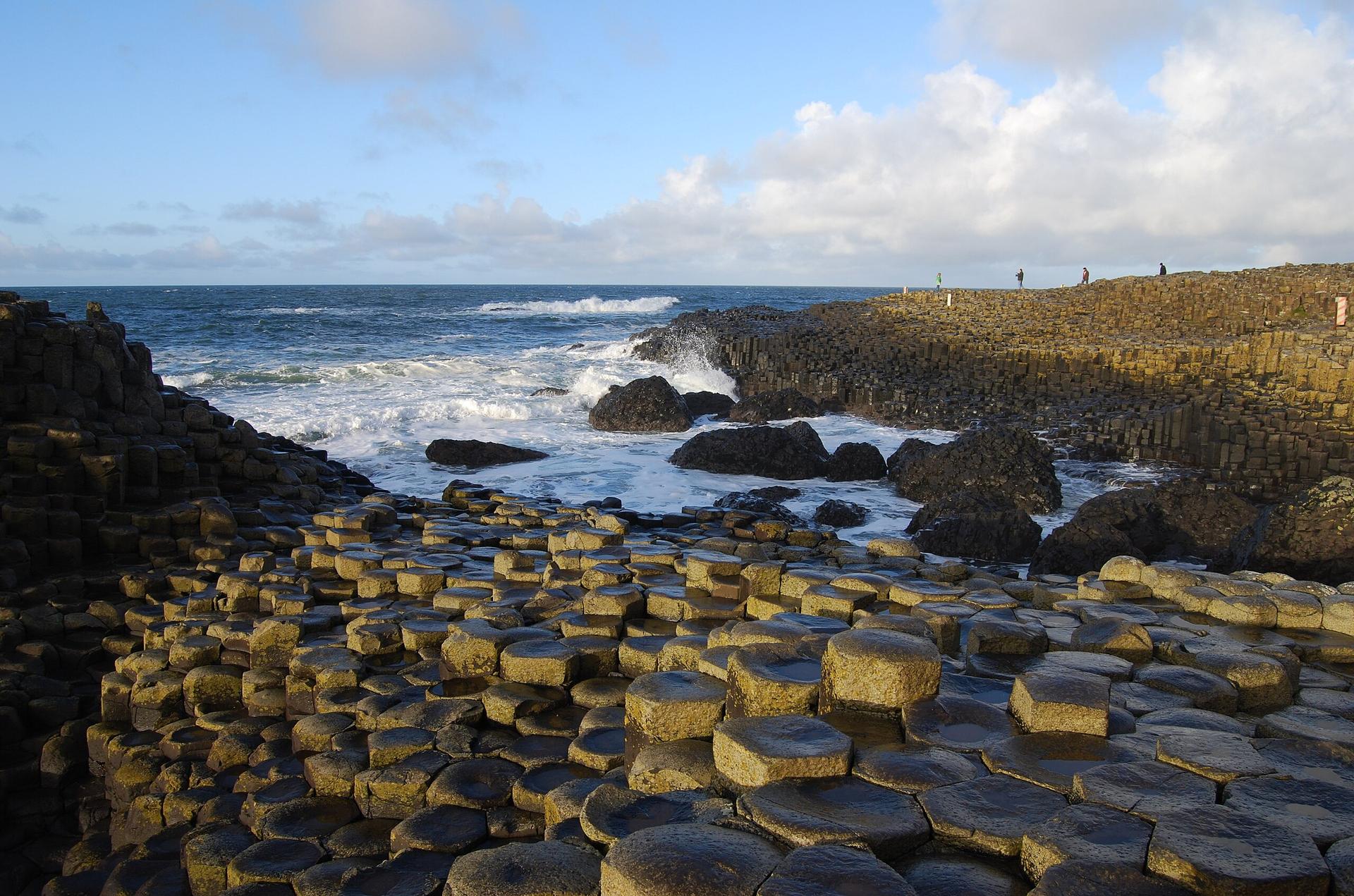
Looking beyond Shane's Castle? Discover Antrim for broader travel guides, local hot-spots, and regional highlights.
Explore Antrim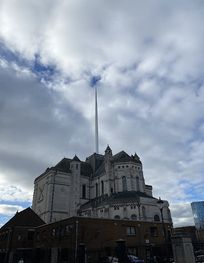
Belfast’s grand civic heart, where Edwardian architecture meets city history in Donegall Square’s green heart.
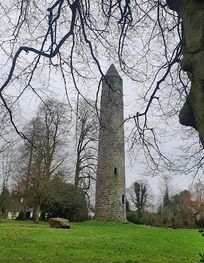
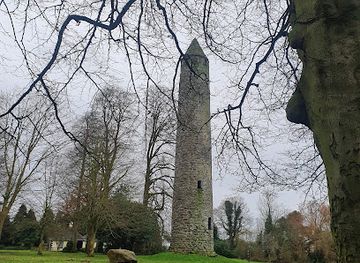
Explore Antrim’s 28-metre medieval round tower, a resilient symbol of Ireland’s monastic heritage and Viking-era defense.
