Saddell ABBEY Travel Guide
Free Guide: Explore the serene ruins of Saddell Abbey, a 12th-century Cistercian monastery rich in medieval art and clan history on Scotland’s Kintyre coast.


A brief summary of Saddell ABBEY
Explore the serene ruins of Saddell Abbey, a 12th-century Cistercian monastery rich in medieval art and clan history on Scotland’s Kintyre coast.
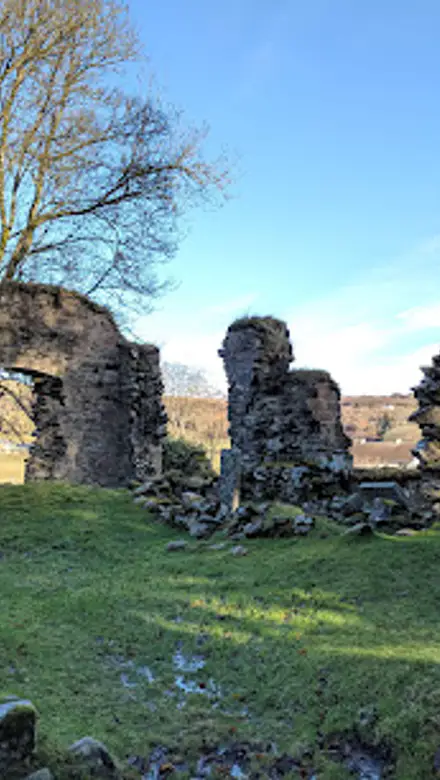
Saddell Abbey, founded around 1160 by Somerled, Lord of Kintyre, is a tranquil ruin of a Cistercian monastery nestled in a peaceful glen on the east coast of the Kintyre peninsula near Campbeltown. Known for its medieval carved grave slabs and rich connections to Clan MacDonald and the Lords of the Isles, the site offers visitors a glimpse into Scotland’s medieval ecclesiastical heritage amid serene natural surroundings.
On-site amenities
 Restrooms
 Seating areas
 Information boards
Opening hours
- Every dayOpen 24 hours
Opening hours as listed on the venue’s Google Business Profile. Hours can change for services and special events, so check with the venue before you go.
- Address
- B842, Campbeltown PA28 6RA
Getting there
Car
Bus
Walking
Discover more about Saddell ABBEY
Origins and Founding Legacy
Saddell Abbey’s story begins in the mid-12th century, traditionally founded in 1160 by Somerled, the Warrior King and Lord of Kintyre, whose descendants became the powerful Clan MacDonald and Lords of the Isles. After Somerled’s death in 1164, his son Reginald (Ragnall) continued the abbey’s construction, bringing monks from Mellifont Abbey in Ireland to establish the Cistercian community. The abbey’s architecture and surviving details reflect this Irish influence, with the site originally comprising a cruciform church and conventual buildings arranged around a cloister.
Medieval Monastic Life and Artistic Heritage
For over three centuries, Saddell Abbey functioned as a peaceful monastic center, serving as the MacDonald clan’s burial ground and a spiritual hub in Argyll. The abbey is renowned for its remarkable collection of medieval carved grave slabs and effigies, many depicting knights in West Highland armor, priests in prayer, and symbolic motifs like swords and galleys. These stones, sheltered under cover at the site, represent the distinctive Kintyre school of medieval sculpture and are among the finest examples of their kind in Scotland.
Decline, Secularization, and Transformation
By the late 15th century, Saddell Abbey’s monastic community had faded, coinciding with the decline of the MacDonald protectors. In 1507, King James IV granted the abbey and its lands to David Hamilton, Bishop of Argyll, who repurposed much of the abbey’s stone to build nearby Saddell Castle, a four-storey tower house on the shore. The abbey itself fell into ruin, with only parts of the presbytery, north transept, and refectory walls remaining. The castle, restored by the Landmark Trust, carries its own history of MacDonald and Campbell ownership, including reputed hauntings and a connection to Paul McCartney’s "Mull of Kintyre" music video.
Setting and Visitor Experience Today
Nestled in a quiet glen where the Saddell Water meets the Kilbrannan Sound, the abbey ruins are surrounded by yew trees and rhododendrons, creating a tranquil atmosphere. Visitors can explore the graveyard, view the intricately carved medieval stones, and enjoy the peaceful coastal landscape. Nearby, the restored Saddell Castle adds historical depth to the visit, while the adjacent beach at Saddell Bay offers scenic beauty and a connection to local cultural landmarks such as the Antony Gormley sculpture.
Historical Significance and Cultural Connections
Saddell Abbey stands as a testament to the medieval Gaelic and Norse heritage of western Scotland, reflecting the power and influence of the Lords of the Isles. It embodies the religious, artistic, and clan history of the region, linking to broader narratives of Scottish history including the Wars of Independence and the shifting fortunes of noble families. The abbey’s ruins and sculptural heritage continue to captivate historians, archaeologists, and visitors interested in Scotland’s past.
Conservation and Legacy
Though much of the original abbey fabric was lost or repurposed over centuries, the site remains protected and accessible to the public. Efforts to preserve the medieval grave slabs and maintain the ruins ensure that Saddell Abbey endures as a cultural and historical landmark. Its peaceful setting invites reflection on the passage of time and the enduring legacy of Scotland’s monastic and clan traditions.
Evendo Review Centre
 Google
Guest reviews
Best time to go
Quietest: Jan, Feb & Dec · before 6am or at 8pm
Busy times are Evendo estimates for a typical year, to help you plan. Actual crowds vary with events, school holidays and the weather.
Explore Saddell ABBEY on the map
A handpicked selection of must-see spots near Saddell ABBEY, mapped for you.
Get your free copy of our complete guide to Saddell ABBEY, delivered straight to you.
Everything on this page, from opening hours and how to get there to Eve’s tips and the best time to go, in one PDF you can read offline, print or share.
Already have an account? Sign in
Your Saddell ABBEY guide is ready.
We'll send it to · Not you? Sign out

Getting your guide ready…
We are putting together a fresh copy of the Saddell ABBEY guide. This can take up to a minute.
This can take a few moments. If your browser asks, choose Allow so the download can start. You'll find the guide in your Downloads folder.
Nothing happened? Download it again
Sorry, the guide is taking longer than usual. Please try again in a minute, or get it by email instead.
Other nearby places you may find interesting
The closest places of the same kind, if this one is not quite what you had in mind.
-
-
-
-
-


Swipe for more places
More to explore near Saddell ABBEY

 Best experiences near Saddell ABBEY
 Best hotels near Saddell ABBEY
 Best landmarks near Saddell ABBEY
 Best attractions near Saddell ABBEY
 Best shops near Saddell ABBEY
 Best restaurants near Saddell ABBEY
 Best bars near Saddell ABBEY
Do you manage this location?
Take control to get all the benefits, like improved information, better appearance, and stronger visibility across AI-powered discovery.
Explore more

Explore more of Argyllshire
Explore Argyllshire: A Scottish paradise of rugged coastlines, ancient castles, and charming villages, offering a blend of natural beauty and rich history.
Explore Argyllshire
Explore more of United Kingdom
Discover the United Kingdom: A blend of rich history, stunning landscapes, and vibrant cities, offering a unique travel experience for every visitor.
Explore United Kingdom