Bolton Castle Travel Guide
A 14th-century palace-fortress where Mary, Queen of Scots was imprisoned and six centuries of English history unfolds within intact medieval walls.
A Palace-Fortress of Uncompromising Ambition
Bolton Castle stands as a masterpiece of late medieval military architecture, built between 1378 and 1399 by Sir Richard le Scrope, one of England's most powerful courtiers and Lord Chancellor to King Richard II. The castle represents an extraordinary investment of wealth and vision—construction cost an estimated 18,000 marks, an astronomical sum equivalent to roughly £90 million in modern currency. Master mason John Lewyn, who also worked on Raby Castle and Dunstanburgh Castle, directed the construction from a contract dated September 1378, with the royal licence to crenellate granted in July 1379. The castle's design exemplifies the quadrangular fortress type: four substantial corner towers connected by high curtain walls enclosing a spacious inner courtyard, with no central keep. Each corner tower rises four storeys, while the connecting ranges rise three storeys, creating a harmonious balance of defensive capability and residential comfort. The rectangular towers do not extend far beyond the curtain walls, yet machicolations crown the walls, enabling defenders to drop objects onto attackers below. Each internal courtyard door is protected by its own portcullis, many still retaining murder holes—grim reminders of the castle's martial purpose. The gatehouse on the eastern range provides the primary entrance, itself fortified and controlled.A Fortress Designed for Living
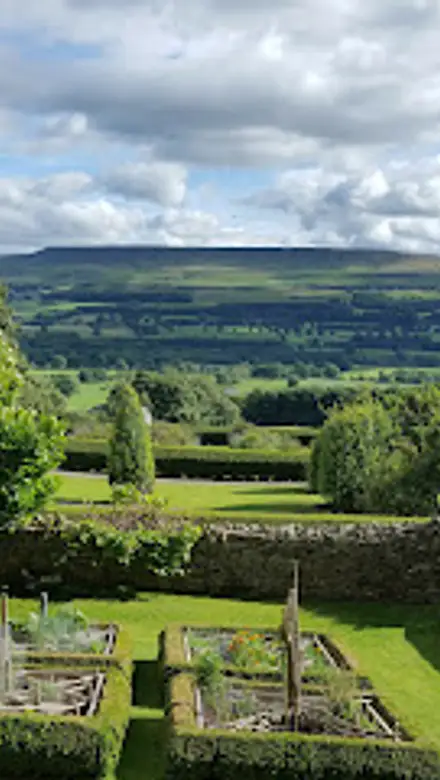
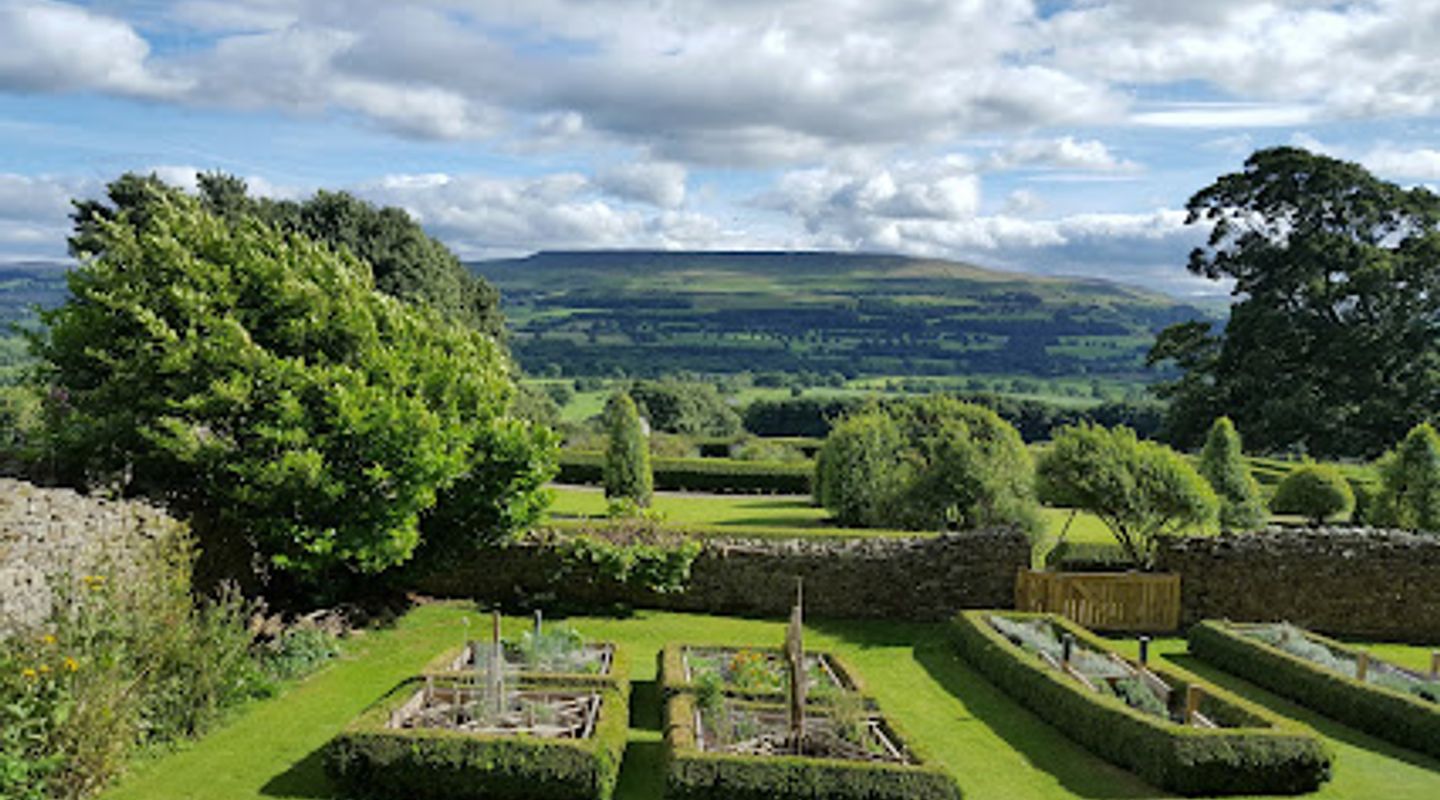
What distinguishes Bolton from purely military strongholds is its sophisticated domestic architecture. The upper floors of each tower contain spacious, comfortable private apartments with fireplaces, large windows, and decorated chambers. The castle was conceived as a luxurious family residence as much as a defensive structure—a palace wrapped in fortress walls. The Great Chamber, Solar, Nursery, Old Kitchens, Armory, and Dungeon all survive, along with a chapel, stables, and extensive service areas. About one-third of the rooms remain fully intact, while the remainder is almost completely accessible to visitors, offering genuine insight into medieval aristocratic life. The castle's setting amplifies its grandeur. Positioned on rising ground overlooking Wensleydale on the edge of the Yorkshire Dales National Park, Bolton commands sweeping views across the valley. The surrounding landscape originally included an extensive medieval garden covering nearly 20 acres, with deer parks enclosed by high walls—symbols of the owner's elevated status. The original Forest of Wensleydale would have been visible from the castle's towers in 1379.Six Centuries of Turbulent History
Bolton Castle's walls have witnessed extraordinary historical events. In 1536, John, 8th Baron Scrope, supported the Pilgrimage of Grace rebellion against Henry VIII's religious reforms and granted sanctuary to Adam Sedbar, Abbot of Jervaulx. When the King's men pursued them, Scrope fled to Skipton Castle, but the Abbot was captured and executed. In retribution, Henry VIII ordered Bolton Castle set ablaze, causing severe damage that took years to repair. The castle's most famous chapter began in July 1568, when Mary, Queen of Scots arrived as a prisoner. After her defeat at the Battle of Langside in Scotland, Mary fled to England, where she was perceived as a threat to Queen Elizabeth I. Initially held at Carlisle Castle, Mary was deemed too secure a risk there and was transferred to Bolton under the watch of Sir Henry Scrope. Mary occupied apartments in the southwest tower, where she remained for six months before being transferred to Tutbury Castle in Staffordshire during a heavy snowstorm. Contemporary accounts describe her as free to wander the grounds and often going hunting; it was during her captivity at Bolton that she learned to speak English, having previously spoken only French, Latin, and Scots. During the English Civil War, Bolton Castle endured a siege lasting over a year. The defending garrison, led by John Scrope, held out until 1644, when they finally surrendered on honourable terms after consuming all their horses to avoid starvation. Parliamentary forces subsequently "slighted" the castle in 1647—deliberately damaging its defensive capability to render it untenable as a stronghold. Despite this destruction, much survived, including the southwest tower and west curtain wall with their private apartments intact.Preservation and Modern Stewardship
In 1675, the Scrope family moved to the newly completed Bolton Hall, abandoning the castle as a residence. The northeast tower collapsed in 1762, yet the structure remained largely sound. Between 1992 and 1994, English Heritage undertook a comprehensive four-phase conservation project, addressing serious deterioration through careful repointing, wall consolidation, and digital recording. This work identified six distinct historic periods of construction, occupation, alteration, dereliction, and conservation. Bolton Castle has never been sold and remains in the ownership of the descendants of the Scrope family to this day. The castle is designated a Grade I listed building and a Scheduled Ancient Monument, reflecting its national significance as one of England's most complete and best-preserved medieval palace-fortresses. The surrounding village of Castle Bolton takes its name from this remarkable structure, which continues to dominate Wensleydale with its commanding presence.A brief summary to Bolton Castle
- North Yorkshire, Nr Leyburn, DL8 4ET, GB
- Click to display
- Click to display

Know before you go
Hi, I'm Eve. Here are a few practical things to know before exploring Bolton Castle.
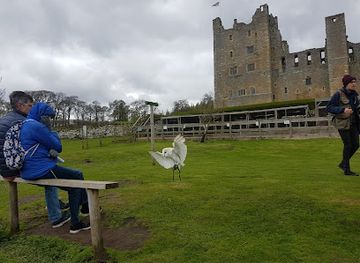
- Visit in spring or early autumn for the best combination of mild weather, lower crowds, and active falconry displays. The castle closes for the winter season, so plan accordingly.
- Allocate at least 3 hours to explore the castle rooms, towers, gardens, and participate in activities. The southwest tower apartments where Mary, Queen of Scots was held are particularly atmospheric.
- Wear comfortable walking shoes with good grip, as the castle involves climbing multiple flights of narrow stone stairs and uneven floors. Some areas require ducking through low doorways.
- Check the daily schedule for falconry flying displays and archery talks, which run at specific times and enhance the medieval experience significantly.
- The tea room serves afternoon tea from 2:30 pm and Yorkshire tapas in the Guest Hall. Book ahead for groups or special occasions, as the castle also hosts weddings and private events.
Do you manage this location?
Take control to get all the benefits, like improved information, better appearance, and stronger visibility across AI-powered discovery. Learn more about listing your business on Evendo
Activate your presenceOther nearby places you may find interesting
The closest places of the same kind, if this one is not quite what you had in mind.

Explore Bolton Castle on the Map
A handpicked selection of must-see spots near Bolton Castle, mapped for you.
Unlock the Best of Bolton Castle
Buy tickets
-
No tickets available
Book tours with entry


Getting There
-
By Car
From Leyburn town centre, follow the B6160 northwestward toward Wensleydale for approximately 4 miles. Bolton Castle is signposted from the main road. The journey takes around 10–15 minutes. Ample on-site parking is available. From Skipton (15 miles south), allow 25–30 minutes via the A65 and B6160. From York (40 miles south), allow 50–60 minutes via the A64 and A1(M). Parking is charged at the castle.
-
By Bus
The Wensleydale Railway operates seasonal heritage train services from Leeming Bar station (near Northallerton) to Leyburn, approximately 10 miles south of Bolton Castle. Journey time is roughly 1 hour. From Leyburn, local taxi services or the seasonal Wensleydale Wanderer bus service can reach the castle in 15–20 minutes. Service frequency is limited, particularly outside summer months, so plan ahead.
-
By Walking
From Leyburn town centre, a scenic walking route of approximately 4 miles takes 90–120 minutes via country lanes and footpaths through Wensleydale. The terrain is gently rolling with some moderate inclines. The final approach involves a steep uphill section of approximately 0.5 miles to the castle entrance. This route is suitable for moderately fit walkers and offers excellent views of the valley. Waterproof footwear is recommended, particularly in wet conditions.
-
By Taxi
Taxis from Leyburn town centre (approximately 4 miles) typically cost £12–18 and take 10–15 minutes. From Northallerton railway station (20 miles), expect £35–50 and 30–40 minutes. From Skipton (15 miles), expect £25–35 and 25–30 minutes. Local taxi firms operate year-round, though advance booking is advisable, particularly during peak season.















Your all‑in‑one travel companion app
Explore expert travel guides, compare and book tours, experiences, hotels, and more—all from the palm of your hand. Download now for seamless trip planning wherever your wanderlust takes you.


Experience Britain’s highest pub with historic charm, hearty local fare, and breathtaking Yorkshire Dales views at The World Famous Tan Hill Inn.
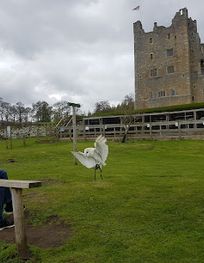
Explore Bolton Castle, a stunning 14th-century fortress in North Yorkshire, famed for its medieval architecture and Mary, Queen of Scots’ imprisonment.