

Peace Wall Belfast, Belfast Travel Guide
Free Guide: A barrier transformed into a canvas of hope—Belfast's Peace Wall tells stories of division, resilience, and the ongoing journey toward reconciliation.


A brief summary of Peace Wall Belfast
A barrier transformed into a canvas of hope—Belfast's Peace Wall tells stories of division, resilience, and the ongoing journey toward reconciliation.
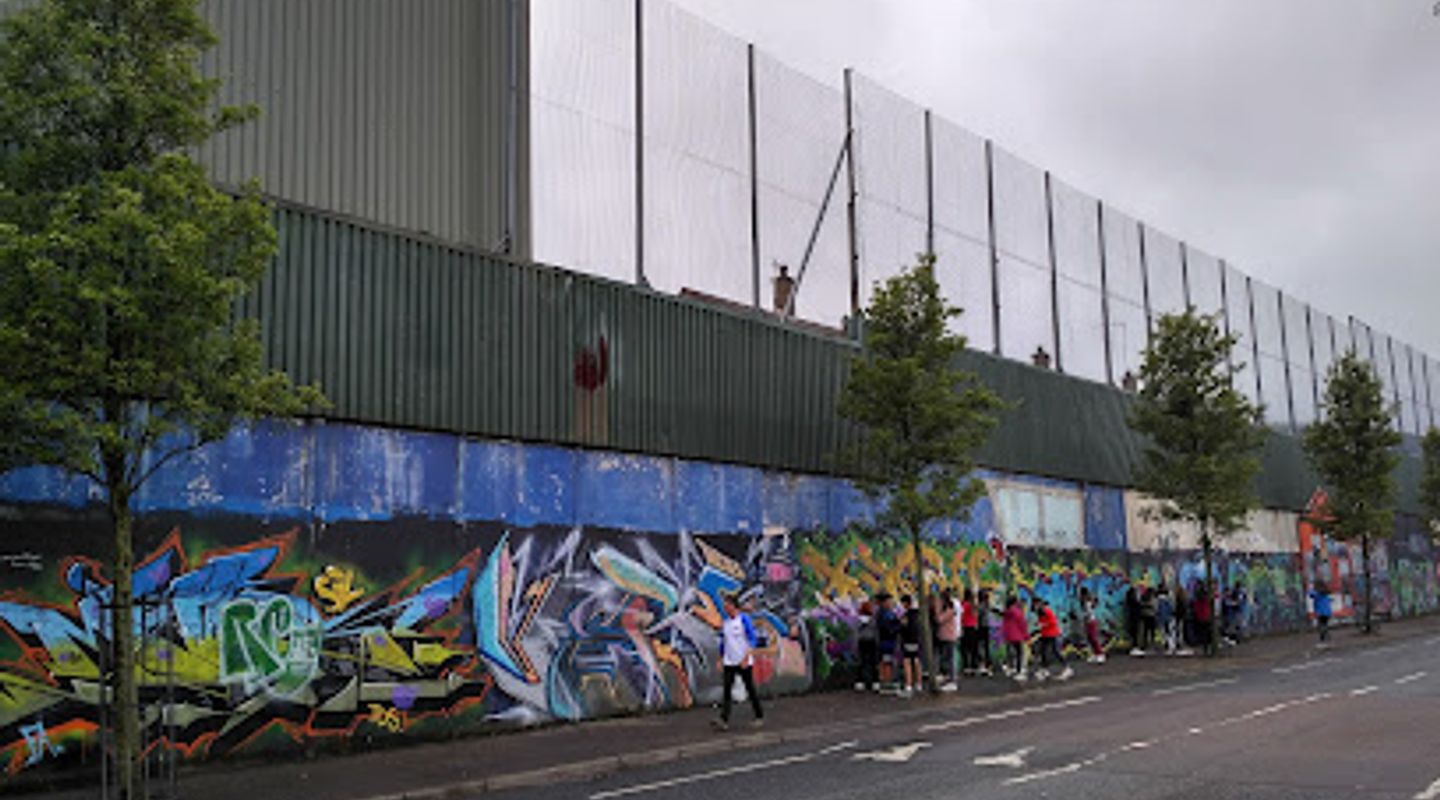
The Belfast Peace Wall at Cupar Way stands as one of Northern Ireland's most significant historical landmarks, a powerful symbol of division and reconciliation. Originally constructed in 1969 during The Troubles, this barrier separates predominantly Catholic and Protestant communities. Today, it serves as a canvas for vibrant murals and messages of peace, attracting visitors from around the world who come to reflect on the city's turbulent past and ongoing journey toward unity. The wall's transformation from a symbol of conflict into an artistic expression of hope makes it an essential stop for understanding Belfast's complex history.
On-site amenities
 Food options
 Drink options
 Restrooms
 Information boards
Opening hours
- Every day7 am–7 pm
Opening hours as listed on the venue’s Google Business Profile. Hours can change for services and special events, so check with the venue before you go.
- Address
- 15 Cupar Way, Belfast BT13 2RX
- Phone
- Website
Getting there
Walking from Belfast City Centre
Black Cab Tour
Guided Walking Tour
Public Transport and Walking
Discover more about Peace Wall Belfast
Origins During The Troubles
The Peace Wall at Cupar Way emerged from one of Northern Ireland's darkest periods. In August 1969, intense sectarian violence erupted between Catholic nationalist and Protestant unionist communities, prompting British troops to construct temporary barriers from corrugated iron and barbed wire. What began as an emergency measure quickly hardened into permanent structures of brick, steel, and concrete. The Cupar Way wall became one of the most prominent examples, stretching approximately 800 metres in length and reaching heights of up to 8 metres. Over 50 years later, it remains a tangible reminder of the fear and division that gripped Belfast during the 30-year conflict known as The Troubles.
A Canvas for Artistic Expression
Unlike many other peace walls that remain stark and imposing, the Cupar Way barrier has transformed into a vibrant gallery of political murals, street art, and personal messages. Local and international artists have covered its surface with powerful imagery representing both local struggles and global movements for justice and peace. Visitors leave handwritten messages of hope, solidarity, and reflection on the wall's surface, creating an ever-evolving testament to the human desire for reconciliation. The murals depict historical figures, political statements, and symbols of cultural identity from both communities, making the wall a living document of Belfast's narrative.
Symbol of Resilience and Reconciliation
The Peace Wall represents far more than physical division. It embodies the resilience of communities that endured decades of violence and the complex process of moving toward peace. The wall's continued existence reflects ongoing debates about reconciliation—some view it as a necessary security measure, while others see it as a barrier to unity that should eventually be removed. In 2013, the Northern Irish Executive committed to removing all peace walls by mutual consent, yet progress has been slow, highlighting the delicate nature of healing deeply rooted divisions. The wall stands as a paradox: a symbol of conflict that has become a symbol of hope.
The Interface Between Communities
Cupar Way's location in West Belfast places it at the heart of one of the city's most historically significant interfaces. The wall physically separates neighbourhoods with distinct cultural identities, religious affiliations, and political perspectives. Walking along the wall reveals the everyday reality of life in a divided city—residential streets, local businesses, and community spaces that exist in close proximity yet remain separated by concrete and steel. Gates, often closed at night, control movement between areas, creating isolated communities with their own traditions, shops, and social networks. This physical separation has shaped generations of residents' experiences and continues to influence daily life.
A Major Tourist Destination
In recent years, the Peace Wall at Cupar Way has become one of Belfast's most visited attractions. Black cab tours regularly stop here, allowing visitors to explore the murals, photograph the artwork, and leave their own messages of peace. Walking tours led by local guides provide deeper context into the historical events and personal stories behind the wall's existence. The site attracts history enthusiasts, photographers, artists, and curious travellers seeking to understand Northern Ireland's complex past. The wall's transformation into a tourist destination reflects how communities can reclaim spaces of conflict and transform them into places of learning and reflection.
Ongoing Significance in Modern Belfast
Despite the signing of the Good Friday Agreement in 1998, the Peace Wall remains standing, and remarkably, additional walls have been erected in the decades since. The wall continues to serve practical and symbolic functions—providing a sense of security for residents while simultaneously challenging visitors to contemplate the nature of division, conflict resolution, and the possibility of change. The vibrant murals and messages covering its surface suggest a community engaged in ongoing dialogue about its future. The wall invites reflection on how societies move beyond conflict, the role of art in healing, and the enduring human capacity for hope even in the most challenging circumstances.
Evendo Review Centre
 Google
Guest reviews
Best time to go
Quietest: Jan, Feb & Dec · before 6am or at 10pm
Busy times are Evendo estimates for a typical year, to help you plan. Actual crowds vary with events, school holidays and the weather.
Explore Peace Wall Belfast on the map
A handpicked selection of must-see spots near Peace Wall Belfast, mapped for you.
Get your free copy of our complete guide to Peace Wall Belfast, delivered straight to you.
Everything on this page, from opening hours and how to get there to Eve’s tips and the best time to go, in one PDF you can read offline, print or share.
Already have an account? Sign in
Your Peace Wall Belfast guide is ready.
We'll send it to · Not you? Sign out

Getting your guide ready…
We are putting together a fresh copy of the Peace Wall Belfast guide. This can take up to a minute.
This can take a few moments. If your browser asks, choose Allow so the download can start. You'll find the guide in your Downloads folder.
Nothing happened? Download it again
Sorry, the guide is taking longer than usual. Please try again in a minute, or get it by email instead.
Unlock the best of Peace Wall Belfast
Skip-the-line tickets, guided tours with entry, and walking tours of the area, booked in a few clicks.




Other nearby places you may find interesting
The closest places of the same kind, if this one is not quite what you had in mind.
-
-
-
-
-


Swipe for more places
More to explore near Peace Wall Belfast

 Best experiences near Peace Wall Belfast
 Best hotels near Peace Wall Belfast
 Best landmarks near Peace Wall Belfast
 Best attractions near Peace Wall Belfast
 Best shops near Peace Wall Belfast
 Best restaurants near Peace Wall Belfast
 Best bars near Peace Wall Belfast
Do you manage this location?
Take control to get all the benefits, like improved information, better appearance, and stronger visibility across AI-powered discovery.
Explore more

Explore more of Belfast
Discover Belfast, a city of history, culture, and modern charm, where the legacy of the Titanic meets vibrant street life and stunning natural beauty.
Explore Belfast
Explore more of United Kingdom
Discover the United Kingdom: A blend of rich history, stunning landscapes, and vibrant cities, offering a unique travel experience for every visitor.
Explore United Kingdom
