Chester Cross, Chester Travel Guide
Medieval heart of Chester where Roman streets meet Tudor architecture and civic tradition.
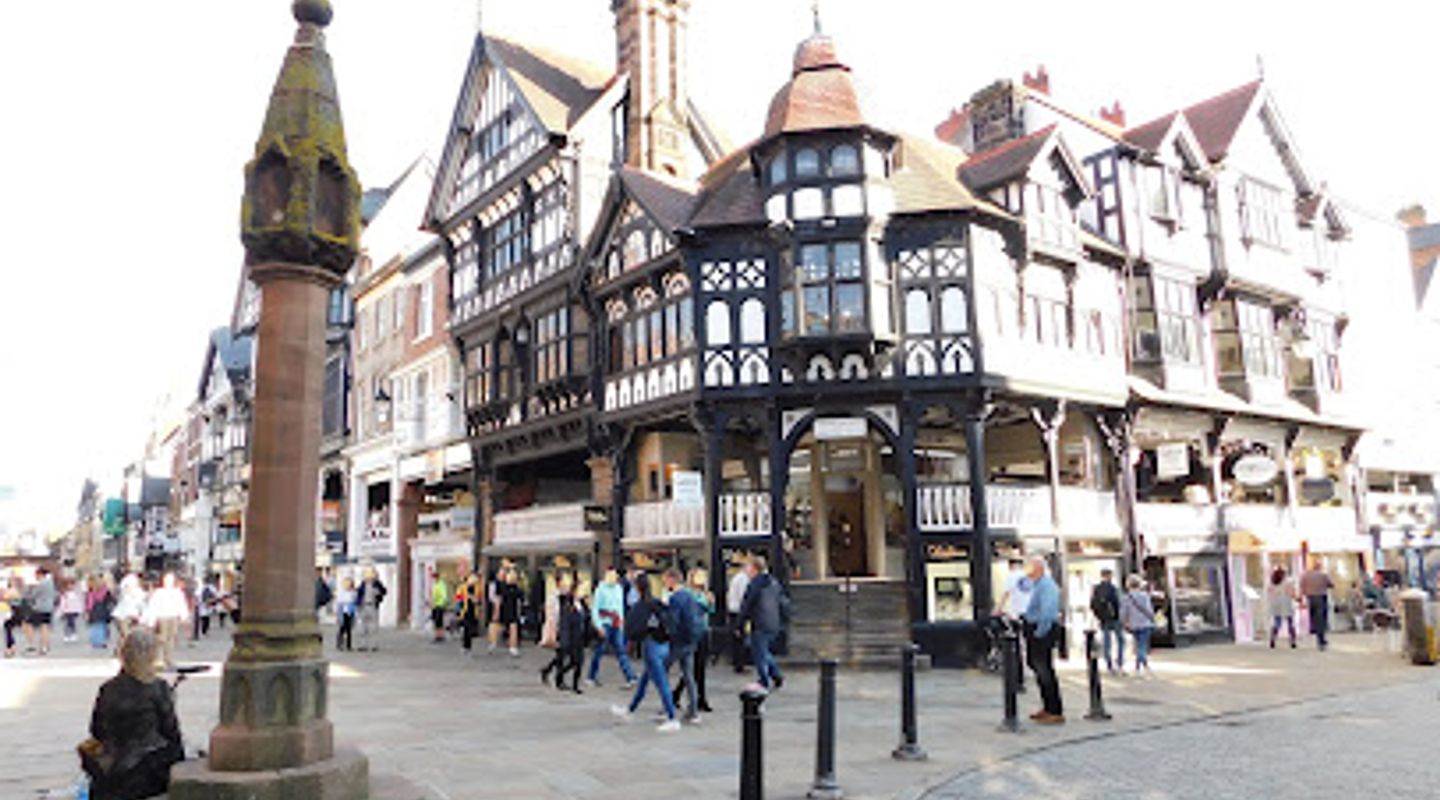
Chester Cross is the historic heart of Chester, a Grade II listed medieval cross standing at the junction of four ancient Roman streets in the city centre. Originally erected in the medieval period, the cross was damaged during the English Civil War and removed, but was painstakingly restored and reinstated in its original position in 1975 using recovered fragments. Today it serves as a vibrant meeting point, civic focal point, and gateway to Chester's famous Rows and distinctive black-and-white Tudor architecture.
A brief summary to Chester Cross
- 46 Watergate St, Chester, GB
- Click to display
- Duration: 0.5 to 2 hours
- Free
-
 Outdoor
- Mobile reception: 5 out of 5

Know before you go
Hi, I'm Eve. Here are a few practical things to know before exploring Chester Cross.
- Visit during summer months to experience the town crier's traditional midday proclamations from the steps of the High Cross, a living link to centuries of civic ceremony.
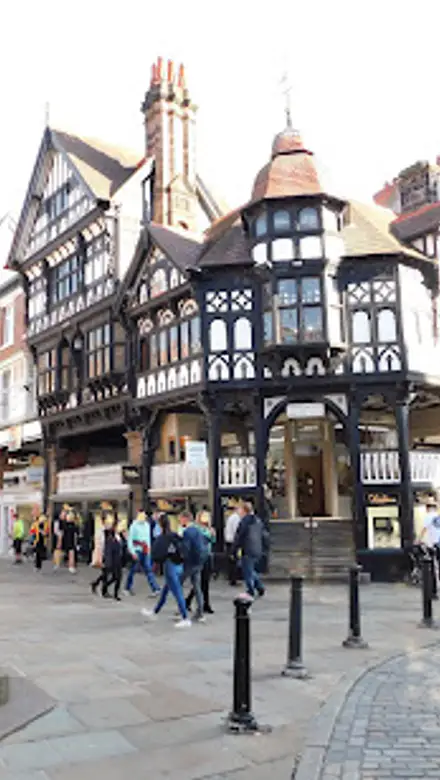
- Look up at the surrounding black-and-white Tudor-style buildings and Victorian architecture while exploring the junction—the facades tell stories of Chester's architectural evolution.
- Use Chester Cross as your starting point for exploring the Rows, Chester's unique two-tiered medieval shopping galleries that radiate from the junction.
- Take time to read the heritage interpretation panel near St Peter's Church, which explains the cross's role as a marker of the Roman fortress's southern boundary.
- The junction is an ideal meeting point and photo spot—the convergence of historic streets and architecture creates compelling compositions from multiple angles.
Do you manage this location?
Take control to get all the benefits, like improved information, better appearance, and stronger visibility across AI-powered discovery. Learn more about listing your business on Evendo
Activate your presenceOther nearby places you may find interesting
The closest places of the same kind, if this one is not quite what you had in mind.


Explore Chester Cross on the Map
A handpicked selection of must-see spots near Chester Cross, mapped for you.
Unlock the Best of Chester Cross
Buy tickets
-
No tickets available
Book tours with entry


Getting There
-
Train
Chester railway station is approximately 10–15 minutes walk from Chester Cross. Exit the station and head north through the city centre following signs for the town centre or the Rows. The walk is straightforward through pedestrianised shopping streets. No parking or accessibility concerns on this route.
-
Local Bus
Multiple local bus services stop in Chester city centre near the Cross, with frequent departures throughout the day. Journey times from surrounding areas typically range from 10–30 minutes depending on origin. Buses serve routes to Wrexham, Liverpool, and surrounding towns. Single fares generally cost £1.50–£3.50. Check local timetables for current schedules.
-
Car and Parking
Chester Cross itself is in a pedestrianised zone with no vehicle access. However, several car parks operate within 2–5 minutes walk, including multi-storey facilities near the Rows and surface car parks near the city walls. Parking costs typically range from £1.50–£2.50 per hour, with daily rates around £8–£12. The Grosvenor Shopping Centre car park and Chester city centre car parks are well signposted from main roads.
-
Walking
Chester Cross is easily reached on foot from most city centre locations. From the city walls, it is a 5–10 minute walk through the medieval street network. The terrain is flat and paved throughout the city centre. All approaches are accessible and well-lit, with clear sightlines. The junction itself is open and easy to navigate.
For the on-the-go comforts that matter to you
-
 Restrooms
-
 Drink Options
-
 Food Options
-
 Seating Areas
-
 Information Boards
Discover more about Chester Cross
A Medieval Monument at the Heart of Roman Chester
Chester Cross stands at the precise intersection where four of Chester's most significant streets converge: Watergate Street, Eastgate Street, Bridge Street, and Northgate Street. This junction marks far more than a simple meeting of roads—it represents the geographical and historical heart of Chester itself. The location's importance stretches back to Roman times, when these streets formed the principal routes through the legionary fortress. Watergate Street and Eastgate Street continue the line of the Roman via Principalis, the main east-west thoroughfare, while the junction's position marks the southern boundary of the Roman principia, the fortress headquarters building. This continuity of use across nearly two millennia makes Chester Cross one of England's most layered urban spaces.The Cross Through Centuries of Change
The medieval cross that gives the junction its name is a Grade II listed structure of considerable historical significance. Crafted in the medieval period, the cross originally featured ornamental niches on each side of its crown, some containing statuary that has since weathered away. During the English Civil War, following Chester's surrender to Parliamentarian forces in 1646, the cross was demolished. For over three centuries, fragments of the original structure lay scattered and lost to public view. In 1949, recovered pieces were temporarily erected near Newgate, but it was not until 1975—designated European Architectural Heritage Year—that the cross was fully restored and returned to its original position at the junction. This restoration was undertaken by Chester Civic Trust and marked a significant moment in the city's heritage conservation. A small plaque on the steps of nearby St Peter's Church commemorates this reinstatement, celebrating both the cross's return and its 329-year absence from the site.A Living Civic Centre
Today, Chester Cross functions as far more than a historical monument. It remains a vital public gathering space and the focal point of civic life in Chester's city centre. During summer months, the town crier delivers traditional proclamations from the steps of the High Cross, maintaining a custom that stretches back centuries and creating a living connection between past and present. The cross serves as a natural meeting point for residents and visitors alike, and its steps have hosted buskers, protestors, informal gatherings, and integration into processions and public events. The surrounding area pulses with activity, from the retail energy of Chester's famous Rows to the constant flow of pedestrians exploring the medieval street layout.Architectural Context and Surrounding Heritage
Immediate to the north of Chester Cross stands St Peter's Church, a Grade I listed building of considerable architectural merit. At the southeast corner of the junction sits 1 Bridge Street, a Grade II* listed structure. The junction is surrounded by Chester's iconic black-and-white Tudor-style buildings, many dating from the 16th and 17th centuries, though some have been substantially rebuilt in later periods. The corner building at the junction itself was constructed by Thomas Lockwood in 1888, representing the Victorian era's engagement with Chester's medieval streetscape. These architectural layers create a visually striking environment where medieval street patterns, Tudor facades, Victorian additions, and modern commerce coexist.Gateway to Chester's Unique Shopping Experience
Chester Cross serves as the natural gateway to the Rows, Chester's unique two-tiered medieval shopping galleries that run along the main streets radiating from the junction. These covered walkways, accessed by staircases from street level, create a distinctive retail experience found nowhere else in the United Kingdom. The upper level offers a labyrinthine network of shops, cafes, and businesses sheltered from the weather, while street-level shops maintain their own character. This unusual arrangement has evolved over centuries and remains one of Chester's most distinctive features, drawing both shoppers and architectural enthusiasts.Waymarking and Heritage Interpretation
The significance of Chester Cross extends beyond the immediate junction. Cast iron signposts erected around 1900–1903 mark routes to the cross from a mile's distance, including waymarkers on Wrexham Road, Lache Lane, Boughton, Liverpool Road, and Parkgate Road. These Victorian-era markers reflect the cross's enduring importance as a navigational and symbolic centre. Heritage interpretation panels throughout the city centre reference the cross, explaining its role as a marker of the Roman fortress's southern boundary and its continuity as a focal point across different historical periods.












Your all‑in‑one travel companion app
Explore expert travel guides, compare and book tours, experiences, hotels, and more—all from the palm of your hand. Download now for seamless trip planning wherever your wanderlust takes you.


Explore More of Chester
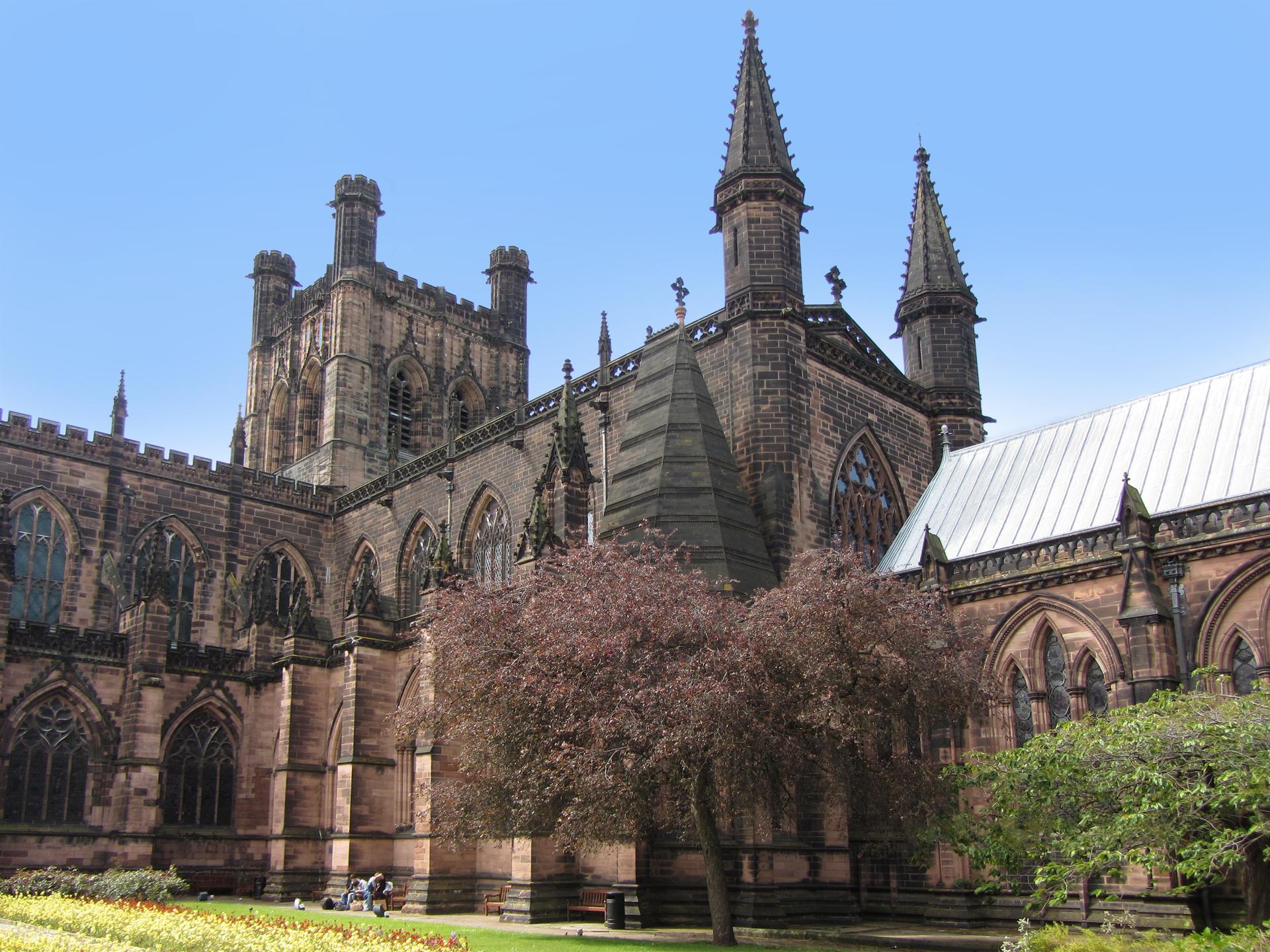
Looking beyond Chester Cross? Discover Chester for broader travel guides, local hot-spots, and regional highlights.
Explore Chester
Explore Flint Castle’s unique medieval fortress with panoramic estuary views and a rich history immortalized by Shakespeare.

Discover Chester’s Crypt Chambers, a breathtaking fusion of medieval crypt and Gothic Revival architecture nestled within the city’s historic Rows.