

The Derry Walls, Derry Travel Guide
Free Guide: Walk the 17th-century ramparts of Ireland’s only complete walled city, where centuries of history, sieges and resilience unfold with every step around the Maiden City.


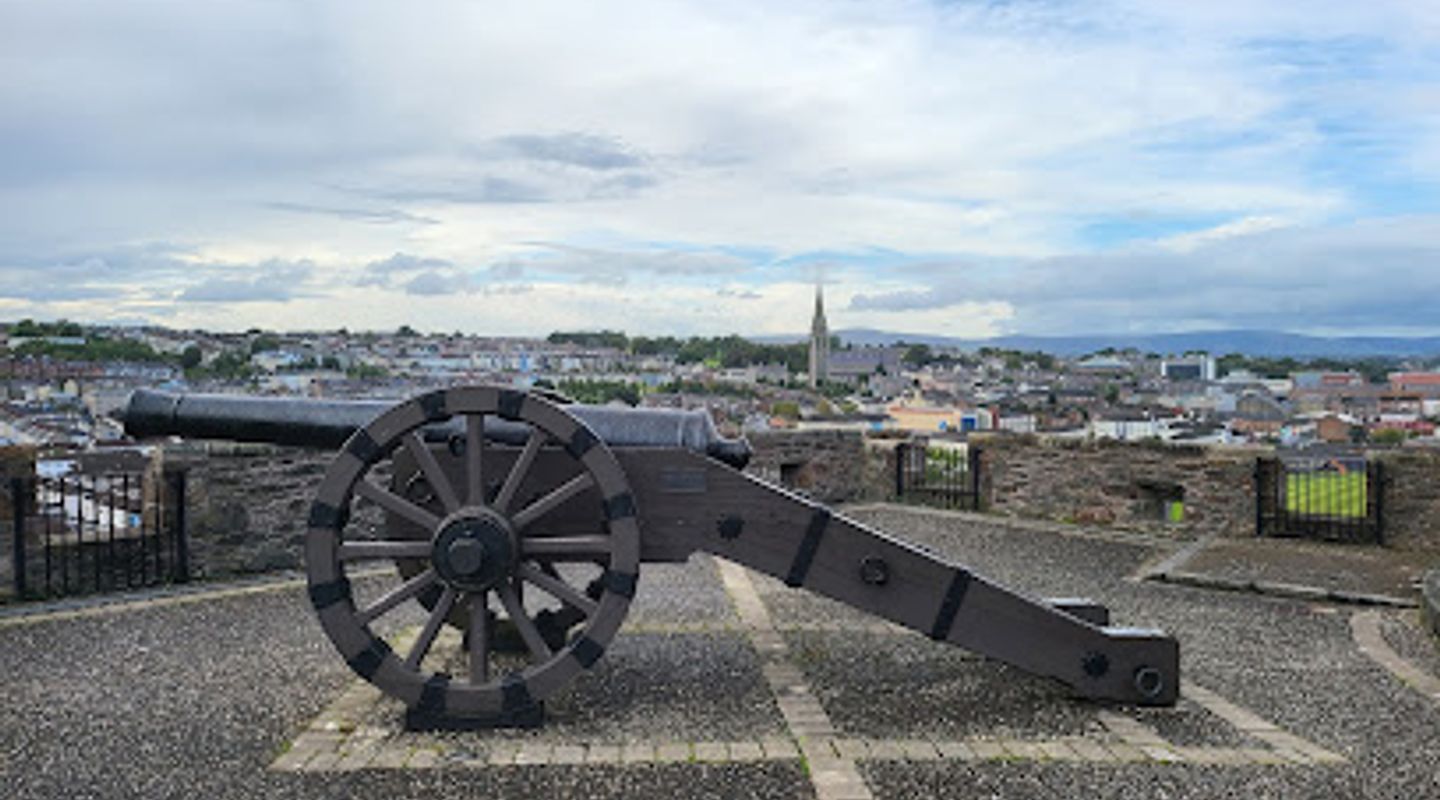
A brief summary of The Derry Walls
Walk the 17th-century ramparts of Ireland’s only complete walled city, where centuries of history, sieges and resilience unfold with every step around the Maiden City.
Encircling Derry’s historic core, the 17th-century city walls are the only complete walled circuit in Ireland and one of Europe’s finest examples of a walled city. Built between 1613 and 1618 by the Irish Society to protect English and Scottish settlers, these nearly 1.5 km of ramparts offer a unique walk through centuries of history. Along the way, visitors pass restored cannons like the famous ‘Roaring Meg’, see the original four gates and later additions, and enjoy panoramic views over the city and the River Foyle. The walls have never been breached, earning Derry the nickname ‘Maiden City’.
On-site amenities
 Seating areas
 Information boards
 Trash bins
Opening hours
- Every dayOpen 24 hours
Opening hours as listed on the venue’s Google Business Profile. Hours can change for services and special events, so check with the venue before you go.
- Address
- The Diamond, Londonderry BT48 6HW
- Phone
- Website
Getting there
On foot from city centre
From Londonderry train station
From Foyle Street Bus Centre
Discover more about The Derry Walls
A Living Monument of Stone and Memory
Standing almost 20 feet high and stretching about 1.5 km around Derry’s old town, the city walls are a rare, intact example of a 17th-century walled city. Constructed between 1613 and 1618 by the Irish Society – a consortium of London livery companies – these ramparts were designed to protect the new English and Scottish settlers of the Plantation of Ulster. The walls’ Renaissance street plan, still visible today, reflects the ordered, fortified town laid out by the London builders. Over the centuries, they have witnessed sieges, rebellions and political change, yet remarkably have never been breached, giving rise to Derry’s proud nickname, the Maiden City.
Defenders, Sieges and the Spirit of the Walls
The walls’ most famous test came during the Siege of Derry in 1689, when apprentice boys famously locked the gates against the advancing forces of King James II. For 105 gruelling days, the city held out behind these ramparts, supplied only by the eventual breaking of the boom across the River Foyle. Cannons once used in that siege, including the legendary ‘Roaring Meg’, now stand restored along the walls, a tangible link to that pivotal moment. The story of the Apprentice Boys and the siege remains central to the city’s Protestant and Unionist identity, and the walls themselves are a powerful symbol of resilience and defiance in the face of overwhelming odds.
Walking the Ramparts: Gates, Cannons and Views
Today, the walls form a continuous, elevated promenade that circles the historic core. Visitors can walk the full circuit, passing the four original gates – Bishop’s Gate, Ferryquay Gate, Shipquay Gate and Butcher Gate – as well as later additions like Magazine Gate, Castle Gate and New Gate. Along the way, 24 restored cannons from the 16th, 17th and 18th centuries are displayed, with ‘Roaring Meg’ prominently positioned on the double bastion near Ferryquay Gate. The walk offers constantly changing perspectives: narrow, cobbled streets within the walls, the broad sweep of the River Foyle, and views across to the Bogside and the Peace Bridge, each vista layered with historical and political meaning.
Layers of Conflict and Reconciliation
The walls are not just a relic of the 17th century; they are deeply entwined with Derry’s more recent past. During the Troubles, the ramparts were often closed, and the Walker Monument on the walls – commemorating the Protestant governor of the 1689 siege – became a flashpoint, its destruction by the IRA in 1973 a stark reminder of the city’s divisions. Today, the monument’s plinth remains, a quiet marker of that painful history. The walls now serve as a shared space, where visitors can reflect on centuries of conflict while also seeing symbols of reconciliation, such as the Peace Bridge, that connect the city’s divided communities across the Foyle.
Evendo Review Centre
 Google
Guest reviews
Best time to go
Quietest: Jan, Feb & Nov · before 9am or from 8pm
Busy times are Evendo estimates for a typical year, to help you plan. Actual crowds vary with events, school holidays and the weather.
Explore The Derry Walls on the map
A handpicked selection of must-see spots near The Derry Walls, mapped for you.
Get your free copy of our complete guide to The Derry Walls, delivered straight to you.
Everything on this page, from opening hours and how to get there to Eve’s tips and the best time to go, in one PDF you can read offline, print or share.
Already have an account? Sign in
Your The Derry Walls guide is ready.
We'll send it to · Not you? Sign out

Getting your guide ready…
We are putting together a fresh copy of the The Derry Walls guide. This can take up to a minute.
This can take a few moments. If your browser asks, choose Allow so the download can start. You'll find the guide in your Downloads folder.
Nothing happened? Download it again
Sorry, the guide is taking longer than usual. Please try again in a minute, or get it by email instead.
Unlock the best of The Derry Walls
Skip-the-line tickets, guided tours with entry, and walking tours of the area, booked in a few clicks.



Other nearby places you may find interesting
The closest places of the same kind, if this one is not quite what you had in mind.
-
-
-
-
-


Swipe for more places
More to explore near The Derry Walls

 Best experiences near The Derry Walls
 Best hotels near The Derry Walls
 Best landmarks near The Derry Walls
 Best attractions near The Derry Walls
 Best shops near The Derry Walls
 Best restaurants near The Derry Walls
 Best bars near The Derry Walls
Do you manage this location?
Take control to get all the benefits, like improved information, better appearance, and stronger visibility across AI-powered discovery.
Explore more
Explore more of Derry
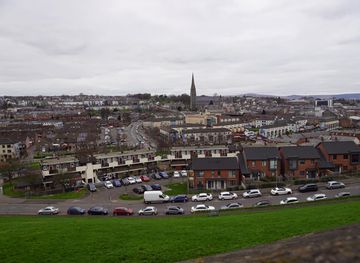
Explore Derry: Where history meets vibrant culture in a city bridging Irish and British heritage, offering breathtaking views and captivating festivals.
Explore Derry
Explore more of United Kingdom
Discover the United Kingdom: A blend of rich history, stunning landscapes, and vibrant cities, offering a unique travel experience for every visitor.
Explore United Kingdom
