Charles De Gaulle Statue Travel Guide
Free Guide: A commanding tribute in London’s Carlton Gardens honoring Charles De Gaulle’s leadership of Free France during WWII.


A brief summary of Charles De Gaulle Statue
A commanding tribute in London’s Carlton Gardens honoring Charles De Gaulle’s leadership of Free France during WWII.
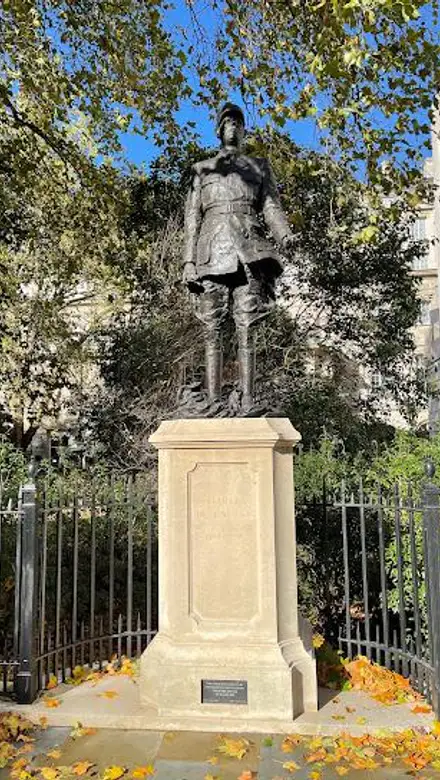
The Charles De Gaulle Statue in Carlton Gardens, London, commemorates the leader of the Free French Forces during World War II. Unveiled in 1993 by Queen Elizabeth The Queen Mother, this life-sized bronze statue portrays de Gaulle in his brigadier general uniform, standing opposite the building that served as the Free French headquarters. The site reflects his pivotal role in rallying French resistance and symbolizes enduring Franco-British ties.
On-site amenities
 Seating areas
 Information boards
Opening hours
- Every dayOpen 24 hours
Opening hours as listed on the venue’s Google Business Profile. Hours can change for services and special events, so check with the venue before you go.
- Address
- Carlton Gardens, London SW1Y 5AD
Getting there
London Underground
Bus
Walking
Discover more about Charles De Gaulle Statue
A Symbol of Defiance and Leadership
The Charles De Gaulle Statue stands proudly in Carlton Gardens, London, marking the location where de Gaulle established the headquarters of the Free French Forces during World War II. This bronze statue, life-sized and set on a plinth of equal height, depicts de Gaulle in his brigadier general uniform, embodying strength and resilience. It commemorates his leadership in rallying the French resistance after the fall of France in 1940 and his determination to continue the fight against occupation.
Historical Significance of Carlton Gardens
Carlton Gardens served as the nerve center for the Free French government-in-exile from 1940 to 1944. De Gaulle arrived in London in June 1940 and set up his headquarters here, initially residing at the Connaught Hotel before moving to Hampstead. The building opposite the statue was the operational hub where de Gaulle organized Free French military training and operations. Nearby plaques further memorialize his presence and the stirring 18 June 1940 appeal broadcast from the BBC, which became a rallying cry for French resistance.
The Statue’s Creation and Unveiling
Created by sculptor Angela Conner with architectural input from Bernard Wiehahn, the statue was unveiled in June 1993 by Queen Elizabeth The Queen Mother. Its installation followed a campaign led by Lady Soames, Winston Churchill’s daughter, reflecting the deep respect held for de Gaulle’s wartime role. The statue’s location near the headquarters and the blue plaques creates a poignant historical ensemble, honored annually by ceremonies organized by the French Embassy.
De Gaulle’s London Legacy and Franco-British Relations
During his London exile, de Gaulle was a towering figure, often seen walking through St James’s and Berkeley Square, greeted by applause from locals. Despite occasional political tensions with the British government, his presence symbolized hope and resistance. The statue serves as a reminder of the enduring ties between France and the United Kingdom forged during those challenging years.
Architectural and Artistic Features
The statue’s design captures de Gaulle’s commanding presence, with his left hand raised in a gesture that has been interpreted as both supplication and determination. The choice of bronze and the life-sized scale give the monument a timeless quality, blending seamlessly with the historic surroundings of Carlton Gardens and the elegant architecture of St James’s.
Commemorative Importance Today
Today, the statue stands as a focal point for remembrance and education. It invites visitors to reflect on the sacrifices and leadership that shaped modern Europe. The site’s proximity to other historic landmarks in London enhances its significance as a cultural heritage destination, preserving the memory of de Gaulle’s pivotal role during World War II.
Evendo Review Centre
 Google
Guest reviews
Best time to go
Quietest: Jan, Feb & Nov · before 6am or from 11pm
Busy times are Evendo estimates for a typical year, to help you plan. Actual crowds vary with events, school holidays and the weather.
Explore Charles De Gaulle Statue on the map
A handpicked selection of must-see spots near Charles De Gaulle Statue, mapped for you.
Get your free copy of our complete guide to Charles De Gaulle Statue, delivered straight to you.
Everything on this page, from opening hours and how to get there to Eve’s tips and the best time to go, in one PDF you can read offline, print or share.
Already have an account? Sign in
Your Charles De Gaulle Statue guide is ready.
We'll send it to · Not you? Sign out

Getting your guide ready…
We are putting together a fresh copy of the Charles De Gaulle Statue guide. This can take up to a minute.
This can take a few moments. If your browser asks, choose Allow so the download can start. You'll find the guide in your Downloads folder.
Nothing happened? Download it again
Sorry, the guide is taking longer than usual. Please try again in a minute, or get it by email instead.
Unlock the best of Charles De Gaulle Statue
Skip-the-line tickets, guided tours with entry, and walking tours of the area, booked in a few clicks.


Other nearby places you may find interesting
The closest places of the same kind, if this one is not quite what you had in mind.
-
-
-
-
-


Swipe for more places
More to explore near Charles De Gaulle Statue
-
 Best experiences near Charles De Gaulle Statue
-
 Best hotels near Charles De Gaulle Statue
-
 Best landmarks near Charles De Gaulle Statue
-
 Best attractions near Charles De Gaulle Statue
-
 Best shops near Charles De Gaulle Statue
-
 Best restaurants near Charles De Gaulle Statue
-
 Best bars near Charles De Gaulle Statue


Do you manage this location?
Take control to get all the benefits, like improved information, better appearance, and stronger visibility across AI-powered discovery.
Explore more

Explore more of Devon
Discover Devon: A blend of stunning coastlines, historic cities, and charming villages perfect for outdoor adventures and culinary delights in the heart of England's West Country.
Explore Devon
Explore more of United Kingdom
Discover the United Kingdom: A blend of rich history, stunning landscapes, and vibrant cities, offering a unique travel experience for every visitor.
Explore United Kingdom