Machine Gun Corps Memorial Travel Guide
Free Guide: A classical sculpture honoring the Machine Gun Corps' sacrifice in the First World War, standing amid London's most significant military memorials.


A brief summary of Machine Gun Corps Memorial
A classical sculpture honoring the Machine Gun Corps' sacrifice in the First World War, standing amid London's most significant military memorials.
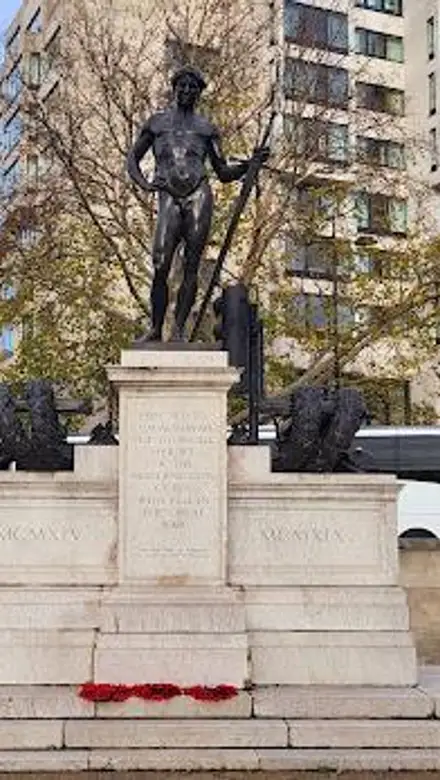
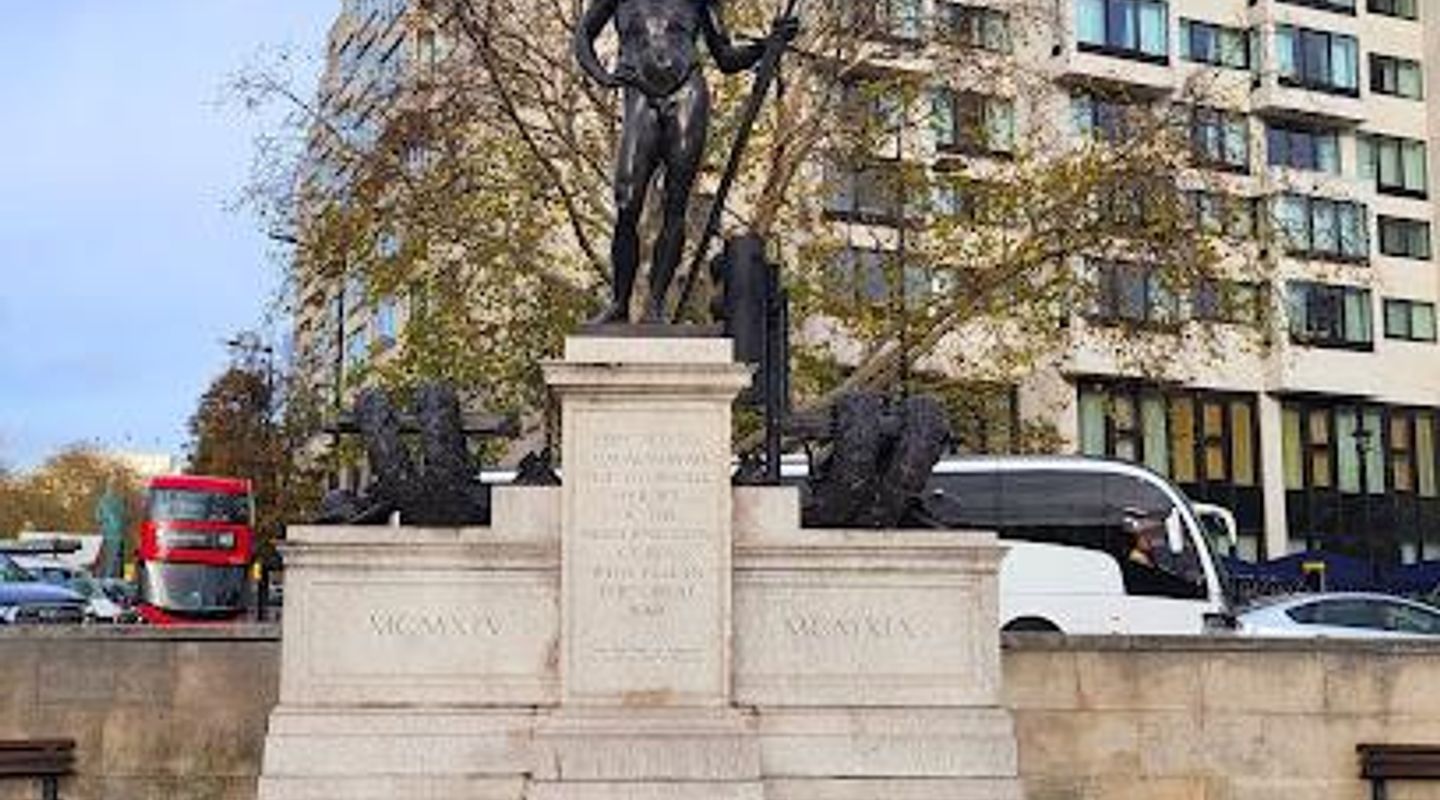
The Machine Gun Corps Memorial, also known as 'The Boy David,' stands at Hyde Park Corner as a striking tribute to the fallen of the Machine Gun Corps during the First World War. Unveiled in May 1925, this controversial yet iconic monument features a bronze statue of a young David by sculptor Francis Derwent Wood, flanked by two Vickers guns encased in bronze and laurel wreaths. The inscription reads: 'Saul hath slain his thousands, but David his tens of thousands.'
On-site amenities
 Seating areas
 Information boards
 Trash bins
Opening hours
- Every dayOpen 24 hours
Opening hours as listed on the venue’s Google Business Profile. Hours can change for services and special events, so check with the venue before you go.
- Address
- 4 Duke of Wellington Pl, London SW1W 0QH
- Website
Getting there
London Underground
Bus
Walking
Taxi or Private Vehicle
Discover more about Machine Gun Corps Memorial
A Monument Born from Sacrifice and Controversy
The Machine Gun Corps Memorial stands as one of London's most distinctive and contentious war memorials. Unveiled on 10 May 1925 by the Duke of Connaught, the memorial commemorates the extraordinary sacrifice of the Machine Gun Corps during the First World War. The Corps, formed by Royal Warrant on 14 October 1915 with King George V as Colonel-in-Chief, saw service that was both devastating and decisive. In its brief existence from 1915 to 1922, the Machine Gun Corps suffered a casualty rate exceeding 30 percent, earning it the grim nickname 'the suicide club.' The memorial's inscription—'Saul hath slain his thousands, but David his tens of thousands'—reflects the disproportionate impact of machine gun warfare on the conflict.
The Artistic Vision of Francis Derwent Wood
Designed by renowned sculptor Francis Derwent Wood, the memorial's centerpiece is a bronze statue of a young David, rendered in classical style and standing nude atop the monument. This artistic choice proved immediately controversial, drawing criticism from conservative architectural circles and sparking heated debate in the House of Commons and the pages of The Times. Despite the outcry, the Office of Works and the memorial committee stood firm in their support of Wood's modernist vision. To either side of the David figure stand two actual Vickers guns—the primary armament of the Machine Gun Corps—encased in bronze and adorned with laurel wreaths, creating a powerful juxtaposition of classical art and industrial warfare.
A Troubled History and Relocation
The memorial's journey has been as turbulent as its reception. Originally erected in 1925 on a traffic island near Grosvenor Place, south of the Royal Artillery Memorial, the monument was dismantled shortly after its installation due to roadworks. For decades it remained in storage, boxed and hidden from public view. It was not until 1946 that the memorial was finally reconstructed at its present location in the central section of Hyde Park Corner, following minor repairs and cleaning. This long absence from public sight reflected both the practical challenges of urban development and the lingering controversy surrounding the memorial's design and symbolism.
Symbolism and Historical Context
The choice of the biblical David as the memorial's focal point carries profound symbolic weight. In the Old Testament narrative, David defeats the giant Goliath with a simple sling—a story of an underdog triumphing through courage and precision. Similarly, the Machine Gun Corps, though relatively small in number, wielded disproportionate firepower and tactical significance on the Western Front. The memorial thus elevates the Corps' contribution to the war effort, acknowledging both their sacrifice and their instrumental role in shaping the course of the conflict. The Vickers guns flanking the statue serve as a tangible reminder of the technological innovation that defined modern warfare.
A Landmark at the Heart of London
Located at 4 Duke of Wellington Place, the memorial occupies a prominent position at Hyde Park Corner, one of London's most historically significant intersections. The site sits adjacent to the Wellington Arch, the Royal Artillery Memorial, and the Bomber Command Memorial, creating a concentrated landscape of military remembrance. This clustering of monuments transforms Hyde Park Corner into an open-air museum of British military history, spanning conflicts from the Napoleonic Wars through the Second World War. The memorial's placement on a traffic island, surrounded by the constant flow of London's traffic, creates an unusual juxtaposition—a solemn tribute to the dead situated amid the bustle of modern urban life.
Enduring Legacy and Recognition
Today, the Machine Gun Corps Memorial remains Grade I-listed and is recognized as a significant work of public sculpture and historical documentation. While initial controversy has long faded, the memorial continues to provoke thoughtful reflection on the nature of modern warfare, artistic expression, and collective remembrance. The statue's classical beauty stands in stark contrast to the brutal reality of machine gun warfare, inviting visitors to contemplate the human cost of industrial-scale conflict. Each year, particularly around Armistice Day on 11 November, the memorial draws those seeking to honor the memory of the Machine Gun Corps and to reflect on the sacrifice of those who served.
Evendo Review Centre
 Google
Guest reviews
Best time to go
Quietest: Jan, Feb & Dec · before 6am or from 11pm
Busy times are Evendo estimates for a typical year, to help you plan. Actual crowds vary with events, school holidays and the weather.
Explore Machine Gun Corps Memorial on the map
A handpicked selection of must-see spots near Machine Gun Corps Memorial, mapped for you.
Get your free copy of our complete guide to Machine Gun Corps Memorial, delivered straight to you.
Everything on this page, from opening hours and how to get there to Eve’s tips and the best time to go, in one PDF you can read offline, print or share.
Already have an account? Sign in
Your Machine Gun Corps Memorial guide is ready.
We'll send it to · Not you? Sign out

Getting your guide ready…
We are putting together a fresh copy of the Machine Gun Corps Memorial guide. This can take up to a minute.
This can take a few moments. If your browser asks, choose Allow so the download can start. You'll find the guide in your Downloads folder.
Nothing happened? Download it again
Sorry, the guide is taking longer than usual. Please try again in a minute, or get it by email instead.
Unlock the best of Machine Gun Corps Memorial
Skip-the-line tickets, guided tours with entry, and walking tours of the area, booked in a few clicks.

Other nearby places you may find interesting
The closest places of the same kind, if this one is not quite what you had in mind.
-
-
-
-
-


Swipe for more places
More to explore near Machine Gun Corps Memorial
-
 Best experiences near Machine Gun Corps Memorial
-
 Best hotels near Machine Gun Corps Memorial
-
 Best landmarks near Machine Gun Corps Memorial
-
 Best attractions near Machine Gun Corps Memorial
-
 Best shops near Machine Gun Corps Memorial
-
 Best restaurants near Machine Gun Corps Memorial
-
 Best bars near Machine Gun Corps Memorial


Do you manage this location?
Take control to get all the benefits, like improved information, better appearance, and stronger visibility across AI-powered discovery.
Explore more

Explore more of Devon
Discover Devon: A blend of stunning coastlines, historic cities, and charming villages perfect for outdoor adventures and culinary delights in the heart of England's West Country.
Explore Devon
Explore more of United Kingdom
Discover the United Kingdom: A blend of rich history, stunning landscapes, and vibrant cities, offering a unique travel experience for every visitor.
Explore United Kingdom