

Glasgow City Chambers, Glasgow Travel Guide
Free Guide: A grand Victorian town hall in the heart of Glasgow, where civic power meets opulent architecture and free guided tours reveal the city’s proud history.


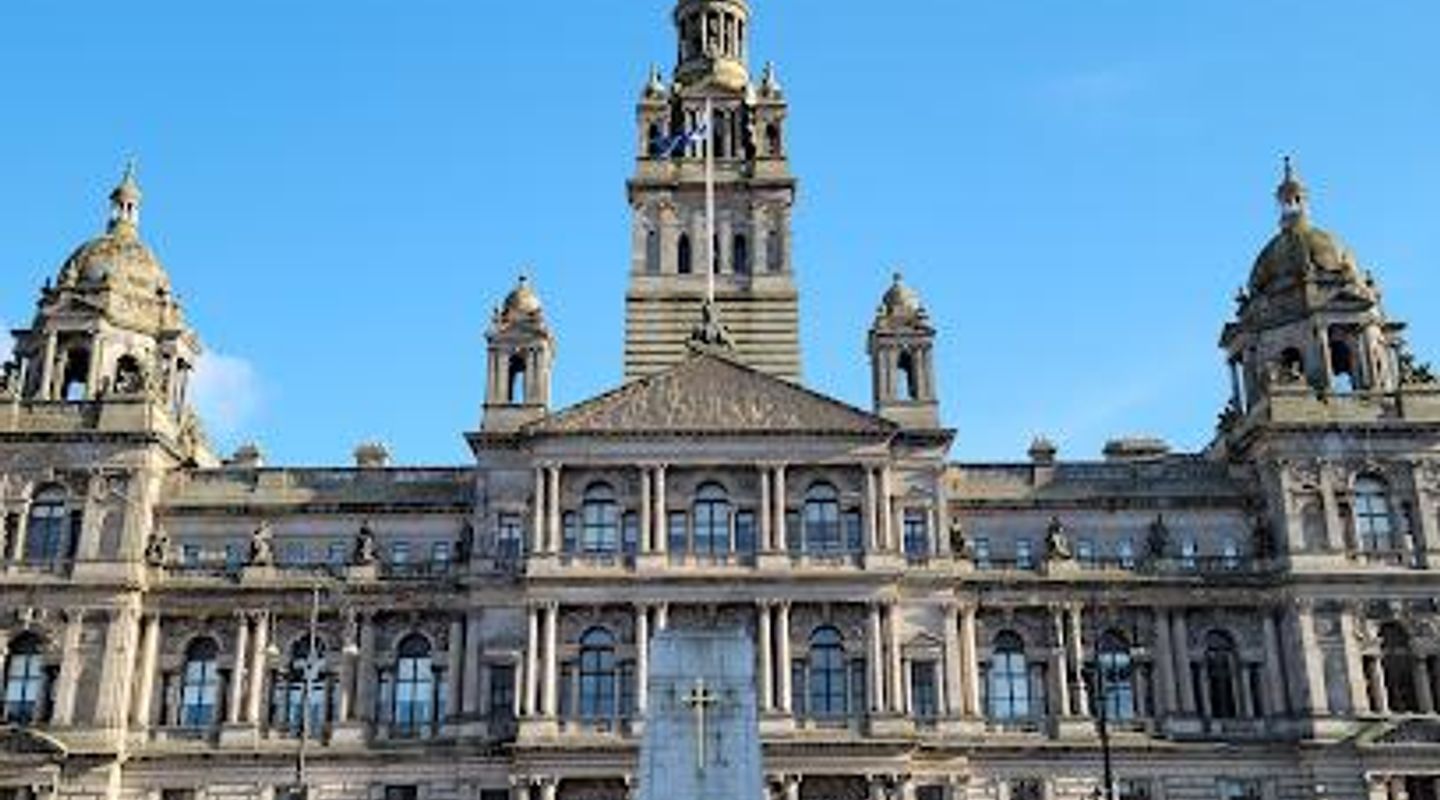
A brief summary of Glasgow City Chambers
A grand Victorian town hall in the heart of Glasgow, where civic power meets opulent architecture and free guided tours reveal the city’s proud history.
Dominating George Square in central Glasgow, the City Chambers is a magnificent Victorian-era town hall and the seat of Glasgow City Council. Completed in 1888, this grand civic building showcases opulent Italian Renaissance interiors, including Europe’s largest marble staircase and a lavish banqueting hall adorned with murals by the Glasgow Boys. Free guided tours offer a rare glimpse into the city’s governance and architectural splendour, making it a must-see landmark for visitors exploring Glasgow’s historic heart.
On-site amenities
 Restrooms
 Drinking water
 Seating areas
 Trash bins
 Information boards
Opening hours
- Mon9 am–5 pm
- Tue9 am–5 pm
- Wed9 am–5 pm
- Thu9 am–5 pm
- Fri9 am–5 pm
- SatClosed
- SunClosed
Opening hours as listed on the venue’s Google Business Profile. Hours can change for services and special events, so check with the venue before you go.
- Address
- 82 George Square, Glasgow G2 1DU
- Phone
- Website
Getting there
On foot
By subway
By car
Discover more about Glasgow City Chambers
A Civic Palace for the Second City
Rising proudly on the eastern side of George Square, Glasgow City Chambers is one of Scotland’s most impressive municipal buildings. Constructed between 1883 and 1888, it was designed by Paisley-born architect William Young as a powerful symbol of Glasgow’s status as the ‘Second City of the British Empire’. The building’s imposing neoclassical façade, richly sculpted with columns, pediments and allegorical figures, faces west across the square toward the city centre, its central Jubilee Pediment crowned by a seated Queen Victoria flanked by figures representing the Empire’s global reach. This grand edifice was conceived not just as council offices, but as a palace of the people, a statement of civic pride and prosperity in the late Victorian era.
Architecture and Symbolism
The City Chambers’ exterior is a masterclass in Victorian civic architecture, blending classical proportions with elaborate ornamentation. The western façade on George Square is dominated by its sculpted pediment and a central tower inspired by Alexander ‘Greek’ Thomson’s St Vincent Street Church. The building’s quadrangle plan, carriage entrances and extensive use of granite and stone reflect both its monumental scale and its function as a working municipal complex. Inside, the contrast is striking: the cool grey exterior gives way to a warm, opulent interior in the Italian Renaissance style, with rich marbles, mosaics, stained glass and gilded details that celebrate Glasgow’s industrial and cultural achievements. The architecture itself tells a story of empire, trade and civic ambition, with decorative elements that reference the city’s global connections and its role as a leading port and industrial centre.
Inside the People’s Palace
Stepping into the City Chambers is like entering a civic palace. The entrance hall features Italian-style arches and mosaic canopies, with the city’s coat of arms set into the floor. The centrepiece of the interior is western Europe’s largest marble staircase, crafted from Carrara marble imported from Italy and said to contain more marble than the Vatican. This grand staircase leads to the magnificent Banqueting Hall, where huge electric chandeliers illuminate murals by artists of the Glasgow Boys school, depicting scenes of Glasgow’s past, present and future. The hall is used for major civic events, receptions and ceremonies, and its stained-glass dome and ornate woodwork create an atmosphere of grandeur and tradition. Other highlights include the Council Chamber, where Glasgow City Council meets in a semi-circular layout around the Lord Provost’s desk, and the Councillors’ Corridor, a vaulted passage lined with faience tiles in yellow, white and blue.
Exploring the Chambers
The City Chambers is not just a working government building but also a living museum of civic life. Free guided tours, conducted by council staff on weekdays, take visitors through the building’s most impressive spaces, including the Banqueting Hall, the Council Chamber and the Upper Gallery, where portraits of past Lord Provosts line the walls. These tours offer insights into the building’s history, its role in local government and the traditions of civic ceremony, such as the use of the municipal mace, a silver-gilt sceptre that must be present for council meetings to proceed. While the ground floor can be admired without a tour, the upper floors and key ceremonial rooms are accessible only with a guide, making the scheduled tours the best way to experience the full splendour of this civic treasure.
George Square and the City’s Heart
The City Chambers is the focal point of George Square, Glasgow’s principal civic space and a historic hub of the city. Originally laid out as a grand residential square in the late 18th century, the area evolved into a public square surrounded by monuments, statues and important buildings. The Chambers’ presence on the square underscores its role as the symbolic and administrative heart of Glasgow, a place where politics, history and public life converge. The square itself is a lively gathering space, often used for events, markets and celebrations, and it provides an ideal vantage point from which to appreciate the full scale and grandeur of the Chambers’ façade. For visitors, the combination of the square’s monuments and the Chambers’ architecture offers a powerful introduction to Glasgow’s rich civic heritage.
Evendo Review Centre
 Google
Guest reviews
Best time to go
Quietest: Jan, Feb & Mar · before 9am or from 7pm
Busy times are Evendo estimates for a typical year, to help you plan. Actual crowds vary with events, school holidays and the weather.
Explore Glasgow City Chambers on the map
A handpicked selection of must-see spots near Glasgow City Chambers, mapped for you.
Get your free copy of our complete guide to Glasgow City Chambers, delivered straight to you.
Everything on this page, from opening hours and how to get there to Eve’s tips and the best time to go, in one PDF you can read offline, print or share.
Already have an account? Sign in
Your Glasgow City Chambers guide is ready.
We'll send it to · Not you? Sign out

Getting your guide ready…
We are putting together a fresh copy of the Glasgow City Chambers guide. This can take up to a minute.
This can take a few moments. If your browser asks, choose Allow so the download can start. You'll find the guide in your Downloads folder.
Nothing happened? Download it again
Sorry, the guide is taking longer than usual. Please try again in a minute, or get it by email instead.
Unlock the best of Glasgow City Chambers
Skip-the-line tickets, guided tours with entry, and walking tours of the area, booked in a few clicks.


Other nearby places you may find interesting
The closest places of the same kind, if this one is not quite what you had in mind.
-
-
-
-
-


Swipe for more places
More to explore near Glasgow City Chambers

 Best experiences near Glasgow City Chambers
 Best hotels near Glasgow City Chambers
 Best landmarks near Glasgow City Chambers
 Best attractions near Glasgow City Chambers
 Best shops near Glasgow City Chambers
 Best restaurants near Glasgow City Chambers
 Best bars near Glasgow City Chambers
Do you manage this location?
Take control to get all the benefits, like improved information, better appearance, and stronger visibility across AI-powered discovery.
Explore more

Explore more of Glasgow
Discover Glasgow, Scotland's cultural capital, where history, architecture, and vibrant arts scene meet, offering a unique and unforgettable travel experience.
Explore Glasgow
Explore more of United Kingdom
Discover the United Kingdom: A blend of rich history, stunning landscapes, and vibrant cities, offering a unique travel experience for every visitor.
Explore United Kingdom
