
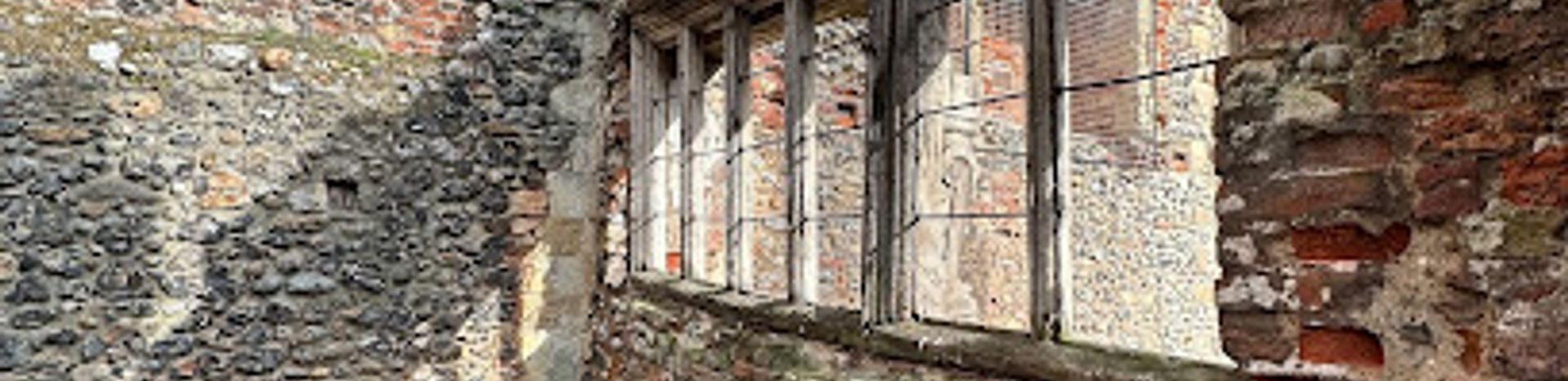
Greyfriars Cloisters
Medieval Franciscan ruins revealing seven centuries of Norfolk's spiritual heritage and monastic life.
Greyfriars Cloisters stands as a haunting testament to medieval religious life in Great Yarmouth. Founded around 1226 by Sir William Garbridge, this Franciscan friary was substantially expanded in the late 13th century before its dissolution in 1538. Today, visitors encounter the surviving architectural fragments of this once-thriving monastic community, including a remarkable vault and weathered wall sections that hint at the cloisters' former grandeur. Managed by English Heritage, the site offers a contemplative journey through seven centuries of Norfolk's spiritual heritage.
A brief summary to English Heritage - Greyfriars Cloisters
- Greyfriars Way, Great Yarmouth, GB
- Visit website
- Duration: 0.75 to 2 hours
- Free
-
 Outdoor
- Mobile reception: 4 out of 5
Local tips
- Visit in late afternoon when golden light illuminates the surviving vault and wall fragments, creating atmospheric conditions ideal for photography and contemplation.
- Combine your visit with the adjacent Row Houses, also managed by English Heritage, to gain a complete picture of medieval Great Yarmouth's social hierarchy and urban character.
- Bring a guidebook or use the information boards on-site to help interpret the fragmentary remains and visualise the original layout of the friary complex.
- The site is open year-round but can be muddy after rain; wear appropriate footwear for exploring the grounds and examining the architectural details.

For the on-the-go comforts that matter to you
- Information Boards
Getting There
-
Bus
Local buses serve Great Yarmouth town centre with regular services throughout the day. Journey times from the town centre to Greyfriars Way are typically 5–10 minutes depending on traffic and route. Services operate year-round with reduced frequency on Sundays. Fares are approximately £1.50–£2.50 per journey. The site is within walking distance of several bus stops on the main routes through the town.
-
Walking
From Great Yarmouth town centre, Greyfriars Cloisters is approximately 1.5–2 kilometres away, a walk of 20–30 minutes across relatively flat terrain. The route passes through the historic town centre and follows accessible pavements. The final approach to Greyfriars Way is straightforward with clear street signage. This walking route offers views of other medieval and historic buildings that contextualise the friary within Great Yarmouth's broader heritage landscape.
-
Car
Greyfriars Way is accessible by car from the A47 and main roads serving Great Yarmouth. Limited on-street parking is available near the site, though spaces can be restricted during peak seasons and weekends. Journey times from surrounding areas vary: approximately 10–15 minutes from the seafront, 5–10 minutes from the town centre, and 20–30 minutes from Norwich. The site has no dedicated car park, so parking availability should be confirmed before visiting.
-
Taxi
Taxis are readily available from Great Yarmouth town centre, the railway station, and seafront areas. Journey times are typically 5–15 minutes depending on starting point and traffic conditions. Fares generally range from £6–£15 for journeys within the town. Taxi services operate throughout the day and evening, making this a convenient option for visitors without personal transport.
English Heritage - Greyfriars Cloisters location weather suitability
-
 Any Weather
-
 Clear Skies
Discover more about English Heritage - Greyfriars Cloisters
A Franciscan Haven in Medieval Norfolk
Greyfriars Cloisters represents one of Great Yarmouth's most significant medieval monuments, preserving the physical memory of a Franciscan community that flourished for over three centuries. Founded circa 1226 by Sir William Garbridge, the friary emerged during a period when Great Yarmouth was establishing itself as a major port and commercial centre. The Franciscans, known colloquially as the Grey Friars for their simple grey habits, were drawn to the prosperous town where they could serve both the spiritual needs of the growing population and the merchant classes who dominated the port. The monastery underwent substantial expansion in 1285 and again in 1290, reflecting both the order's success and the town's expanding wealth.The Architecture of Monastic Life
The surviving remains reveal the sophisticated architectural planning that characterised medieval friaries. The most distinctive feature is the preserved vault, a rare survival that demonstrates the skilled masonry techniques employed by 13th and 14th-century craftsmen. The fragmentary walls and architectural elements scattered across the site tell the story of a complex designed for communal living, prayer, and service. Early 14th-century features remain visible within the cloister's interior, offering glimpses into the spatial arrangement where friars would have moved between the church, dormitories, refectory, and chapter house. The quality of surviving stonework and architectural detailing underscores the importance and resources invested in this religious establishment.Dissolution and Transformation
Like thousands of English monasteries, Greyfriars fell victim to Henry VIII's Dissolution of the Monasteries in 1538. This seismic event ended nearly three centuries of continuous religious occupation and transformed the site from a living community into ruins. The friary's buildings were dismantled, repurposed, or left to decay, and the friars dispersed. For nearly five centuries, the site lay largely forgotten, its significance obscured by the urban development of Great Yarmouth. The fragmented remains that survive today represent only a fraction of the original complex, yet they retain sufficient character and detail to convey the scale and importance of the medieval establishment.Rediscovery and Heritage Preservation
Greyfriars Cloisters has been recognised and protected as a heritage site of national importance, now managed by English Heritage. The organisation has undertaken careful conservation work to stabilise the remaining structures and interpret their historical significance for contemporary visitors. The site sits within the broader context of Great Yarmouth's medieval townscape, adjacent to the Row Houses that represent the secular counterpart to this religious architecture. Together, these monuments offer a comprehensive view of medieval urban life, encompassing both the spiritual aspirations and commercial ambitions that shaped the town's character.The Franciscan Legacy
The Franciscan order, founded by Saint Francis of Assisi, emphasised poverty, humility, and service to the poor. In Great Yarmouth, the Grey Friars would have been active in preaching, pastoral care, and charitable work, serving as a spiritual anchor for the community. Their presence in the town reflected the broader medieval understanding that a prosperous port required not only merchants and mariners but also religious institutions to tend to the souls of its inhabitants. The friary's location within the urban fabric, rather than in remote countryside, underscores the Franciscans' commitment to engaging with urban populations and addressing the spiritual needs of ordinary people.Visiting the Ruins Today
Today's visitors encounter a site that rewards careful observation and historical imagination. The surviving vault and wall fragments, though modest in scale, speak eloquently of medieval craftsmanship and the devotional life that once animated these spaces. The cloister's open character invites contemplation, allowing visitors to trace the footsteps of friars who walked these same ground centuries ago. The site's integration into Great Yarmouth's heritage landscape, alongside the Row Houses and other medieval features, creates opportunities for deeper understanding of how medieval communities balanced commercial prosperity with spiritual life.For the vibe & atmosphere seeker
- Tranquil
- Scenic
- Unique
- Spiritual / Energy Spot
For the design and aesthetic lover
- Rustic Designs
For the architecture buff
- Historic
- Sacred Sites
- Heritage Neighborhoods
For the view chaser and sunset hunter
- Iconic Views
For the social media creator & influencer
- Architectural Shots
- Photo Spots
For the eco-conscious traveler
- Protected Area
- Locally Managed
- Leave-No-Trace Critical
For the kind of experience you’re after
- Spiritual / Energy Spot
- Myth & Legends
- Cultural Heritage
- Photowalk
- Day Trip
For how adventurous you want the journey to be
- Easy Access
Location Audience
- Family Friendly
- Senior Friendly
- Solo Friendly
- Couple Friendly
- Wheelchair Access


