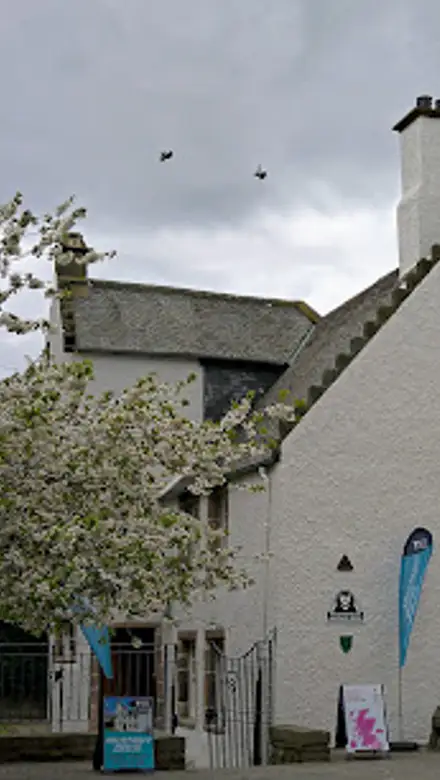
Abertarff House, Inverness Travel Guide
Free Guide: Scotland's oldest house in Inverness, where four centuries of Highland history whisper through ancient stone.


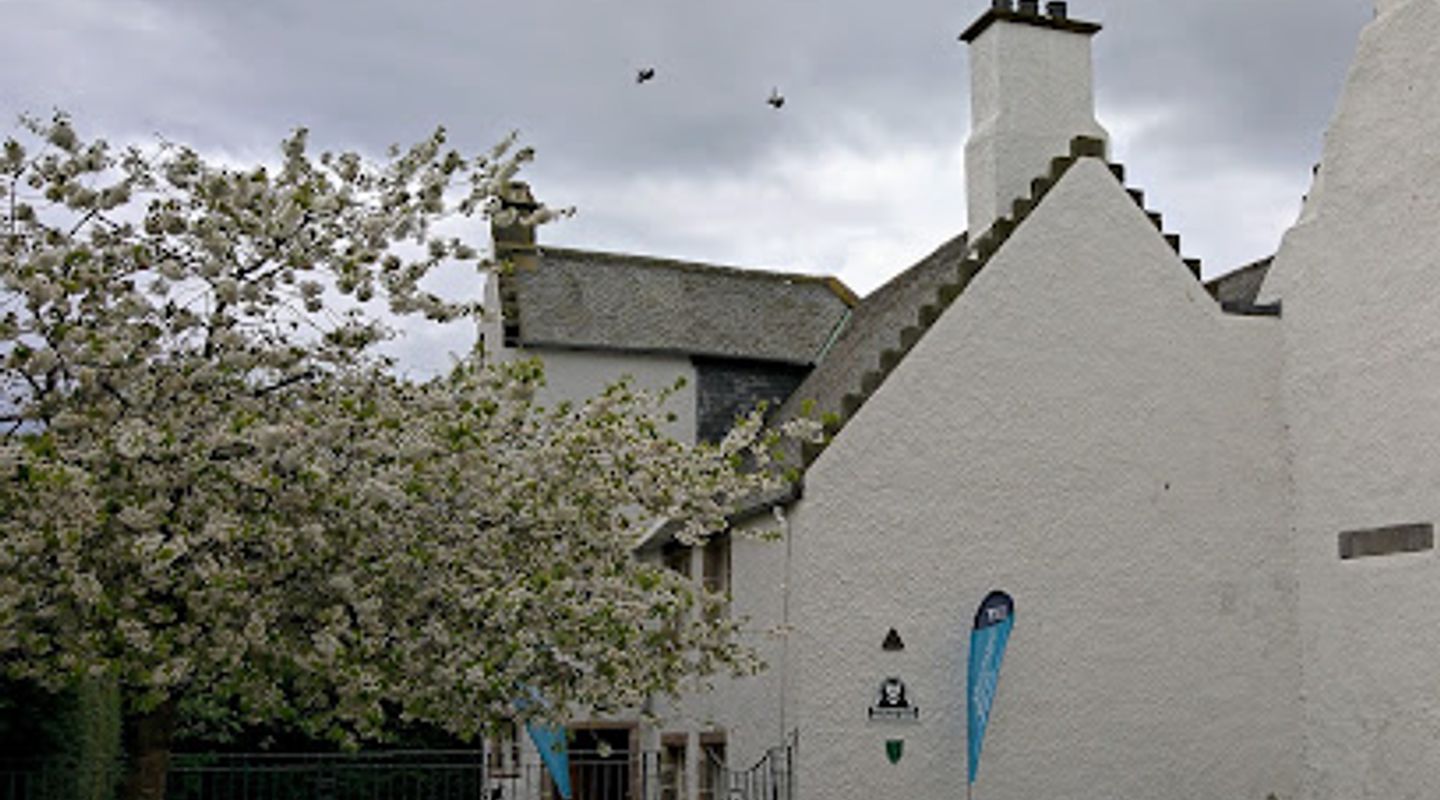
A brief summary of Abertarff House
Scotland's oldest house in Inverness, where four centuries of Highland history whisper through ancient stone.
Built in 1593, Abertarff House is the oldest residential building in Inverness and a masterpiece of 16th-century Scottish architecture. This intimate town house, tucked away on Church Street, has witnessed four centuries of Highland history—from the Covenanting era through the Jacobite risings to the modern age. Now managed by the National Trust for Scotland, it offers visitors a glimpse into domestic life during Inverness's formative years through its carefully preserved interiors and engaging exhibitions.
On-site amenities
 Restrooms
 Information boards
 Seating areas
Opening hours
- MonClosed
- Tue10 am–4 pm
- Wed10 am–4 pm
- Thu10 am–4 pm
- Fri10 am–4 pm
- Sat10 am–4 pm
- SunClosed
Opening hours as listed on the venue’s Google Business Profile. Hours can change for services and special events, so check with the venue before you go.
- Address
- 71 Church St, Inverness IV1 1ES
- Website
Getting there
Local Bus Service
Walking from City Centre
Taxi or Ride-Share
Parking Nearby
Discover more about Abertarff House
A House That Survived Four Centuries
Abertarff House stands as a remarkable survivor of Scottish architectural heritage. Built in 1593, it remains the oldest residential house in Inverness, a distinction earned not through grand prominence but through quiet resilience. The building's survival owes much to its location—tucked away in a close off Church Street, it escaped the demolition and redevelopment that claimed so many of its contemporaries. In the 1950s and 1960s, the Inverness Field Club championed its preservation with such vigor that the building was saved from complete ruin. Today, it represents one of the finest remaining examples of 16th and early 17th-century Scottish domestic architecture, with its distinctive crow-stepped gables and circular stone stair tower serving as architectural signatures of its era.
Architectural Treasures and Design
The house exemplifies the sophisticated design principles of late Renaissance Scotland. As a 2½-storey town house, it features a projecting turnpike staircase that winds upward through the building's core, allowing access to upper floors in an elegant spiral. The crow-stepped gables—those distinctive stepped edges visible on the roofline—were both functional and fashionable, reflecting the architectural vocabulary of prosperous Scottish burghs. Inside, original oak timber beams remain visible, their dark wood speaking to the craftsmanship of centuries past. A particularly striking feature is the 17th-century marriage stone positioned above the main fireplace, an intimate detail that hints at the domestic ceremonies and family life that unfolded within these walls. The restoration work undertaken by the National Trust for Scotland in 1966 carefully preserved these authentic elements while making the building safe and accessible for modern visitors.
Ownership Through the Centuries
The early ownership of Abertarff remains somewhat mysterious, with historical records fragmentary and occasionally contradictory. Names such as Scheivz, Sutor, and Warrand of Warrenfield appear in the earliest accounts, though precise dates of ownership are uncertain. The house's story becomes clearer in 1793 when it was acquired by Clan Fraser of Lovat, one of the most powerful families in the Highlands. Colonel Archibald Fraser, who purchased the property, was the younger son of the famous Simon Fraser, Lord Lovat—known as "The Fox"—who was executed for treason following his support of the Jacobite cause at the Battle of Culloden in 1746. Archibald himself witnessed Culloden as a nine-year-old and later served as a Member of Parliament for Inverness-shire, where he advocated for the repeal of the dress act that had banned Highland dress after the rebellion. Upon Archibald's death in 1815, the house passed to his illegitimate grandson, also named Archibald Thomas Frederick Fraser, continuing the family's connection to this historic property.
From Bank to Community Hub
In the mid-19th century, the Commercial Bank of Scotland—which would eventually become the Royal Bank of Scotland—acquired Abertarff House. During this period, the building served multiple purposes: tenement housing, dental surgery, and even a filming location for a Disney episode of "People and Places." This versatility reflected the building's adaptability, though such varied uses gradually took their toll. By the 1950s, Abertarff had fallen into serious disrepair, becoming a derelict structure that seemed destined for demolition. The intervention of the National Trust for Scotland in 1963 marked a turning point. The Trust's comprehensive restoration in 1966 involved reharling the exterior with lime-based mortar, repairing floors, windows, and the roof, and addressing structural issues that threatened the building's integrity. Subsequent conservation work has maintained the building using traditional materials and techniques, ensuring that Abertarff continues to stand as a living link to Inverness's past.
Witnessing History Unfold
Few buildings in Scotland have witnessed such a dramatic sweep of national events. Abertarff House stood during the Covenanting period of the 17th century, when religious and political tensions convulsed Scotland. It endured the upheaval of the Jacobite risings, particularly the failed rebellion of 1745 and its devastating aftermath at Culloden. The house survived two world wars, its sturdy walls providing shelter through decades of conflict and social change. Each era left its mark—not always visible, but embedded in the building's fabric and the stories of those who lived within it. The ground floor exhibition space now tells these stories, focusing particularly on life in 1600s Inverness during the Covenanting period, allowing visitors to understand how ordinary people navigated extraordinary times.
Experiencing Abertarff Today
Visitors to Abertarff House enter a carefully curated space that balances historical authenticity with modern accessibility. Two downstairs rooms are open to the public, featuring the exhibition on 17th-century Inverness life. Staff and volunteers are present to share knowledge about the house's history, the people who lived there, and the broader context of Highland life. The original architectural features—the oak beams, the marriage stone, the turnpike stair—remain visible and tangible, creating an intimate connection with the past. The house functions not merely as a museum but as a regional headquarters for the National Trust for Scotland, ensuring that it remains a living, working space rather than a frozen artifact. For those planning visits to other Trust properties in the Highlands, including Culloden Battlefield, Hugh Miller's Cottage, and Brodie Castle, Abertarff serves as an excellent starting point for understanding the region's complex and compelling history.
Evendo Review Centre
 Google
Guest reviews
Best time to go
Quietest: Jan, Feb & Nov · before 9am or from 5pm
Busy times are Evendo estimates for a typical year, to help you plan. Actual crowds vary with events, school holidays and the weather.
Explore Abertarff House on the map
A handpicked selection of must-see spots near Abertarff House, mapped for you.
Get your free copy of our complete guide to Abertarff House, delivered straight to you.
Everything on this page, from opening hours and how to get there to Eve’s tips and the best time to go, in one PDF you can read offline, print or share.
Already have an account? Sign in
Your Abertarff House guide is ready.
We'll send it to · Not you? Sign out

Getting your guide ready…
We are putting together a fresh copy of the Abertarff House guide. This can take up to a minute.
This can take a few moments. If your browser asks, choose Allow so the download can start. You'll find the guide in your Downloads folder.
Nothing happened? Download it again
Sorry, the guide is taking longer than usual. Please try again in a minute, or get it by email instead.
Unlock the best of Abertarff House
Skip-the-line tickets, guided tours with entry, and walking tours of the area, booked in a few clicks.
 Tour with entry
2 Hour Private Walking Tour in Inverness City Centre with a Guide
from $188.42 Tour with entry
Full-Day Private Tour to Urquhart Castle Loch Ness and Inverness
from $778.82 Tour with entry
Private Family Heritage Walking Tour in Inverness
from $785.67 Tour with entry
Private Romantic Walking Tour in Historic Inverness
from $785.67
 Tour
TourDiscovering Inverness: A Self-Guided Audio Tour of the Capital of the Highlands
from $9.49 Tour
TourInverness and Outlander Private Self-Guided Walking Tour
from $11.29 Tour
TourFull-Day Outlander Experience in the Scottish Highlands from Inverness
from $785.10 Tour
Tour3 Day Tour To Isle of Skye , Glencoe , Loch Ness and Culloden
from $4,338.57
Other nearby places you may find interesting
The closest places of the same kind, if this one is not quite what you had in mind.
-
Dolphin Spirit Inverness Experience thrilling dolphin and wildlife boat trips from Inverness Marina, blending adventure with expert marine insights in the scenic Moray Firth.
-
Bruce's roundabout Discover Bruce's Roundabout, where Inverness’s history and whimsy meet in a unique urban landmark full of charm and cultural resonance.
-
Whin Park A revitalized riverside park in Inverness blending inclusive play, boating, and scenic walks for families and nature lovers.
-
Circle of Wise Discover the Circle of Wise, an ancient stone circle blending history and community spirit along Inverness’s scenic Great Glen Way.
-
Hydro Ness Discover Hydro Ness, Inverness’s innovative hydroelectric project blending sustainability, education, and scenic riverside charm.
Swipe for more places
More to explore near Abertarff House

 Best experiences near Abertarff House
 Best hotels near Abertarff House
 Best landmarks near Abertarff House
 Best attractions near Abertarff House
 Best shops near Abertarff House
 Best restaurants near Abertarff House
 Best bars near Abertarff House
Do you manage this location?
Take control to get all the benefits, like improved information, better appearance, and stronger visibility across AI-powered discovery.
Explore more

Explore more of Inverness
Discover Inverness, the picturesque gateway to Scotland's Highlands, where history, culture, and natural beauty blend seamlessly in a vibrant city setting.
Explore Inverness
Explore more of United Kingdom
Discover the United Kingdom: A blend of rich history, stunning landscapes, and vibrant cities, offering a unique travel experience for every visitor.
Explore United Kingdom