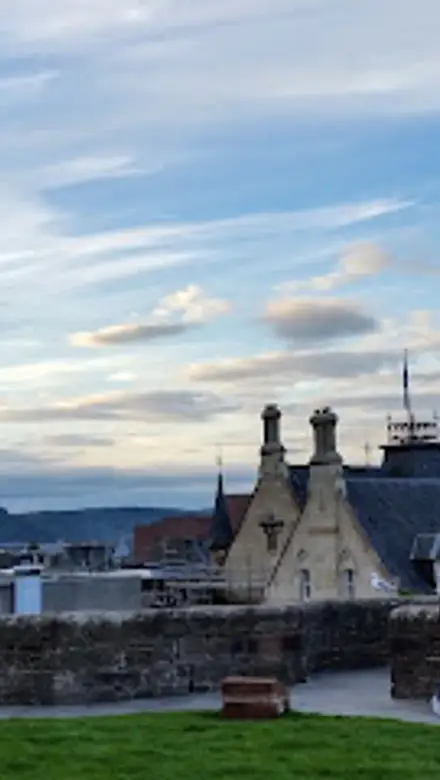
The Steeple, Inverness Travel Guide
Free Guide: A Georgian sentinel of Highland justice, bearing witness to centuries of law, conflict, and the transformative Highland Clearances.


A brief summary of The Steeple
A Georgian sentinel of Highland justice, bearing witness to centuries of law, conflict, and the transformative Highland Clearances.
Rising 45 metres above the heart of Inverness, the Town Steeple is a striking Georgian landmark that once formed part of the city's courthouse and jail complex. Built in 1791, this Category A listed structure features three bronze bells in its spire and stands as a testament to centuries of Highland history. The steeple's weathered stones hold stories of the Highland Clearances, political prisoners, and the dramatic transformation of the Scottish Highlands during the late 18th and early 19th centuries.
On-site amenities
 Restrooms
 Drink options
 Food options
 Seating areas
 Information boards
- Address
- 8 Bridge St, Inverness IV1 1HD
Getting there
Walking from Inverness City Centre
Driving and Parking
Public Transport
Train Access
Discover more about The Steeple
A Georgian Monument to Justice and Conflict
The Inverness Town Steeple stands as one of Scotland's most historically significant architectural landmarks, dominating the corner of Bridge Street and Church Street in the city centre. Completed in 1791, this 45-metre Georgian structure was erected as part of a comprehensive civic complex that included a courthouse and jail. The steeple's elegant proportions and refined detailing reflect the neoclassical tastes of the late 18th century, while its commanding presence continues to define Inverness's skyline. Three bronze bells hang within the spire, their voices once marking time for the city's inhabitants and summoning justice within the courts below.
Centuries of Imprisonment and the Highland Clearances
The site itself carries one of Scotland's most turbulent histories. A jail has occupied this location since at least 1436, making it one of Inverness's oldest continuously used sites. The medieval tollbooth was rebuilt in 1691 with adjoining courthouse and prison facilities, which were subsequently replaced by the current structure between 1787 and 1789. The steeple became infamous during the Highland Clearances of the 1790s and early 1800s, when tenant farmers were violently displaced from their ancestral lands to make way for profitable sheep farming. In 1792, the year known as "Bliadhna nan Caorach" or the "Year of the Sheep," five men arrested during the Ross-shire Sheep Riot—a dramatic protest in which over 6,000 sheep were driven off the land—were imprisoned within these walls. Destined for transportation to Australia, they mysteriously escaped, with local legend suggesting they plied their guard with whisky during a fateful night watch.
Patrick Sellar and the Conscience of the Highlands
Among the most notorious prisoners held here was Patrick Sellar, the factor whose name became synonymous with the brutality of the Clearances. Tried in 1814 for culpable homicide, fire-raising, and cruelty during the Strathnaver clearances, Sellar was acquitted by a jury of his peers. Yet a plaque affixed to the steeple's side declares that while the courts found him innocent, he remains eternally guilty in the eyes of the Highlanders. His trial and imprisonment symbolise the deep divisions and injustices that scarred the Highlands during this period, making the steeple a physical embodiment of contested history and unresolved grievances.
Architectural Significance and Modern Preservation
The steeple's Georgian design showcases the refined taste of late 18th-century Scottish architecture. The structure was substantially rebuilt in 1816 and underwent extensive refurbishment in 2013, ensuring its preservation for future generations. Today, it remains the only visible remnant of the original tolbooth complex, the adjoining courthouse and jail buildings having been demolished or repurposed. Its Category A listing reflects its national importance as a heritage structure. The steeple's prominent location on the High Street makes it one of Inverness's most recognisable landmarks, visible from multiple vantage points throughout the city centre and serving as a focal point for the Inverness Historic Trail.
A Living Symbol of Highland Identity
The Town Steeple transcends its role as a mere architectural monument. It stands as a tangible reminder of the Highlands' complex past—a place where law and injustice, authority and resistance, have intersected across nearly six centuries. Visitors standing before its weathered stone walls can contemplate the voices of those imprisoned within, the decisions made in the courts below, and the profound social upheaval that reshaped Highland society. The three bells in its spire, silent now except on special occasions, once rang out across a landscape transformed by clearance and emigration. In the 21st century, the steeple continues to anchor Inverness's identity, drawing historians, heritage enthusiasts, and curious travellers who seek to understand the real stories behind Scotland's iconic skyline.
Evendo Review Centre
 Google
Guest reviews
Best time to go
Quietest: Jan, Feb & Nov · before 7am or at 9pm
Busy times are Evendo estimates for a typical year, to help you plan. Actual crowds vary with events, school holidays and the weather.
Explore The Steeple on the map
A handpicked selection of must-see spots near The Steeple, mapped for you.
Get your free copy of our complete guide to The Steeple, delivered straight to you.
Everything on this page, from opening hours and how to get there to Eve’s tips and the best time to go, in one PDF you can read offline, print or share.
Already have an account? Sign in
Your The Steeple guide is ready.
We'll send it to · Not you? Sign out

Getting your guide ready…
We are putting together a fresh copy of the The Steeple guide. This can take up to a minute.
This can take a few moments. If your browser asks, choose Allow so the download can start. You'll find the guide in your Downloads folder.
Nothing happened? Download it again
Sorry, the guide is taking longer than usual. Please try again in a minute, or get it by email instead.
Other nearby places you may find interesting
The closest places of the same kind, if this one is not quite what you had in mind.
-
-
-
-
-


Swipe for more places
More to explore near The Steeple

 Best experiences near The Steeple
 Best hotels near The Steeple
 Best landmarks near The Steeple
 Best attractions near The Steeple
 Best shops near The Steeple
 Best restaurants near The Steeple
 Best bars near The Steeple
Do you manage this location?
Take control to get all the benefits, like improved information, better appearance, and stronger visibility across AI-powered discovery.
Explore more

Explore more of Inverness
Discover Inverness, the picturesque gateway to Scotland's Highlands, where history, culture, and natural beauty blend seamlessly in a vibrant city setting.
Explore Inverness
Explore more of United Kingdom
Discover the United Kingdom: A blend of rich history, stunning landscapes, and vibrant cities, offering a unique travel experience for every visitor.
Explore United Kingdom