Dick Turpins grave, Leeds Travel Guide
Free Guide: Explore the mysterious grave of Dick Turpin in York, where history and legend intertwine in the quiet St George’s Churchyard.


A brief summary of Dick Turpins grave
Explore the mysterious grave of Dick Turpin in York, where history and legend intertwine in the quiet St George’s Churchyard.
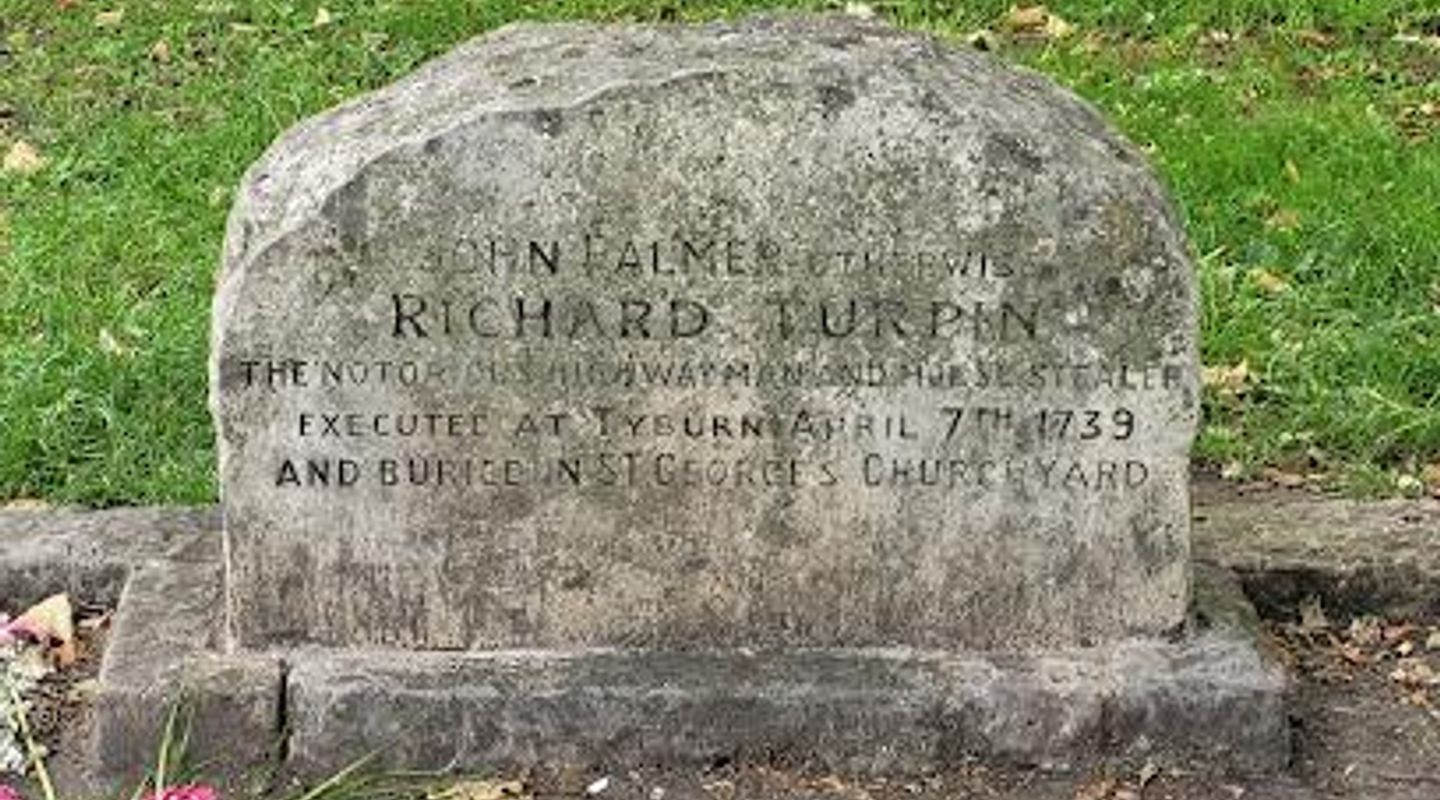
Dick Turpin's Grave in York marks the reputed final resting place of the notorious 18th-century highwayman Richard 'Dick' Turpin. Located in the quiet St George’s Church graveyard, this site features a prominent headstone erected posthumously to commemorate Turpin’s infamous legacy. While the actual presence of Turpin’s remains here is debated, the grave remains a significant historical landmark tied to his dramatic life and execution in York.
On-site amenities
 Information boards
 Seating areas
 Trash bins
Opening hours
- Every dayOpen 24 hours
Opening hours as listed on the venue’s Google Business Profile. Hours can change for services and special events, so check with the venue before you go.
- Address
- 6 Lead Mill Ln, York YO1 9QH
- Website
Getting there
Bus
Walking
Taxi
Discover more about Dick Turpins grave
The Enigmatic Legacy of Dick Turpin
Dick Turpin, born in 1705 in Essex, England, became one of the most infamous highwaymen of the 18th century. His criminal career evolved from livestock theft to violent highway robbery, culminating in his arrest and execution in York in 1739. Despite his notoriety, much of Turpin’s story is shrouded in myth and legend, including the famous but apocryphal tale of his legendary ride from London to York on his horse Black Bess. This grave site in York commemorates Turpin’s dramatic life and death, though historians question whether his remains truly lie beneath the headstone.
A Grave Marked by Mystery and Myth
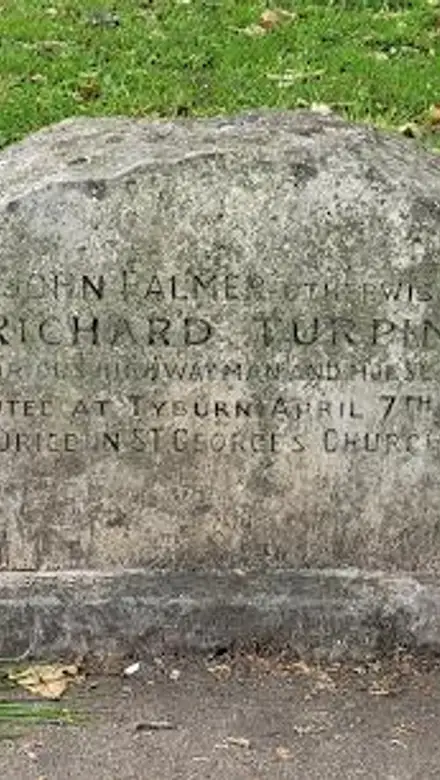
The grave is located in St George’s Church graveyard on Lead Mill Lane, York, marked by a large headstone bearing the names John Palmer (Turpin’s alias) and Dick Turpin. This stone was erected after 1918, likely to honor Turpin’s historical significance and attract visitors. Contemporary accounts suggest that after Turpin’s execution, his body was buried here but was soon disturbed by body-snatchers who sought to sell corpses for medical dissection. The coffin was reportedly filled with quicklime and reburied to prevent further theft, adding to the mystery surrounding the grave’s authenticity.
Historical Context of Turpin’s Final Days
Turpin was tried and convicted for horse theft and hanged at York’s Knavesmire gallows, known as the "Three-Legged Mare," in April 1739. His execution was notable for his defiant demeanor and the hiring of professional mourners. After his death, his body was briefly stolen but recovered by an angry mob, reflecting the public’s conflicted feelings toward the notorious outlaw. The graveyard itself is otherwise unremarkable, underscoring the contrast between Turpin’s infamous life and the quiet resting place that bears his name.
The Grave as a Cultural and Tourist Landmark
Today, the grave attracts visitors interested in England’s criminal folklore and Georgian history. It stands as a tangible link to the past, situated near York’s city center and opposite St George’s Church. Nearby, the York Castle Museum offers further insight into Turpin’s imprisonment and execution. The grave’s presence fuels fascination with Turpin’s life story, blending fact and fiction in a way that continues to captivate historians and tourists alike.
Legacy Beyond the Grave
Dick Turpin’s legend was cemented by 19th-century literature, particularly Harrison Ainsworth’s 1834 novel "Rookwood," which popularized the tale of his daring ride and tragic end. Despite the embellishments, Turpin remains a symbol of the romanticized highwayman in English culture. The grave site serves both as a memorial and a reminder of the complex interplay between history and myth in shaping public memory.
Visiting the Site Today
The grave is accessible to the public year-round and offers a quiet, reflective atmosphere contrasting with Turpin’s turbulent life. The site encourages contemplation of the historical realities behind the legends and invites visitors to explore York’s rich Georgian heritage through this evocative landmark.
Evendo Review Centre
 Google
Guest reviews
Best time to go
Quietest: Jan, Feb & Dec · before 6am or at 10pm
Busy times are Evendo estimates for a typical year, to help you plan. Actual crowds vary with events, school holidays and the weather.
Explore Dick Turpins grave on the map
A handpicked selection of must-see spots near Dick Turpins grave, mapped for you.
Get your free copy of our complete guide to Dick Turpins grave, delivered straight to you.
Everything on this page, from opening hours and how to get there to Eve’s tips and the best time to go, in one PDF you can read offline, print or share.
Already have an account? Sign in
Your Dick Turpins grave guide is ready.
We'll send it to · Not you? Sign out

Getting your guide ready…
We are putting together a fresh copy of the Dick Turpins grave guide. This can take up to a minute.
This can take a few moments. If your browser asks, choose Allow so the download can start. You'll find the guide in your Downloads folder.
Nothing happened? Download it again
Sorry, the guide is taking longer than usual. Please try again in a minute, or get it by email instead.
Unlock the best of Dick Turpins grave
Skip-the-line tickets, guided tours with entry, and walking tours of the area, booked in a few clicks.


Other nearby places you may find interesting
The closest places of the same kind, if this one is not quite what you had in mind.
-
-
-
-
-


Swipe for more places
More to explore near Dick Turpins grave

 Best experiences near Dick Turpins grave
 Best hotels near Dick Turpins grave
 Best landmarks near Dick Turpins grave
 Best attractions near Dick Turpins grave
 Best shops near Dick Turpins grave
 Best restaurants near Dick Turpins grave
 Best bars near Dick Turpins grave
Do you manage this location?
Take control to get all the benefits, like improved information, better appearance, and stronger visibility across AI-powered discovery.
Explore more

Explore more of Leeds
Discover Leeds: A dynamic city where history meets innovation, offering cultural treasures, stunning architecture, and a gateway to the scenic Yorkshire Dales.
Explore Leeds
Explore more of United Kingdom
Discover the United Kingdom: A blend of rich history, stunning landscapes, and vibrant cities, offering a unique travel experience for every visitor.
Explore United Kingdom