
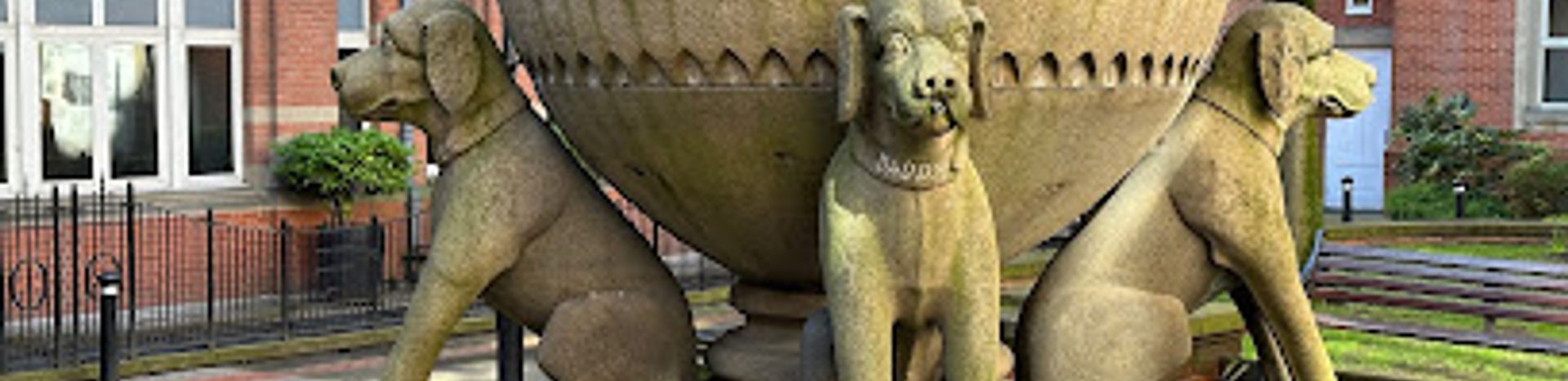
The Talbot Hounds Fountain in Leeds
A majestic 19th-century fountain featuring four stone Talbot hounds, rescued from a lost Gothic mansion and now a cherished Leeds landmark.
The Talbot Hounds Fountain, located at 15 Boar Lane in Leeds, is a striking historical landmark featuring four stone Talbot hounds arranged around an ornate fountain bowl. Originally part of the grand Castle Carr estate near Halifax, this 19th-century fountain was rescued after the demolition of the Gothic mansion and relocated to Leeds’ Trevelyan Square. The Talbot hound, now extinct, was a medieval hunting dog breed symbolizing heritage and nobility, making this fountain a unique piece of local history and artistry.
A brief summary to The Talbot Hounds Fountain
- 15 Boar Ln, Leeds, LS1 6EN, GB
- Duration: 0.25 to 1 hours
- Free
-
 Outdoor
- Mobile reception: 5 out of 5
Local tips
- Visit during daylight hours to fully appreciate the detailed stonework and the tranquil setting of the fountain.
- Use the Talking Statues Leeds app or website to hear fascinating stories narrated by the Talbot hounds themselves.
- Combine your visit with a walk around Trevelyan Square to explore other heritage buildings and public art.
- Photography enthusiasts should try capturing the fountain in soft morning or evening light for the best effect.

For the on-the-go comforts that matter to you
- Seating Areas
- Information Boards
- Restrooms
- Drink Options
- Food Options
Getting There
-
Bus
Take the bus lines 1, 6, or 28 to Leeds city centre, then walk approximately 5 minutes on mostly flat, paved streets to Trevelyan Square where the fountain is located. Bus fares range from £2.50 to £4.00 depending on ticket type, with frequent services throughout the day.
-
Train
Arrive at Leeds Railway Station, a major hub with frequent connections from across the UK. From the station, it is a 15-minute walk on paved urban paths to the Talbot Hounds Fountain. The station has full accessibility and amenities.
-
Taxi or Rideshare
Taxis and rideshare services can drop you directly at Trevelyan Square. Travel time from Leeds city centre is typically under 10 minutes depending on traffic. Expect fares around £5-£10.
The Talbot Hounds Fountain location weather suitability
-
 Any Weather
-
 Clear Skies
-
 Mild Temperatures
-
 Rain / Wet Weather
Discover more about The Talbot Hounds Fountain
Origins and Historical Context of Castle Carr
Castle Carr was a vast mock-Tudor and Norman-style mansion built between 1859 and 1867 near Halifax for Captain Joseph Priestly Edwards. Designed by architect Thomas Risley, the estate was renowned for its grandeur, including a 62-foot oak-panelled banqueting hall and elaborate water gardens featuring lakes, fountains, and a 130-foot high water jet. The mansion was decorated with numerous stone Talbot hounds, a breed of hunting dog now extinct, which adorned fireplaces and fountains alike. Tragically, Edwards and his eldest son died in a railway accident before the house was completed, and the family never fully inhabited the estate. Castle Carr fell into disrepair and was demolished in the early 1960s, though its water gardens remain on private land and open occasionally to visitors.The Talbot Hounds Fountain’s Journey to Leeds
The Talbot Hounds Fountain originally stood within the water gardens of Castle Carr, serving as a centerpiece with four stone hounds spouting water from their mouths. After Castle Carr’s demolition, the fountain was lost for decades until rediscovered in a stonemason’s yard in the 1990s. It was subsequently relocated and installed in Trevelyan Square, Leeds, a business quarter that underwent redevelopment in 1992. The fountain now stands as one of the last surviving relics of the Castle Carr estate, symbolizing both the lost grandeur of the mansion and the historical legacy of the Talbot hound.Significance of the Talbot Hound
The Talbot hound, depicted in the fountain, was a medieval hunting dog breed known for its distinctive white coat and long ears. Although extinct today, it is believed to be an ancestor of modern breeds such as the Beagle and Bloodhound. The Talbot was a common heraldic symbol in England, often appearing on coats of arms and inn signs, representing loyalty and nobility. The fountain’s hounds reflect this heritage, linking the artwork to centuries of English history and tradition. The breed’s symbolic importance is further underscored by its connection to notable families like the Talbots, Earls of Shrewsbury.Artistic and Cultural Features
The fountain is notable for its detailed stonework and the lifelike expressions of the four Talbot hounds, each positioned around a large ornate bowl. The water spouting from their mouths gives the impression of animated life, blending functional design with artistic storytelling. The fountain is also part of a wider initiative known as Talking Statues Leeds, where visitors can interact with statues via smartphone, hearing stories and historical facts, adding a modern cultural layer to this Victorian relic. This blend of history, art, and technology makes the fountain a unique cultural asset in Leeds.Setting and Visitor Experience
Situated in a quiet courtyard near Leeds city centre, the fountain offers a tranquil spot amidst the urban bustle. Its location in Trevelyan Square, surrounded by heritage buildings and modern offices, provides a striking contrast between past and present. Visitors can appreciate the fountain’s craftsmanship and historical significance while enjoying the peaceful ambience. The site is accessible year-round and is an evocative reminder of the region’s architectural and social history.Legacy and Preservation
The Talbot Hounds Fountain stands as a testament to Leeds’ commitment to preserving its historical artifacts and celebrating local heritage. Its rescue and relocation highlight efforts to save important cultural landmarks from oblivion. The fountain continues to inspire interest in the extinct Talbot breed and the vanished Castle Carr estate, ensuring that this piece of 19th-century history remains a visible and valued part of Leeds’ urban landscape.For the vibe & atmosphere seeker
- Tranquil
- Scenic
- Unique
- Casual
For the design and aesthetic lover
- Vintage Styles
For the architecture buff
- Historic
- Landmarks
- Parks & Gardens
For the view chaser and sunset hunter
- Iconic Views
For the social media creator & influencer
- Instagrammable
- Photo Spots
For the eco-conscious traveler
- Public-Transport Accessible
For the kind of experience you’re after
- Cultural Heritage
- Photowalk
- Day Trip
For how adventurous you want the journey to be
- Easy Access
Location Audience
- Family Friendly
- Senior Friendly
- Child Friendly
- Teen Friendly
- Wheelchair Access
- Pet Friendly
- Solo Friendly
- Couple Friendly
- Solo Female Friendly


