
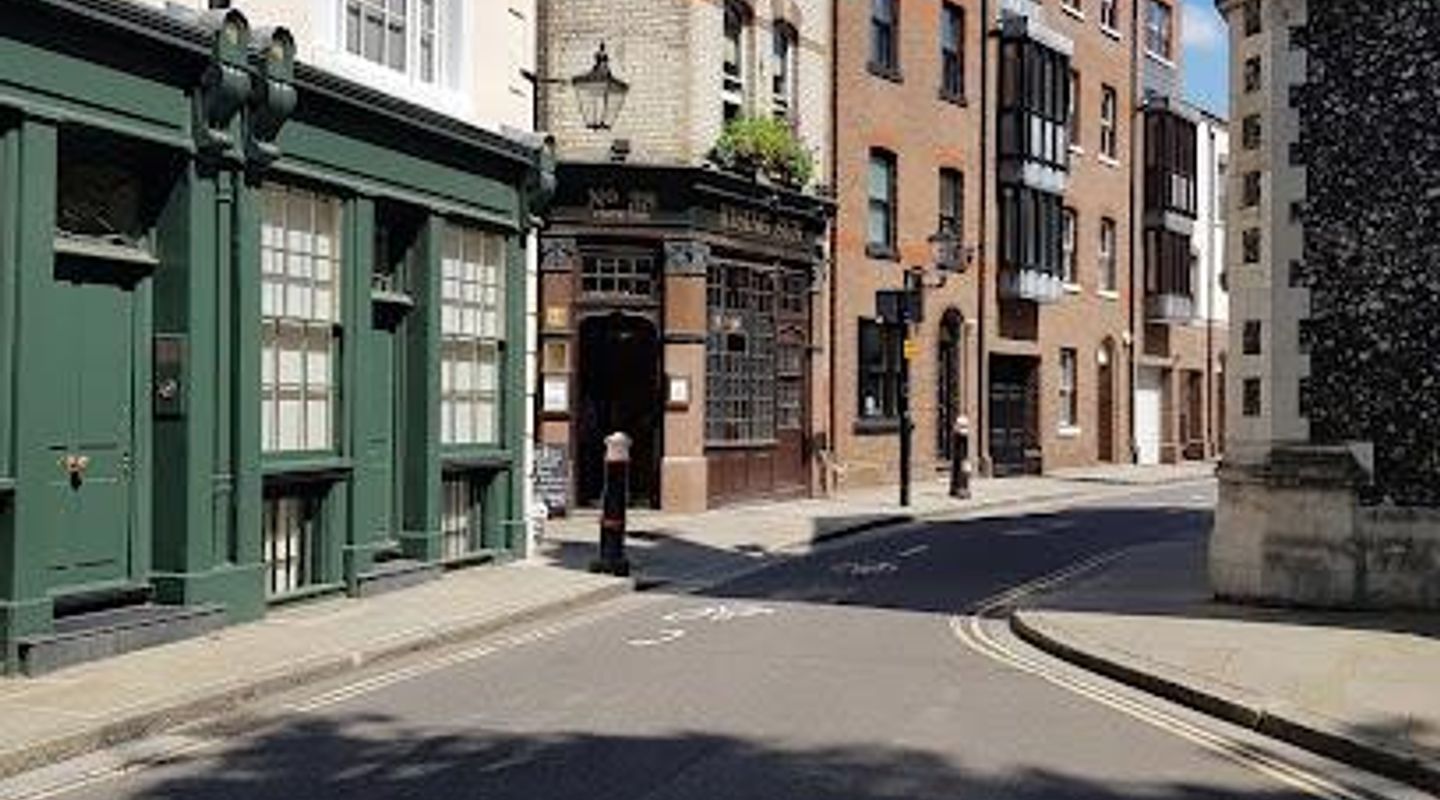
Cloth Fair, London Travel Guide
A compact historic street in Smithfield where medieval trade history, listed façades and quiet City-of-London atmosphere still shape the walk.
Cloth Fair is one of the City of London’s most atmospheric historic streets: compact, quiet and lined with surviving older fabric in the Smithfield area. There is no single monument here, just a short heritage walk with listed buildings, church context and a strong sense of the medieval-to-Georgian City. Most visitors come for photographs, architecture and a brief pause in a densely built district.
A brief summary to Cloth Fair
- London, GB
- Duration: 0.2 to 2 hours
- Free
-
 Outdoor
- Mobile reception: 5 out of 5

Know before you go
Hi, I'm Eve. Here are a few practical things to know before exploring Cloth Fair.
- Pair Cloth Fair with St Bartholomew the Great and the surrounding Smithfield streets for a more complete heritage walk.
- Visit in dry daylight if possible; the street’s details and older façades read best when you can slow down and look closely.
- Do not expect on-site visitor services, toilets or seating; plan to use nearby facilities in the wider City area.
Do you manage this location?
Take control to get all the benefits, like improved information, better appearance, and stronger visibility across AI-powered discovery. Learn more about listing your business on Evendo
Activate your presenceOther nearby places you may find interesting
The closest places of the same kind, if this one is not quite what you had in mind.


Explore Cloth Fair on the Map
A handpicked selection of must-see spots near Cloth Fair, mapped for you.
Unlock the Best of Cloth Fair
Buy tickets
-
No tickets available
Book tours with entry


Book tours without entry
-
No tours available
Getting There
-
Tube
Barbican is the nearest practical Underground option, with Farringdon also useful for a longer but straightforward walk into the Smithfield area.
-
Walking
If you are already in the City or at nearby Farringdon, walking is the most natural approach; the street is compact and easy to fold into a wider route.
-
Bus
Bus access works well in the broader Smithfield and Barbican area, though it is still a street-level visit rather than a stop with its own transport hub.
-
Taxi / Rideshare
A taxi or rideshare is possible, but central City traffic and limited drop-off space make it less convenient than public transport.
For the on-the-go comforts that matter to you
-
 Information Boards
Discover more about Cloth Fair
What it is
Cloth Fair is a historic street in Smithfield, best treated as a heritage walk rather than a standalone attraction. It sits in the old core of the City of London, close to St Bartholomew the Great and the market streets around Smithfield. The street takes its name from the cloth trade and the old fair traditions of the area, and its value lies in the survival of older urban fabric in a part of London that has been heavily rebuilt.What you see on the ground
The street is small, narrow and outwardly modest. There are no grand visitor facilities or long sightlines; the interest is at pavement level, in façades, doorways, brickwork and the way the street sits against church and market surroundings. Some nearby properties preserve timber-framed elements dating back centuries, even where later fronts were added. The result is a compact streetscape that feels older than the surrounding business district, with a calm, residential tone that contrasts sharply with the busier roads nearby.How a visit feels
A visit is usually brief and linear. You walk through, stop for a few photographs, and then continue into Smithfield or toward St Bartholomew the Great. The street is most rewarding for travellers who notice details: uneven building lines, listed façades, the scale of the lane, and the way the historic setting survives inside central London. It is not a place for long lingering unless you are building a wider City heritage route. In good weather, the quiet makes it easy to read the street’s layers; in rain or winter cold, the experience becomes a much shorter stop.Why travellers come
People come here for London history that still feels embedded in the street rather than displayed in a museum. Cloth Fair suits architecture-minded visitors, photographers, and anyone tracing the old commercial life of Smithfield and the Bartholomew Fair area. It also works well as a short, low-cost stop between larger sights. The appeal is subtle: a preserved fragment of the pre-modern City, set inside one of London’s most densely built districts, with enough texture to justify a detour but not enough scale to fill an afternoon.Practical expectations
Expect limited on-site amenities and a mostly outdoor experience. The street is easy to combine with nearby walking routes, but it is not a destination for dining, shopping or formal interpretation. Public transport is the sensible way in, usually via Barbican or Farringdon, followed by a short walk. The best visit is unhurried but compact: arrive with time to look closely, then move on to the surrounding Smithfield streets and church precincts.












Your all‑in‑one travel companion app
Explore expert travel guides, compare and book tours, experiences, hotels, and more—all from the palm of your hand. Download now for seamless trip planning wherever your wanderlust takes you.


Explore More of London
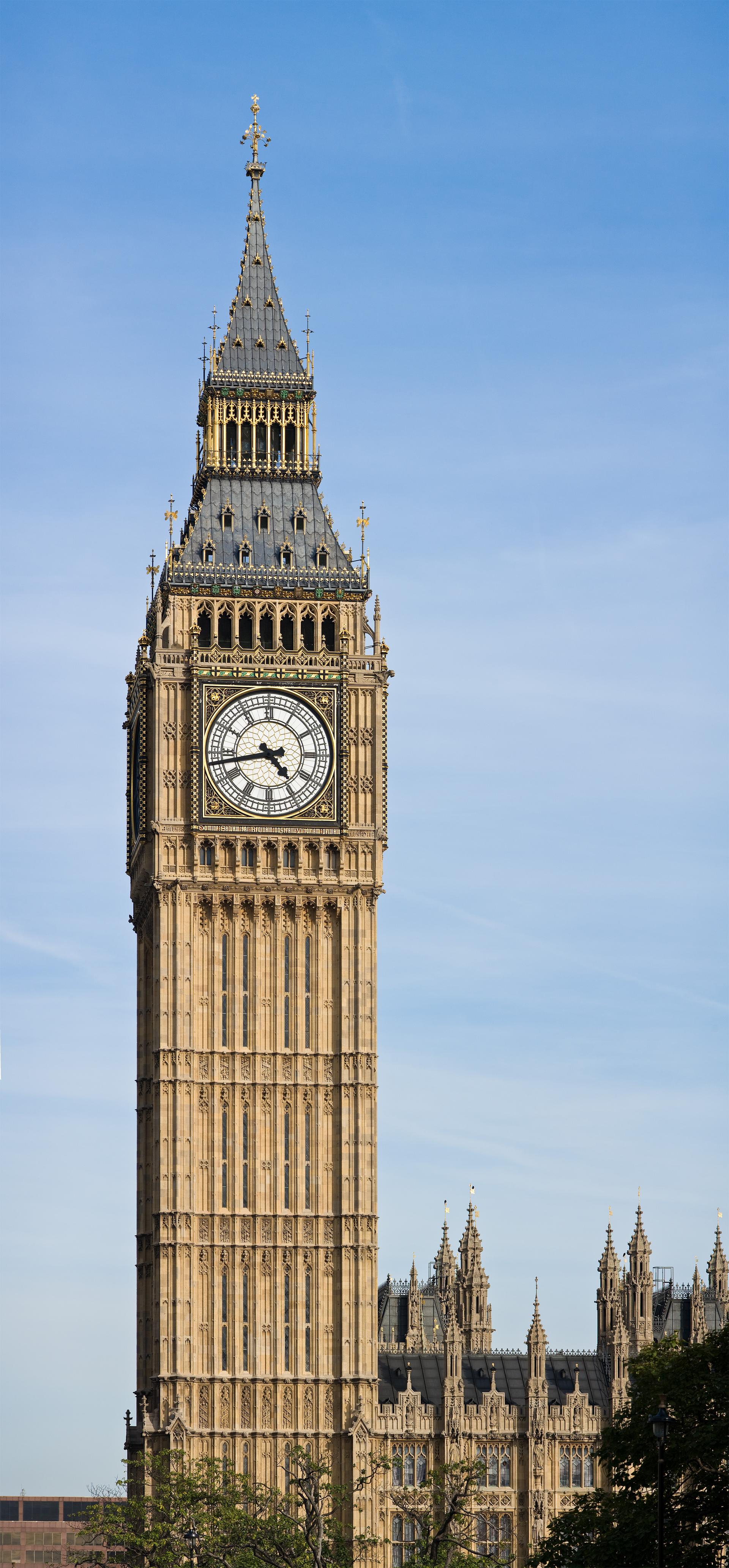
Looking beyond Cloth Fair? Discover London for broader travel guides, local hot-spots, and regional highlights.
Explore London
A compact City of London church with medieval roots, Wren-era rebuilding, memorial chapels, and a strong musical identity beside Holborn Viaduct.
London’s historic wholesale meat market, where Victorian market halls and pre-dawn trading still define the experience in the City.
