

Notting Hill Gate, London Travel Guide
Free Guide: Historic and vibrant Notting Hill Gate Underground Station links three Tube lines beneath a lively West London street.


A brief summary of Notting Hill Gate
Historic and vibrant Notting Hill Gate Underground Station links three Tube lines beneath a lively West London street.
Notting Hill Gate Underground Station is a key London Tube station serving the Central, Circle, and District lines. Opened in 1868 and rebuilt in the late 1950s, it links separate platforms beneath the bustling Notting Hill Gate street. The station features a Grade II listed glass roof and mosaic art columns, offering a blend of historic charm and modern convenience in the vibrant Notting Hill area.
On-site amenities
 Restrooms
 Drink options
 Food options
 Seating areas
 Information boards
 Visitor centre
- Address
- London W11 3HT
- Website
Getting there
London Underground
Bus Services
Taxi
Walking
Discover more about Notting Hill Gate
Historic Origins and Architectural Evolution
Notting Hill Gate Underground Station first opened on October 1, 1868, as part of the Metropolitan Railway's extension, serving the Circle and District lines. The Central line platforms were added later in 1900, designed by Harry Bell Measures. Originally, the station operated as two separate entities on opposite sides of Notting Hill Gate street, with distinct entrances and access methods, including lifts for the Central line platforms.In the late 1950s, the station underwent significant redevelopment to accommodate road widening and improve passenger interchange. The separate stations were unified beneath the street with a shared ticket hall and escalators, replacing the older lifts. This 1959 rebuild introduced the first metal-sided escalators on the London Underground and created a pedestrian subway under the widened road. The station's sub-surface platforms retain a rare partially glazed iron roof, a distinctive feature preserved as a Grade II listed structure since 1984.
Design Features and Artistic Elements
The station's architecture reflects a blend of Victorian engineering and mid-20th-century modernism. The 'cut and cover' construction method is evident in the brick retaining walls and elliptical iron roof spanning nine bays. The Central line platforms are uniquely stacked vertically due to spatial constraints during construction, with the westbound platform above the eastbound.Artistic touches include mosaic columns at the southern entrance, installed in 2006 by local public art group Urban Eye, adding vibrant cultural flair. Though plans for street-level canopies were developed by Weston Williamson architects, these have not been realized, leaving the station entrances open to the urban environment.
Connectivity and Surrounding Attractions
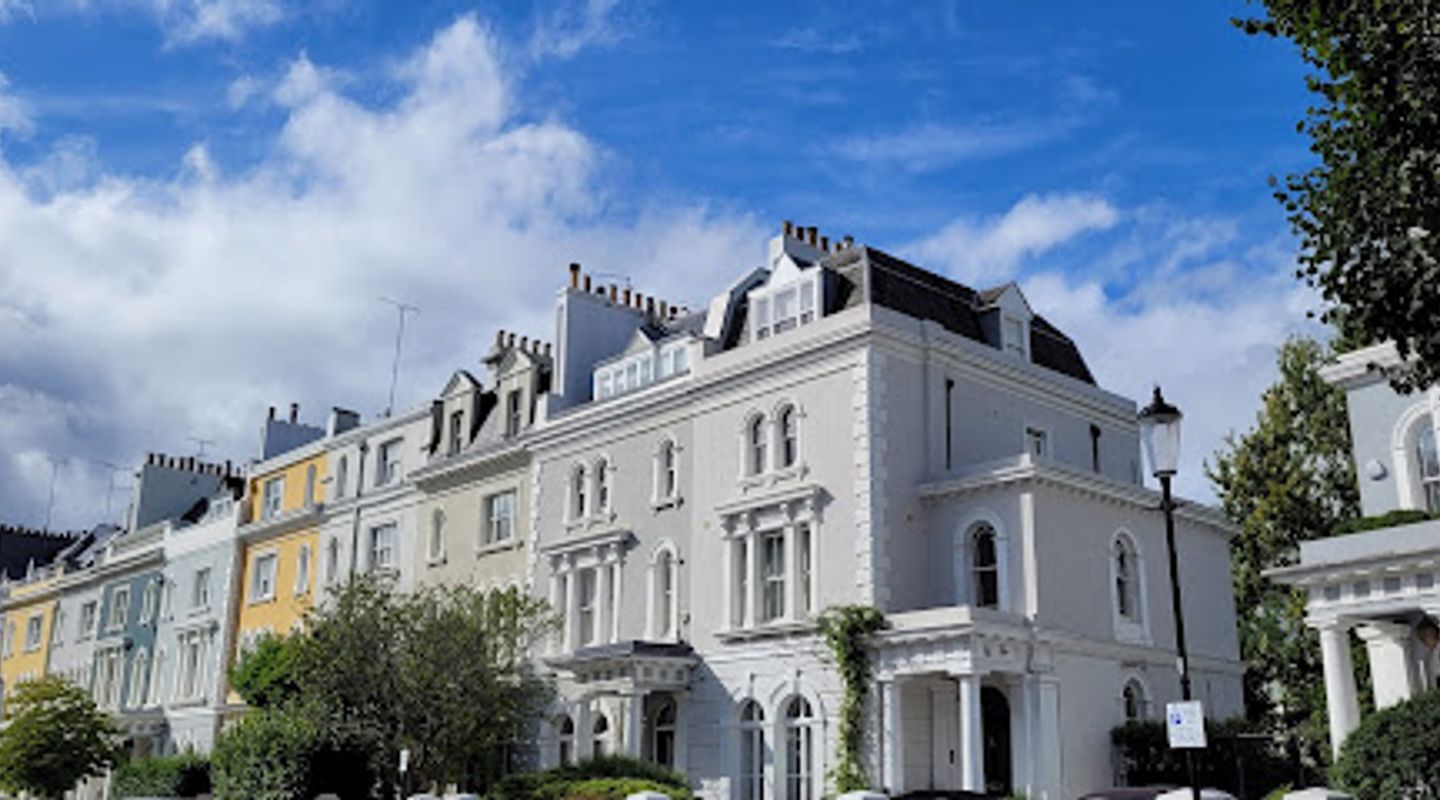
Notting Hill Gate station is a vital interchange within London's fare zones 1 and 2, connecting travelers to Holland Park, Queensway, High Street Kensington, and Bayswater stations. It is well-served by London buses and coach services, including the Oxford Tube.The station is a gateway to the iconic Notting Hill neighborhood, famed for its pastel-colored houses, Portobello Road Market, and cultural venues like the Gate Theatre and Coronet Theatre. Nearby attractions also include independent art galleries, bookshops, and vibrant street life that typifies this fashionable West London district.
Passenger Experience and Facilities
The station offers modern amenities such as WiFi, escalators, ticket halls, and payphones, catering to daily commuters and tourists alike. Its design facilitates smooth interchange between the three lines, with clear signage and a spacious underground concourse.Despite its urban setting, the station maintains a cool, historic vibe appreciated by locals and visitors. The presence of mosaic art and preserved architectural elements provide a unique atmosphere compared to more utilitarian stations.
Role in London's Transport Network
As a multi-line station, Notting Hill Gate plays a strategic role in London's Underground network, enabling efficient travel across central and west London. It supports frequent services on the Central, Circle, and District lines, with last trains running just after midnight.The station's location on the boundary of fare zones 1 and 2 makes it a popular access point for both inner-city residents and those coming from outer areas, blending convenience with the charm of the Notting Hill neighborhood.
Preservation and Future Prospects
Notting Hill Gate's Grade II listing ensures the preservation of its distinctive architectural features, especially the historic platforms and roof structure. While modernization efforts continue across the London Underground, this station balances heritage with functionality.Future improvements may focus on accessibility and passenger flow, but the station's unique character as a historic transit hub remains central to its identity and appeal.
Evendo Review Centre
 Google
Guest reviews
Best time to go
Quietest: Jan, Feb & Mar · before 5am or from 11pm
Busy times are Evendo estimates for a typical year, to help you plan. Actual crowds vary with events, school holidays and the weather.
Explore Notting Hill Gate on the map
A handpicked selection of must-see spots near Notting Hill Gate, mapped for you.
Get your free copy of our complete guide to Notting Hill Gate, delivered straight to you.
Everything on this page, from opening hours and how to get there to Eve’s tips and the best time to go, in one PDF you can read offline, print or share.
Already have an account? Sign in
Your Notting Hill Gate guide is ready.
We'll send it to · Not you? Sign out

Getting your guide ready…
We are putting together a fresh copy of the Notting Hill Gate guide. This can take up to a minute.
This can take a few moments. If your browser asks, choose Allow so the download can start. You'll find the guide in your Downloads folder.
Nothing happened? Download it again
Sorry, the guide is taking longer than usual. Please try again in a minute, or get it by email instead.
Unlock the best of Notting Hill Gate
Skip-the-line tickets, guided tours with entry, and walking tours of the area, booked in a few clicks.

Other nearby places you may find interesting
The closest places of the same kind, if this one is not quite what you had in mind.
-
-
-
-
-


Swipe for more places
More to explore near Notting Hill Gate

 Best experiences near Notting Hill Gate

 Best hotels near Notting Hill Gate

 Best landmarks near Notting Hill Gate

 Best attractions near Notting Hill Gate

 Best shops near Notting Hill Gate

 Best restaurants near Notting Hill Gate

 Best bars near Notting Hill Gate
Do you manage this location?
Take control to get all the benefits, like improved information, better appearance, and stronger visibility across AI-powered discovery.
Explore more

Explore more of London
Explore London: A city of iconic landmarks, rich history, vibrant culture, and endless attractions that cater to every taste, making it a must-visit destination.
Explore London
Explore more of United Kingdom
Discover the United Kingdom: A blend of rich history, stunning landscapes, and vibrant cities, offering a unique travel experience for every visitor.
Explore United Kingdom
