

Richmond Park, London Travel Guide
Free Guide: A vast southwest London Royal Park of free-roaming deer, open grassland, woodland walks, and long skyline views, with Isabella Plantation adding seasonal colour.


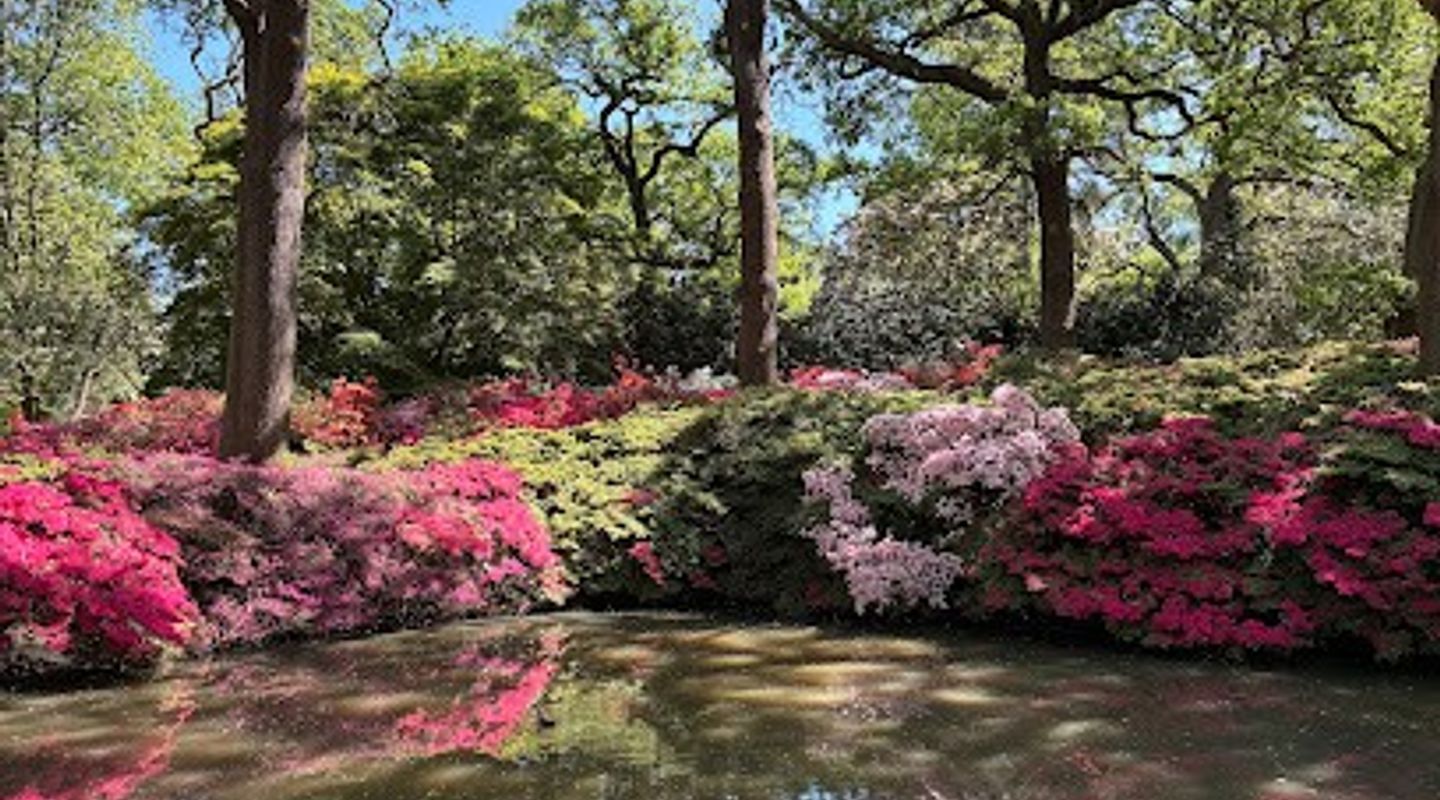
A brief summary of Richmond Park
A vast southwest London Royal Park of free-roaming deer, open grassland, woodland walks, and long skyline views, with Isabella Plantation adding seasonal colour.
Richmond Park is London’s largest Royal Park, a broad sweep of grassland, woodland, ponds, and long views where red and fallow deer move freely. It feels spacious and calm rather than manicured, with enough scale for a short deer-spotting stop or a half-day walk. Isabella Plantation, viewpoints, and picnic lawns give the park a varied rhythm.
On-site amenities
 Restrooms
 Drink options
 Food options
 Seating areas
 Sheltered areas
 Picnic areas
 Trash bins
 Information boards
Opening hours
- Every day7:30 am–8:15 pm
Opening hours as listed on the venue’s Google Business Profile. Hours can change for services and special events, so check with the venue before you go.
- Address
- Richmond
- Phone
- Website
Getting there
Train
Bus
Cycle
Car
Discover more about Richmond Park
What it is
Richmond Park is a vast Royal Park in southwest London, managed as both a historic landscape and a protected nature reserve. It is not a single attraction but a large, working public park where deer management, recreation, and conservation overlap. The park’s defining feature is its free-roaming red and fallow deer, which move across open grassland and through wooded sections in a setting that still carries the shape of a former royal hunting ground.
How it feels on the ground
The scale is the first thing you notice. Paths run through broad open ground, belts of mature trees, and quieter interior corners, so the park feels expansive rather than enclosed. On a fine day, the light reaches far across the grass, and the higher points open out to long views over southwest London and, in places, the skyline beyond. It is generally calmer than the central London parks, though popular gates, car parks, cafés, and deer-viewing spots can become busy in late morning and early afternoon.
What visitors actually do
Most visits are self-directed. People come to walk, cycle, run, picnic, photograph deer, or spend time in specific areas such as Isabella Plantation, which has a more enclosed ornamental woodland character than the rest of the park. Some visitors stay for an hour or two for a short circuit and a café stop; others spend half a day following different routes, combining viewpoints, woodland paths, and garden sections. The park works well for low-key outdoor time because there is no single route to follow and no need to rush between sights.
History and landscape
Richmond Park began as a royal hunting landscape and has remained closely tied to royal ownership and deer management for centuries. Its broad character has changed surprisingly little, which is part of its appeal: this is a large urban park that still reads as a managed historic landscape rather than a decorative city garden. It is also nationally significant for conservation, with protected habitat status that gives the open grassland and woodland real ecological weight, not just scenic value.
Practical expectations
Entry to the park is free, but the site is large enough that transport choice matters. Richmond station is the most practical rail gateway, with other stations and bus links serving different edges of the park. Cycling is straightforward, and a seasonal minibus helps connect key points. Facilities are concentrated around main visitor areas, so plan around the part of the park you want to see rather than expecting a dense central hub. Bring weather-appropriate clothing, because the open ground can feel windy, wet, or hot depending on the season. Deer should be watched from a distance, and picnics are best kept away from them.
Evendo Review Centre
 Google
Guest reviews
Best time to go
Quietest: Jan, Feb & Dec · before 8am or from 7pm
Busy times are Evendo estimates for a typical year, to help you plan. Actual crowds vary with events, school holidays and the weather.
Explore Richmond Park on the map
A handpicked selection of must-see spots near Richmond Park, mapped for you.
Get your free copy of our complete guide to Richmond Park, delivered straight to you.
Everything on this page, from opening hours and how to get there to Eve’s tips and the best time to go, in one PDF you can read offline, print or share.
Already have an account? Sign in
Your Richmond Park guide is ready.
We'll send it to · Not you? Sign out

Getting your guide ready…
We are putting together a fresh copy of the Richmond Park guide. This can take up to a minute.
This can take a few moments. If your browser asks, choose Allow so the download can start. You'll find the guide in your Downloads folder.
Nothing happened? Download it again
Sorry, the guide is taking longer than usual. Please try again in a minute, or get it by email instead.
Unlock the best of Richmond Park
Skip-the-line tickets, guided tours with entry, and walking tours of the area, booked in a few clicks.
 Tour with entry
Nordic Walking Tour of Richmond
from $75.45 Tour with entry
London E Bike Tour Richmond Park Deer and Hidden Gems
from $86.93 Tour with entry
Hampton Court Palace, Kew Gardens and Richmond Park From London
from $477.88 Tour with entry
Explore Ted Lasso and Richmond upon Thames Private Tour
from $1,068.94


Other nearby places you may find interesting
The closest places of the same kind, if this one is not quite what you had in mind.
-
-
-
-
-


Swipe for more places
More to explore near Richmond Park

 Best experiences near Richmond Park
 Best hotels near Richmond Park
 Best landmarks near Richmond Park
 Best attractions near Richmond Park
 Best shops near Richmond Park
 Best restaurants near Richmond Park
 Best bars near Richmond Park
Do you manage this location?
Take control to get all the benefits, like improved information, better appearance, and stronger visibility across AI-powered discovery.
Explore more

Explore more of London
Explore London: A city of iconic landmarks, rich history, vibrant culture, and endless attractions that cater to every taste, making it a must-visit destination.
Explore London
Explore more of United Kingdom
Discover the United Kingdom: A blend of rich history, stunning landscapes, and vibrant cities, offering a unique travel experience for every visitor.
Explore United Kingdom
