The Clock Tower, London Travel Guide
St Albans’ medieval Clock Tower is the only surviving town belfry in England, with steep steps, civic history, and rooftop views over the city.
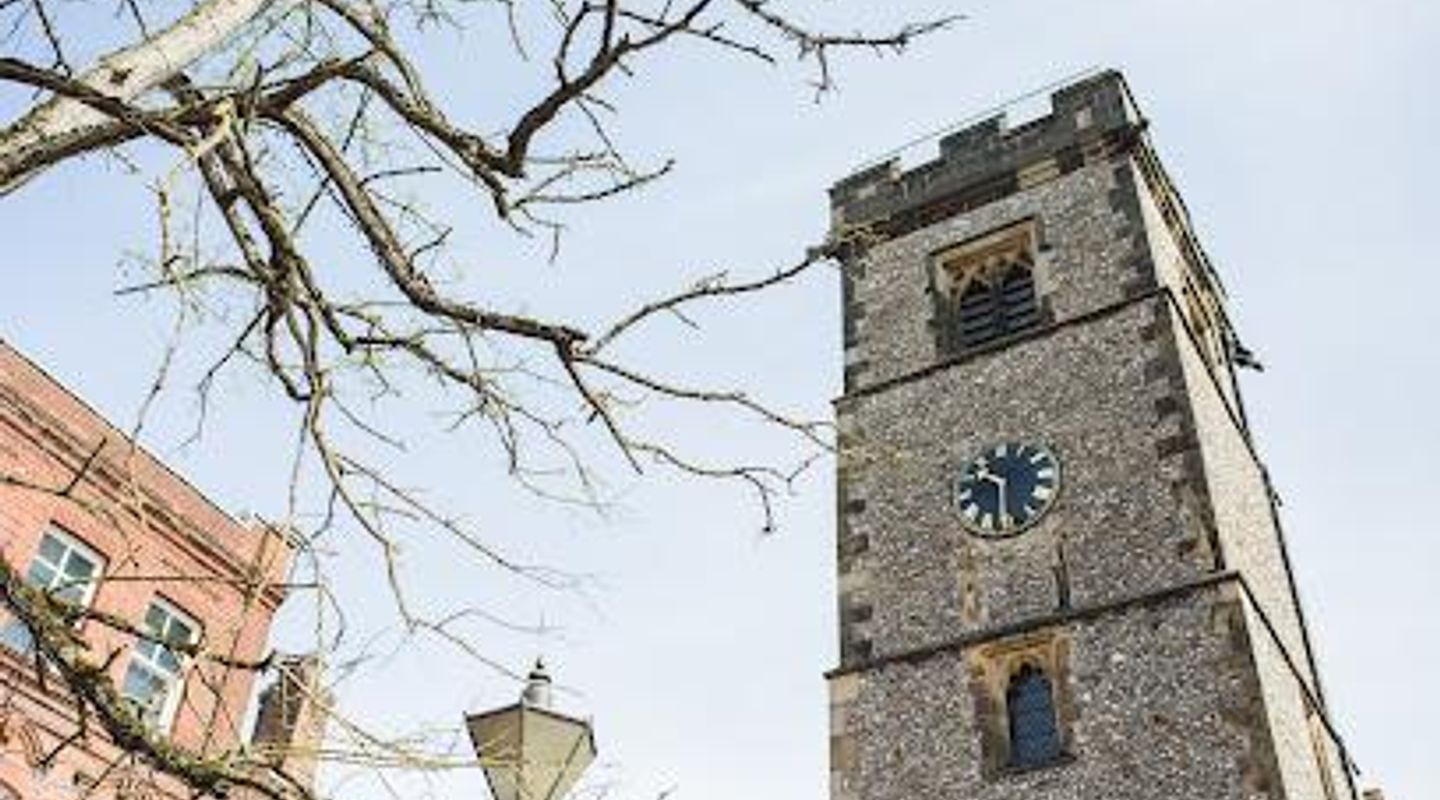
Standing on St Albans High Street, the Clock Tower is a compact medieval landmark with a big civic story. Built in the early 15th century, it is the only surviving medieval town belfry in England and a Scheduled Ancient Monument. Most visits are brief: admire the exterior, read the history, and, when open, climb the steep narrow stairs for views over the town and Hertfordshire countryside.
A brief summary to The Clock Tower
- High St, St Albans, AL3 4EL, GB
- Click to display
- Duration: 0.25 to 2 hours
- Budget
-
 Outdoor
- Mobile reception: 4 out of 5

Know before you go
Hi, I'm Eve. Here are a few practical things to know before exploring The Clock Tower.
- Check whether the tower is open before you go; access is seasonal and can change with weather or volunteer availability.
- The climb is steep and narrow, with 93 steps, so it is not suitable for wheelchairs or anyone uneasy on tight staircases.
- Pair it with the cathedral, market area, and nearby museum sites to make the short visit feel worthwhile.
Do you manage this location?
Take control to get all the benefits, like improved information, better appearance, and stronger visibility across AI-powered discovery. Learn more about listing your business on Evendo
Activate your presenceOther nearby places you may find interesting
The closest places of the same kind, if this one is not quite what you had in mind.

Explore The Clock Tower on the Map
A handpicked selection of must-see spots near The Clock Tower, mapped for you.
Unlock the Best of The Clock Tower
Buy tickets
-
No tickets available
Book tours with entry
-
No tours available
Book tours without entry

Getting There
-
Train
From London, the practical rail option is to St Albans City, then continue into the centre on foot, by bus, or by taxi; the rail journey is roughly 20 minutes before the last mile.
-
Driving
Driving is straightforward via major roads such as the M1, A1(M), or M25, but town-centre parking is pay-and-display and can be tight at busy times.
-
Local transport
Local buses serve the city centre, and the tower is easy to combine with a walk through the historic core once you are in St Albans.
-
Walking
If you are already in central St Albans, the tower is best reached on foot as part of a short heritage circuit around the market area and cathedral quarter.
For the on-the-go comforts that matter to you
-
 Information Boards
Discover more about The Clock Tower
What it is
The Clock Tower is one of St Albans’ defining landmarks: a medieval civic belfry built between 1403 and 1405, standing directly on the town-centre High Street. It is not a museum-style attraction or a grand monument set apart from daily life. Instead, it sits in the middle of an active market town, where shoppers, commuters, and heritage visitors pass it all day. Its status as the only surviving medieval town belfry in England gives it unusual historical weight for such a small structure.The tower was built as a symbol of civic independence, and that political edge still shapes how it is read today. It is a Scheduled Ancient Monument, and its survival in a busy urban setting is part of its appeal. Visitors come for the exterior, the story, and, when access is available, the climb to the viewing platform.What the visit feels like
A visit here is short, concentrated, and very local in character. You are not spending hours wandering galleries or landscaped grounds; you are standing on a town street, looking up at a medieval tower, then moving inside for a steep ascent if it is open. The interior climb is narrow and demanding, with 93 very steep steps, so the experience is more physical than it first appears. At the top, the reward is a clear, elevated view across St Albans rooftops and out toward the surrounding Hertfordshire landscape.Because the tower is so compact, the mood changes quickly from street bustle to enclosed stairwell to open-air viewpoint. That contrast is part of the experience. It suits travellers who like heritage in its original urban context, rather than polished interpretation or long-form attraction visits.Why people come
Most visitors come for one of three reasons: to see a rare medieval civic structure, to connect it with St Albans’ wider historic core, or to use it as a short stop on a day out. It works well alongside the cathedral, the market area, and nearby museum sites, so many people fold it into a broader walk through the city centre. Photographers are drawn by the tower’s vertical profile and the elevated outlook, while history-minded travellers come for the story of medieval self-governance and the tower’s role in the town’s civic identity.The tower is less suited to slow, contemplative visits. Its value lies in its scale, its setting, and the fact that it is still part of the living town rather than isolated from it.Practical expectations
Expect limited facilities and a seasonal pattern of access. The tower is volunteer-run when open, and opening can be affected by weather or local conditions. The staircase is steep and narrow, so it is not wheelchair accessible and is best for visitors comfortable with stairs. In good weather, the view is the main draw; in poor weather, the exterior and historical context still make it worth a quick stop, but the experience is less rewarding.A realistic visit is 15 to 30 minutes for a look at the exterior, or 45 to 75 minutes if you climb the tower and spend time in the surrounding historic centre. It is a modestly priced, low-friction heritage stop rather than a full-day attraction.












Your all‑in‑one travel companion app
Explore expert travel guides, compare and book tours, experiences, hotels, and more—all from the palm of your hand. Download now for seamless trip planning wherever your wanderlust takes you.


Explore More of London
Looking beyond The Clock Tower? Discover London for broader travel guides, local hot-spots, and regional highlights.
Explore London