Dover House, London Travel Guide
Free Guide: Historic neoclassical mansion on Whitehall, home to the Scotland Office with a unique rotunda entrance and rich aristocratic past.


A brief summary of Dover House
Historic neoclassical mansion on Whitehall, home to the Scotland Office with a unique rotunda entrance and rich aristocratic past.
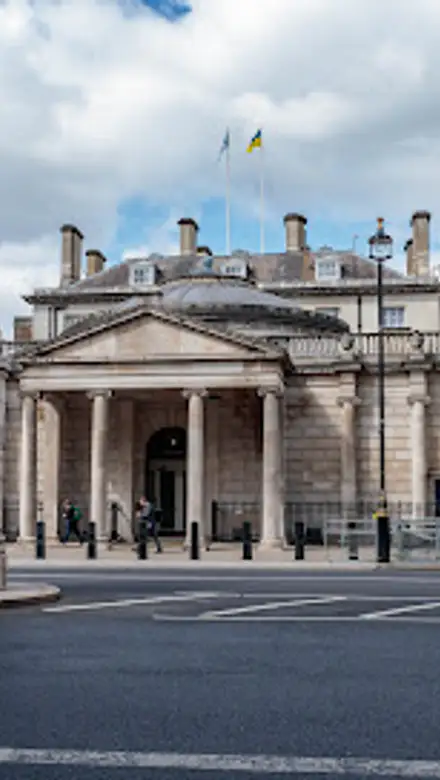
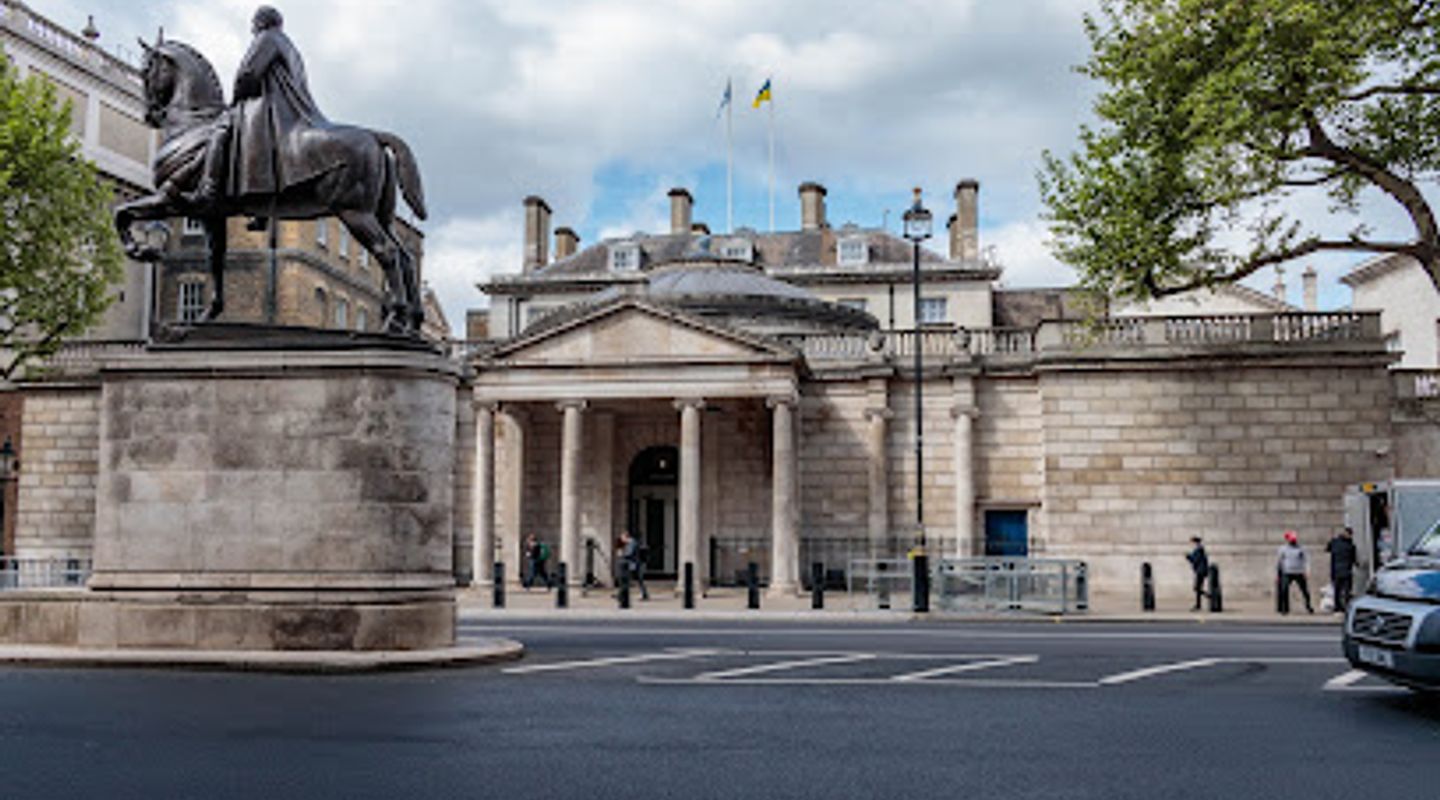
Dover House is a distinguished Grade I-listed neoclassical mansion located at 70 Whitehall, London. Originally built in the 1750s as a private townhouse for Sir Matthew Fetherstonhaugh, it has served aristocrats, diplomats, and now functions as the London headquarters of the Scotland Office. Its unique rotunda entrance hall and rich history make it a notable landmark within the government district.
On-site amenities
 Information boards
 Seating areas
 Restrooms
- Address
- 70 Whitehall, London SW1A 2AU
- Website
Getting there
Public Transport
Bus
Taxi or Rideshare
Discover more about Dover House
Architectural Origins and Evolution
Dover House was designed in the 1750s by the architect James Paine as the London townhouse for Sir Matthew Fetherstonhaugh, a Member of Parliament. The building exemplifies neoclassical design, a style characterized by grandeur and symmetry inspired by classical antiquity. Over the decades, Dover House underwent significant remodels: Henry Flitcroft transformed it into "Montagu House" for George Montagu, the 1st Duke of Montagu, and later Henry Holland refurbished it for Prince Frederick, Duke of York, between 1788 and 1792. Holland's addition of the rotunda entrance hall, set within the former forecourt, remains a unique architectural feature among London mansions.
Residence of Aristocracy and Diplomacy
Throughout its history, Dover House has been home to prominent figures including the Melbourne family, Viscounts Melbourne, and the Agar-Ellis family, who held the title Baron Dover. It also served as the residence of Lady Caroline Lamb, famously linked to the poet Lord Byron. The building hosted a French ambassador at one point, underscoring its diplomatic significance. Its aristocratic legacy is reflected in its stately interiors and distinguished location on Whitehall, close to the heart of British governance.
Transition to Government Use
In 1885, Dover House transitioned from private residence to government use, becoming the headquarters of the Scottish Office, the UK government department responsible for Scottish affairs. During World War II, the building was temporarily used by the Colonial Office. Despite speculation about demolition in the mid-20th century, Dover House has endured and now houses the Scotland Office, the Office of the Advocate General for Scotland, and the Independent Commission for Aid Impact. Its continued government function highlights its importance within the administrative landscape of London.
Architectural and Historical Significance
Dover House is a Grade I-listed building, indicating its exceptional national importance. The neoclassical style, combined with its unique rotunda entrance, sets it apart architecturally. Its location on Whitehall places it among the most politically significant buildings in the UK. The mansion’s layered history—from aristocratic townhouse to a modern government hub—reflects broader changes in British society and governance over the past two and a half centuries.
Visual and Cultural Highlights
Visitors and observers can appreciate Dover House’s elegant façade and the distinctive rotunda entrance hall, which offers a rare architectural experience in London. The mansion’s connection to historical figures and events, including its role during wartime and its association with notable personalities, enriches its cultural narrative. Its position near Horse Guards Parade and other landmarks situates it within a vibrant historical and ceremonial context.
Preservation and Modern Use
Despite its age, Dover House remains well-maintained and functional, with ongoing refurbishments respecting its heritage status. Modern government departments operate within its walls, blending historical ambiance with contemporary administrative needs. This balance of preservation and practical use ensures Dover House remains a living part of London’s historic and political fabric.
Evendo Review Centre
 Google
Guest reviews
Best time to go
Quietest: Jan, Feb & Dec · before 6am or at 9pm
Busy times are Evendo estimates for a typical year, to help you plan. Actual crowds vary with events, school holidays and the weather.
Explore Dover House on the map
A handpicked selection of must-see spots near Dover House, mapped for you.
Get your free copy of our complete guide to Dover House, delivered straight to you.
Everything on this page, from opening hours and how to get there to Eve’s tips and the best time to go, in one PDF you can read offline, print or share.
Already have an account? Sign in
Your Dover House guide is ready.
We'll send it to · Not you? Sign out

Getting your guide ready…
We are putting together a fresh copy of the Dover House guide. This can take up to a minute.
This can take a few moments. If your browser asks, choose Allow so the download can start. You'll find the guide in your Downloads folder.
Nothing happened? Download it again
Sorry, the guide is taking longer than usual. Please try again in a minute, or get it by email instead.
Other nearby places you may find interesting
The closest places of the same kind, if this one is not quite what you had in mind.
-
 Big Ben
Discover the iconic Elizabeth Tower and its famous bell, Big Ben, a timeless symbol of London's heritage and British culture.
Big Ben
Discover the iconic Elizabeth Tower and its famous bell, Big Ben, a timeless symbol of London's heritage and British culture.
-
Buckingham Palace Explore the majestic official residence of the British monarch, from lavish State Rooms to the iconic Changing of the Guard ceremony.
-
Victoria Memorial A majestic tribute to Queen Victoria, blending imperial grandeur with royal ceremony at the heart of London’s historic Mall.
-
Richard D’Oyly Carte Monument A sculptural homage to Richard D’Oyly Carte’s theatrical and hospitality legacy, nestled in the serene Victoria Embankment Gardens.
-
George Duke of Cambridge statue A commanding bronze tribute to Prince George, Duke of Cambridge, standing proudly on Whitehall amidst London’s historic military heart.
Swipe for more places
More to explore near Dover House

 Best experiences near Dover House
 Best hotels near Dover House
 Best landmarks near Dover House
 Best attractions near Dover House
 Best shops near Dover House
 Best restaurants near Dover House
 Best bars near Dover House
Do you manage this location?
Take control to get all the benefits, like improved information, better appearance, and stronger visibility across AI-powered discovery.
Explore more

Explore more of London
Explore London: A city of iconic landmarks, rich history, vibrant culture, and endless attractions that cater to every taste, making it a must-visit destination.
Explore London
Explore more of United Kingdom
Discover the United Kingdom: A blend of rich history, stunning landscapes, and vibrant cities, offering a unique travel experience for every visitor.
Explore United Kingdom