Pudding Ln, London Travel Guide
Where medieval London burned and modern building codes were born.
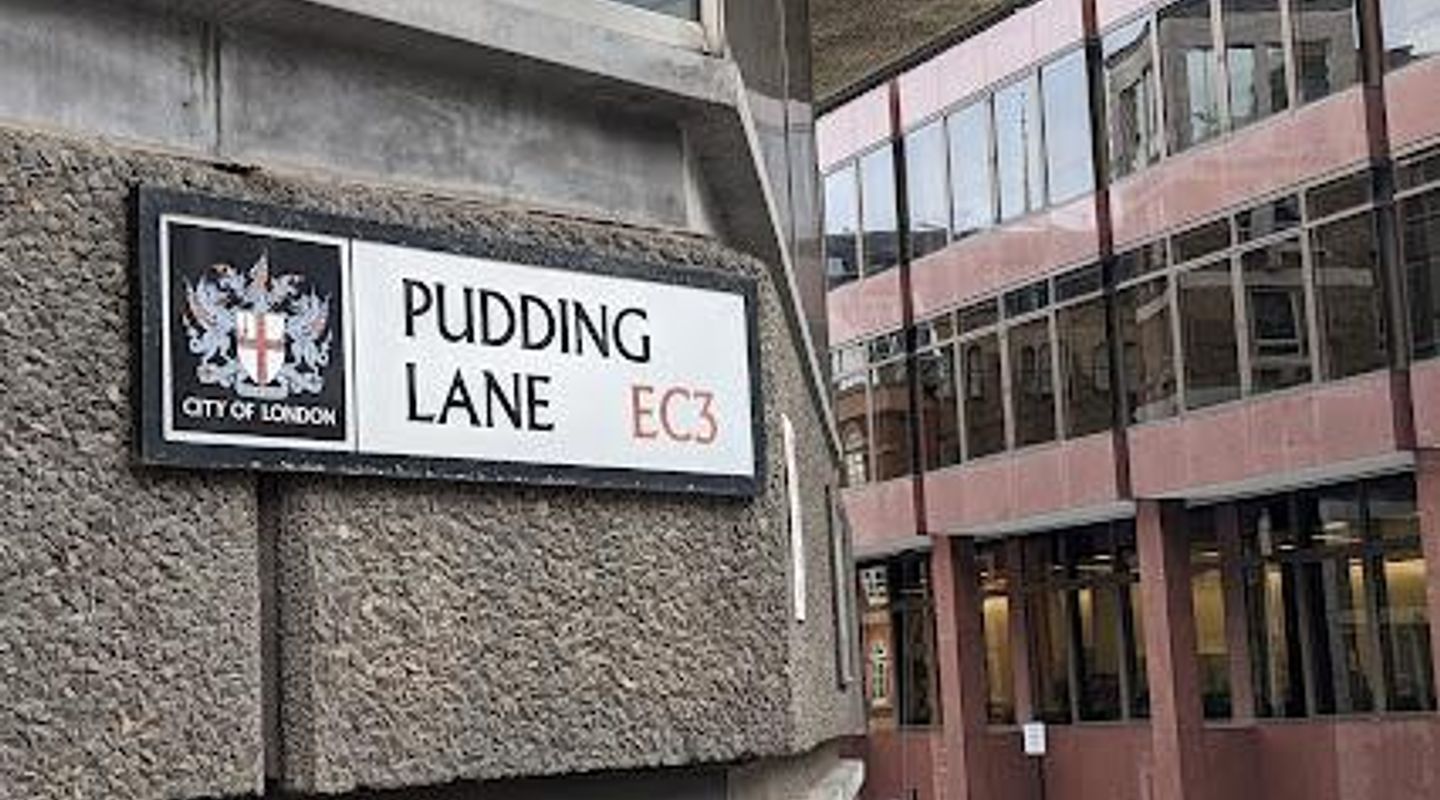
Pudding Lane is a historic street in London's City district, immortalized as the birthplace of the Great Fire of London in 1666. This narrow lane between Eastcheap and Lower Thames Street marks one of history's most pivotal moments, when a fire in Thomas Farriner's bakery sparked a catastrophic blaze that destroyed 85% of medieval London. Today, a commemorative plaque marks the exact spot where the fire began, and the nearby Monument—designed by Sir Christopher Wren—stands as a permanent reminder of the disaster. The lane's name derives from medieval times, when butchers disposed of animal offal here before it was carried to the Thames.
A brief summary to Pudding Ln
- London, GB
- Duration: 0.25 to 1.5 hours
- Free
-
 Outdoor
- Mobile reception: 5 out of 5

Know before you go
Hi, I'm Eve. Here are a few practical things to know before exploring Pudding Ln.
- Visit the commemorative plaque marking the exact spot where the fire began in Farriner's bakery. It's a small but historically significant marker on the lane itself.
- Combine your visit with the nearby Monument, which stands just off Pudding Lane on Monument Street. The 311-step climb offers rewarding views and a certificate of achievement.
- Explore the surrounding area to follow the Great Fire's path of destruction: St Paul's Cathedral, St Magnus Church, and other Wren-designed buildings rebuilt after the fire.
- The lane is narrow and atmospheric—best visited early morning or late afternoon to avoid crowds and experience the street's medieval character.
- Stop at nearby Cheapside, once a bustling market street and still a vibrant shopping area, to understand the commercial life that existed before the fire.
Do you manage this location?
Take control to get all the benefits, like improved information, better appearance, and stronger visibility across AI-powered discovery. Learn more about listing your business on Evendo
Activate your presenceOther nearby places you may find interesting
The closest places of the same kind, if this one is not quite what you had in mind.



Explore Pudding Ln on the Map
A handpicked selection of must-see spots near Pudding Ln, mapped for you.
Unlock the Best of Pudding Ln
Buy tickets
-
No tickets available
Book tours with entry
-
No tours available
Book tours without entry

Getting There
-
Underground (Tube)
Monument Station on the District and Circle Lines is the closest tube station, located approximately 100 meters from Pudding Lane. Journey time from central London varies by starting point but typically ranges from 5–15 minutes. The station exit places you directly near the Monument and Pudding Lane. Single fares within London cost between £1.75–£3.00 depending on zones traveled.
-
Bus
Multiple bus routes serve the area around Pudding Lane, including routes 15, 17, 21, 22, 23, 44, 48, and 133, which stop at various points along Lower Thames Street and Eastcheap. Journey times from central London typically range from 15–30 minutes depending on traffic and starting location. Single bus fares cost £1.75 within central London.
-
Walking
Pudding Lane is accessible on foot from London Bridge Station (approximately 400 meters, 5–7 minute walk) or Tower Bridge (approximately 600 meters, 8–10 minute walk). The walk is relatively flat and passes through the historic City district. The streets are well-lit and busy during business hours, though quieter on weekends and evenings.
-
Taxi or Rideshare
Black cabs and rideshare services operate throughout London. Journey times to Pudding Lane from central London typically range from 10–25 minutes depending on traffic. Fares vary significantly based on starting location and time of day, but expect £8–£20 for journeys from major central London landmarks. The lane itself has limited vehicle access due to its narrow medieval width.
For the on-the-go comforts that matter to you
-
 Information Boards
-
 Nearby Food Options
-
 Nearby Restrooms
Discover more about Pudding Ln
The Spark That Changed London Forever
On the early morning of Sunday, 2 September 1666, a small fire ignited in the bakery of Thomas Farriner, the King's baker, located on Pudding Lane. Farriner had neglected to fully extinguish the oven fire the previous evening, leaving sparks to ignite dry flour sacks stored nearby. What began as a domestic accident would become one of history's most devastating urban disasters. The flames spread rapidly through the wooden buildings that crowded the lane, then south toward the Thames warehouses, where strong easterly winds caught the blaze and fanned it into an unstoppable firestorm. Within hours, the fire had consumed entire streets; within days, it had transformed the face of London.The Lord Mayor's initial hesitation to order the demolition of buildings to create firebreaks proved catastrophic. By the time he authorized the destruction of structures to slow the fire's advance, it was already too late. For four days the inferno raged unchecked. When finally extinguished on Wednesday, the devastation was almost complete: 13,200 houses, 87 parish churches, 52 livery company halls, the Guildhall, the Royal Exchange, and the magnificent St Paul's Cathedral had all been reduced to ash. Approximately 100,000 people were left homeless, and the medieval City of London had been erased.A Street Named for Butchers' Waste
Pudding Lane's unusual name reflects its medieval character long before the fire. The lane ran conveniently from Eastcheap, London's primary meat market, down toward the Thames, and it served a practical purpose in the butchers' trade. The medieval word "pudding" referred to animal offal—the guts and entrails discarded during butchering. Butchers licensed to operate in the area would have carts of these "puddings" transported down the lane to waste barges waiting at the river's edge, or directly into the Thames when tidal conditions permitted. The lane was lined with butchers' stalls and the workshops of basketmakers and turners, making it a place of labor and commerce rather than refinement. By Farriner's time in the 17th century, the lane's original purpose had faded, but its evocative name remained.Innovations Born from Catastrophe
The Great Fire of London catalyzed sweeping changes to the city's infrastructure and governance. In 1667, just a year after the disaster, King Charles II enacted the Rebuilding Act, the first comprehensive building regulations in London's history. These laws mandated that all new structures be built from brick or stone rather than wood, that no hanging signs be permitted, and that all dwellings have easy access to water for firefighting. The act represented a revolutionary approach to urban safety and remained the foundation of London's building codes for centuries—so enduring that all buildings in the modern City remain subject to these 1667 regulations, with only one exception: Shakespeare's Globe Theatre, rebuilt in 1996 with a thatched roof permitted only because of an elaborate sprinkler system.Pudding Lane also holds another distinction: it was designated as one of the world's first one-way streets. In 1617, nearly 50 years before the fire, traffic regulations were issued restricting movement in one direction along Pudding Lane and 16 nearby streets, a pioneering attempt at traffic management in a crowded medieval city.The Monument and Collective Memory
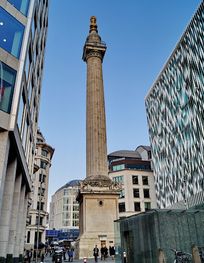
About ten years after the fire, a monument was erected to commemorate the disaster and ensure future generations would remember the calamity. Designed by Sir Christopher Wren and Dr Robert Hooke, the Monument stands 202 feet tall—precisely the same distance it stands from the exact spot where the fire began on Pudding Lane. Built between 1671 and 1677 on the site of St Margaret's Church, the first building to burn in the blaze, the Monument features a flaming gilded urn at its summit symbolizing the fire itself. Visitors can climb the 311 internal steps to reach a viewing platform offering panoramic vistas across London, a physical journey that mirrors the city's rise from devastation to renewal. The Monument remains one of London's most iconic structures and a tangible link to the events of 1666.












Your all‑in‑one travel companion app
Explore expert travel guides, compare and book tours, experiences, hotels, and more—all from the palm of your hand. Download now for seamless trip planning wherever your wanderlust takes you.


Explore More of London
Looking beyond Pudding Ln? Discover London for broader travel guides, local hot-spots, and regional highlights.
Explore London