Philpot Lane Mice Sculpture, Devon Travel Guide
Discover London’s tiniest public sculpture—two bronze mice locked in a timeless tussle over cheese, steeped in legend and Victorian charm.
Nestled at 23 Eastcheap in London, the Philpot Lane Mice Sculpture is the city's tiniest public artwork, depicting two bronze mice locked in a tug-of-war over a piece of cheese. This small but captivating sculpture, dating back to the early 1860s, is shrouded in local legend involving two workers who tragically died during the building's construction. Despite its size, it has become a beloved quirky landmark amid London's grand architectural landscape.
A brief summary to Philpot Lane Mice Sculpture
- 23 Eastcheap, London, EC3M 1DE, GB
- Click to display
- Duration: 0.25 to 1 hours
- Free
-
 Outdoor
- Mobile reception: 5 out of 5

Know before you go
Hi, I'm Eve. Here are a few practical things to know before exploring Philpot Lane Mice Sculpture.
- Bring binoculars or a camera with zoom to better see the tiny details of the mice sculpture high on the building facade.
- Visit during daylight hours for optimal viewing, as the sculpture is best seen in natural light.
- Combine your visit with a walk around the nearby Monument to the Great Fire of London for a fuller historical experience.
- Look for other animal carvings on the building, such as dog and wild boar heads, to appreciate the Victorian architectural details.
Do you manage this location?
Take control to get all the benefits, like improved information, better appearance, and stronger visibility across AI-powered discovery. Learn more about listing your business on Evendo
Activate your presenceOther nearby places you may find interesting
The closest places of the same kind, if this one is not quite what you had in mind.
Explore Philpot Lane Mice Sculpture on the Map
A handpicked selection of must-see spots near Philpot Lane Mice Sculpture, mapped for you.
Unlock the Best of Philpot Lane Mice Sculpture
Buy tickets
-
No tickets available
Book tours with entry

Book tours without entry

Getting There
-
London Underground
Take the District or Circle Line to Monument Station, approximately a 5-10 minute walk to 23 Eastcheap. The station is well-served with frequent trains, and the walk is on flat, paved streets accessible to most travelers. No additional cost beyond standard fare applies.
-
Bus
Bus routes 15, 17, 40, and 43 stop near Monument Station, with a short 5-8 minute walk to Philpot Lane. Buses run regularly throughout the day, and contactless payment or Oyster cards are accepted. This option offers scenic views of the City during your journey.
-
Walking
If you are staying nearby in the City of London, walking to Philpot Lane is recommended. The terrain is flat and the streets are pedestrian-friendly, with plenty of historic sights along the way. Walking times vary but generally range from 10 to 20 minutes depending on your starting point.
For the on-the-go comforts that matter to you
-
 Seating Areas
-
 Information Boards
Discover more about Philpot Lane Mice Sculpture
A Tiny Tribute Hidden in Plain Sight
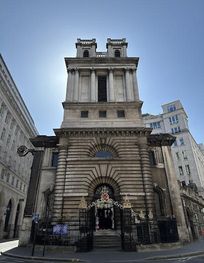
The Philpot Lane Mice Sculpture is an exceptionally small yet fascinating piece of public art located on the exterior wall of 23 Eastcheap, London. Measuring only a few inches, this bronze carving depicts two mice engaged in a perpetual struggle over a chunk of cheese. Positioned about 15 feet above street level on a Victorian office building constructed between 1861 and 1862, the sculpture is often cited as London's smallest permanent public sculpture. Its subtle presence contrasts sharply with the towering skyscrapers and bustling financial district surrounding it, inviting passersby to pause and appreciate the minute details of the city's history.Legend and Lore: The Story Behind the Mice
Local legend tells a tragic tale linked to the sculpture’s origin. During the building's construction, two workers supposedly argued over a missing cheese sandwich while perched high on scaffolding. The dispute escalated, resulting in both men falling to their deaths. It was later discovered that the sandwich had been nibbled by mice, not stolen by either man. To commemorate this unusual and sorrowful event, the tiny mice sculpture was added to the building’s facade. While the story's accuracy is debated and timelines questioned, it has become an enduring part of London's folklore, symbolizing both human folly and the unexpected consequences of small events.Architectural Context and Artistic Detail
The building housing the sculpture was originally designed as offices and warehousing for spice merchants Messrs. Hunt and Crombie. It features richly detailed Victorian polychromatic brickwork and barley-twist columns, with other animal motifs such as dog and wild boar heads adorning the eaves. The mice themselves are crafted with meticulous detail, their tiny forms capturing a whimsical yet poignant scene. Despite their modest size and muted brown color, the mice draw attention for their storytelling power and the craftsmanship that brings them to life.Urban Curiosity and Cultural Significance
The Philpot Lane Mice have become a beloved curiosity and a symbol of London's layered history, blending fact and folklore. Their presence encourages visitors to look beyond the grand and monumental to appreciate the small and often overlooked elements that enrich the city's character. The sculpture also exemplifies how stories—whether fully factual or partly mythic—contribute to cultural heritage, with the mice serving as a reminder of the human stories embedded in urban spaces.Engaging with the Sculpture Today
Today, the mice remain a popular secret among Londoners and visitors who seek out the city's hidden gems. Located on a small strip of land between buildings, the sculpture is easily visible from the street level and accessible at any time. Over the years, the mice have been carefully maintained and repainted to preserve their charm and visibility. Their story continues to be retold, ensuring that this tiny sculpture remains a vibrant part of London's rich tapestry of history and legend.The Legacy of Philpot Lane
Philpot Lane itself is named after Sir John Philpot, Lord Mayor of London from 1378 to 1379, adding further historical depth to the location. The lane and its tiny mice sculpture stand as a testament to the city's ability to weave together history, art, and storytelling in unexpected ways. For those who take the time to look up, the Philpot Lane Mice offer a unique glimpse into London's past and a charming reminder that even the smallest details can hold great significance.More to explore near Philpot Lane Mice Sculpture













Your all‑in‑one travel companion app
Explore expert travel guides, compare and book tours, experiences, hotels, and more—all from the palm of your hand. Download now for seamless trip planning wherever your wanderlust takes you.


Explore More of Devon

Looking beyond Philpot Lane Mice Sculpture? Discover Devon for broader travel guides, local hot-spots, and regional highlights.
Explore Devon