
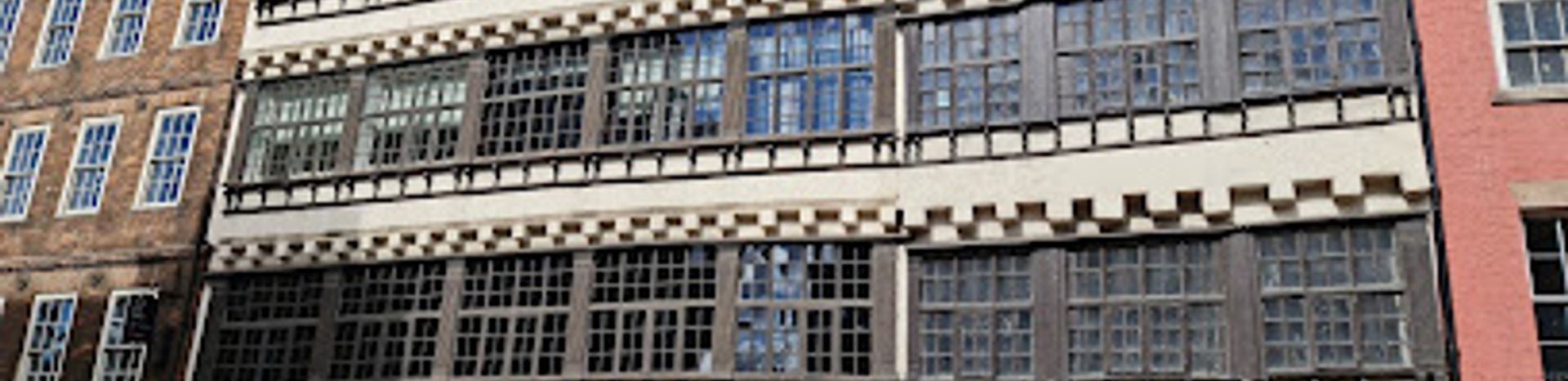
Bessie Surtees House, Newcastle upon Tyne
Explore the Jacobean grandeur and romantic history of Bessie Surtees House, a treasured Newcastle landmark where love and heritage intertwine.
Bessie Surtees House is a pair of magnificent 16th and 17th-century merchants’ houses located on Sandhill in Newcastle upon Tyne. Renowned for its Jacobean architecture and the romantic 1772 elopement of Bessie Surtees, the house features well-preserved period interiors including carved oak panelling and elaborate plaster ceilings. Now home to Historic England’s North East office, the site offers a unique glimpse into Newcastle’s mercantile past and architectural heritage.
A brief summary to Historic England North East & Yorkshire
- Bessie Surtees House, 41-44 Sandhill, Newcastle upon Tyne, NE1 3JF, GB
- +441912691255
- Visit website
- Duration: 0.5 to 1.5 hours
- Free
-
 Indoor
- Mobile reception: 4 out of 5
Local tips
- Book guided tours in advance as public access to the historic rooms is limited and by appointment only.
- Look for the timber-framed window on the first floor, the iconic spot of Bessie Surtees’ dramatic elopement.
- Visit during heritage open days or The Late Shows for access to areas usually closed to the public.
- Wear comfortable shoes as access to the first floor is via stairs and there is no elevator.
- Combine your visit with a walk along Newcastle’s Quayside to enjoy the riverside atmosphere and nearby attractions.

For the on-the-go comforts that matter to you
- Restrooms
- Seating Areas
- Information Boards
Getting There
-
Train
From Newcastle Central Station, a 10 to 15-minute walk along city streets leads to Bessie Surtees House on Sandhill. The station is well connected with frequent services from regional and national destinations.
-
Bus
Multiple bus routes serve Newcastle city centre with stops near Sandhill. From the central bus station, expect a 10 to 20-minute walk. Tickets cost approximately £2 to £4 depending on the route.
-
Car
There is no dedicated parking at Bessie Surtees House. Visitors should use nearby public car parks in central Newcastle, with typical fees ranging from £5 to £15 for a day. Walking from parking areas involves navigating city pavements.
-
Walking
If staying in central Newcastle, walking to Bessie Surtees House is straightforward and takes 10 to 20 minutes depending on your starting point. The terrain is urban with paved sidewalks but includes some stairs at the building entrance.
Historic England North East & Yorkshire location weather suitability
-
 Any Weather
-
 Rain / Wet Weather
-
 Clear Skies
-
 Mild Temperatures
Discover more about Historic England North East & Yorkshire
Architectural Heritage of Jacobean Newcastle
Bessie Surtees House comprises two adjoining five-storey merchants’ houses dating from the 16th and 17th centuries, showcasing rare and exquisite Jacobean domestic architecture. The timber-framed structure features overhanging jettied upper storeys and a facade decorated with classical plasterwork details. Inside, visitors can admire the principal first-floor room with its finely carved oak panelling, ornate plaster ceilings, and intricately carved fireplace surrounds. The building’s preservation offers a valuable example of the craftsmanship and design aesthetics of Newcastle’s mercantile elite during this period.A Storied Past on Newcastle’s Historic Quayside
Situated on Sandhill, a historic quayside area used since Roman times, the house was once part of a bustling commercial hub for prominent merchants. The earliest record of a house on this site dates to 1465, owned by local lawyer Robert Rhodes. Over the centuries, the property passed through various hands, including the families of Thomas Davison and Ralph Cock, Newcastle’s mayor in 1634. Milbank House, the adjacent property, was similarly a merchant’s residence with a Georgian brick frontage added in the 18th century.The Romantic Legend of Bessie Surtees
The house is best known for the daring 1772 elopement of Elizabeth “Bessie” Surtees, daughter of banker Aubone Surtees, and John Scott, a coal merchant’s son who later became Lord Chancellor of England as Lord Eldon. Defying family expectations and social conventions, Bessie famously escaped through a first-floor timber-framed window to flee to Scotland with John Scott. Their marriage was later formalized in Newcastle’s St Nicholas Parish Church, symbolizing reconciliation between the families. This romantic episode adds a human dimension to the house’s historical significance.Preservation and Public Engagement
After a period of decline in the 18th and 19th centuries when the area’s wealthier residents moved to suburbs, the house was restored in 1930 by Lord Gort, incorporating architectural features salvaged from other historic buildings. Newcastle City Council acquired the property in 1978 and leased it to English Heritage (now Historic England) in 1989. Today, the first-floor rooms are open to visitors by guided tours, allowing the public to explore the splendid interiors and learn about the building’s history through exhibitions. The remainder of the building serves as Historic England’s North East regional office.Location and Visitor Experience
Bessie Surtees House sits prominently on Newcastle’s Sandhill, overlooking the River Tyne, near Newcastle Central Station. While the house itself is compact, its rich history and architectural features provide an immersive experience for visitors interested in heritage and local stories. The timber-framed window from which Bessie eloped remains visible, accompanied by a cast iron plaque recounting the tale. The site is a Grade I listed building, reflecting its national importance and careful preservation.Legacy and Cultural Significance
Beyond its architectural value, Bessie Surtees House embodies Newcastle’s mercantile history and social narratives of love and defiance. It stands as a testament to the city’s evolution from a medieval trading port to a modern urban center. The house’s story continues to inspire local cultural events and heritage open days, fostering appreciation for Newcastle’s past and the preservation of its historic fabric.For the vibe & atmosphere seeker
- Historic
- Scenic
- Tranquil
- Unique
For the design and aesthetic lover
- Vintage Styles
- Rustic Designs
For the architecture buff
- Historic
- Landmarks
For the view chaser and sunset hunter
- Iconic Views
- Waterfront
For the social media creator & influencer
- Instagrammable
- Photo Spots
- Architectural Shots
For the eco-conscious traveler
- Public-Transport Accessible
- Locally Managed
For the kind of experience you’re after
- Cultural Heritage
- Myth & Legends
- Photowalk
- Day Trip
For how adventurous you want the journey to be
- Easy Access
Location Audience
- Family Friendly
- Senior Friendly
- Child Friendly
- Teen Friendly
- Wheelchair Access
- Solo Friendly
- Couple Friendly
- Solo Female Friendly


