

North East England, United Kingdom Travel Guide
Explore North East England for Newcastle culture, Roman heritage, Northumberland castles, Durham history and a windswept North Sea coast.
North East England occupies the north-eastern corner of England, stretching from the North Sea coast and the estuaries of the Tyne, Wear and Tees to the Cheviot Hills and the western edge of the Pennines. The contemporary region comprises Northumberland, Tyne and Wear, and County Durham, a varied area where fortified border country, industrial cities, cathedral towns and long beaches are linked by comparatively compact but sometimes rural journeys. Newcastle upon Tyne provides the region's largest urban centre, known for its bridges, quayside, neoclassical streets and lively cultural life, while neighbouring Gateshead contributes major arts venues and riverside architecture. Sunderland has a strong maritime and industrial identity on the Wear, and Durham is defined by its hilltop cathedral and castle above a looping river. Further north, Northumberland offers a very different experience: market towns such as Alnwick, Morpeth, Hexham and Berwick-upon-Tweed lead towards open moorland, sandy beaches and the frontier landscapes associated with Hadrian's Wall. The region's history is unusually legible in its buildings and landscapes. Roman remains follow the line of Hadrian's Wall, medieval castles reflect centuries of conflict with Scotland, and former coal-mining communities, shipyards, railways and staithes reveal the scale of industrial transformation. At Beamish, the open-air museum in County Durham, aspects of nineteenth- and early twentieth-century life are interpreted through recreated streets, transport and working environments. In Newcastle and Gateshead, former industrial waterfronts now accommodate galleries, music venues and public spaces without erasing the riverside's commercial past. The coast alternates between working ports, dunes, cliffs and broad beaches. Tynemouth, Whitley Bay, Seaham and Redcar sit in different coastal settings, while the Northumberland shore around Bamburgh, Embleton and Druridge Bay is marked by castles, islands, dunes and long views. Inland, the North Pennines and Northumberland National Park provide walking, cycling, dark-sky landscapes and a quieter rural character. Weather can change quickly, and distances in the uplands are greater than the map may suggest. Food reflects both geography and industry: North Sea seafood, traditional stotties, pease pudding, locally produced meat and farmhouse goods appear alongside contemporary cooking in city restaurants and independent cafés. The region's cultural calendar includes major museums, theatres, music venues and galleries, while football, rugby, rowing and coastal walking remain visible parts of everyday life. A well-planned itinerary can combine urban culture with Roman archaeology, coastal landscapes and historic market towns, but it is best approached as a region of distinct areas rather than a single city break.

Know before you go
Hi, I'm Eve. Here are a few practical things to know before exploring North East England.
- Base urban sightseeing in Newcastle, Gateshead, Sunderland or Durham, but allow extra time for rural Northumberland and the Pennines.
- Use a car or carefully planned buses for dispersed Northumberland beaches, castles and Hadrian's Wall sites, where services can be limited.
- Check tide times and weather before coastal walks, particularly around dunes, tidal causeways and exposed cliff paths.
- Treat Hadrian's Wall as a linear landscape rather than a single attraction, and wear sturdy footwear on uneven archaeological paths.
- Try a stottie, pease pudding or locally caught seafood alongside contemporary regional cooking in the cities and coastal towns.
- Book popular cathedral, castle and theatre visits ahead during school holidays, summer weekends and major sporting fixtures.
Top City Travel Guides in North East England
The cities of North East England, and the easiest places to base yourself.

Destinations in North East England
Resorts, valleys and scenic spots worth a trip of their own.
Explore North East England: Things to Do, Places to Eat, Hotels & More
Handpicked recommendations for top attractions, local dining, accommodations, and more

Top Attractions & Sightseeing in North East England
Top-rated picks
Best Attractions
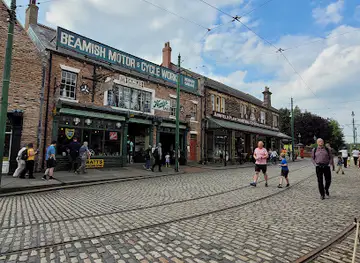
Beamish, the Living Museum of the North
Step back in time at Beamish, the Living Museum of the North, where history breathes through authentic streets, trams, and farms across four centuries.

Eldon Square
Newcastle’s vibrant city-centre shopping and dining hub with over 140 stores and 30+ eateries under one roof.

Alnwick Castle
Explore Alnwick Castle, a majestic medieval fortress blending rich history, cinematic magic, and enchanting gardens in the heart of Northumberland.

Durham Cathedral
Explore Durham Cathedral, a Norman architectural marvel and sacred pilgrimage site with breathtaking views and rich medieval heritage.

Best landmarks in North East England
Top-rated picks
Best Landmarks

Angel of the North
A colossal steel angel rising from a former coal mine, welcoming travellers and symbolising the spirit of the North East.

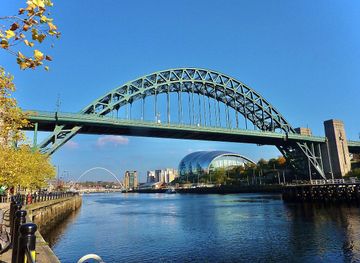
Tyne Bridge
An iconic steel arch bridge spanning the River Tyne, symbolising NewcastleGateshead’s industrial heritage and modern spirit.

Grey's Monument
A towering tribute at Newcastle’s heart, celebrating Earl Grey and the dawn of modern democracy in Britain.

Collingwood Monument
A commanding tribute to Admiral Collingwood overlooking the River Tyne, celebrating a naval hero’s legacy at the Battle of Trafalgar.

Best restaurants in North East England
Top-rated picks
Best Restaurants

Blackfriars Restaurant
Dine in history at Blackfriars, Newcastle’s oldest purpose-built dining room serving classic British cuisine with a modern twist.

The Fish Shack
Rustic seafood delights in a charming harbour shack with stunning waterfront views on Amble’s picturesque Northumberland coast.

The Cook & Barker Inn
A warm, stylish country pub near Morpeth, serving excellent food and offering comfortable rooms in the heart of Northumberland.

The Old Boathouse
Fresh Northumberland seafood served with stunning coastal views in a charming maritime setting.

Best bars in North East England
Top-rated picks
Best Bars

Pitcher & Piano Newcastle
A stylish riverside bar on Newcastle’s Quayside, blending modern design with classic pub charm and vibrant social energy.
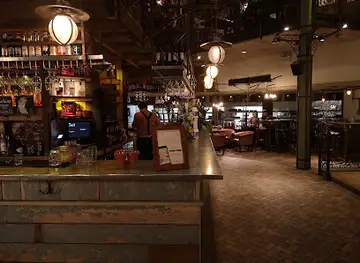
The Botanist Newcastle
A lush secret garden bar and restaurant in Newcastle, blending botanical cocktails, live music, and vibrant social events.

The Tyne Bar
A vibrant hub for craft beer, live music, and community spirit nestled in Newcastle’s creative Ouseburn Valley.
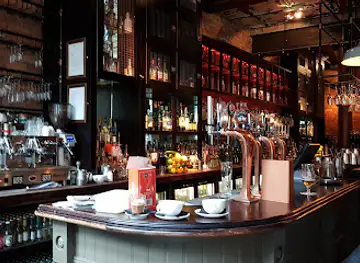
Pleased To Meet You
A stylish gin bar and restaurant in Newcastle city centre, blending craft cocktails with seasonal British cuisine in a lively, welcoming setting.

Best nightclubs in North East England
Top-rated picks
Best Nightclubs

Flares & Popworld - Middlesbrough
Middlesbrough’s premier two-room nightclub blending retro vibes and modern beats for unforgettable nights out.

Flares - Newcastle
Newcastle’s vibrant retro nightclub with disco classics, lively DJs, and a welcoming atmosphere for unforgettable nights out.

Digital
Experience cutting-edge nightlife and live music at Digital Newcastle, the city’s iconic club in vibrant Times Square.

Tup Tup Palace
Experience Newcastle’s vibrant nightlife in style at Tup Tup Palace, a luxurious club blending exotic décor with pulsating beats until the early hours.

Best shops in North East England
Top-rated picks
Best Shops

Sanderson Arcade
Discover Morpeth’s vibrant shopping hub with diverse stores, eateries, and a welcoming atmosphere at Sanderson Arcade.

Marks and Spencer
A modern, versatile Marks and Spencer store offering quality fashion, food, and homeware in Wallsend’s Silverlink Shopping Park.

Barbour Factory Outlet
Discover authentic British heritage and timeless outdoor style at the Barbour Factory Outlet in South Shields, home of iconic waxed jackets and quality craftsmanship.

Asda Cramlington Superstore
A comprehensive supermarket experience within Cramlington’s lively Manor Walks Shopping Centre, blending convenience, variety, and community spirit.

Explore North East England on the Map
A handpicked selection of must-see spots in North East England, mapped for you.
North East England Essentials
-
Newcastle International Airport is the principal air gateway and lies within the region, with connections that vary by season and destination. The East Coast Main Line links Newcastle, Durham and Darlington with London and other English cities, while long-distance rail routes also connect the region with Scotland and northern England. Newcastle Central is the main intercity station. The A1 provides the principal north-south road approach, and the A66 and A69 are useful for western journeys. Teesside International Airport, also within North East England in County Durham, can be relevant for travellers heading to the southern part of the region, although route availability changes.
-
Newcastle, Gateshead, Sunderland and nearby urban areas are connected by local rail, metro services, buses and ferries across the Tyne. Durham is walkable in its central historic area and linked by train to the main cities. A car is helpful for Northumberland's castles, beaches, villages and Hadrian's Wall, as well as for the North Pennines, where public transport is less frequent and attractions are spread out. Cycling is practical on selected former railway paths and quieter lanes, while rural walking requires attention to weather, navigation and the distance between settlements.
-
The currency is the pound sterling, written as GBP or £, as throughout the United Kingdom. Cards and contactless payments are widely accepted in cities, towns, hotels, visitor attractions and most restaurants, although smaller rural businesses, markets, public toilets and seasonal stalls may still be easier with some cash. Ensure a card can handle chip-and-pin payments and consider carrying modest sterling notes and coins when travelling in remote areas.
-
North East England is generally straightforward for visitors, but ordinary urban precautions are sensible around busy transport hubs, nightlife areas and large events. On the coast, keep away from unstable cliff edges, respect warning signs and check tides before walking near rocky shores or tidal crossings. Upland weather can deteriorate quickly, especially in the Cheviots, North Pennines and exposed sections of Hadrian's Wall. Drivers should allow for narrow rural roads, cyclists, livestock and limited lighting outside towns.
-
Call 999 or 112 for police, fire, ambulance or coastguard emergencies; both numbers are free from UK mobile and landline phones. On a mountain or remote countryside walk, give rescuers a precise location, grid reference or what3words address if available, and avoid leaving an injured person unless staying would be unsafe. For urgent but non-life-threatening medical advice, NHS 111 provides guidance in England. Mobile coverage can be inconsistent in upland valleys and along parts of the coast.
-
Queue patiently, stand clear of railway doors and allow passengers to leave before boarding, as these are ordinary UK conventions that apply throughout the region. Ask before photographing people or private property, and follow access signs on farmland, estates and archaeological sites. Close gates, keep dogs under control and avoid climbing on fragile Roman or medieval remains. In pubs and restaurants, tipping is discretionary rather than compulsory, while service charges should be checked before adding anything.
-
Plan city and countryside days separately: Newcastle and Gateshead reward walking and public transport, whereas coastal Northumberland and the uplands need more logistical preparation. The coast is often cooler and windier than inland towns, even in summer. Visit major heritage sites early or later in the day during busy periods, and allow time for small market towns such as Hexham, Alnwick and Morpeth rather than treating them only as transport stops. Regional museums can provide valuable context before visiting former industrial landscapes.
When is the best time to visit North East England?
Useful Local Phrases for North East England
You don't need to speak the language perfectly. Even learning a few simple words can make conversations warmer—and locals usually appreciate the effort.
— Eve

Here are the phrases I use most often in North East England. Try a few—you'll be surprised how far they go! 😊
❤️
-
- HelloHiya
[hee-yah] - GoodbyeTa-ra
[tah-rah] - YesAye
[eye] - NoNaa
[nah] - Please/You're welcomePlease/No problem
[pleez/no prob-lem] - Thank youThanks a lot
[thangs a lot] - Excuse me/SorrySorry
[saw-ree] - How are you?Howay, how's it gan?
[hoh-way, how's it gan?] - Fine. And you?Reet. An' yers?
[reet. an' yehrs?] - Do you speak English?D'ya speak English?
[d'ya speek ing-glish?] - I don't understandAh divn't get it
[ah divn't get it]
- HelloHiya
-
- I'd like to see the menu, pleaseCan I have a look at the menu, please?
[kan ah hav a luk at the men-yoo, pleez?] - I don't eat meatAh divn't eat meat
[ah divn't eet meet] - Cheers!Cheers!
[cheers] - I would like to pay, pleaseCan I pay, please?
[kan ah pay, pleez?]
- I'd like to see the menu, pleaseCan I have a look at the menu, please?
-
- Help!Help!
[help] - Go away!Gerrout!
[ger-owt] - Call the Police!Ring the coppers!
[ring the kop-ers] - Call a doctor!Get a doctor!
[get a dok-tor] - I'm lostAh'm lost
[ah'm lost] - I'm illAh'm poorly
[ah'm poor-lee]
- Help!Help!
-
- I'd like to buy...Ah'd like to buy...
[ah'd lyk to buy...] - I'm just lookingAh'm just having a look
[ah'm just havin' a luk] - How much is it?How much's that?
[how much's that?] - That's too expensiveThat's too dear
[that's too deer] - Can you lower the price?Can ya knock the price down?
[kan ya nok the prys daan?]
- I'd like to buy...Ah'd like to buy...
-
- What time is it?Wot time is it?
[wot tym is it?] - It's one o'clockIt's one o'clock
[it's wun uh-clock] - Half past (10)Half past ten
[half past ten] - MorningMornin'
[mawr-nin] - AfternoonAft'noon
[aft-noon] - EveningEvenin'
[eev-nin] - YesterdayYest'day
[yest-day] - TodayTo'day
[to-day] - TomorrowTo'morrow
[to-mor-row] - 1One
[wun] - 2Two
[too] - 3Three
[three] - 4Four
[for] - 5Five
[fiv] - 6Six
[siks] - 7Seven
[sev-en] - 8Eight
[ayt] - 9Nine
[nyn] - 10Ten
[ten]
- What time is it?Wot time is it?
-
- Where's a/the...?Where's the...?
[where's the...?] - What's the address?Wot's the address?
[wot's the uh-dress?] - Can you show me (on the map)?Can ya show me on the map?
[kan ya sho me on the map?] - When's the next (bus)?When's the next bus?
[when's the nekst bus?] - A ticket (to ....)A ticket to...
[a tik-it to...]
- Where's a/the...?Where's the...?
History of North East England
-
North East England contains evidence of settlement and ritual activity dating from the Stone Age onwards. The region's uplands, river valleys and coastal margins preserve prehistoric monuments, worked stone and burial sites, although many are less conspicuous than the later Roman and medieval remains. Communities farmed fertile valleys and exploited coastal and woodland resources, establishing patterns of movement and settlement that were later reshaped by Roman roads, monasteries and industrial development.
-
The Roman conquest brought forts, roads, settlements and administrative change to northern Britain. Hadrian's Wall, begun in AD 122 under the emperor Hadrian, ran across the region from the Solway coast towards the Tyne, with major remains at sites such as Segedunum, Corbridge and Housesteads. It was not simply a defensive barrier: forts, civilian settlements and supply routes supported a frontier society involving soldiers, traders and local communities.
-
After Roman rule ended, much of the region became part of the kingdom of Bernicia and later the larger kingdom of Northumbria. Monastic centres at places including Lindisfarne and Jarrow helped make the North East an important centre of Christian scholarship and manuscript production. The period also left enduring associations with figures such as Bede, whose historical writing at Jarrow remains a major source for early English history.
-
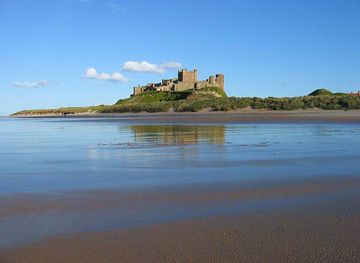
The Norman conquest brought new administrative structures, castles and landholding patterns to northern England. Durham developed under the powerful authority of its prince-bishops, while castles at Newcastle, Norham, Alnwick, Bamburgh and elsewhere reflected the strategic importance of the border with Scotland. Repeated warfare, raids and changing alliances shaped settlements and estates for centuries, leaving a dense architectural record of fortified towers, castles, churches and medieval town centres.
-
Coal mining expanded dramatically from the eighteenth century, particularly around the Tyne, Wear and Durham coalfield. Collieries, waggonways, staithes and railways connected inland pits with ports, where coal was shipped to markets across Britain and beyond. Newcastle and Sunderland developed as major industrial and maritime centres, while engineering and ironworking created companies, inventions and skilled communities that helped shape modern transport. The industrial landscape still survives in bridges, villages, museums and former railway routes.
-
During the nineteenth and twentieth centuries, the Tyne and Wear became internationally important for shipbuilding, marine engineering and heavy industry. Shipyards and factories employed generations of workers, and expanding suburbs, civic buildings, terraces and public institutions accompanied urban growth. The region was also associated with major engineering developments, including the work of George Stephenson and other figures in railway history. Industrial decline later brought serious economic and social change, as yards, mines and factories closed or contracted.
-
From the late twentieth century, North East England increasingly turned towards universities, culture, services, advanced manufacturing, tourism and environmental restoration. Former industrial waterfronts in Newcastle, Gateshead and Sunderland gained galleries, performance spaces and public promenades, while mining landscapes were reclaimed and heritage sites reinterpreted. This transformation has not erased regional inequalities or industrial memories, but it has broadened the visitor economy and created new links between historic identity, contemporary culture and the natural landscape.
Neighbouring Regions of North East England
The closest regions to North East England, if you have time for more than one.



Your all‑in‑one travel companion app
Explore expert travel guides, compare and book tours, experiences, hotels, and more—all from the palm of your hand. Download now for seamless trip planning wherever your wanderlust takes you.


Explore More of United Kingdom

Looking beyond North East England? Discover United Kingdom for broader travel guides, local hot-spots, and regional highlights.
Explore United KingdomNorth East England in Photos
Browse through our photo collection highlighting the charm and character of the destination.


North East England: Coast, Castles and Industrial Heritage
North East England occupies the north-eastern corner of England, stretching from the North Sea coast and the estuaries of the Tyne, Wear and Tees to the Cheviot Hills and the western edge of the Pennines. The contemporary region comprises Northumberland, Tyne and Wear, and County Durham, a varied area where fortified border country, industrial cities, cathedral towns and long beaches are linked by comparatively compact but sometimes rural journeys. Newcastle upon Tyne provides the region's largest urban centre, known for its bridges, quayside, neoclassical streets and lively cultural life, while neighbouring Gateshead contributes major arts venues and riverside architecture. Sunderland has a strong maritime and industrial identity on the Wear, and Durham is defined by its hilltop cathedral and castle above a looping river. Further north, Northumberland offers a very different experience: market towns such as Alnwick, Morpeth, Hexham and Berwick-upon-Tweed lead towards open moorland, sandy beaches and the frontier landscapes associated with Hadrian's Wall. The region's history is unusually legible in its buildings and landscapes. Roman remains follow the line of Hadrian's Wall, medieval castles reflect centuries of conflict with Scotland, and former coal-mining communities, shipyards, railways and staithes reveal the scale of industrial transformation. At Beamish, the open-air museum in County Durham, aspects of nineteenth- and early twentieth-century life are interpreted through recreated streets, transport and working environments. In Newcastle and Gateshead, former industrial waterfronts now accommodate galleries, music venues and public spaces without erasing the riverside's commercial past. The coast alternates between working ports, dunes, cliffs and broad beaches. Tynemouth, Whitley Bay, Seaham and Redcar sit in different coastal settings, while the Northumberland shore around Bamburgh, Embleton and Druridge Bay is marked by castles, islands, dunes and long views. Inland, the North Pennines and Northumberland National Park provide walking, cycling, dark-sky landscapes and a quieter rural character. Weather can change quickly, and distances in the uplands are greater than the map may suggest. Food reflects both geography and industry: North Sea seafood, traditional stotties, pease pudding, locally produced meat and farmhouse goods appear alongside contemporary cooking in city restaurants and independent cafés. The region's cultural calendar includes major museums, theatres, music venues and galleries, while football, rugby, rowing and coastal walking remain visible parts of everyday life. A well-planned itinerary can combine urban culture with Roman archaeology, coastal landscapes and historic market towns, but it is best approached as a region of distinct areas rather than a single city break.