
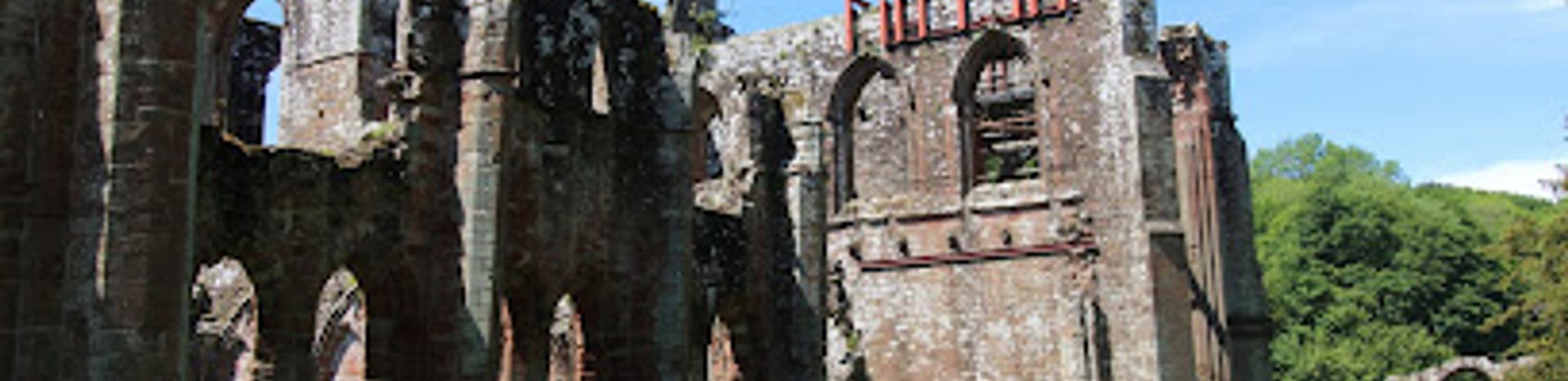
Furness Abbey
Medieval monastery ruins where 900 years of history emerge from rosy sandstone and legend.
Furness Abbey stands as one of northern England's most impressive monastic ruins, set within 45 acres of grounds near Barrow-in-Furness. Once the second most powerful Cistercian monastery in Britain after Fountains Abbey in Yorkshire, this 12th-century foundation retains remarkable architectural fragments including the ornate chapter house, cloister buildings, and substantial portions of the abbey church. The site combines medieval grandeur with an intimate, contemplative atmosphere, offering visitors a tangible connection to 900 years of monastic history through both the physical ruins and an on-site museum housing significant archaeological discoveries.
A brief summary to Furness Abbey
- Manor Rd, Barrow-in-Furness, LA13 0PJ, GB
- +443703331181
- Visit website
- Duration: 1.5 to 3 hours
- Budget
-
 Outdoor
- Mobile reception: 4 out of 5
Local tips
- Wear comfortable walking shoes to explore the extensive grounds and ruins comfortably. The site covers 45 acres with uneven terrain and multiple structures to discover.
- Check opening hours before visiting, as the abbey operates on seasonal schedules. From November to March, it is open weekends only (10:00–16:00), while April to October it opens daily (10:00–17:00).
- Bring a guidebook or use the visitor centre exhibition to fully understand the layout and history. The ruins require imagination to visualise their former grandeur, and contextual information greatly enhances the experience.
- Visit the on-site museum to see significant archaeological finds, including the rare medieval crozier and gemstone ring discovered at the abbey, which provide tangible connections to monastic life.
- Bring your dog if you have one—the abbey is very dog-friendly, and the open grounds provide excellent space for a leisurely walk with your pet.

For the on-the-go comforts that matter to you
- Restrooms
- Drink Options
- Food Options
- Seating Areas
- Information Boards
- Visitor Center
Getting There
-
By Car
From Barrow-in-Furness town centre, follow signs to Manor Road. The abbey is approximately 2 miles from the town centre, a 5–8 minute drive. Parking is available on street near the church and within 250 metres of the site. The approach is straightforward via local roads, and the site is clearly signposted.
-
By Bus
Local buses serve Barrow-in-Furness with connections to the abbey area. Journey times from the town centre are typically 15–20 minutes depending on the service. Check local transport schedules for current routes and frequencies, as services may vary seasonally.
-
On Foot
From Barrow-in-Furness town centre, the abbey is approximately 2 miles away via Manor Road and local streets. The walk takes 35–45 minutes on paved roads and pavements. The route is relatively flat and accessible, though not particularly scenic for the entire distance.
-
By Bicycle
The site welcomes cyclists and provides space to secure bikes. From Barrow-in-Furness, the 2-mile journey by bicycle takes approximately 10–15 minutes via local roads. The terrain is flat and manageable for most cyclists.
Furness Abbey location weather suitability
-
 Any Weather
-
 Clear Skies
-
 Mild Temperatures
Discover more about Furness Abbey
A Monastery of Extraordinary Power and Influence
Furness Abbey was founded in 1123 by Stephen, who would later become King of England, establishing what became the second most powerful Cistercian monastery in all of Britain. At its height, the abbey commanded vast estates and wielded considerable spiritual and temporal authority across northern England. The scale of its ambitions is evident in every remaining stone—from the soaring arches of the abbey church to the intricately decorated chapter house where monks gathered daily to conduct the business of their community. The abbey's prominence extended beyond its walls; it was significant enough to merit mention in William Wordsworth's celebrated poem The Prelude, and the romantic artist J.M.W. Turner was so captivated by its ruins that he created a series of etchings documenting its melancholic beauty.Architectural Fragments of Medieval Craftsmanship
Walking through the 45-acre grounds, visitors encounter substantial remains that speak to the abbey's former magnificence. The east end and west tower of the church still rise impressively, their rosy-hued sandstone glowing warmly in natural light. The chapter house, where the abbot and monks conducted their daily affairs, displays ornate decorative work that hints at the wealth and artistic patronage the monastery commanded. The cloister buildings, arranged around the central courtyard that formed the heart of monastic life, remain partially visible, allowing visitors to trace the daily rhythms of the community. An unusual feature—a medieval amphitheatre adjacent to the main abbey structures—suggests the site may have hosted monastic gatherings or even public performances, adding a layer of complexity to our understanding of how the abbey functioned within its broader community.Archaeological Treasures and Historical Mysteries
The abbey has yielded remarkable archaeological discoveries that illuminate monastic life in vivid detail. A significant hoard of medieval treasures was unearthed at the site, including the first crozier—a ceremonial staff with a distinctive crook—to be excavated in Britain in over 50 years, along with an impressive gemstone ring. These precious objects are now displayed in the abbey's museum, offering tangible evidence of the monastery's wealth and the status of its leadership. The site carries an air of mystery and legend; it is reputedly haunted, and local tradition holds that a tunnel once ran beneath the abbey, connecting it to both Piel Castle and Dalton Castle, suggesting networks of medieval power and communication that extended far beyond the abbey walls.The Visitor Experience and Contemplative Setting
The abbey's location on the edge of the Lake District, near Barrow-in-Furness, creates a landscape that balances accessibility with a sense of discovery. The grounds invite leisurely exploration, with pleasant walking paths winding through the ruins and surrounding parkland. The infirmary chapel, particularly well-preserved, offers insights into how the monks cared for the sick and injured within their community. The on-site visitor centre houses an education centre and extensive exhibition detailing the abbey's history, providing essential context for understanding the architectural fragments scattered across the grounds. Many visitors find that the combination of impressive ruins, open spaces, and the quieter atmosphere—compared to more famous monastic sites—creates an ideal setting for contemplation and historical reflection.Conservation and Modern Stewardship
The abbey is now managed by English Heritage, ensuring its preservation for future generations. Emergency conservation work has been undertaken to address the challenge of the ruined abbey church sinking into soft ground, demonstrating the ongoing commitment to maintaining these structures. The site welcomes walkers, cyclists, and dogs, reflecting a modern approach to heritage that encourages public engagement while respecting the historical significance of the location. The abbey's status as a protected English Heritage site guarantees that visitors will encounter professional interpretation, well-maintained grounds, and facilities that enhance the experience without detracting from the authentic character of the ruins.For the vibe & atmosphere seeker
- Romantic
- Scenic
- Tranquil
- Unique
- Adventurous
For the design and aesthetic lover
- Rustic Designs
- Historic
For the architecture buff
- Historic
- Landmarks
- Sacred Sites
- Heritage Neighborhoods
For the view chaser and sunset hunter
- Iconic Views
- Panoramas
For the social media creator & influencer
- Instagrammable
- Photo Spots
- Architectural Shots
For the eco-conscious traveler
- Protected Area
- Locally Managed
- Leave-No-Trace Critical
For the kind of experience you’re after
- Myth & Legends
- Cultural Heritage
- Photowalk
- Nature Escape
- Day Trip
For how adventurous you want the journey to be
- Easy Access
Location Audience
- Family Friendly
- Senior Friendly
- Child Friendly
- Wheelchair Access
- Pet Friendly
- Solo Friendly
- Couple Friendly


