

Free North West England Travel Guide & Mobile App
Explore North West England with free travel guides. Discover regional history, expert tips, proposed trips, and audio guides on web or mobile app.


Explore North West England for Lake District walks, Manchester and Liverpool culture, historic Chester, coastal resorts and industrial heritage.
Read more about North West England
When is the best time to visit North West England?
Best: June–August · 19–21°C| Month | High (°C) | Rainfall (mm) |
|---|---|---|
| January | 7 | 101 |
| February | 8 | 80 |
| March | 10 | 80 |
| April | 13 | 70 |
| May | 16 | 60 |
| June (best) | 19 | 60 |
| July (best) | 21 | 70 |
| August (best) | 20 | 80 |
| September | 18 | 80 |
| October | 14 | 90 |
| November | 10 | 100 |
| December | 7 | 110 |
Getting to and around North West England
How to get there
Transportation
Top city travel guides in North West England
The cities of North West England, and the easiest places to base yourself.
-
-

-
-

-

-


Swipe for more cities
Destinations in North West England
Resorts, valleys and scenic spots worth a trip of their own.
-

-

-

-

-

-


Swipe for more destinations
Best attractions in North West England
North West England offers an unusually broad collection of attractions, ranging from the mountain scenery and lakes of Cumbria to the museums, galleries and music institutions of Manchester and Liverpool. The Lake District National Park is the region's major outdoor destination, with walking, cycling, boating and viewpoints around Windermere, Keswick, Ambleside and Ullswater, while Hadrian's Wall and Roman sites in northern Cumbria add a substantial archaeological dimension. Historic Chester, Lancaster Castle, Furness Abbey and the country houses and gardens of Cheshire provide different perspectives on medieval and later England. Lancashire contributes seaside attractions at Blackpool and Morecambe, as well as industrial and textile heritage in its former mill towns. In the cities, visitors can explore maritime history at Liverpool's waterfront museums, science and industry at Manchester's museums, and contemporary culture at Salford Quays and MediaCity. Estuaries, reserves and coastal paths support birdwatching and nature study, although tidal landscapes demand care. The attraction landscape is best understood as a series of contrasting experiences rather than a single circuit.
-
Historical landmark
Royal Albert Dock Liverpool
Historic waterfront landmark blending maritime heritage, world-class museums, vibrant dining, and scenic River Mersey views in Liverpool.
-
Stadium
Old Trafford
Explore Old Trafford, the iconic 'Theatre of Dreams' and largest football club stadium in the UK, home to Manchester United's legendary legacy.
-
National park
Peak District National Park
Explore England’s oldest national park, where rugged moors meet charming villages and endless trails invite adventure and discovery.
-
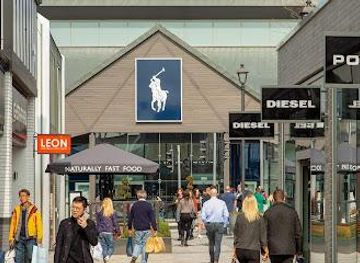
Shopping outlet
Designer Outlet Cheshire Oaks
Discover over 140 designer brands with up to 60% off year-round at Cheshire Oaks, the UK’s premier open-air shopping destination near Liverpool.

Best landmarks in North West England
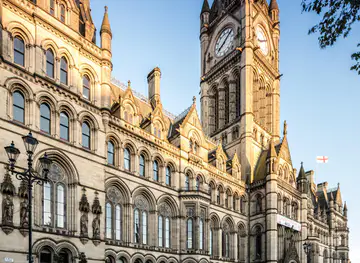
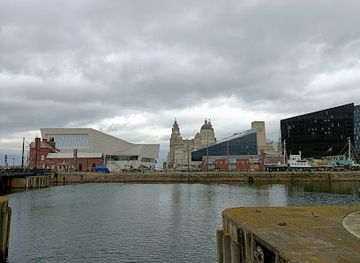
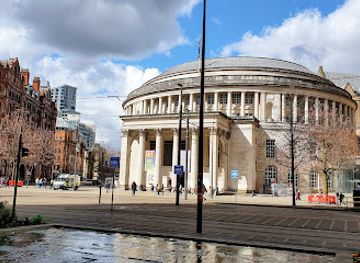
The region's most recognisable landmarks express its varied geography and history. The Lake District's mountain silhouettes and broad waters, particularly around Windermere, Derwentwater and Ullswater, are natural landmarks shaped by glacial geology and centuries of farming and literary association. Hadrian's Wall crosses northern Cumbria as the most visible reminder of Roman frontier power, while Carlisle Castle and cathedral reflect the city's long role on the Anglo-Scottish border. Chester's Roman and medieval walls, cathedral and distinctive Rows form an unusually coherent historic cityscape. Blackpool Tower dominates the Lancashire resort skyline, and Morecambe's sweeping bay provides a major coastal setting rather than a single monument. Liverpool's Three Graces—the Royal Liver Building, Cunard Building and Port of Liverpool Building—define the waterfront, while the city's docks reveal the scale of its maritime history. In Manchester, the Town Hall, former warehouses, canals and surviving mill buildings convey the industrial and civic ambitions of the Victorian city, complemented by the modern architecture of Salford Quays.
-
 Cathedral
Manchester Cathedral
Discover Manchester Cathedral: a stunning Gothic sanctuary steeped in history, art, and community at the heart of the city.
-
Historical landmark
Chester City Walls
Walk the ancient Chester City Walls for panoramic views of history, architecture, and the scenic River Dee in Britain’s most complete city fortifications.
-
Historical landmark
St. Peter's Square
Manchester’s historic St Peter's Square blends rich heritage, iconic architecture, and vibrant urban life at the heart of the city centre.
-
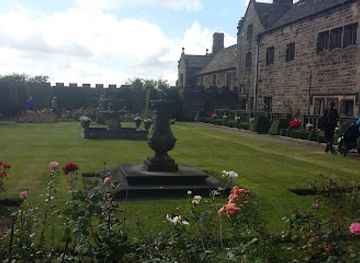
Historical landmark
Hoghton Tower
Tudor fortress with royal connections, dramatic hilltop views, and nine centuries of aristocratic heritage.

Explore North West England on the map
Plan your trip on one map. See where the top cities, national parks and sights are, and book hotels and experiences in a few clicks.
Best hotels in North West England
Best restaurants in North West England
Dining in North West England combines substantial regional cooking with the cosmopolitan food scenes of Manchester, Liverpool and their surrounding metropolitan districts. Lancashire hotpot, Lancashire cheese, Eccles cakes and black pudding are associated with different parts of the region, while Cheshire cheese, Cumbrian produce and traditional bakery goods appear in farm shops, cafés and market stalls. The coast and estuaries support seafood traditions, although availability varies by season and locality. Country pubs, rural inns and tearooms are particularly common in Cumbria, Cheshire and Lancashire, while cities offer restaurants shaped by South Asian, Middle Eastern, Chinese, Caribbean, European and many other communities. Liverpool's and Manchester's central districts have the widest choice of contemporary dining, from informal small plates to established fine-dining restaurants. Farmers' markets, delis and independent food halls are useful for tasting local products, but visitors should distinguish genuinely regional specialities from dishes marketed more broadly as northern English food.
-
Steak
Hawksmoor Manchester
Experience exquisite British steaks and seafood in a historic Victorian courthouse with impeccable service and elegant private dining.
-
Modern European
20 Stories
Experience Manchester’s skyline from 20 Stories, a glamorous rooftop restaurant blending Modern European cuisine with stunning city views.
-
Family friendly
The Cherry Tree at Blackrod
A vibrant modern British gastropub in Bolton offering classic dishes, elegant events, and a welcoming atmosphere for all occasions.
-
Australian
Australasia
Pan-Asian elegance meets Australian coastal flavors in Manchester’s stylish Spinningfields hotspot for sushi, cocktails, and shared plates.


Best bars in North West England
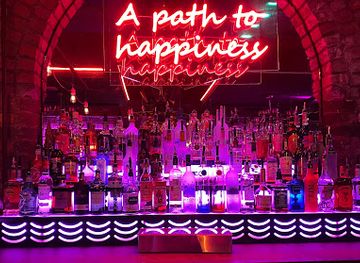
Evening life varies sharply across North West England. Manchester has the region's broadest concentration of cocktail bars, traditional pubs, live-music rooms, theatres and late-night venues, with additional activity around Salford and the wider metropolitan area. Liverpool combines historic pubs, music venues, restaurants and clubs, reflecting its long association with live performance and popular music. Chester, Lancaster, Carlisle and larger Lancashire towns provide a more compact mixture of pubs, bars and cultural venues, while Blackpool has a distinctly seasonal resort nightlife centred on its seafront and entertainment economy. In the Lake District, evening culture is generally quieter, with local pubs, hotel bars, restaurants, breweries and occasional live music rather than a major club scene. Rural venues can be widely dispersed and public transport may finish early, so visitors should plan their return journey rather than assume that urban-style late-night connections are available.
-
Cocktail bar
The Alchemist New York Street
A captivating cocktail theatre and dining experience blending molecular mixology with global cuisine in Manchester’s vibrant city centre.
-
Bar
The Blues Kitchen Manchester
Experience authentic Southern barbecue, soulful live music, and vibrant vibes in the heart of Manchester’s Spinningfields.
-
Cocktail bar
The Alchemist Spinningfields
Innovative cocktails and contemporary dining in Manchester’s vibrant Spinningfields district, blending theatrical flair with a lively social scene.
-
Cocktail bar
Cloud 23
Experience Manchester’s skyline from the stylish 23rd-floor cocktail bar with innovative drinks and panoramic city views.


Best nightclubs in North West England
Evening life varies sharply across North West England. Manchester has the region's broadest concentration of cocktail bars, traditional pubs, live-music rooms, theatres and late-night venues, with additional activity around Salford and the wider metropolitan area. Liverpool combines historic pubs, music venues, restaurants and clubs, reflecting its long association with live performance and popular music. Chester, Lancaster, Carlisle and larger Lancashire towns provide a more compact mixture of pubs, bars and cultural venues, while Blackpool has a distinctly seasonal resort nightlife centred on its seafront and entertainment economy. In the Lake District, evening culture is generally quieter, with local pubs, hotel bars, restaurants, breweries and occasional live music rather than a major club scene. Rural venues can be widely dispersed and public transport may finish early, so visitors should plan their return journey rather than assume that urban-style late-night connections are available.
-
Nightclub
Ark Manchester
Experience Manchester’s vibrant nightlife at Ark Manchester, a stylish multi-room club with diverse music, VIP luxury, and a dynamic party atmosphere.
-
Nightclub
Popworld - Preston
Popworld Preston: Where cheesy pop tunes meet vibrant nightlife and unforgettable party vibes in the heart of the city.
-
Night Club
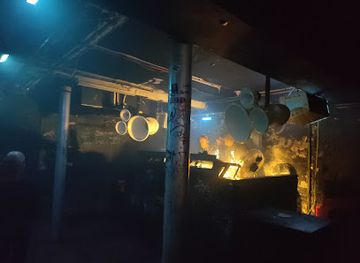
Hidden at Downtex Mill
Dive into Manchester’s underground scene at Hidden, a raw, multi-room nightclub housed in a historic textile mill with cutting-edge music and vibrant community spirit.
-
Nightclub
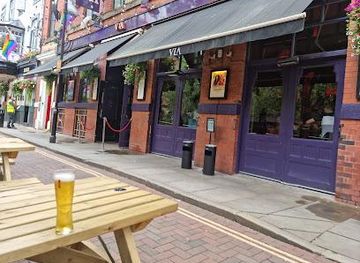
Via Manchester
Experience the vibrant heart of Manchester’s LGBTQ+ nightlife with lively drag shows, stylish dining, and canal-side charm at Via Manchester.

Best shops in North West England
Shopping in North West England ranges from major urban centres to small market towns and rural food shops. Manchester offers the widest metropolitan choice, including department stores, independent boutiques, fashion streets, specialist food retailers and shopping centres in and around the central area. Liverpool combines city-centre retail with independent shops and design-led businesses in neighbourhoods beyond the main commercial streets. Chester is known for shopping within and around its historic centre, while Lancaster, Carlisle, Kendal, Knutsford and other towns provide a more local mixture of high-street chains, antiques, books, galleries and independent retailers. In Cumbria and Cheshire, farm shops and delis are practical places to buy cheeses, preserves, baked goods and other regional produce. Market halls, seasonal farmers' markets and craft shops vary by town and day, so check local arrangements before making a special journey. Lake District visitors will also find outdoor clothing and walking equipment, but authentic souvenirs are more likely to be regional food, crafts, books, ceramics or locally made textiles than mass-produced novelty items.
-
Shopping outlet
Affinity Lancashire Outlet Shopping
Discover unbeatable deals and family-friendly fun at Affinity Lancashire, Fleetwood’s premier outlet shopping destination by the marina.
-
Gift shop
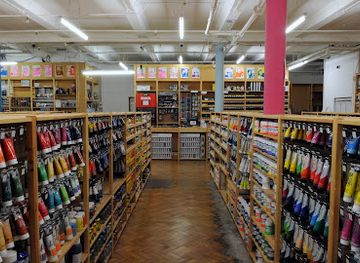
Fred Aldous Ltd
A historic family-run arts and crafts store in Manchester’s Northern Quarter, offering 30,000+ creative supplies and vintage charm.
-
Shop
The Vintage Emporium Stockport
Explore a vast treasure trove of vintage fashion, antiques, and homeware in a historic Edwardian cotton mill with a cozy tearoom and free parking.
-
Shop
Cedar Farm
Discover Cedar Farm: Lancashire’s charming blend of boutique shopping, gourmet dining, and family-friendly farm fun in a scenic rural setting.



Get your free copy of our complete guide to North West England, delivered straight to you.
Everything on this page, from attractions and restaurants to essentials and local phrases, in one PDF you can read offline, print or share.
Already have an account? Sign in
Your North West England guide is ready.
We'll send it to · Not you? Sign out

Getting your guide ready…
We are putting together a fresh copy of the North West England guide. This can take up to a minute.
This can take a few moments. If your browser asks, choose Allow so the download can start. You'll find the guide in your Downloads folder.
Nothing happened? Download it again
Sorry, the guide is taking longer than usual. Please try again in a minute, or get it by email instead.
North West England essentials
Currency and Payment
Safety
Emergency Situations
Do's and Don'ts
Local Tips
From Eve
Local phrases worth knowing
You don't need to get them perfect. A few words go a long way, and locals appreciate the effort.
Basics
| English | Local | Say it |
|---|---|---|
| Hello | Ey up | [ay up] |
| Goodbye | Ta-ra | [ta-rah] |
| Yes | Aye | [eye] |
| No | Naa | [nah] |
| Please/You're welcome | Please | [pleez] |
| Thank you | Cheers | [cheers] |
| Excuse me/Sorry | Sorry | [sorry] |
| How are you? | How's it going? | [how's it goin] |
| Fine. And you? | Sound. And you? | [sownd. and yew?] |
| Do you speak English? | Do ya speak English? | [do ya speak ing-lish?] |
| I don't understand | I don’t get it | [I dont get it] |
Eating & Drinking
| English | Local | Say it |
|---|---|---|
| I'd like to see the menu, please | Can I see the menu, please? | [can I see tha men-yoo, pleez?] |
| I don't eat meat | I’m veggie | [I’m vej-ee] |
| Cheers! | Cheers! | [cheers] |
| I would like to pay, please | Can I pay, please? | [can I pay, pleez?] |
Emergencies
| English | Local | Say it |
|---|---|---|
| Help! | Help! | [help] |
| Go away! | Get lost! | [get lost] |
| Call the Police! | Ring the coppers! | [ring the cop-ers] |
| Call a doctor! | Get a doc! | [get a doc] |
| I'm lost | I’m lost | [I’m lost] |
| I'm ill | I’m poorly | [I’m poor-lee] |
Shopping
| English | Local | Say it |
|---|---|---|
| I'd like to buy... | I want to buy... | [I want to buy...] |
| I'm just looking | Just browsing | [just browsin] |
| How much is it? | How much's this? | [how much's this?] |
| That's too expensive | That's well pricey | [that's well pricy] |
| Can you lower the price? | Can ya drop the price? | [can ya drop the price?] |
Time & Numbers
| English | Local | Say it |
|---|---|---|
| What time is it? | Wot time is it? | [wot time is it?] |
| It's one o'clock | It's one o'clock | [it's one o'clock] |
| Half past (10) | Half ten | [half ten] |
| Morning | Morning | [morning] |
| Afternoon | Afternoon | [afternoon] |
| Evening | Evening | [evening] |
| Yesterday | Yesterday | [yesterday] |
| Today | Today | [today] |
| Tomorrow | Tomorrow | [tomorrow] |
| 1 | One | [one] |
| 2 | Two | [two] |
| 3 | Three | [three] |
| 4 | Four | [four] |
| 5 | Five | [five] |
| 6 | Six | [six] |
| 7 | Seven | [seven] |
| 8 | Eight | [eight] |
| 9 | Nine | [nine] |
| 10 | Ten | [ten] |
Transport & Directions
| English | Local | Say it |
|---|---|---|
| Where's a/the...? | Where's a...? | [where's a...?] |
| What's the address? | Wot's the address? | [wot's the address?] |
| Can you show me (on the map)? | Can ya show me on the map? | [can ya show me on the map?] |
| When's the next (bus)? | When's the next bus? | [when's the next bus?] |
| A ticket (to ....) | A ticket to... | [a ticket to...] |
History of North West England
Prehistoric landscapes and Roman Britain
North West England preserves evidence of settlement and ritual activity from prehistoric communities, including monuments and stone circles in Cumbria. Under Roman rule, the region became strategically important because it connected the frontier at Hadrian's Wall with forts, roads and coastal stations. The wall crosses northern Cumbria, while forts at places including Birdoswald and Hardknott illustrate the military organisation of the frontier. Roman settlements also developed at Chester, known to the Romans as Deva Victrix, and at Manchester, then a fort and settlement called Mamucium. Their remains established patterns of movement and urban importance that continued long after Roman administration ended.
Anglo-Saxon, Norse and medieval borderlands
After the Roman period, power in the North West shifted among competing kingdoms and local rulers. Norse settlement left a particularly strong mark in Cumbria and parts of Lancashire, visible in place-names and elements of local culture. Medieval monasteries, castles and market towns then shaped the countryside and towns. Furness Abbey became one of the wealthiest monasteries in northern England before the Dissolution, while Lancaster Castle and Carlisle Castle reflected the region's position near the Scottish border. Chester's walls and medieval Rows developed within a city whose Roman foundations remained central to its identity.
Ports, wool and the growth of Lancaster and Chester
From the medieval period into the early modern era, trade by road, river and sea supported towns across the region. Chester served the Dee estuary and trade with Ireland, while Lancaster became connected to Atlantic commerce and later to the slave trade, a difficult history acknowledged in the city's museums and civic interpretation. Rural districts produced wool, livestock, grain and dairy goods, and market centres linked farms with expanding coastal and urban economies. Historic houses, churches, bridges and market buildings across Cheshire, Lancashire and Cumbria reflect the wealth generated by land ownership and commerce.
Canals, factories and the Industrial Revolution
The North West became one of the principal centres of the Industrial Revolution. Lancashire's cotton towns, Manchester's mills and warehouses, and the engineering and chemical industries of the Mersey and Irwell corridors transformed both landscape and society. Canals such as the Bridgewater Canal moved coal and raw materials efficiently, while the Liverpool and Manchester Railway, opened in 1830, demonstrated the potential of modern rail transport. Manufacturing brought rapid urban growth, difficult working conditions and new political movements, but it also created the commercial buildings, mills and transport infrastructure that remain among the region's most important heritage.
Liverpool, maritime commerce and migration
Liverpool developed into a major Atlantic port, handling trade, passengers and migration on a global scale. Its docks, warehouses and monumental waterfront buildings record both commercial success and the exploitation embedded in transatlantic trade, including the city's links to slavery. During the nineteenth and twentieth centuries, Irish, Welsh, Chinese, Caribbean and other communities helped shape the city's social and cultural life. The port also became a major departure point for emigrants and ocean travellers. Liverpool's museums, docklands and neighbourhood institutions offer ways to understand this layered maritime history beyond its most familiar architectural views.
Twentieth-century change and popular culture
The twentieth century brought deindustrialisation, war, suburban growth and major changes in work across the North West. Cotton manufacturing declined, docks and heavy industries were reorganised, and many towns faced profound economic disruption. At the same time, the region exerted exceptional cultural influence. Liverpool's popular music scene, Manchester's independent music and club culture, and the wider region's football traditions became internationally recognised. New museums, universities, theatres, galleries and creative districts have helped many former industrial areas adapt, while surviving mills, docks and civic buildings preserve the physical memory of earlier economies.
The Lake District as a cultural landscape
The Lake District's modern identity was shaped not only by its scenery but also by artists, writers and conservationists. Poets including William Wordsworth responded to the area's valleys and lakes in ways that influenced British ideas about landscape and tourism. Visitors, guidebooks, railways and the work of local and national conservation bodies gradually turned the area into a major destination. The Lake District was designated a national park in 1951 and became a UNESCO World Heritage cultural landscape in 2017, recognising the interaction of farming, settlement, literary culture and protected scenery rather than treating the mountains as untouched wilderness.
North West England in Photos
Browse through our photo collection highlighting the charm and character of the destination.
Neighbouring regions of North West England
The closest regions to North West England, if you have time for more than one.
-

-

-

-
-


Swipe for more regions
Explore more

Explore more of United Kingdom
Discover the United Kingdom: A blend of rich history, stunning landscapes, and vibrant cities, offering a unique travel experience for every visitor.
Explore United Kingdom