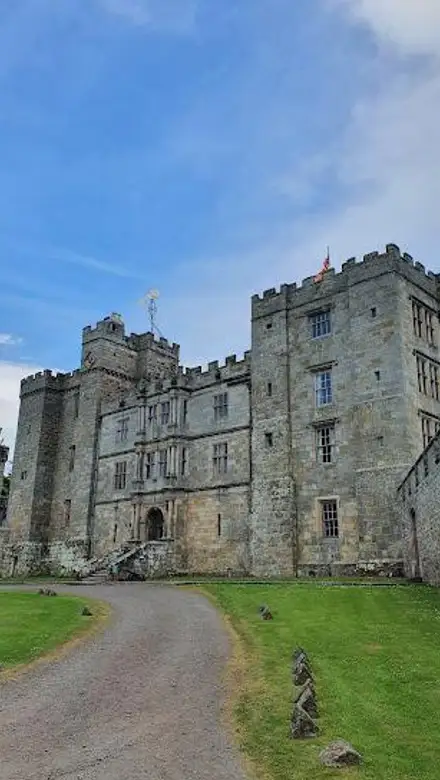
Chillingham Castle Travel Guide
Free Guide: Medieval fortress and haunted castle where 800 years of English history come alive in stone and shadow.


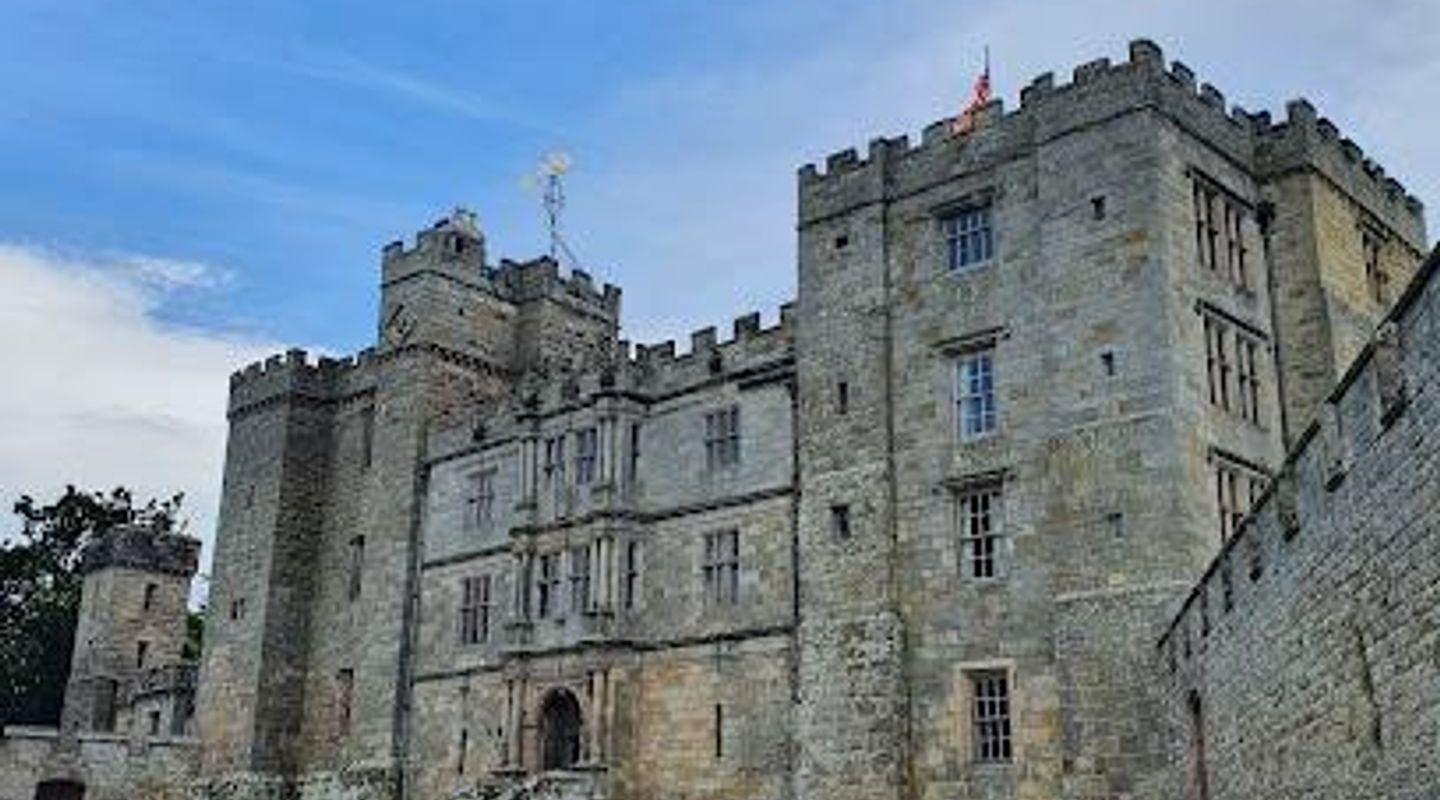
A brief summary of Chillingham Castle
Medieval fortress and haunted castle where 800 years of English history come alive in stone and shadow.
A formidable 13th-century fortress in Northumberland, England, Chillingham Castle stands as one of Britain's most haunted and historically significant medieval strongholds. Built originally as a monastery and transformed into a strategic border defense, the castle remained in the Grey family for 800 years. Today, visitors explore lavish state rooms, a notorious torture chamber, atmospheric dungeons, and beautifully landscaped gardens while experiencing the castle's legendary paranormal activity. The castle's eclectic interior, filled with antiques and historical artifacts, offers an authentic glimpse into medieval and aristocratic life.
On-site amenities
 Restrooms
 Drink options
 Food options
 Seating areas
 Picnic areas
 Information boards
 Visitor centre
- Address
- Chillingham, Alnwick NE66 5NJ
Getting there
Car
Public Transport & Walking
Taxi or Ride Service
Guided Tour Package
Discover more about Chillingham Castle
From Monastery to Medieval Fortress
Chillingham Castle began its extraordinary history in the 12th century as a peaceful monastery built by monks on the land below Ross Hill in northern England. By the late 13th century, the escalating tensions along the Scottish border transformed this religious sanctuary into a strategic military asset. In 1296, a devastating Scottish raid destroyed the original monastery structure, prompting its reconstruction as a fortified manor house with a single tower and curtain wall. The castle's significance grew rapidly when King Henry III placed the estate in the hands of the Grey family in 1246, beginning an unbroken 800-year tenure that would define the castle's identity.
Royal Visitors and Strategic Importance
Chillingham's location on the volatile England-Scotland border made it a crucial checkpoint and military stronghold. King Henry III visited in 1255 upon his return from the borders, and in 1298, King Edward I himself stayed at the castle while en route to battle William Wallace during the First Scottish War of Independence. This royal attention underscored the castle's growing significance as a symbol of English power in the borderlands. By 1344, Sir Thomas Grey received a license to crenellate from King Edward III, transforming Chillingham into a fully fortified quadrangle with massive corner towers and walls reaching an impressive thickness of 10 feet. The Greys subsequently added additional towers and a protective moat, creating one of the most formidable defensive structures in Northumberland.
Conflict, Siege, and Survival
The castle endured repeated attacks and sieges throughout its medieval history. In 1513, after losing several nearby castles to Scottish forces, the Grey family retreated to Chillingham and subsequently joined 20,000 English troops who defeated the Scots at the Battle of Flodden Field. During the Pilgrimage of Grace in 1536—a major rebellion against King Henry VIII—the castle faced siege from the powerful Percy family of nearby Alnwick Castle. Sir Robert Ellerker, guardian of the young Grey heir, defended the fortress against superior numbers, though the Percys' cannon fire necessitated the subsequent rebuilding of the east curtain wall and staircase towers. These conflicts left permanent scars on the structure, visible to visitors today.
Transformation and Refinement
With the crowning of King James I in 1603, the border between England and Scotland stabilized, and the need for imposing military defenses diminished. The castle's character shifted dramatically from fortress to aristocratic residence. The moat was filled, and the renowned architect Inigo Jones redesigned the north and south facades, introducing long galleries, a banqueting hall, and a library. In 1590, the main entrance was relocated to its present position in the center of the north front. The south side of the courtyard was rebuilt as elegant cloisters with pillars in preparation for King James VI of Scotland's royal visit on his way to London for his coronation. These modifications transformed Chillingham into a sophisticated stately home while preserving its medieval core.
Decline, Restoration, and Modern Legacy
After centuries of continuous occupation, Chillingham Castle was abandoned in 1932 and fell into severe disrepair. During World War II, the castle served as an army barracks, and soldiers stripped decorative woodwork to fuel fires during harsh winters. Post-war neglect allowed lead to be removed from the roof, causing extensive weather damage throughout the structure. In 1982, Sir Humphry Wakefield, 2nd Baronet, purchased the castle and undertook a comprehensive restoration. Notably, Sir Humphry's wife Catherine is descended from the Grey family, making the restoration a homecoming of sorts. Under his stewardship, the castle was carefully restored to its current state and opened to the public, allowing visitors to experience its remarkable layers of history. The castle now operates seasonally, welcoming guests to explore its dungeons, state rooms, chapel, and formal gardens designed by Sir Jeffrey Wyatville.
A Living Testament to Medieval History
Today, Chillingham Castle stands as an intact medieval fortress that has survived over 800 years of warfare, political upheaval, and social change. Its eclectic interior reflects centuries of occupation, from medieval military architecture to Elizabethan grandeur and Victorian additions. Visitors encounter original torture devices in the dungeon, ornate state rooms filled with antiques and historical artifacts, a medieval minstrels' gallery overlooking the Great Hall, and atmospheric chapels. The castle's grounds feature beautifully maintained formal gardens and woodland walks offering panoramic views of the Northumberland countryside. The castle's reputation as one of Britain's most haunted locations adds an additional layer of intrigue, with numerous documented accounts of paranormal activity throughout its rooms and corridors.
Evendo Review Centre
 Google
Guest reviews
Best time to go
Quietest: Jan, Nov & Dec · before 8am or at 7pm
Busy times are Evendo estimates for a typical year, to help you plan. Actual crowds vary with events, school holidays and the weather.
Explore Chillingham Castle on the map
A handpicked selection of must-see spots near Chillingham Castle, mapped for you.
Get your free copy of our complete guide to Chillingham Castle, delivered straight to you.
Everything on this page, from opening hours and how to get there to Eve’s tips and the best time to go, in one PDF you can read offline, print or share.
Already have an account? Sign in
Your Chillingham Castle guide is ready.
We'll send it to · Not you? Sign out

Getting your guide ready…
We are putting together a fresh copy of the Chillingham Castle guide. This can take up to a minute.
This can take a few moments. If your browser asks, choose Allow so the download can start. You'll find the guide in your Downloads folder.
Nothing happened? Download it again
Sorry, the guide is taking longer than usual. Please try again in a minute, or get it by email instead.
Unlock the best of Chillingham Castle
Skip-the-line tickets, guided tours with entry, and walking tours of the area, booked in a few clicks.


Other nearby places you may find interesting
The closest places of the same kind, if this one is not quite what you had in mind.
-
-
-
-
-


Swipe for more places
More to explore near Chillingham Castle

 Best experiences near Chillingham Castle
 Best hotels near Chillingham Castle
 Best landmarks near Chillingham Castle
 Best attractions near Chillingham Castle
 Best shops near Chillingham Castle
 Best restaurants near Chillingham Castle
 Best bars near Chillingham Castle
Do you manage this location?
Take control to get all the benefits, like improved information, better appearance, and stronger visibility across AI-powered discovery.
Explore more

Explore more of Northumberland
Discover Northumberland: A blend of natural beauty, rich history, and charming villages in England's northernmost county.
Explore Northumberland
Explore more of United Kingdom
Discover the United Kingdom: A blend of rich history, stunning landscapes, and vibrant cities, offering a unique travel experience for every visitor.
Explore United Kingdom