

Fye Bridge, Norwich Travel Guide
Free Guide: Medieval bridge spanning centuries of history, commerce, and dark trials in Norwich's heart.


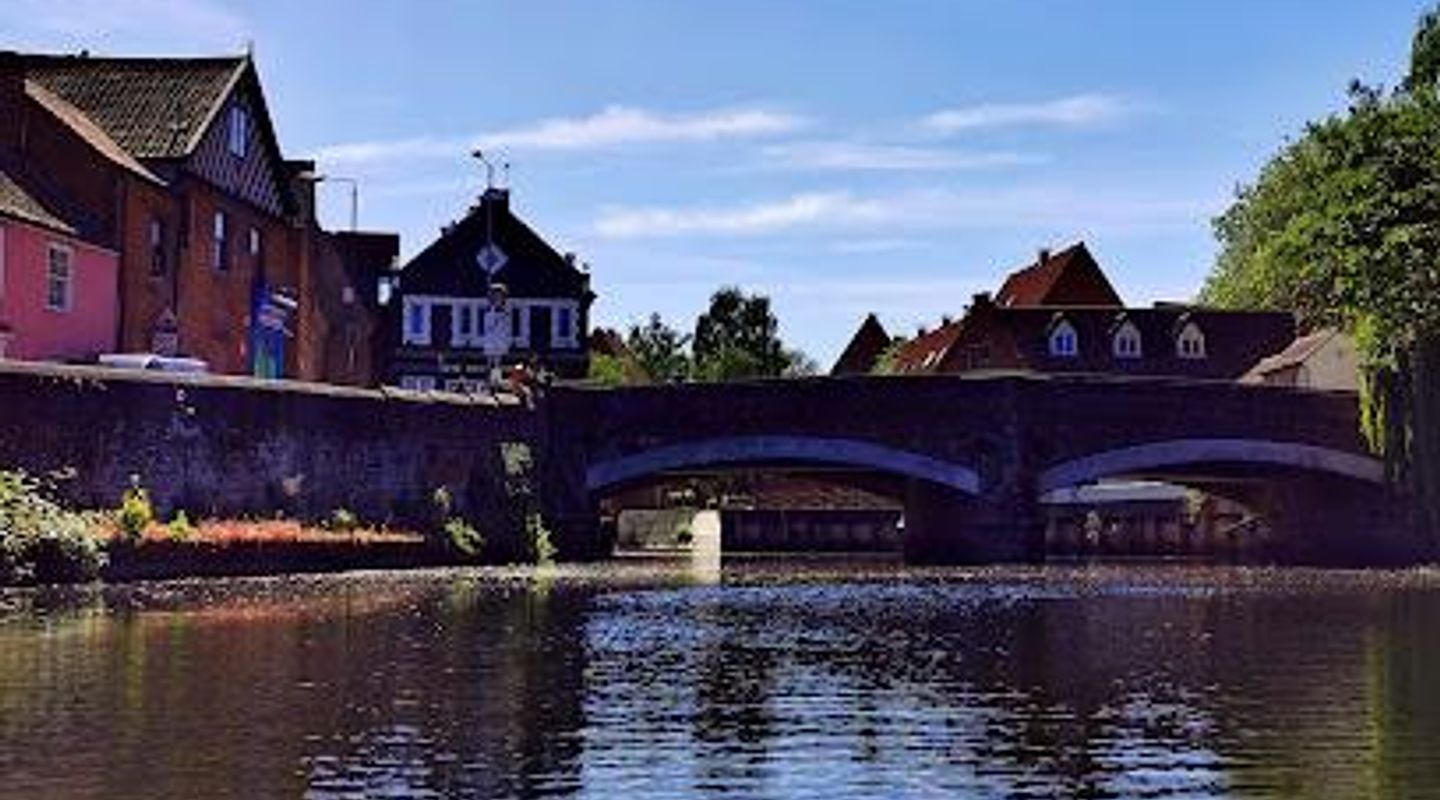
A brief summary of Fye Bridge
Medieval bridge spanning centuries of history, commerce, and dark trials in Norwich's heart.
Fye Bridge is a grade II listed double-arched brick and stone bridge spanning the River Wensum in Norwich, England. Built in 1933, it stands on the oldest known bridge site in the city, with origins tracing back to a timber causeway around the mid-10th century. The bridge is historically significant as a connection between Norwich's north and south banks and holds a dark past linked to medieval punishment and witch trials.
On-site amenities
 Restrooms
 Drink options
 Food options
 Seating areas
 Information boards
- Address
- 4 Fye Bridge St, Norwich NR3 1HZ
- Website
Getting there
Walking
Public Transport
Parking
Cycling
Discover more about Fye Bridge
Historical Significance
Fye Bridge represents one of Norwich's most historically important thoroughfares, connecting the north and south of the city across the River Wensum. The current brick and stone structure, completed in 1933, stands on what is likely the oldest surviving bridge site in Norwich. The bridge's history extends back to approximately the mid-10th century, when a timber causeway first linked the Anglo-Scandinavian settlement of Norwich-over-the-Water with the growing town on the south bank. Documentary references to the site date back to 1141, establishing its long-standing importance to the city's infrastructure and commerce.
Medieval and Early Modern Development
Around 1400, a two-arched stone bridge was constructed at this location, depicted on William Cuningham's map of Norwich from 1558. This medieval structure suffered flood damage and was rebuilt in 1573. During the 17th century, Fye Bridge served as the main thoroughfare linking northern and southern Norwich, with high foot traffic due to its proximity to the fish market. The bridge featured a fortified gate on its west side until 1791, reflecting its strategic importance to the city's defense and commerce.
Dark History: Punishment and Witch Trials
Fye Bridge holds a particularly dark chapter in Norwich's history. The bridge was the site of a medieval ducking stool, a contraption used to punish "disorderly women," scolds, "strumpets," and dishonest tradesmen. During the 17th century, particularly during the witch trials headed by Matthew Hopkins and John Stearne, the ducking stool took on a sinister purpose. Women suspected of witchcraft were subjected to this brutal test: if they survived the dunking into the River Wensum, they were deemed witches and subsequently burned; if they drowned, they were declared innocent. A stone market cross known as Stump Cross stood on the bridge until its demolition in 1644. The bridge also featured a pillory and was the site of documented cases of ducking punishment, including Mary Clay, who was ducked three times in 1670.
Modern Reconstruction and Architecture
In 1829, the medieval stone bridge was replaced with an iron bridge designed by County Surveyor Francis Stone. This iron structure witnessed the proclamation of William IV in 1830 and was widened in the early 20th century. The current bridge, built in 1933, features two flat segmental stone arches, each spanning 35 feet, supporting brick spandrels and parapets with a total width of 50 feet between parapets. Its design deliberately echoes the original medieval bridge and is based on Bishop Bridge, the only surviving medieval bridge in Norwich.
Archaeological and Cultural Legacy
Excavations during the 1933 reconstruction uncovered significant archaeological finds, including 17th-century pottery vessels and a post-medieval iron axehead. More recent metal detecting has revealed 17th-century lead cloth seals, remnants of Norwich's once-dominant textile industry. The bridge's name possibly derives from the Old English word 'fye,' meaning to clean the river. Today, Fye Bridge stands as a testament to Norwich's medieval prosperity and its complex social history, connecting modern visitors to centuries of urban life, commerce, and the darker aspects of historical justice.
Haunted Legacy
According to local folklore, Fye Bridge is said to be haunted by the ghost of a woman tried for witchcraft and burned at nearby Lollard's Pit. The apparition, dressed in rags, allegedly asks passersby to help gather dropped sticks used to kindle the fire that killed her. Local legend warns that those who assist will die in a fire within the year, adding to the bridge's reputation as a site of supernatural activity.
Evendo Review Centre
 Google
Guest reviews
Best time to go
Quietest: Jan, Feb & Dec · before 6am or at 10pm
Busy times are Evendo estimates for a typical year, to help you plan. Actual crowds vary with events, school holidays and the weather.
Explore Fye Bridge on the map
A handpicked selection of must-see spots near Fye Bridge, mapped for you.
Get your free copy of our complete guide to Fye Bridge, delivered straight to you.
Everything on this page, from opening hours and how to get there to Eve’s tips and the best time to go, in one PDF you can read offline, print or share.
Already have an account? Sign in
Your Fye Bridge guide is ready.
We'll send it to · Not you? Sign out

Getting your guide ready…
We are putting together a fresh copy of the Fye Bridge guide. This can take up to a minute.
This can take a few moments. If your browser asks, choose Allow so the download can start. You'll find the guide in your Downloads folder.
Nothing happened? Download it again
Sorry, the guide is taking longer than usual. Please try again in a minute, or get it by email instead.
Other nearby places you may find interesting
The closest places of the same kind, if this one is not quite what you had in mind.
-
-
-
-
-


Swipe for more places
More to explore near Fye Bridge

 Best experiences near Fye Bridge
 Best hotels near Fye Bridge
 Best landmarks near Fye Bridge
 Best attractions near Fye Bridge
 Best shops near Fye Bridge
 Best restaurants near Fye Bridge
 Best bars near Fye Bridge
Do you manage this location?
Take control to get all the benefits, like improved information, better appearance, and stronger visibility across AI-powered discovery.
Explore more

Explore more of Norwich
Norwich travel guide: explore medieval lanes, Norwich Castle, two cathedrals, independent culture, Norfolk food, riverside walks and the Broads nearby.
Explore Norwich
Explore more of United Kingdom
Discover the United Kingdom: A blend of rich history, stunning landscapes, and vibrant cities, offering a unique travel experience for every visitor.
Explore United Kingdom
