

The Park Tunnel, Nottingham Travel Guide
Free Guide: Discover Nottingham’s hidden Victorian sandstone tunnel, a unique historic passage blending architectural beauty with urban mystery.


A brief summary of The Park Tunnel
Discover Nottingham’s hidden Victorian sandstone tunnel, a unique historic passage blending architectural beauty with urban mystery.
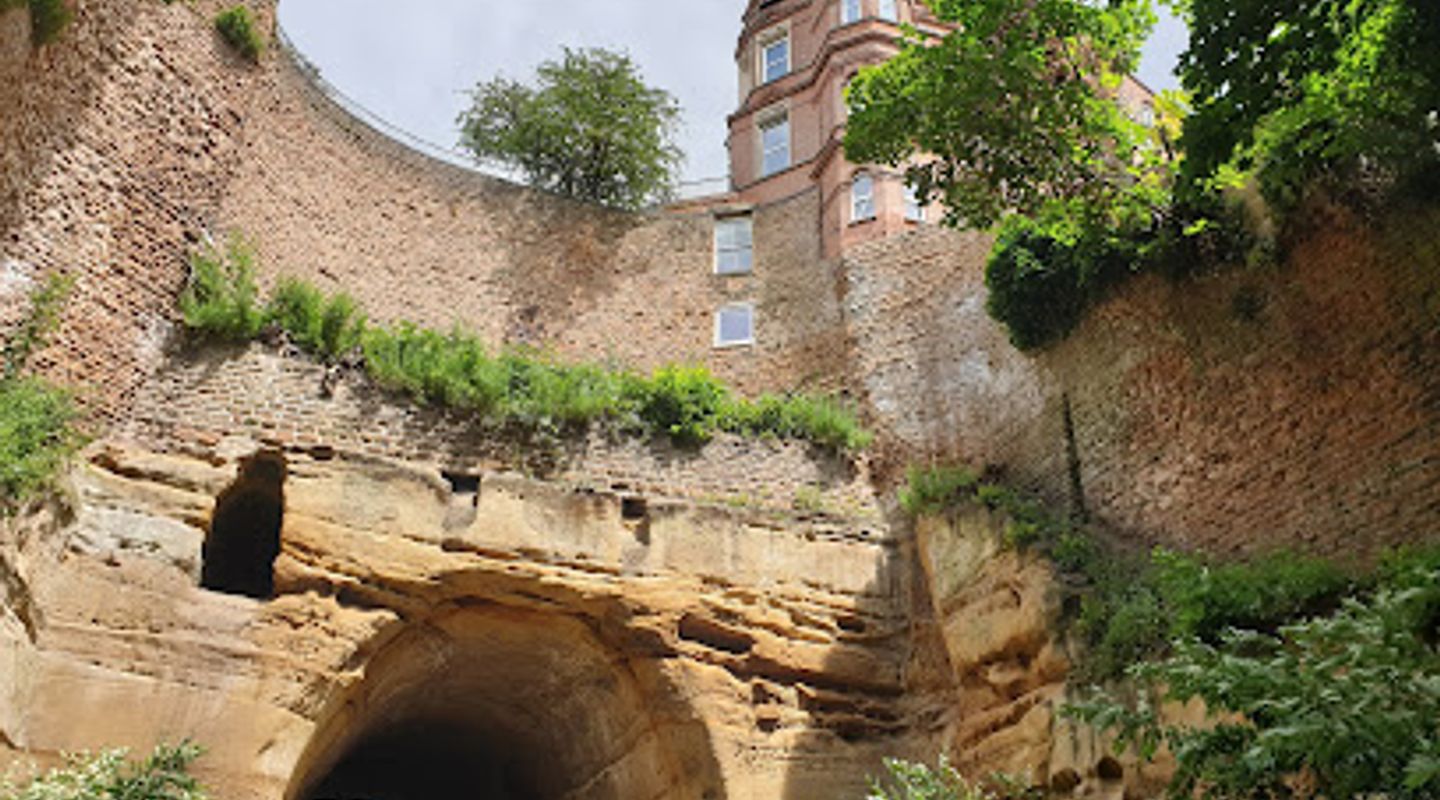
The Park Tunnel in Nottingham is a remarkable Victorian-era sandstone tunnel built in 1855 to provide access for horsedrawn carriages to The Park Estate from Derby Road. Though never used as intended due to its steep gradient, it remains a striking historical structure and pedestrian passage, tucked away in the city centre. Its unique architecture and atmospheric setting make it a hidden gem for visitors seeking a glimpse into Nottingham’s 19th-century heritage.
On-site amenities
 Seating areas
 Information boards
Opening hours
- Every dayOpen 24 hours
Opening hours as listed on the venue’s Google Business Profile. Hours can change for services and special events, so check with the venue before you go.
- Address
- 33 Derby Rd, Nottingham NG1 5AW
Getting there
Bus
Tram
Walking
Discover more about The Park Tunnel
A Victorian Engineering Endeavour with a Steep Challenge
Constructed in 1855 under the direction of architect Thomas Chambers Hine, The Park Tunnel was commissioned by the Fifth Duke of Newcastle to serve as a grand entrance for horsedrawn carriages into The Park Estate, an exclusive residential area in Nottingham. The tunnel was designed to connect Derby Road with the upper parts of The Park Estate, a prestigious district once part of a noble hunting park. Despite its impressive sandstone construction and spacious dimensions, the tunnel’s gradient of 1 in 12 proved too steep for horses to pull carriages uphill, exceeding the Duke’s original specification of 1 in 14. As a result, the tunnel was never used for its intended purpose, becoming an unusual relic of Victorian ambition and a rare example of a large-scale urban tunnel unused for transport.
Architectural Character and Hidden Location
The tunnel extends approximately 350 feet and is carved from striking sandstone, featuring a wide, vaulted passage that once promised elegant access to Nottingham’s wealthier residents. Its entrances are marked by ornate gates, with the Derby Road end notably bearing the inscription "Parkgate and the Convent." The tunnel’s design and materials reflect the Victorian era’s taste for combining utility with aesthetic appeal. Today, it remains mostly hidden from casual view, nestled between residential streets and accessible only via specific entry points, making it a quiet and atmospheric spot away from Nottingham’s busier tourist sites.
Present-Day Use and Visitor Experience
Although the tunnel never fulfilled its original function, it has found new life as a pedestrian walkway connecting Derby Road, Upper College Street, and The Ropewalk to The Park Estate. Open to the public during daylight hours, it offers visitors a unique historical experience and a chance to explore an unusual urban feature. The terrain can be uneven, so comfortable footwear is recommended. Visitors often remark on the tunnel’s mysterious ambiance and the thrill of discovering a hidden piece of Nottingham’s history. Pigeons nesting on the sandstone ledges add to the tunnel’s atmospheric character, though some visitors prefer to observe from a distance.
Context within Nottingham’s Heritage Landscape
The Park Tunnel is part of a broader network of historical sites in Nottingham that showcase the city’s rich Victorian and medieval past. Nearby, the Park Estate itself is a testament to 19th-century urban planning and architecture, while other local attractions like Nottingham Castle and the City of Caves reveal layers of history carved into the city’s sandstone bedrock. The tunnel’s story complements Nottingham’s narrative of industrial ambition, social stratification, and architectural innovation, making it a meaningful stop for history enthusiasts and urban explorers alike.
Access and Preservation Efforts
The tunnel is freely accessible with no admission fee, reflecting its status as a public urban passage rather than a formal tourist attraction. It remains a cherished but often overlooked feature of Nottingham’s cityscape. Preservation efforts focus on maintaining its structural integrity and historical character, with local groups and the city council recognizing its value as a cultural landmark. While not wheelchair accessible due to steps and uneven surfaces, it is a rewarding destination for those able to navigate its length on foot.
Discovering a Forgotten Victorian Wonder
Visitors often stumble upon The Park Tunnel by chance, drawn by curiosity or local recommendations. Its blend of engineering ambition, architectural beauty, and urban mystery makes it a unique highlight in Nottingham’s heritage. Whether admired for its sandstone craftsmanship or contemplated as a Victorian ‘what might have been,’ the tunnel invites reflection on the city’s evolving landscape and the stories hidden beneath its streets.
Evendo Review Centre
 Google
Guest reviews
Best time to go
Quietest: Jan, Feb & Dec · before 6am or at 9pm
Busy times are Evendo estimates for a typical year, to help you plan. Actual crowds vary with events, school holidays and the weather.
Explore The Park Tunnel on the map
A handpicked selection of must-see spots near The Park Tunnel, mapped for you.
Get your free copy of our complete guide to The Park Tunnel, delivered straight to you.
Everything on this page, from opening hours and how to get there to Eve’s tips and the best time to go, in one PDF you can read offline, print or share.
Already have an account? Sign in
Your The Park Tunnel guide is ready.
We'll send it to · Not you? Sign out

Getting your guide ready…
We are putting together a fresh copy of the The Park Tunnel guide. This can take up to a minute.
This can take a few moments. If your browser asks, choose Allow so the download can start. You'll find the guide in your Downloads folder.
Nothing happened? Download it again
Sorry, the guide is taking longer than usual. Please try again in a minute, or get it by email instead.
Unlock the best of The Park Tunnel
Skip-the-line tickets, guided tours with entry, and walking tours of the area, booked in a few clicks.

Other nearby places you may find interesting
The closest places of the same kind, if this one is not quite what you had in mind.
-
-
-
-
-


Swipe for more places
More to explore near The Park Tunnel

 Best experiences near The Park Tunnel
 Best hotels near The Park Tunnel
 Best landmarks near The Park Tunnel
 Best attractions near The Park Tunnel
 Best shops near The Park Tunnel
 Best restaurants near The Park Tunnel
 Best bars near The Park Tunnel
Do you manage this location?
Take control to get all the benefits, like improved information, better appearance, and stronger visibility across AI-powered discovery.
Explore more

Explore more of Nottingham
Explore Nottingham, a dynamic city where history meets modernity, with its legendary tales, cultural vibrancy, and stunning natural landscapes.
Explore Nottingham
Explore more of United Kingdom
Discover the United Kingdom: A blend of rich history, stunning landscapes, and vibrant cities, offering a unique travel experience for every visitor.
Explore United Kingdom
