
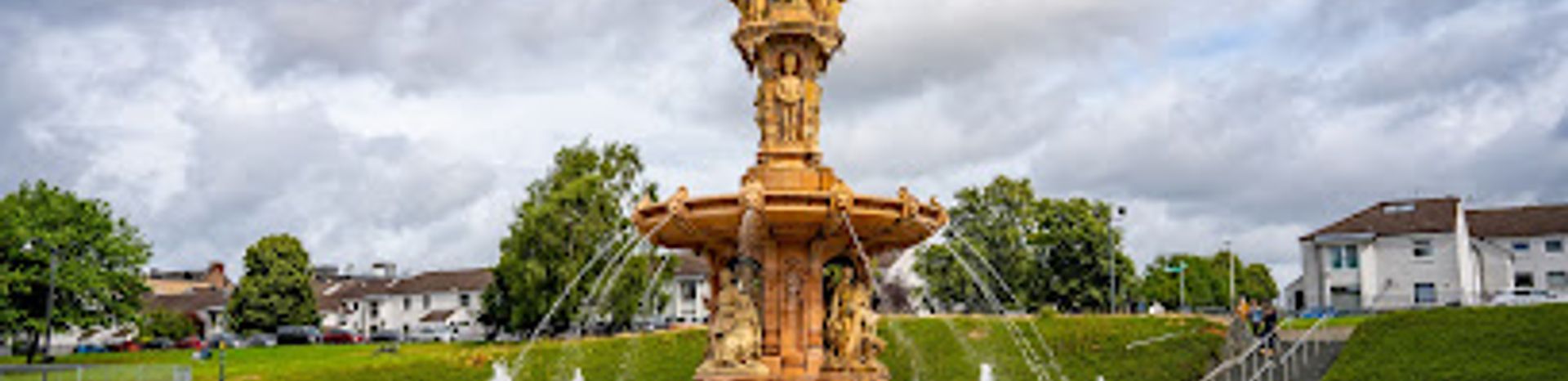
Doulton Fountain: Glasgow’s Majestic Terracotta Tribute to Empire
The world’s largest terracotta fountain, a Victorian masterpiece celebrating Queen Victoria’s Golden Jubilee and Glasgow’s imperial heritage.
The Doulton Fountain, located in Glasgow Green, is the world’s largest terracotta fountain and a striking Victorian monument commemorating Queen Victoria’s Golden Jubilee of 1887. Designed by Arthur Edward Pearce and crafted by Royal Doulton artisans, this 14-metre-tall fountain features elaborate sculptures representing the British Empire’s global reach, including figures symbolizing Australia, Canada, India, and South Africa. Restored and relocated multiple times, it stands today as a vibrant centerpiece celebrating Glasgow’s imperial heritage and artistic craftsmanship.
A brief summary to Doulton Fountain
- Glasgow Green, Glasgow, G40 1AT, GB
- Duration: 0.5 to 1.5 hours
- Free
-
 Outdoor
- Mobile reception: 4 out of 5
- Monday 12 am-12 am
- Tuesday 12 am-12 am
- Wednesday 12 am-12 am
- Thursday 12 am-12 am
- Friday 12 am-12 am
- Saturday 12 am-12 am
- Sunday 12 am-12 am
Local tips
- Visit in daylight to fully appreciate the intricate terracotta sculptures and the vibrant red hues against the greenery of Glasgow Green.
- Explore the nearby People’s Palace museum to gain deeper insight into Glasgow’s social history and the context of the fountain.
- Come in the evening to see the fountain beautifully illuminated, creating a dramatic and atmospheric scene.
- Avoid winter months if you want to see the fountain’s water cascades active, as they are typically switched off to prevent frost damage.

For the on-the-go comforts that matter to you
- Restrooms
- Drink Options
- Food Options
- Seating Areas
- Information Boards
Getting There
-
Bus
Take the Glasgow City Bus service number 75 or 75A from the city centre to Glasgow Green; the journey takes approximately 15-20 minutes. Buses run frequently but check schedules for evening services. A single fare costs around £1.80 GBP.
-
Subway and Walk
Use the Glasgow Subway to reach St Enoch station, then enjoy a 15-minute walk through the city streets to Glasgow Green. The subway operates every 8 minutes during peak times, with tickets priced at about £1.50 GBP.
-
Taxi
A taxi from Glasgow city centre to Glasgow Green takes roughly 10 minutes depending on traffic. Expect fares between £6 and £10 GBP. Taxis provide direct and convenient access but may be subject to peak-time surcharges.
-
Walking
For those staying nearby, a walk of 20-30 minutes from central Glasgow offers an easy, flat route through urban parks and streets, suitable for most fitness levels and accessible year-round.
Doulton Fountain location weather suitability
-
 Any Weather
-
 Rain / Wet Weather
-
 Clear Skies
-
 Cold Weather
-
 Mild Temperatures
Discover more about Doulton Fountain
A Monument Born from Victorian Grandeur
The Doulton Fountain was commissioned by Sir Henry Doulton, founder of the Royal Doulton pottery company, as a gift to the people of Glasgow to mark Queen Victoria’s Golden Jubilee in 1887. Designed by architect Arthur Edward Pearce in an ornate French Renaissance style, the fountain was unveiled at the 1888 International Exhibition held in Kelvingrove Park, attracting millions of visitors and showcasing Glasgow’s prominence as the British Empire’s second city.Architectural and Artistic Excellence in Terracotta
This fountain is the largest terracotta fountain ever constructed, towering over 14 metres (46 feet) high with a base diameter of 70 feet. Crafted from warm red terracotta bricks built around an iron frame, the material was chosen for its ability to be intricately sculpted and its weather-resistant qualities. The fountain’s design is rich with sculptural detail: the apex features a statue of Queen Victoria dressed as Empress of India, holding imperial regalia. Below her, kneeling maidens pour water symbolizing purity and abundance, while military figures represent Scottish, English, Irish regiments, and the Royal Navy.Symbolism Reflecting Empire and Industry
At its base, four groups of statues personify the corners of the British Empire at the time—Australia, Canada, India, and South Africa—each depicting figures and symbols of their military, agricultural, and industrial heritage. For example, Canada is represented by a trapper with a moose’s head and a woman with wheat and mining tools, while India’s figures include an armed turbaned soldier and a female figure symbolizing arts and industry. This iconography illustrates Glasgow’s deep connections to imperial trade and global influence during the Victorian era.Journey Through Time: Relocation and Restoration
Originally installed in Kelvingrove Park for the 1888 exhibition, the fountain was moved to Glasgow Green in 1890 and later repositioned outside the People’s Palace in 2004. Over the years, it faced weather damage, neglect, and even a lightning strike that damaged Queen Victoria’s statue. A major £2 million restoration completed in 2005 painstakingly repaired and preserved the fountain, with artisans recreating missing elements to maintain historical accuracy. The restoration revived its cascades and enhanced its illumination, making it a dramatic and tranquil focal point in Glasgow Green.The Fountain’s Place in Glasgow’s Cultural Landscape
Today, the Doulton Fountain stands as a celebrated historic landmark and a testament to Victorian craftsmanship and imperial history. Its vibrant terracotta hues contrast beautifully with the greenery of Glasgow Green, offering visitors a scenic and contemplative space. The fountain’s intricate sculptures and symbolic groups invite reflection on Glasgow’s industrial past and its role within the British Empire, making it a culturally rich and visually stunning attraction.Enduring Legacy and Visitor Experience
The fountain’s enduring presence, combined with its artistic grandeur and historical significance, makes it a must-see for those interested in architecture, history, and imperial symbolism. Its location near the People’s Palace, Glasgow’s social history museum, further enriches the visitor experience by connecting the fountain’s story to the broader narrative of the city’s development and heritage.For the vibe & atmosphere seeker
- Scenic
- Tranquil
- Historic
- Relaxing
For the design and aesthetic lover
- Vintage Styles
- Art Deco Styles
For the architecture buff
- Historic
- Landmarks
- Art & Design
- Heritage Neighborhoods
For the view chaser and sunset hunter
- Iconic Views
- Panoramas
For the social media creator & influencer
- Instagrammable
- Photo Spots
- Architectural Shots
For the eco-conscious traveler
- Public-Transport Accessible
- Locally Managed
For the kind of experience you’re after
- Cultural Heritage
- Photowalk
- Day Trip
- Weekend Getaway
For how adventurous you want the journey to be
- Easy Access
Location Audience
- Family Friendly
- Senior Friendly
- Child Friendly
- Teen Friendly
- Wheelchair Access
- Pet Friendly
- Couple Friendly
- Solo Friendly
- Solo Female Friendly


