

Dryburgh Abbey Travel Guide
Free Guide: Explore the serene Gothic ruins of Dryburgh Abbey, a historic sanctuary by the River Tweed and the resting place of Sir Walter Scott.


A brief summary of Dryburgh Abbey
Explore the serene Gothic ruins of Dryburgh Abbey, a historic sanctuary by the River Tweed and the resting place of Sir Walter Scott.
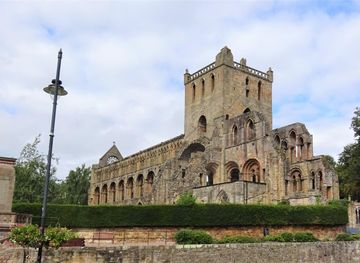
Dryburgh Abbey, nestled by the River Tweed near Melrose in the Scottish Borders, is a remarkably complete medieval ruin founded in 1150. Known for its graceful Gothic architecture, peaceful woodland setting, and as the final resting place of Sir Walter Scott, the abbey offers visitors a tranquil glimpse into monastic life with well-preserved cloisters, a chapter house with original plasterwork, and scenic grounds featuring ancient trees and memorials.
On-site amenities
 Restrooms
 Seating areas
 Information boards
Opening hours
- Every day9:30 am–5 pm
Opening hours as listed on the venue’s Google Business Profile. Hours can change for services and special events, so check with the venue before you go.
- Address
- Dryburgh, St Boswells, Melrose TD6 0RQ
- Phone
- Website
Getting there
Car
Bus
Taxi
Walking
Discover more about Dryburgh Abbey
A Storied Past Amidst Tranquil Surroundings
Dryburgh Abbey was established around 1150 as a Premonstratensian monastery, chosen for its secluded location embraced by a loop of the River Tweed. Despite enduring three devastating fires and four attacks over the centuries, the abbey’s ruins remain remarkably intact, revealing the resilience of this sacred site. The abbey grounds evoke a deep sense of calm and reflection, enhanced by the surrounding woodland and the gentle flow of the river, making it a unique sanctuary in the Scottish Borders.
Architectural Elegance and Monastic Life
Visitors can explore some of Scotland’s finest examples of Gothic ecclesiastical architecture here. The abbey’s transepts and cloisters are particularly notable, with the chapter house preserving fragments of original painted plasterwork dating back to its construction. The cloister walls and the remnants of the dormitory and novices’ day room offer a rare insight into the daily lives of the monks. The warming house and gatehouse ruins further enrich the understanding of monastic routines and medieval craftsmanship.
Resting Place of Literary and Military Figures
Dryburgh Abbey is famously the burial site of Sir Walter Scott, Scotland’s celebrated novelist and poet, whose tomb lies in the north transept alongside family members. Nearby rests Field-Marshal Earl Haig, a prominent British commander during World War One, whose post-war dedication to veterans adds a poignant layer to the abbey’s history. The Earl of Buchan, who restored the abbey grounds in the 18th century and integrated them into his landscaped parkland, is also interred here.
Natural Beauty and Historic Trees
The abbey’s grounds are a harmonious blend of history and nature. Ancient trees, including the Dryburgh Yew—one of Scotland’s oldest—and a California Redwood, stand as living monuments to the site’s longevity. The carefully maintained gardens and parkland planted by the Earl of Buchan provide peaceful walking paths and picnic spots, inviting visitors to linger and absorb the serene atmosphere.
Visitor Experience and Accessibility
Dryburgh Abbey offers a contemplative experience with informative boards that illuminate its rich history and architectural details without disrupting the tranquil ambiance. While the main paths are generally accessible, some areas with stone steps may be challenging for those with mobility issues. The visitor centre, located a short distance from the car park, is mostly level with a slight incline. Facilities include restrooms and seating areas, though there is no café or gift shop on site.
Legacy and Cultural Significance
As one of the most beautiful and atmospheric historic sites in the Scottish Borders, Dryburgh Abbey represents a fusion of medieval spirituality, literary heritage, and natural splendor. Its preservation allows visitors to connect with Scotland’s monastic past and the enduring legacy of figures like Sir Walter Scott. The abbey’s peaceful ruins continue to inspire reflection and admiration, making it a treasured landmark for history enthusiasts and nature lovers alike.
Evendo Review Centre
 Google
Guest reviews
Best time to go
Quietest: Jan, Feb & Dec · before 6am or at 9pm
Busy times are Evendo estimates for a typical year, to help you plan. Actual crowds vary with events, school holidays and the weather.
Explore Dryburgh Abbey on the map
A handpicked selection of must-see spots near Dryburgh Abbey, mapped for you.
Get your free copy of our complete guide to Dryburgh Abbey, delivered straight to you.
Everything on this page, from opening hours and how to get there to Eve’s tips and the best time to go, in one PDF you can read offline, print or share.
Already have an account? Sign in
Your Dryburgh Abbey guide is ready.
We'll send it to · Not you? Sign out

Getting your guide ready…
We are putting together a fresh copy of the Dryburgh Abbey guide. This can take up to a minute.
This can take a few moments. If your browser asks, choose Allow so the download can start. You'll find the guide in your Downloads folder.
Nothing happened? Download it again
Sorry, the guide is taking longer than usual. Please try again in a minute, or get it by email instead.
Unlock the best of Dryburgh Abbey
Skip-the-line tickets, guided tours with entry, and walking tours of the area, booked in a few clicks.


Other nearby places you may find interesting
The closest places of the same kind, if this one is not quite what you had in mind.
-
-
-
-
-


Swipe for more places
More to explore near Dryburgh Abbey

 Best experiences near Dryburgh Abbey
 Best hotels near Dryburgh Abbey
 Best landmarks near Dryburgh Abbey
 Best attractions near Dryburgh Abbey
 Best shops near Dryburgh Abbey
 Best restaurants near Dryburgh Abbey
 Best bars near Dryburgh Abbey
Do you manage this location?
Take control to get all the benefits, like improved information, better appearance, and stronger visibility across AI-powered discovery.
Explore more
Explore more of Roxburghshire
Discover the enchanting landscapes and rich history of Roxburghshire, a picturesque region in the Scottish Borders known for its ancient castles, scenic hills, and vibrant market towns.
Explore Roxburghshire
Explore more of United Kingdom
Discover the United Kingdom: A blend of rich history, stunning landscapes, and vibrant cities, offering a unique travel experience for every visitor.
Explore United Kingdom
