Holy Trinity Church, Yorkshire And The Humber Travel Guide
Discover Leeds’ elegant 18th-century Holy Trinity Church, a Georgian architectural masterpiece and vibrant cultural hub in the city centre.
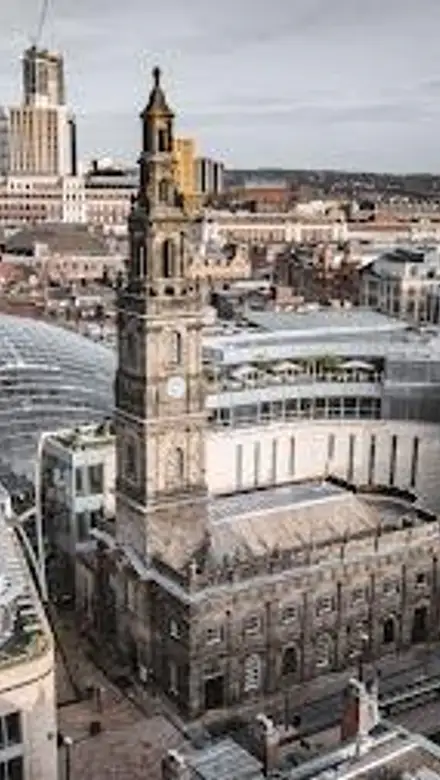
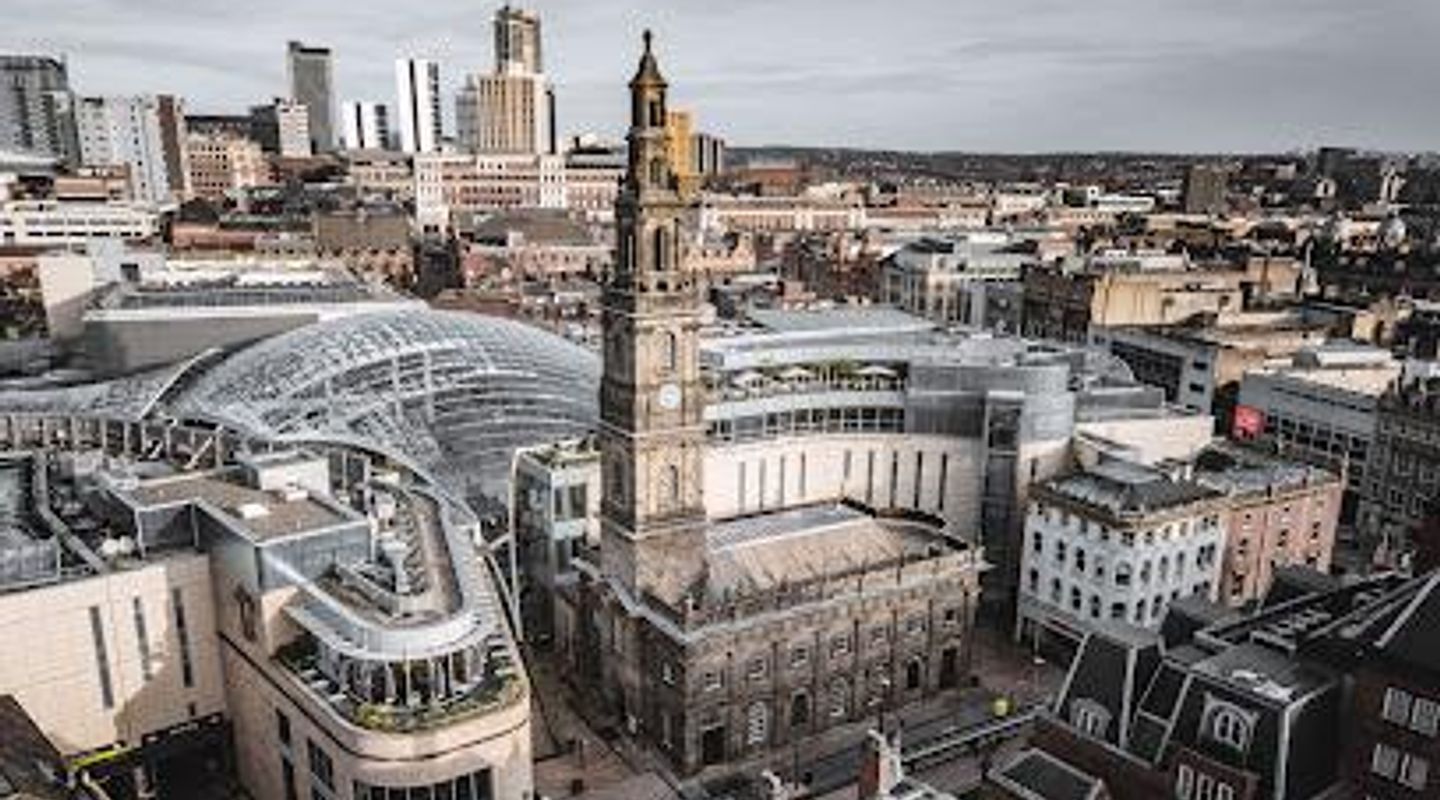
Holy Trinity Church on Boar Lane in Leeds is a Grade I listed Georgian church built between 1722 and 1727, designed by architect William Etty. It stands as a testament to early 18th-century urban sophistication, funded by local merchants and Lady Elizabeth Hastings. The church features a striking stone steeple added in 1839, a richly decorated interior with Corinthian columns, and serves as a vibrant cultural venue in the heart of Leeds.
A brief summary to Holy Trinity Church
- Boar Ln, Leeds, LS1 6HW, GB
- Click to display
- Duration: 0.5 to 2 hours
- Free
-
 Outdoor
- Mobile reception: 5 out of 5
- Tuesday 12 pm-1 pm
- Wednesday 11:30 am-2:30 pm

Know before you go
Hi, I'm Eve. Here are a few practical things to know before exploring Holy Trinity Church.
- Visit during weekday afternoons for quieter moments and to appreciate the detailed interior architecture.
- Check the church’s schedule for concerts and art exhibitions to experience its vibrant cultural offerings.
- Look for the sheep motifs on the downpipe brackets, symbolic of the merchants’ wool trade wealth.
- Explore nearby cultural sites like the Royal Armouries Museum and Leeds Art Gallery to enrich your visit.
Do you manage this location?
Take control to get all the benefits, like improved information, better appearance, and stronger visibility across AI-powered discovery. Learn more about listing your business on Evendo
Activate your presenceOther nearby places you may find interesting
The closest places of the same kind, if this one is not quite what you had in mind.
Explore Holy Trinity Church on the Map
A handpicked selection of must-see spots near Holy Trinity Church, mapped for you.
Unlock the Best of Holy Trinity Church
Buy tickets
-
No tickets available
Book tours with entry
-
No tours available
Book tours without entry

Getting There
-
Train
From Leeds railway station, a 5-10 minute walk through the city centre brings you directly to Holy Trinity Church on Boar Lane. The station is well connected with frequent services from across the UK. Walking routes are mostly flat and accessible.
-
Bus
Bus routes 140 and 446 stop near Boar Lane with services running every 5-10 minutes during the day. The bus stop is a short walk from the church, making it a convenient option for visitors from across Leeds. Tickets cost around £2-£4 depending on distance.
-
Taxi
Taxis and ride-share services are widely available in Leeds city centre. A short taxi ride from the railway station or other central locations typically takes 5 minutes, with fares usually between £4 and £8 depending on traffic.
For the on-the-go comforts that matter to you
-
 Restrooms
-
 Information Boards
-
 Seating Areas
Discover more about Holy Trinity Church
Architectural Heritage and Historical Origins
Holy Trinity Church is a distinguished Grade I listed building located on Boar Lane in Leeds city centre. Constructed between 1722 and 1727, it was designed by the architect William Etty, whose work reflects the urbane taste and sophistication of early 18th-century Leeds. The church was primarily funded by local merchants, whose wealth derived from the wool and textile trade, symbolized by sheep motifs on the building’s downpipe brackets. Lady Elizabeth Hastings of Ledston Hall also contributed generously to its construction. The church was originally a chapel of ease to St Peter’s parish but became a separate parish in 1885, reflecting the growing urban population and religious needs of Leeds at the time.Distinctive Architectural Features and Interior Design
The church is an exemplary representation of Georgian Baroque architecture, rare in Leeds today. Its exterior is marked by a tall stone steeple, added in 1839 by architect Robert Dennis Chantrell, replacing the original wooden spire. Inside, the six-bay nave is flanked by side aisles and leads to a shallow chancel with a sanctuary dominated by a large Venetian window. Giant Corinthian columns support a tunnel-vaulted ceiling adorned with intricate plasterwork motifs, including a Greek key pattern. The interior has been sensitively restored to improve accessibility and enhance the lighting, highlighting the Georgian monuments and architectural details.Role in Leeds’ Cultural and Religious Life
Holy Trinity Church has long been a centre for worship, music, and the arts in Leeds. Beyond its religious services, it hosts concerts, art exhibitions, and community events that engage city residents and office workers alike. The church’s reordering project in 2013 revitalized its role as a cultural venue, reconnecting it with the community amidst the modern commercial developments surrounding it. Despite urban changes that have reduced its open setting, Holy Trinity remains an iconic landmark, cherished for its historical and architectural significance.Challenges and Preservation Efforts
Throughout its history, Holy Trinity Church has faced threats of closure and demolition, notably in the 1950s. It was saved through advocacy by figures such as John Betjeman, who praised it as the 'St Martin-in-the-Fields of those crowded industrial streets.' Recent restoration efforts have focused on preserving the church’s fabric while adapting it for contemporary use, including upgrades to fire safety, sound systems, and audiovisual technology. These improvements ensure the building’s continued use for worship and cultural events, safeguarding its legacy for future generations.Setting and Surroundings
Situated in the heart of Leeds on Boar Lane, Holy Trinity Church is surrounded by significant cultural institutions such as the Royal Armouries Museum and Leeds Art Gallery. Its proximity to Leeds railway station and frequent bus routes makes it easily accessible. The church’s presence adds historical depth to the vibrant city centre, offering a serene and inspiring space amid the urban bustle.Symbolism and Legacy
Holy Trinity Church stands as a monument to the city’s mercantile past and architectural heritage. The sheep motifs on its downpipes serve as a reminder of the wool trade that fueled Leeds’ growth. Its survival and ongoing use exemplify the community’s commitment to preserving its cultural landmarks. As both a place of worship and a venue for artistic expression, Holy Trinity continues to enrich Leeds’ spiritual and cultural landscape.












Your all‑in‑one travel companion app
Explore expert travel guides, compare and book tours, experiences, hotels, and more—all from the palm of your hand. Download now for seamless trip planning wherever your wanderlust takes you.


Explore More of Yorkshire And The Humber
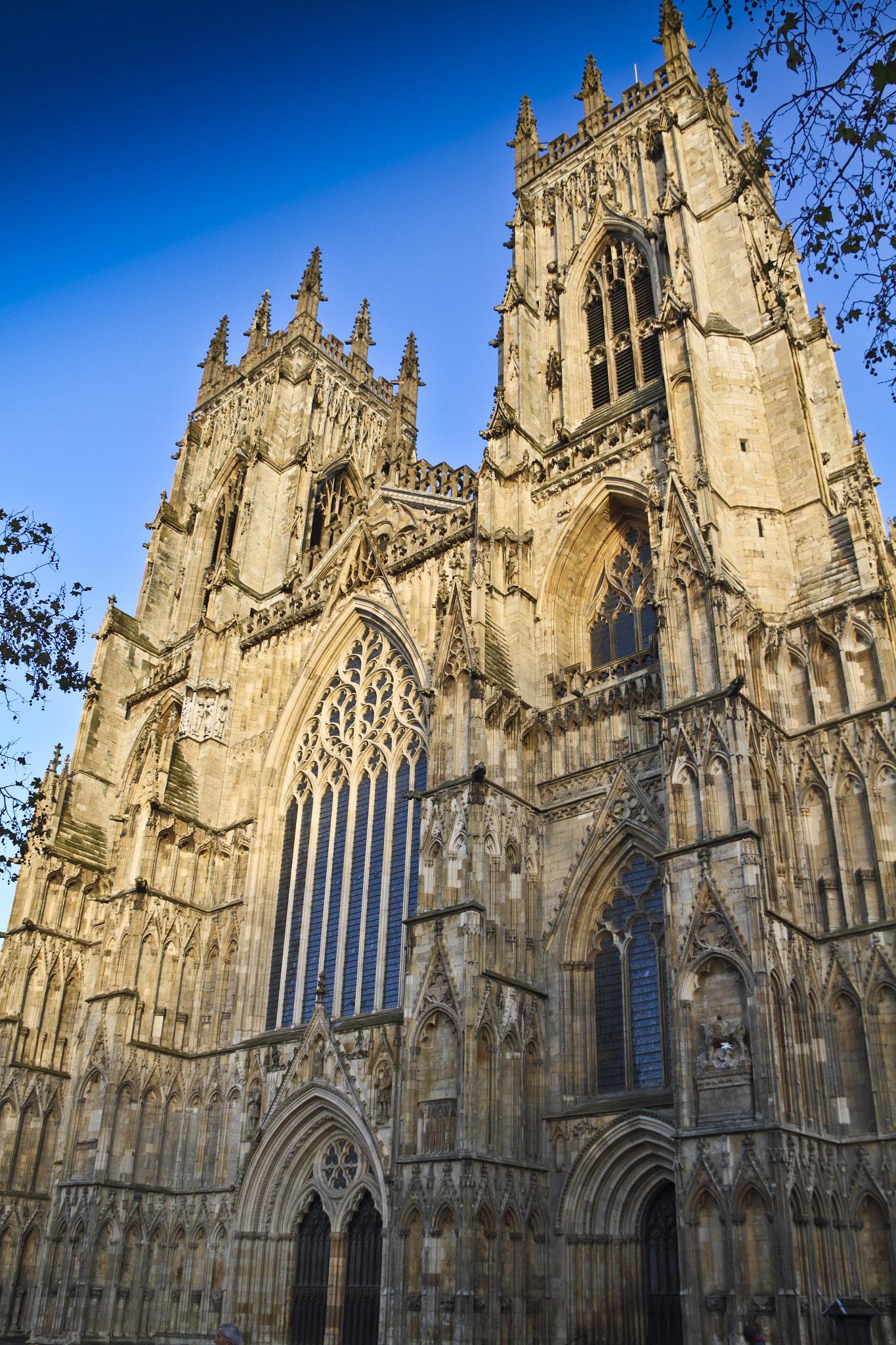
Looking beyond Holy Trinity Church? Discover Yorkshire And The Humber for broader travel guides, local hot-spots, and regional highlights.
Explore Yorkshire And The Humber
Honoring Leeds’ historic benefactor John Harrison, whose philanthropy and leadership shaped the city’s early growth and community spirit.

A historic Leeds landmark with a fascinating time ball legacy, blending Victorian architecture with city-centre life on Briggate.