

Free Sheffield Travel Guide & Mobile App
Plan your Sheffield trip with Evendo. Get free guides to top attractions, restaurants, hotels, and bars. Web access or download the mobile app.


Sheffield combines industrial heritage, Peak District landscapes, independent culture and celebrated theatres, with museums, markets and northern hospitality.
A City Shaped by Water and Steel
Sheffield rises through seven hills in South Yorkshire, where the River Don and its tributaries helped power a celebrated metalworking industry. Its industrial past remains visible in restored workshops, cutlery traditions and the waterways of Kelham Island, yet the city is far more than a monument to manufacturing. Red-brick mills, Victorian civic buildings and modern cultural venues sit alongside leafy streets, independent cafés and a lively student population.Read more about Sheffield
Heritage, Music and the Arts
Green Edges and Open Landscapes
When is the best time to visit Sheffield?
Best: June–August · 20–22°C| Month | High (°C) | Rainfall (mm) |
|---|---|---|
| January | 6 | 67 |
| February | 7 | 52 |
| March | 10 | 53 |
| April | 13 | 47 |
| May | 17 | 50 |
| June (best) | 20 | 61 |
| July (best) | 22 | 54 |
| August (best) | 21 | 63 |
| September | 18 | 58 |
| October | 14 | 72 |
| November | 10 | 65 |
| December | 7 | 75 |
Getting to and around Sheffield
How to get there
Transportation
Best attractions in Sheffield
Sheffield's attractions reveal both its industrial inheritance and its contemporary cultural life. Kelham Island Museum occupies a former industrial district and uses working machinery and collections to explain the city's steelmaking past, while the National Emergency Services Museum presents the history of policing, firefighting and rescue in a former station. In the centre, the Millennium Gallery combines art, design and local industrial stories, and Weston Park Museum offers a broader introduction to Sheffield and its people. The Winter Garden provides an impressive glasshouse beside Millennium Square, while Sheffield Botanical Gardens and Endcliffe Park offer gentler outdoor exploration. Theatre-goers can experience productions at the Crucible and Lyceum, whose adjoining complex is also associated with the annual World Snooker Championship. Beyond the urban core, Rivelin Valley, Redmires and the western edges of the Peak District bring reservoirs, woodland and open moorland within reach of the city.
-
National park
Peak District National Park
Britain’s first national park, offering wild moors, limestone dales, historic villages, and endless trails for every outdoor adventurer.
44 min drive · 24 km from city centre
-
Shopping Centre
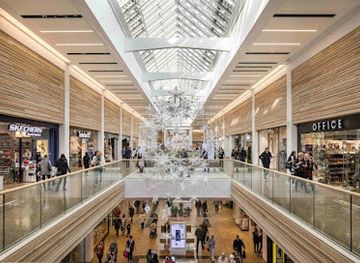
Meadowhall
Yorkshire’s largest shopping centre, combining over 280 stores with vibrant dining, entertainment, and unmatched transport links in Sheffield.
16 min drive · 5.2 km from city centre
-
Manor house
Chatsworth House
Aristocratic grandeur meets natural splendour in England's Peak District.
40 min drive · 20 km from city centre
-
Castle
Bolsover Castle
Explore Bolsover Castle’s lavish 17th-century party palace, scenic gardens, and rich history set atop Derbyshire’s rolling hills.
40 min drive · 20 km from city centre



Best landmarks in Sheffield
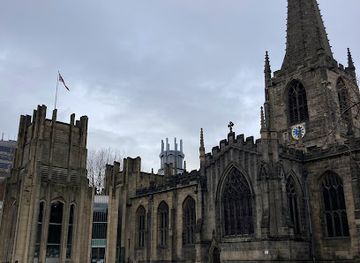
Sheffield Cathedral is the city's oldest surviving building institution, with medieval origins and later additions that reflect the growth of the town and its religious life. Nearby, the Town Hall and adjacent Peace Gardens form a civic ensemble of Victorian and twentieth-century public architecture, while the Central Library and Graves Art Gallery add cultural weight to Surrey Street. The Cutlers' Hall represents the historic importance of Sheffield's specialist metalworking trade and remains associated with the city's civic ceremonies. At the edge of the centre, the Grade II listed Kelham Island industrial area preserves the scale of mills, workshops and waterways that powered manufacturing. The University of Sheffield's Firth Court provides another notable architectural presence, and the Winter Garden offers a modern urban landmark in glass and steel. Together these places chart Sheffield's transformation from market town to industrial city and cultural centre.
-
Cathedral
Sheffield Cathedral
Sheffield’s oldest building in daily use, blending a thousand years of history with modern light, music, and community in the heart of the city.
1 min walk · 0.1 km from city centre
-
Historical landmark
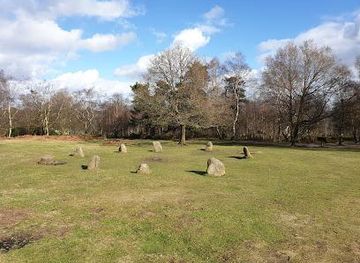
Nine Ladies Stone Circle
An ancient stone circle steeped in Bronze Age mystery and modern spiritual reverence, commanding the windswept moorlands of the Peak District.
46 min drive · 26 km from city centre
-
Catholic cathedral
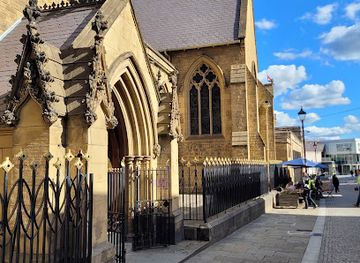
St Marie's Cathedral, Sheffield
A Gothic Revival masterpiece rising from three centuries of hidden faith, now Sheffield's beacon of Catholic heritage.
2 min walk · 0.1 km from city centre
-
Historical landmark
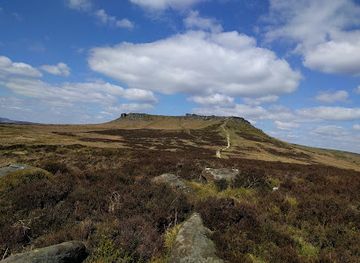
Carl Wark
Explore Carl Wark, an ancient Iron Age hillfort on a rugged Peak District promontory with sweeping moorland views and rich prehistoric heritage.
31 min drive · 11 km from city centre
Explore Sheffield on the map
Plan your Sheffield trip on one map. See where the top attractions, landmarks, restaurants, bars and hotels are, find what's near where you're staying, and book hotels and experiences in a few clicks.
Neighbourhoods in Sheffield
-

-

-

-

-


Swipe for more neighbourhoods
Best hotels in Sheffield
Best restaurants in Sheffield
Sheffield's dining scene reflects its South Yorkshire setting, international population and large student community. Traditional northern eating can include pies, roast dinners, fish and chips, pork products and hearty café fare, while Henderson's Relish, a locally produced savoury sauce, is a familiar part of the city's food identity. The Moor Market brings together food stalls and everyday produce, and London Road, Sharrow Vale and Abbeydale Road are known for a broad range of independent restaurants and casual places to eat. Kelham Island has added former industrial surroundings, breweries and contemporary kitchens to the city's culinary map, while the city centre offers dining around Leopold Square, Division Street and the theatre quarter. Cafés, bakeries, South Asian restaurants and international cooking reflect Sheffield's diverse communities, making neighbourhood exploration as important to the food experience as formal dining.
-
Caribbean
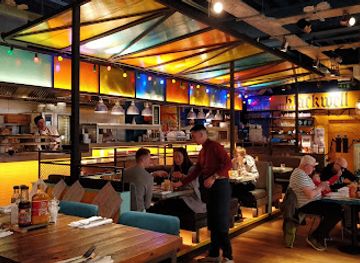
Turtle Bay Sheffield
Lively Caribbean restaurant and bar in Sheffield city centre, known for bold flavours, 2-for-1 cocktails, and vibrant island vibes.
5 min walk · 0.4 km from city centre
-
Buffet
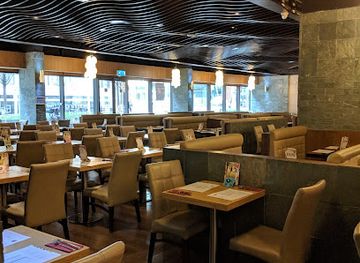
COSMO All You Can Eat World Buffet Restaurant | Sheffield
Explore over 150 dishes from around the world at COSMO Sheffield’s vibrant all-you-can-eat buffet in the city centre.
5 min walk · 0.4 km from city centre
-
Steak
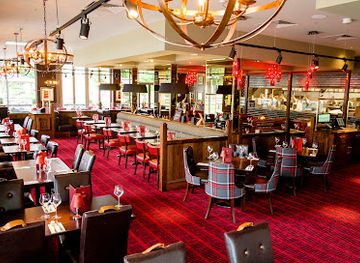
Miller & Carter Sheffield Centertainment
Experience expertly crafted steaks and warm hospitality in Sheffield’s vibrant Valley Centertainment hub.
12 min drive · 4.1 km from city centre
-
Barbecue
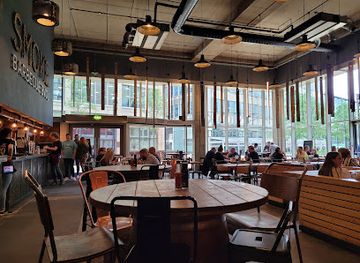
Smoke BBQ
Authentic American barbecue with slow-smoked meats and hearty portions in Sheffield’s vibrant city centre.
5 min walk · 0.4 km from city centre
Best bars in Sheffield
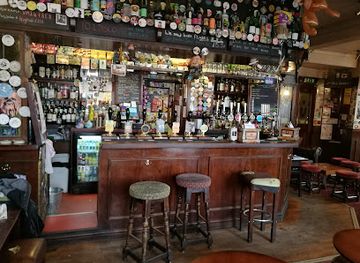
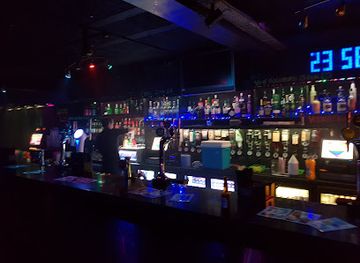
Sheffield has a substantial evening scene shaped by its universities, music history and theatre culture. Division Street and West Street contain busy bars, pubs and late venues, while Kelham Island offers a more industrial setting for breweries, beer halls and relaxed drinking spaces. The city has a long association with independent music, and smaller venues, club nights and live performances remain important to its cultural identity, although individual programmes and operating arrangements change. The Leadmill is one of the best-known names in Sheffield's live-music history, while the Crucible, Lyceum and other performance venues provide theatre and organised evening entertainment. Pubs and bars around Ecclesall Road and London Road suit a more neighbourhood-oriented night out. Visitors should expect lively student areas at weekends and should use licensed transport or established walking routes when returning late.
-
Pub
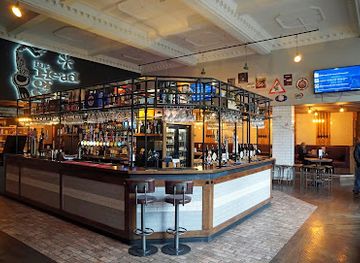
The Head of Steam Sheffield
Historic Sheffield pub with world-class craft beers, vegan-friendly food, and a lively city centre atmosphere on Norfolk Street.
3 min walk · 0.2 km from city centre
-
Bar
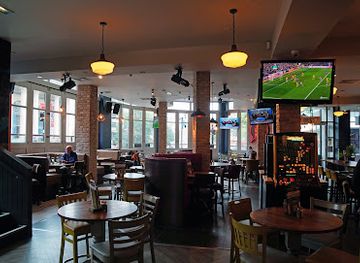
Yates - Sheffield
A vibrant Sheffield City Centre bar blending casual dining, lively nightlife, and extensive sports coverage in a welcoming atmosphere.
5 min walk · 0.4 km from city centre
-
Bar
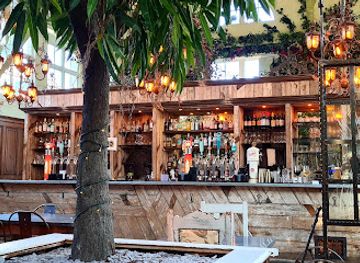
The Botanist Sheffield
A lush, botanical-themed bar and restaurant in Sheffield city centre, blending inventive cocktails, seasonal menus, and live music in a vibrant, welcoming setting.
3 min walk · 0.2 km from city centre
-
Pub
Rutland Arms
Sheffield’s beloved city centre pub offering world-class craft beers, inventive pub grub, and a vibrant, inclusive atmosphere.
8 min walk · 0.7 km from city centre
Best nightclubs in Sheffield
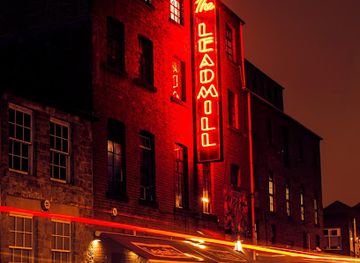
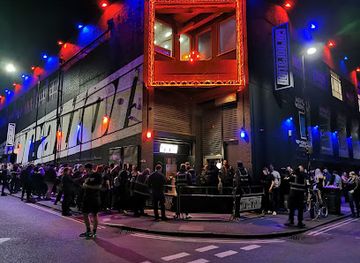
Sheffield has a substantial evening scene shaped by its universities, music history and theatre culture. Division Street and West Street contain busy bars, pubs and late venues, while Kelham Island offers a more industrial setting for breweries, beer halls and relaxed drinking spaces. The city has a long association with independent music, and smaller venues, club nights and live performances remain important to its cultural identity, although individual programmes and operating arrangements change. The Leadmill is one of the best-known names in Sheffield's live-music history, while the Crucible, Lyceum and other performance venues provide theatre and organised evening entertainment. Pubs and bars around Ecclesall Road and London Road suit a more neighbourhood-oriented night out. Visitors should expect lively student areas at weekends and should use licensed transport or established walking routes when returning late.
-
Nightclub
The Leadmill
Sheffield's 40-year heartbeat of live music, club nights, and comedy in a gritty, immersive venue near the station—where crowds roar and nights ignite.
9 min walk · 0.7 km from city centre
-
Nightclub
Corporation
Sheffield’s iconic nightclub with non-stop dance beats and an electric atmosphere in the heart of the city centre.
10 min walk · 0.8 km from city centre
-
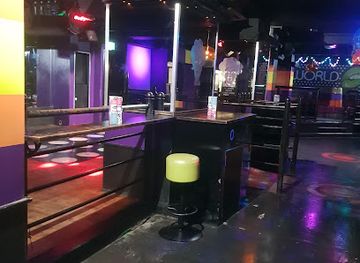
Nightclub
Popworld - Sheffield
A vibrant nightclub in Sheffield city centre, Popworld offers lively pop beats, affordable drinks, and a welcoming party atmosphere every weekend.
5 min walk · 0.4 km from city centre
-
Gay night club
Dempseys Bar and Club
Sheffield's enduring gay bar and club: two floors of drinks, dances, karaoke, and late-night energy from noon till dawn in the city centre.
12 min walk · 1.0 km from city centre
Best shops in Sheffield
Sheffield's shopping is spread between a conventional central retail area, long-established markets and independent neighbourhood streets. The Moor contains mainstream shops and the Moor Market, where visitors can find food, household goods and stalls alongside everyday local trade. Orchard Square and Division Street are associated with independent retailers, cafés and specialist businesses, while Devonshire Street has a more youthful, design-led character. Ecclesall Road, Sharrow Vale and Abbeydale Road extend the independent shopping experience into south-western districts, with vintage clothing, books, gifts, antiques and food shops. Locally relevant purchases include Sheffield-made cutlery, metalwork, design objects and products connected with the city's industrial heritage; Henderson's Relish is a practical food souvenir. Meadowhall, outside the central shopping streets but served by tram and rail, provides a large modern retail environment distinct from the city's smaller independent quarters.
-
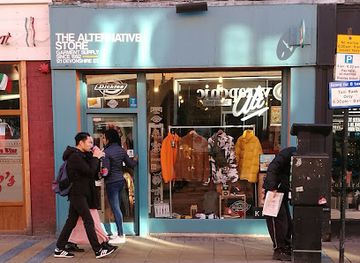
Clothing Shop
The Alternative Store
Fiercely independent since 1992, The Alternative Store offers unique Sheffield-inspired alternative fashion with top-quality clothing and jewellery.
8 min walk · 0.7 km from city centre
-
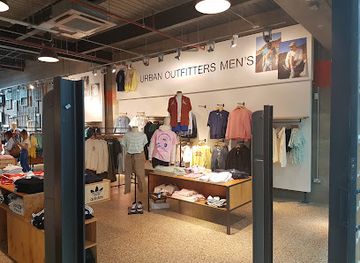
Clothing Shop
Urban Outfitters
Discover a creative blend of fashion, vintage, and homewares at Urban Outfitters Sheffield in Meadowhall, where youthful spirit meets unique style.
16 min drive · 5.3 km from city centre
-
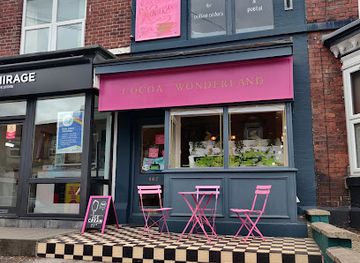
Chocolate shop
Cocoa Wonderland
Step into Sheffield's magical chocolate emporium, where handmade treats and cozy hot chocolates await in a wonderland of sweets and whimsy.
7 min drive · 2.3 km from city centre
-
Gift shop
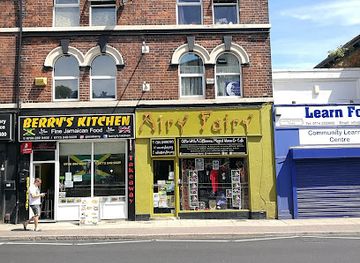
Airy Fairy
Discover unique gifts and spiritual treasures in a cozy bohemian café setting at Sheffield’s Airy Fairy.
5 min drive · 1.7 km from city centre
Get your free copy of our complete guide to Sheffield, delivered straight to you.
Everything on this page, from attractions and restaurants to essentials and local phrases, in one PDF you can read offline, print or share.
Already have an account? Sign in
Your Sheffield guide is ready.
We'll send it to · Not you? Sign out

Getting your guide ready…
We are putting together a fresh copy of the Sheffield guide. This can take up to a minute.
This can take a few moments. If your browser asks, choose Allow so the download can start. You'll find the guide in your Downloads folder.
Nothing happened? Download it again
Sorry, the guide is taking longer than usual. Please try again in a minute, or get it by email instead.
Sheffield essentials
Currency and Payment
Safety
Emergency Situations
Do's and Don'ts
Local Tips
From Eve
Local phrases worth knowing
You don't need to get them perfect. A few words go a long way, and locals appreciate the effort.
Basics
| English | Local | Say it |
|---|---|---|
| Hello | Ey up | [ay up] |
| Goodbye | Ta-ra | [tah-rah] |
| Yes | Aye | [eye] |
| No | Naa | [nah] |
| Please/You're welcome | Please | [pleez] |
| Thank you | Cheers | [cheers] |
| Excuse me/Sorry | Sorry | [sor-ree] |
| How are you? | How's tha? | [how's thah] |
| Fine. And you? | Reyt. An thee? | [right. an thee] |
| Do you speak English? | Can tha speak English? | [can thah speak ing-glish] |
| I don't understand | I don’t get it | [I don't get it] |
Eating & Drinking
| English | Local | Say it |
|---|---|---|
| I'd like to see the menu, please | Can I see t' menu, please? | [can I see t' men-yoo, pleez] |
| I don't eat meat | I don’t eat meat | [I don’t eat meat] |
| Cheers! | Cheers! | [cheers] |
| I would like to pay, please | Can I pay, please? | [can I pay, pleez] |
Emergencies
| English | Local | Say it |
|---|---|---|
| Help! | Help! | [help] |
| Go away! | Clear off! | [clear off] |
| Call the Police! | Ring t' coppers! | [ring t' cop-pers] |
| Call a doctor! | Get a doctor! | [get a doc-tor] |
| I'm lost | I’m lost | [I’m lost] |
| I'm ill | I’m poorly | [I’m poor-ly] |
Shopping
| English | Local | Say it |
|---|---|---|
| I'd like to buy... | I want to buy... | [I want to buy] |
| I'm just looking | I’m just having a gander | [I’m just hav-ing a gan-der] |
| How much is it? | How much is it? | [how much is it] |
| That's too expensive | That’s proper expensive | [that’s prop-er expen-sive] |
| Can you lower the price? | Can tha lower t' price? | [can thah low-er t' price] |
Time & Numbers
| English | Local | Say it |
|---|---|---|
| What time is it? | Wot time is it? | [wot time is it] |
| It's one o'clock | It's one o'clock | [it's one o'clock] |
| Half past (10) | Half past ten | [half past ten] |
| Morning | Mornin' | [morn-in] |
| Afternoon | After-noon | [af-ter-noon] |
| Evening | Evenin' | [eve-nin] |
| Yesterday | Yest'day | [yes-ter-day] |
| Today | Today | [to-day] |
| Tomorrow | Tomorrah | [to-mor-rah] |
| 1 | One | [one] |
| 2 | Two | [two] |
| 3 | Three | [three] |
| 4 | Four | [four] |
| 5 | Five | [five] |
| 6 | Six | [six] |
| 7 | Seven | [seven] |
| 8 | Eight | [eight] |
| 9 | Nine | [nine] |
| 10 | Ten | [ten] |
Transport & Directions
| English | Local | Say it |
|---|---|---|
| Where's a/the...? | Where's t'...? | [where's t'...?] |
| What's the address? | Wot's t' address? | [wot's t' ad-dress] |
| Can you show me (on the map)? | Can tha show me (on t' map)? | [can thah show me (on t' map)] |
| When's the next (bus)? | When's t' next (bus)? | [when's t' next (bus)] |
| A ticket (to ....) | A ticket (to ....) | [a ticket (to ....)] |
History of Sheffield
Early Settlements and Hallamshire
The Sheffield area was inhabited long before the modern city emerged, with evidence of prehistoric activity across the surrounding valleys and uplands. During the Roman period, roads and settlements developed in the wider region, although Sheffield itself did not become a major Roman centre. The name Sheffield derives from the River Sheaf, while the surrounding territory became associated with Hallamshire. Anglo-Saxon settlement established the basis of later communities, and after the Norman Conquest the manor of Sheffield passed through aristocratic ownership. The physical geography of streams, wooded valleys and mineral resources would eventually prove decisive, supplying both power and raw materials for the town's industrial development.
The Medieval Town and Castle
A settlement grew around Sheffield's parish church and market, with a castle established by the late eleventh or early twelfth century. Sheffield Castle became the principal seat of the lords of the manor, while the town developed through agriculture, local trade and craft production. The Church of St Peter, later Sheffield Cathedral, was expanded over successive centuries and remains one of the oldest surviving institutions in the city. Medieval Sheffield was modest in scale but connected to the wider economy of northern England. Wool, farming and metalworking all contributed to its growth, while the surrounding valleys supported mills and small workshops.
Cutlery and Sheffield Plate
From the late medieval period onwards, Sheffield became increasingly associated with ironworking, knife-making and the production of edged tools. Local craftsmen benefited from abundant waterpower, nearby coal and access to iron supplies, while the town's trades developed through specialist workshops and guild regulation. In the eighteenth century, innovations in steel production strengthened Sheffield's reputation. Thomas Boulsover's development of Sheffield plate, a method of fusing silver to copper, created a successful luxury-metalware industry. The town's cutlers became internationally recognised, and its name became closely linked with quality steel goods long before large-scale factories transformed the landscape.
Industrial Expansion and Reform
The nineteenth century brought rapid industrial expansion. New foundries, rolling mills and engineering works spread along the Don Valley and other waterways, while canals and railways connected Sheffield to national markets. Population growth produced dense housing and serious public-health pressures, prompting civic improvements, municipal reform and the expansion of public institutions. Sheffield received city status in 1893, reflecting its economic importance. Industrial fortunes were built by firms including Vickers and the steelmaking enterprises associated with figures such as Harry Brearley, whose discovery of stainless steel in 1913 had lasting international consequences.
War, Industry and Reconstruction
Sheffield's steel and engineering industries played an important role in both world wars, producing materials for armaments, transport and infrastructure. Wartime production brought employment but also exposed the city to bombing during the Sheffield Blitz of December 1940. Post-war reconstruction, changing industrial methods and the decline of traditional heavy manufacturing reshaped the Don Valley and inner districts. Some works closed or contracted, leaving derelict sites and unemployment, while twentieth-century road building altered parts of the centre. The surviving industrial buildings later became important reminders of the city's working history and provided spaces for museums, creative businesses and cultural regeneration.
A Contemporary Cultural City
From the late twentieth century, Sheffield's identity broadened beyond steel. The universities expanded, the Crucible Theatre gained international recognition through the World Snooker Championship, and music from the city reached a wide audience through artists associated with electronic, indie and experimental scenes. Former industrial areas such as Kelham Island underwent gradual regeneration, while the city invested in galleries, theatres, public spaces and green infrastructure. Sheffield remains linked to advanced manufacturing and specialist engineering, but its contemporary character also rests on education, culture, independent enterprise and proximity to the Peak District.
Sheffield in Photos
Browse through our photo collection highlighting the charm and character of the destination.
Cities near Sheffield
The closest cities to Sheffield, if you have time for more than one stop.
-

-

-
-
-


Swipe for more cities
Explore more

Explore more of United Kingdom
Discover the United Kingdom: A blend of rich history, stunning landscapes, and vibrant cities, offering a unique travel experience for every visitor.
Explore United Kingdom